Tesla Dumped 75% of Its Bitcoin Holdings, Should We Worried?

Huobi2022-07-21 tarihinde yayınlandı2022-07-25 tarihinde güncellendi

Özet

Tesla has significantly reduced its position on Bitcoin, but it may not have much negative impact on the market.

Tesla announced a massive reduction in bitcoin holdings on Wednesday night, which seems to show that Musk is giving up his belief in bitcoin? But Tesla’s position on Dogecoin remains unchanged which indicates that this dump may respond to Chinna‘s Covid regulation.

Other analysts argue that a Tesla sale would relieve the potential disruption Musk may cause to the crypto ecosystem and be more conducive to the long-term development of the industry.

1. Tesla dumped 75% of its Bitcoin holdings

Tesla’s Q2 financial report shows that the company reduced its bitcoin holdings by 75% to about $30,000, which added nearly $1 billion cash to its balance sheet.

On the earnings conference call, Elon Musk stressed that this move is a pre-judgment of the uncertain impact of the external environment and did not represent Tesla's forecast on the price of Bitcoin. He also insisted that Tesla may increase its position on cryptocurrencies in the future.

2. Why did Tesla sell its bitcoin?
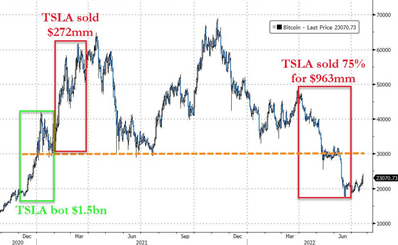
Tesla had announced a 10% layoff plan for its regular employees and closed an office in Silicon Valley in last month. This year, due to the closure of Shanghai factory, Tesla’s did tremendous job to keep a health cash flow. Selling bitcoins in a bad market environment is a good move to hedge risks.

Since the beginning of this year, Tesla's short-term solvency has deteriorated, with its quick ratio and current ratio hitting a quiet low position for few years. In addition, due to the shutdown of the Shanghai factory, the demand for working capital has continued to increase, and the company's solvency is being tested.

So far, Tesla has withdrawn about 123.5 million US dollars from Bitcoin, and has not fully refunded for its inverstment (150 million US dollars). This large-scale withdrawal of Bitcoin should be interpreted as a helpless move.

From another perspective, Elon Musk is still in the lawsuit trouble with Twitter. Selling Bitcoin can alleviate the market’s worries about Tesla’s stock price, which will provide more financial support for the upcoming lawsuit.

3. Will Tesla's move sabotage Bitcoin's upward trend?

While the market appears to have pulled back slightly over the past ten hours, Bitcoin quickly stabilize after aborbing this news.

Tesla's dump may not necessarily be a bad thing for the BTC. If we use logic like: "Pendulum Effect", this rebound of BTC may not have seen the peaked.

We may still need to pay attention to the final decision of the market who will decide the market will choose "bounce"or "reversal"?

Appendix. Musk's Web3.0 journey
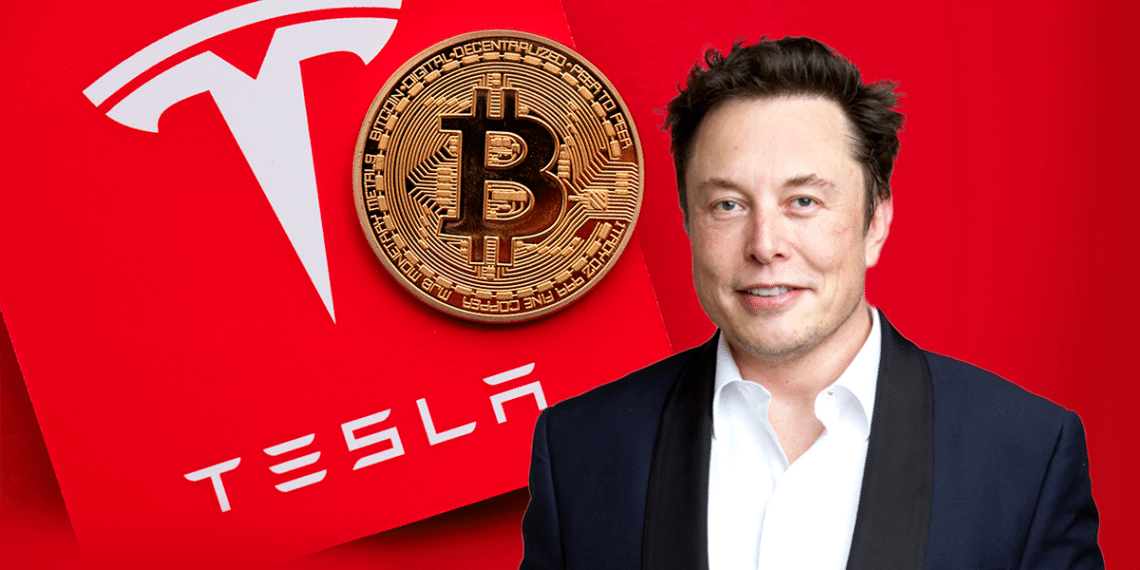
In 2002, Musk sold PayPal, and this start-up experience gave him a deeper understanding of the monetary system.

In February 2019, Musk tweeted that Bitcoin is well structured. This paved the way for Tesla’s $1.5 billion purchase of Bitcoin in January 2021.

On February 8, 2021, Tesla announced that it would begin accepting Bitcoin as a form of payment to its cars.

But in its Q1 2021 report, Tesla announced it had sale of $272 million in bitcoin.

In May of the same year, Tesla called a halt to Bitcoin as a means of payment, citied his concerns about "the rapid increase in the use of fossil fuels for Bitcoin mining."

In the 2022 Q2 earnings report, Tesla announced the sale of $963 million in Bitcoin to meet the funding needs of the unexpected environment. He also mentioned that Tesla did not sell Dogecoin.

İlgili Okumalar

NVIDIA CPU Advances, China's RISC-V Responds: Semiconductor Deep Dive - Part Four

NVIDIA is set to launch its new Vera AI data center CPU in China as early as August, with high pricing. While this move offers a new option, it highlights China's continued dependence on foreign-controlled Arm architecture. In response, the Chinese semiconductor industry is increasingly turning to RISC-V as a strategic alternative for achieving high-performance computing autonomy. The article explores the concept of the "impossible triangle" in CPU development—balancing prosperity, control, and autonomy—and posits that RISC-V's open-source, modular nature offers a unique path to achieving all three. While RISC-V is already dominant in embedded systems, the focus is now shifting to data centers and AI workloads. China has become a global hotspot for RISC-V development, driven by AI-driven compute demand, supply chain concerns from export controls, cost benefits of open-source, and strong policy support. Multiple Chinese companies have reportedly crossed the key performance threshold of 15 SPECint per GHz, a benchmark for entering the high-performance CPU club. Progress extends beyond single-core benchmarks. Companies are developing complete computing subsystems, including commercial-grade coherent network-on-chip (NoC) technology and server processors with up to 40 cores that strictly adhere to the RVA23 standard to ensure software compatibility. Real-world applications are emerging in areas like video transcoding and edge AI. However, significant challenges remain. The RISC-V ecosystem faces fragmentation, immature toolchains and verification processes, and gaps in single-core performance and energy efficiency compared to mature x86 and Arm architectures. The formidable software moat, epitomized by NVIDIA's CUDA, is a long-term hurdle. In conclusion, while RISC-V cannot immediately replace offerings like NVIDIA's Vera, it represents a viable long-term path for China to develop a self-sufficient, high-performance CPU ecosystem. The journey is acknowledged to be long and arduous, requiring sustained effort to overcome technical and ecosystem challenges.

marsbit55 dk önce

NVIDIA CPU Advances, China's RISC-V Responds: Semiconductor Deep Dive - Part Four

marsbit55 dk önce

My Coding Betting Dashboard is Profiting, but Polymarket is Truly Not a Good Place for 'Arbitrage'

The author built a custom monitoring dashboard for Polymarket, a prediction market platform, and tested it with $1,600, achieving over 30% returns. However, the core argument is that Polymarket is not a good venue for traditional arbitrage. The dashboard has two main sections: a "Portfolio Dashboard" for tracking active positions with key metrics like total capital, P&L, and a risk-control module using a tier system (T1, T2, T3), and an "Opportunity Watchlist" for monitoring markets. The article details a critical structural trap in binary markets: a bet with a high perceived probability of success still carries a 100% loss risk if wrong. The author's T1/T2/T3 system is designed to manage this by limiting position sizes based on conviction and time horizon, emphasizing that high confidence should not equal high concentration. A key insight is the danger of "pseudo-diversification"—betting on different markets driven by the same underlying variable. The author concludes that Polymarket offers few true low-risk, arbitrage opportunities. It is instead a high-risk environment where wins can create a false sense of mastery, leading to large losses. The platform is better viewed as a training ground for honing judgment through disciplined, framework-driven betting rather than a reliable income source. The tools help transform intuition into structured, rule-based decisions to mitigate the risk of catastrophic errors.

marsbit3 saat önce

My Coding Betting Dashboard is Profiting, but Polymarket is Truly Not a Good Place for 'Arbitrage'

marsbit3 saat önce

WeChat AI Card Hands-On Guide: Has the AI Shopping Era Arrived?

**"WeChat AI Card" Practical Test Guide: Has the Era of AI Shopping Arrived?** WeChat has officially launched the "AI Exclusive Card," a feature integrated into its Workbuddy AI assistant. This card is designed to handle payments for AI-initiated purchases. Our hands-on test reveals it's not yet a tool for fully autonomous AI shopping, but rather a controlled payment layer for AI agents. The AI Card functions as an isolated sub-wallet within WeChat Pay. Users must bind the card and transfer funds into it from their main wallet. Crucially, every transaction requires explicit user confirmation via smartphone scan; AI cannot spend autonomously. Currently accessible through the Workbuddy agent, the card targets specific digital consumption scenarios: purchasing paid content (reports, data), calling paid APIs/tools, and subscribing to services. Its design prioritizes security and control by separating funds and mandating approval for each payment. We tested a real-world scenario: ordering bubble tea via Workbuddy using a "Meituan Life Assistant" skill. The process encountered multiple hurdles: high "skill" usage costs (exceeding daily free credits), and most importantly, while a payment was successfully initiated, the AI purchased an incorrect product (a mismatched group-buy coupon instead of the desired drink). This highlights the current limitation: the **AI Card only solves the payment step**. The broader challenge lies in the **AI agent's execution chain**—accurately understanding intent, navigating third-party platforms, selecting the right product, and ensuring proper fulfillment. The payment succeeded, but the purchase failed to meet the user's need. In conclusion, the WeChat AI Exclusive Card is a cautious, early-step experiment in AI commerce. It provides a secure, user-controlled payment method for agent interactions but is not yet capable of reliable, end-to-end complex purchases. For now, it's best used for low-value, low-risk digital services with careful user verification at each step. The vision of AI handling complete shopping tasks remains a work in progress.

marsbit6 saat önce

WeChat AI Card Hands-On Guide: Has the AI Shopping Era Arrived?

marsbit6 saat önce

Deconstructing Notion's Growth: From a Note-taking Tool to 100 Million Users—How Notion Built a Triple Growth Flywheel Through Product, Templates, and Community

Notion's growth from a niche note-taking tool to a platform with 100 million users is powered by three interconnected flywheels: Product-Led Growth (PLG), a Template Economy, and Community-Driven Growth. First, Notion's PLG strategy relies on a highly flexible, "plastic" product that users can adapt to countless personal and team workflows. Its freemium model lowers the barrier to entry, while features like page sharing and collaboration drive organic, usage-based viral growth as users naturally invite others. Second, the Template Economy solves the "blank page" problem. Templates, created by both Notion and its community, transform abstract product capabilities into concrete, copyable solutions for specific scenarios (e.g., project management, content calendars). This dramatically lowers activation costs for new users and fuels SEO-driven discovery. Third, a vibrant Community acts as a distributed growth engine. Users and official Ambassadors create tutorials, share use cases, and host local events. This community not only educates users but also fosters a sense of identity around pursuing "better ways of working," strengthening loyalty and enabling global, low-cost expansion. Together, these flywheels create a self-reinforcing ecosystem: a great product attracts users who create templates and community content, which in turn attracts more users and deepens engagement. This system allowed Notion to scale from individuals to teams and enterprises through a bottom-up adoption path. Looking ahead, AI integration promises to accelerate these flywheels further by making templates smarter and the platform a potential AI-native work operating system. Ultimately, Notion's defensible advantage is not just its features, but this deeply entrenched network of user assets, creators, and community trust.

marsbit6 saat önce

Deconstructing Notion's Growth: From a Note-taking Tool to 100 Million Users—How Notion Built a Triple Growth Flywheel Through Product, Templates, and Community

marsbit6 saat önce

İşlemler

Spot
Futures
活动图片