AAVE Flags a Downside Move: Bearish Target Near $130

TheNewsCrypto2025-12-30 tarihinde yayınlandı2025-12-30 tarihinde güncellendi

Özet

AAVE is experiencing a bearish trend, with its price declining by 1.42% and trading around $150.19. It has broken below a descending flag pattern, with key support levels at $149 and $142, and a potential downside target near $130. Technical indicators, including MACD, Chaikin Money Flow, and Bull Bear Power, all signal strong selling pressure and continued bearish momentum. The RSI at 40.79 suggests weak to neutral momentum with limited buying strength. If the downtrend persists, AAVE could fall below $145.32, potentially reaching $140.12. A shift to bullish momentum would require breaking above the $155.78 resistance level.

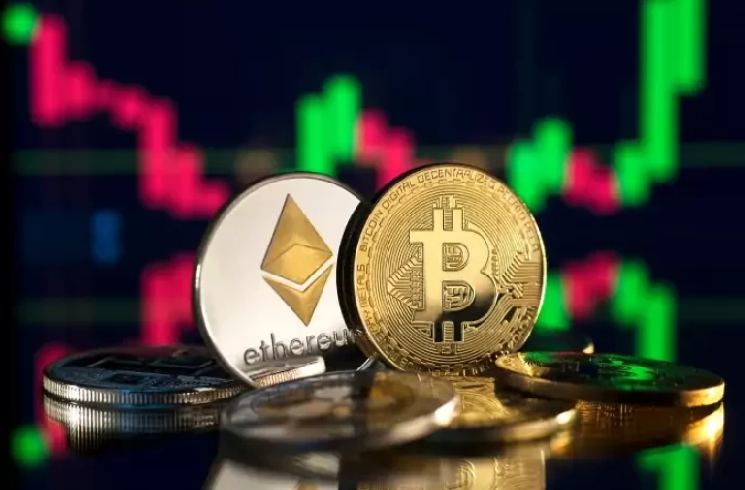
With the prolonged bearish momentum, the crypto market has been moving in all possible ways. All major assets have lit up the red candlesticks, losing momentum. The largest asset, Bitcoin (BTC), is trading near $87.7K, and Ethereum (ETH), the largest altcoin, hovers at $2.9K. Turning attention toward the altcoin pack, the AAVE price has slipped by 1.42%.

The asset opened the day trading at a high range of $152.37.With the bearish encounter, the AAVE price has dropped toward the low of $148.66. If the asset continues to lose momentum, the price movement could see more downside correction within the market.

Currently, AAVE trades at $150.19, with the market cap at $2.29 billion. Meanwhile, the trading volume is down by 19.22% to $172.74 million. Additionally, the Ali chart shows AAVE formed a descending flag pattern. It is consolidated in a narrow range. It has recently broken below the lower trend line, and the key support levels are at $149, $142, with a potential target near $130.

Is AAVE Set for Further Downside?

AAVE’s Moving Average Convergence Divergence (MACD) and signal lines are found below the zero line, showing the active bearish momentum. As long as the lines stay below zero, downside risk remains higher. A potential shift occurs only if they start moving back above the zero line.

Significantly, the Chaikin Money Flow (CMF) indicator value at -0.13 reflects the selling pressure in the market. Notably, the capital is flowing out of the asset, and distribution is happening rather than accumulation. If it moves back toward zero, it might ease the selling pressure.

The Bull Bear Power (BBP) reading of -1.40 indicates strong bearish pressure. Notably, it is pushing the price well below as the downside momentum is dominant. Moreover, the daily Relative Strength Index (RSI) of AAVE at 40.79 suggests weak to neutral momentum, which leans slightly to the bearish side. The asset is not oversold yet, but the buying strength remains limited, hinting at consolidation.

The recent trading pattern of the AAVE/USDT pair points to the downside price trajectory. It could fall below the $145.32 support range, and an extended loss would invite the death cross to take place, driving the price toward $140.12. Assuming the AAVE price has changed the gear to bullish, it might climb to the resistance range at $155.78. Further upside pressure could trigger the emergence of the golden cross and likely send the asset’s price above $160.59.

Top Updated Crypto News

Helium (HNT) Bulls Wake Up: Can They Push Past Resistance?

TagsAAVEAltcoinCryptocurrency

İlgili Sorular

QWhat is the current trading price of AAVE and how much has it declined?

AAAVE is currently trading at $150.19, having declined by 1.42%.

QWhat technical pattern has AAVE formed according to the Ali chart?

AAccording to the Ali chart, AAVE has formed a descending flag pattern and has recently broken below the lower trend line.

QWhat are the key support levels and the potential bearish target for AAVE mentioned in the article?

AThe key support levels are at $149 and $142, with a potential bearish target near $130.

QWhat do the MACD and Chaikin Money Flow (CMF) indicators suggest about AAVE's momentum?

AThe MACD and signal lines are below the zero line, indicating active bearish momentum. The CMF value of -0.13 reflects selling pressure and capital flowing out of the asset.

QWhat is the significance of the Bull Bear Power (BBP) reading and the RSI level for AAVE?

AThe BBP reading of -1.40 indicates strong bearish pressure, pushing the price down. The RSI at 40.79 suggests weak to neutral momentum leaning slightly bearish, indicating limited buying strength and potential consolidation.

İlgili Okumalar

Fed's Internal Doves Flock to Hawkish Stance, Warsh's Debut "Between a Rock and a Hard Place"

U.S. Federal Reserve officials who previously advocated for rate cuts, including Governor Christopher Waller, have recently shifted their stance, with many now not ruling out the possibility of future rate hikes. This sets a challenging stage for new Fed Chair Kevin Warsh's first policy meeting. Appointed by President Trump based on his dovish views, Warsh now faces a committee where the debate has pivoted from "when to cut" to "whether to hike," driven by persistent inflation above 3%, a strong labor market, and supply-side pressures from AI infrastructure demands and geopolitical tensions. Key figures illustrate the shift. Governor Waller, once concerned about employment, now says data has pushed him toward considering rate increases. Even moderate voices like Governor Lisa Cook, while expecting inflation to ease, have indicated readiness to hike if it fails to do so. Long-time hawks such as regional Fed presidents Beth Hammack, Lorie Logan, and Neel Kashkari have grown more vocal, arguing that the real policy rate is effectively falling and that action may soon be needed. The upcoming Fed meeting is expected to keep rates steady but will likely remove the "easing bias" from its statement, signaling a neutral stance between cuts and hikes. The quarterly "dot plot" is anticipated to show most officials projecting no cuts this year, with some potentially indicating hikes. Chair Warsh, a critic of the Fed's reliance on forward guidance like the dot plot, must navigate communicating this pivot using tools he has questioned, all while steering policy in a direction counter to the preferences of the president who appointed him. The consensus suggests the Fed's next move could well be a rate increase.

marsbit6 dk önce

Fed's Internal Doves Flock to Hawkish Stance, Warsh's Debut "Between a Rock and a Hard Place"

marsbit6 dk önce

The Trillion-Yuan Market Cap 'Yi Zhong Tian': Who is the True Value King?

The article analyzes the three leading Chinese optical module companies, collectively nicknamed "Yi Zhong Tian": Xinyisheng, Zhongji Innolight, and TFC Optical Communication. It evaluates their "cost-performance" not by current stock price, but through three lenses: PEG ratio (growth vs. valuation), earnings quality, and premium/discount for certainty. Xinyisheng shows the most attractive PEG ratio and high profitability, but its valuation reflects discounts for risks like high customer concentration and reliance on overseas markets. Zhongji Innolight, the most expensive, commands a premium for its market leadership, dominant share in key products like 800G/1.6T modules, and higher earnings certainty, though it faces geopolitical risks. TFC Optical, as an upstream component supplier ("water seller"), has the highest gross margin and bets on the long-term CPO/NPO architecture trend, but trades at a high valuation with more stable, less explosive growth. The core argument is that while these companies dominate module assembly, the true profit pool and technological moat lie upstream in laser and switch chips, currently controlled by U.S. firms like Lumentum and Coherent. The long-term "cost-performance" for these Chinese leaders hinges on whether the domestic industry, exemplified by companies like Yuanjie Technology, can successfully move up the value chain into high-power laser chips. Otherwise, their high growth may remain confined to the lower-margin assembly segment.

marsbit16 dk önce

The Trillion-Yuan Market Cap 'Yi Zhong Tian': Who is the True Value King?

marsbit16 dk önce

Has the Crypto Market Bottomed? Here's What Institutions Think

The crypto market is in a period of significant debate, with leading institutions offering differing views on whether a bottom has been reached. Three prominent firms have published detailed analyses: * **Galaxy Digital** argues Bitcoin has **not yet bottomed**. Their analysis of 13 historical indicators across six dimensions (valuation, profit-taking, miner pressure, etc.) shows only four are fully met. They project a potential bottom range between $30k and $54k. * **NYDIG** states a bottom is **possible but not likely**. While metrics are close to historic bear market extremes, they note the absence of a classic panic-selling event. They also suggest increased institutional adoption may have structurally altered the market cycle, potentially leading to a shallower downturn. * **Standard Chartered Bank** asserts the **bottom has already occurred** at around $59k. They cite two key factors: potential US-Iran diplomatic progress and the anticipated SpaceX IPO, which they believe absorbed capital and caused ETF selling pressure that is now subsiding. They forecast a year-end price target of $100k. Despite the surface-level disagreement, the reports share critical common ground more valuable for long-term investors: 1. All three believe the market bottom will form **within this year**. 2. All agree the current price is **closer to the bottom than to previous highs**. 3. All maintain a **bullish long-term outlook** for Bitcoin and a new cycle. The core takeaway is that while the exact bottom price ($40k, $50k, or $60k) is debated, the consensus is that a bottom is imminent. For long-term holders, the primary focus should not be pinpointing the absolute low, but on the future potential for prices to reach $100k, $200k, or higher. The fundamental thesis for Bitcoin—sovereign debt accumulation, inflation, declining trust in centralized institutions, global digitization, and improved accessibility—remains intact and is arguably strengthening. The overall landscape is viewed as more favorable than in previous crypto winters.

marsbit26 dk önce

Has the Crypto Market Bottomed? Here's What Institutions Think

marsbit26 dk önce

The 'Chip' Challenge and Breakthroughs in China's Optical Industry Chain

China's Photonics Industry: Bottlenecks and Breakthroughs In the global AI race, computing chips dominate the narrative, but the underlying bottleneck increasingly defining the scale of AI clusters is light—or more specifically, optical connectivity. Optical modules, which translate electrical signals to light and vice versa, are crucial for connecting thousands of GPUs in AI data centers, preventing data congestion and ensuring efficient model training. High-speed modules (800G, 1.6T) are now standard, with performance hinging on advanced DSP (Digital Signal Processor) chips. This is where a critical dependency lies. Two US giants—Marvell and Broadcom—collectively dominate over 90% of the high-end DSP chip market. Chinese optical module leaders like Zhongji Innolight and Eoptolink rely on these chips to manufacture modules for overseas AI customers, primarily in North America. While this creates a supply chain vulnerability, complete decoupling is difficult. Marvell derives over half its revenue from Greater China, and the US firms depend on Chinese partners for chip packaging and optical components. The risk from laser chips (e.g., from Lumentum), another key component, is considered more manageable due to multiple global suppliers and faster progress in domestic alternatives from companies like YOFC and Accelink. To mitigate risks, China's industry is pursuing a multi-pronged strategy: diversifying supply chains and locking in long-term orders; fostering a domestic market ecosystem to adopt homegrown DSPs from firms like Huawei HiSilicon and CETC; accelerating R&D in high-speed DSPs and advanced packaging; and investing in next-gen technologies like silicon photonics and Co-Packaged Optics (CPO) to reduce reliance on discrete DSPs. The ultimate solution lies not in short-term博弈 but in persistent advancement of domestic high-end chip R&D and manufacturing. While challenges remain in performance, certification, and ecosystem building, China's vast domestic market and manufacturing base provide a crucial buffer, buying time for the industry to achieve greater technological independence.

marsbit40 dk önce

The 'Chip' Challenge and Breakthroughs in China's Optical Industry Chain

marsbit40 dk önce

Behind SpaceX's $2 Trillion Market Cap: Why Does Musk Always Have the Next Move Planned?

On June 12th, SpaceX debuted on the Nasdaq, reaching a valuation that briefly touched $2 trillion. This marked the culmination of a 24-year journey from its founding in 2002, driven by Elon Musk's frustration at the high cost of buying rockets. The company's path was defined by early failures, with its first three Falcon 1 launches ending in explosions before a successful 2008 flight opened the era of commercial spaceflight. Key to its model was a fixed-price NASA contract, incentivizing cost reduction. SpaceX mastered rocket reusability, first achieving a Falcon 9 landing in 2015, which drastically cut launch costs. This enabled its profitable Starlink satellite internet constellation, envisioned years before reusability was proven, to create an internal market for frequent launches. Similarly, the next-generation Starship rocket was in development long before its first flight, with its business case evolving from Mars colonization to supporting the emerging concept of in-orbit data centers for AI—a story now central to its valuation. The company's recent IPO, a reversal of its long-standing "no IPO" stance, is funding this ambitious "space-based compute" vision. While major tech players like Google, Blue Origin, and others are investing heavily, significant technical and cost hurdles remain. Ultimately, SpaceX's history is one of creating its own demand: first with Starlink and now with space-based AI compute, betting that its next rocket will enable its next giant market.

marsbit43 dk önce

Behind SpaceX's $2 Trillion Market Cap: Why Does Musk Always Have the Next Move Planned?

marsbit43 dk önce

İşlemler

Spot
Futures

Popüler Makaleler

ATWO Nedir

I. Proje TanıtımıArena Two, hayranların gerçek zamanlı etkinlik sonuçlarında aktif, tokenleştirilmiş bir rol oynamasına olanak tanıyan merkeziyetsiz bir etkileşimli platformdur. Hayranları pasif izleyicilere indirgeyen geleneksel yayıncılık modellerinin aksine, Arena Two, hayranların doğrudan gerçek zamanlı oy kullanmalarını ve sahadaki sonuçları etkilemelerini sağlamak için blok zinciri teknolojisini kullanır.II. Token BilgileriToken adı: ATWO(Arena Two)III. İlgili BağlantılarWeb sitesi:https://arenatwo.com/Keşif araçları:https://basescan.org/token/0x499D35eBE6cEe9B2Ac35Fd003fcBbeeB9CFc7B32Twitter:https://x.com/arenatwoXNot: Proje tanıtımı, resmi proje ekibi tarafından yayınlanan veya sağlanan materyallerden gelmektedir ve yalnızca referans amaçlıdır, yatırım tavsiyesi niteliği taşımaz. HTX, ortaya çıkan doğrudan veya dolaylı kayıplardan sorumluluk kabul etmez.

274 Toplam GörüntülenmeYayınlanma 2026.05.18Güncellenme 2026.06.02

ATWO Nedir

ATWO Nasıl Satın Alınır

HTX.com’a hoş geldiniz! Arena Two (ATWO) satın alma işlemlerini basit ve kullanışlı bir hâle getirdik. Adım adım açıkladığımız rehberimizi takip ederek kripto yolculuğunuza başlayın. 1. Adım: HTX Hesabınızı OluşturunHTX'te ücretsiz bir hesap açmak için e-posta adresinizi veya telefon numaranızı kullanın. Sorunsuzca kaydolun ve tüm özelliklerin kilidini açın. Hesabımı Aç2. Adım: Kripto Satın Al Bölümüne Gidin ve Ödeme Yönteminizi SeçinKredi/Banka Kartı: Visa veya Mastercard'ınızı kullanarak anında Arena Two (ATWO) satın alın.Bakiye: Sorunsuz bir şekilde işlem yapmak için HTX hesap bakiyenizdeki fonları kullanın.Üçüncü Taraflar: Kullanımı kolaylaştırmak için Google Pay ve Apple Pay gibi popüler ödeme yöntemlerini ekledik.P2P: HTX'teki diğer kullanıcılarla doğrudan işlem yapın.Borsa Dışı (OTC): Yatırımcılar için kişiye özel hizmetler ve rekabetçi döviz kurları sunuyoruz.3. Adım: Arena Two (ATWO) Varlıklarınızı SaklayınArena Two (ATWO) satın aldıktan sonra HTX hesabınızda saklayın. Alternatif olarak, blok zinciri transferi yoluyla başka bir yere gönderebilir veya diğer kripto para birimlerini takas etmek için kullanabilirsiniz.4. Adım: Arena Two (ATWO) Varlıklarınızla İşlem YapınHTX'in spot piyasasında Arena Two (ATWO) ile kolayca işlemler yapın.Hesabınıza erişin, işlem çiftinizi seçin, işlemlerinizi gerçekleştirin ve gerçek zamanlı olarak izleyin. Hem yeni başlayanlar hem de deneyimli yatırımcılar için kullanıcı dostu bir deneyim sunuyoruz.

190 Toplam GörüntülenmeYayınlanma 2026.05.18Güncellenme 2026.06.02

ATWO Nasıl Satın Alınır

ZEST Nedir

I. Proje Tanıtımı1. Zest Protocol Nedir?Zest Protocol, kullanıcıların BTC ile getiri kazanmasına veya BTC'yi teminat göstererek varlık ödünç almasına olanak tanıyan, Stacks Layer 2 üzerinde inşa edilmiş Bitcoin yerel bir kredi protokolüdür. Protokolün akıllı sözleşmeleri Clarity dilinde yazılmıştır, tamamen zincir üzerinde çalışır ve açık kaynaklıdır; tasarımı Aave v3'ten ilham alınarak yapılmıştır. Zest, şu anda 800'den fazla BTC'nin yatırıldığı ve zirve TVL'sinin 100 milyon doları aştığı Stacks'teki en büyük DeFi protokolüdür. Mayıs 2026'da protokol, Stacks'tan Bitcoin ana ağına kredi verme yeteneklerini genişleten Bitcoin Teminat Kasaları'nı tanıttı. Bu, kullanıcıların BTC'yi Bitcoin ağından çıkarmadan stabilcoin ödünç almasına olanak tanır ve kendine ait saklama ile kredi vermeyi mümkün kılar.2. Zest Protocol Nasıl Çalışır?Zest Protocol, iki piyasadan oluşmaktadır. Stacks piyasası, kullanıcıların sBTC, STX ve USDC gibi varlıkları yatırarak getiri kazanmasına veya aşırı teminatlı krediler almasına olanak tanıyan Aave v3 üzerine inşa edilmiştir. Varsayılan maksimum LTV %50'dir (%70 sBTC için). Bitcoin piyasası, yeni başlatılan Bitcoin Teminat Kasaları aracılığıyla çalışır. Kullanıcılar, Bitcoin zincirinde kendine ait saklama kasalarında BTC'yi kilitleyerek stabilcoin ödünç alırlar. Teminat, tüm süreç boyunca Bitcoin ana ağında kalır ve kullanıcılar pozisyon tasfiye edilmedikçe saklama hakkını korur.3. Zest Protocol'ü Kim Kurdu?Tycho Onnasch (Kurucu Ortak): Oxford Üniversitesi'nden mezun. Stacks Açık İnternet Vakfı için araştırma ve hibe çalışmalarında yer aldı. Trust Machines'da eski yönetici ve Deedmob'un kurucusu. LinkedIn Profili: https://www.linkedin.com/in/tychokoonnasch/.Fernando Foy (Kurucu Ortak): Daha önce Objectif Emploi'de IT danışmanlığı yaptı. LinkedIn Profili: https://www.linkedin.com/in/fernando-foy/.Emil E. (Kurucu Ortak): Warwick Üniversitesi'nden Fizik alanında Yüksek Lisans derecesine sahiptir. Trust Machines'da eski mühendislik ortağı, Web3 projeleri için tam yığın geliştirici ve HSBC'de veri bilimcisi olarak çalıştı. LinkedIn Profili: https://www.linkedin.com/in/emil-e-49771a145/.Finansman Detayları: Mayıs 2024'te, Zest Protocol, Tim Draper liderliğindeki 3.5 milyon dolarlık bir tohum finansmanı turunun tamamlandığını duyurdu; Binance Labs, Flow Traders, Trust Machines ve diğerlerinin katılımıyla.4. $ZEST Tokenomikası$ZEST, Zest Protocol'ün yerel token'ıdır ve toplam arzı 1 milyar token ile sabit olup enflasyon mekanizması yoktur.Topluluk (27.83%): Airdrop'lar ve kullanıcı teşvikleri için kullanılır;Eko Sistem Gelişimi (24.82%): Likidite, ortaklıklar, pazarlama, borsa listelemeleri vb. için kullanılır;Yatırımcılar (22.35%): Zest Protocol'ün erken gelişimini destekleyen yatırımcı taraflarını destekler;Takım (25%): Ana katkıda bulunanlar için ayrılmıştır.Vesting Takvimi: Takım ve Yatırımcı token'ları, 1 yıllık bir kilitlenme süresine tabi olup ardından 3 yıl boyunca lineer olarak serbest bırakılacaktır.5. Anahtar Dönüm Noktalarının Zaman Çizelgesi2022: Zest Protocol resmi olarak kuruldu.Mart 2024: Güvenlik denetimi tamamlandı ve Stacks kredi piyasası ana ağda başlatıldı.Şubat 2026'da, Stacks Market V2 başlatıldı ve Risk Grupları tanıtıldı.Mayıs 2026'da, Bitcoin Teminat Kasaları tanıtıldı ve şu anda operasyonel bir ana ağ prototipi mevcuttur. Bu, kullanıcıların kendine ait saklama BTC'lerini Bitcoin L1 üzerinde teminat olarak kullanarak EVM zincirlerinde stabilcoin ödünç almalarını sağlar; köprüleme, sarma ve üçüncü taraf saklama işlemlerini sona erdirir. Bu dağıtım iki aşamaya ayrılmıştır. Aşama 1: BTC hareketini kısıtlamak için önceden imzalanmış işlemleri kullanır; Aşama 2: Doğrulama için BitVM kullanır. II. Token BilgisiToken adı: ZEST(Zest Protocol)III. İlgili BağlantılarWeb sitesi:https://www.zestprotocol.com/Keşif Araçları:https://bscscan.com/token/0x5506599c722389a60580b5213ea1da60d64754a1Twitter:https://twitter.com/ZestProtocolNot: Proje tanıtımı, resmi proje ekibi tarafından yayımlanan veya sağlanan materyallerden alınmıştır, yalnızca referans amaçlıdır ve yatırım tavsiyesi niteliği taşımaz. HTX, sonuçlanan doğrudan veya dolaylı kayıplardan sorumluluk kabul etmez.

199 Toplam GörüntülenmeYayınlanma 2026.05.19Güncellenme 2026.06.02

ZEST Nedir

Tartışmalar

HTX Topluluğuna hoş geldiniz. Burada, en son platform gelişmeleri hakkında bilgi sahibi olabilir ve profesyonel piyasa görüşlerine erişebilirsiniz. Kullanıcıların A (A) fiyatı hakkındaki görüşleri aşağıda sunulmaktadır.

活动图片