COTI Sets 2026 Vision to Dominate Programmable Privacy in Web3

TheNewsCrypto2025-12-22 tarihinde yayınlandı2025-12-22 tarihinde güncellendi

Özet

COTI has announced its 2026 vision to become the dominant force in programmable privacy for Web3. Having established itself as the fastest, lightest, and most cost-effective privacy solution in 2025, COTI aims to lead the market as privacy becomes a central trend in crypto. Key 2025 achievements included the launch of its V2 mainnet and Garbled Circuits infrastructure, alongside major partnerships with institutions like the Bank of Israel, the European Central Bank, and industry groups. For 2026, COTI's main initiative is Multichain Privacy-on-Demand, extending its Garbled Circuits technology to other blockchains. It also plans to pioneer private Real-World Assets (RWAs) to tap into the multi-trillion dollar tokenized asset market. Additional goals include leading in private DeFi and DEXs, launching Nodes V2 for community-operated nodes, and implementing improved treasury and governance systems. COTI's layer provides a fast, low-cost, and compliant privacy solution for Web3, powering the next generation of DeFi, payments, and AI.

COTI, a pioneer in the field of privacy layer innovation, has presented its ambitious strategic goal for the year 2026, placing itself as the undisputed leader of the market in Programmable Privacy. COTI is now the quickest, lightest, and most cost-effective privacy solution that is currently available. This progress was made possible by the milestones it achieved in 2025.

In 2025, privacy emerged as the trend that would define the sector, and it is expected to become the main trend in the industry in 2026. In a recent post by a16z, the phrase “Privacy will be the most important moat in crypto” was emphasized. This statement was made in 2026.

During the year 2025, COTI was successful in achieving a number of important milestones, including as the deployment of its V2 mainnet and Garbled Circuits (GC), which is its high-performance industrial-grade infrastructure. The momentum of the institutions increased as a result of aggressive cooperation with governments and international forums, such as the Bank of Israel and European Central Bank, as well as with businesses and forums such as the Enterprise Ethereum Alliance and the Tokenized Asset Coalition (TAC).

With over 80 new initiatives and key collaborations, ecosystem development has skyrocketed, which has fueled the fast increasing activity of decentralized finance. Both liquidity and usage increased, with daily perps volume on PriveX reaching more than $250 million.

Multichain Privacy-on-Demand is the main effort that COTI is working on for the year 2026. This initiative will extend their superior Garbled Circuits architecture to other prominent blockchain organizations. Delivering the capability for decentralized applications (dApps) and developers to build utilizing COTI’s privacy stack across different blockchains.

Additionally, COTI will be a pioneer in the realm of private Real-World Assets (RWAs) by forming strategic collaborations with infrastructure providers and introducing the first privacy-RWAs into the blockchain. aiming to unleash the $30 trillion or more tokenized asset market in the midst of the growing need for compliance-grade privacy in the TradFi industry.

Additional strategic alliances include expanding COTI’s lead in private decentralized exchanges (DEXs) and private decentralized finance (DeFi), with the objective of becoming one of the top three projects in Private DeFi based on volume. In addition, COTI intends to implement its Nodes V2 system, which will allow it to grow to thousands of community-operated nodes. Additionally, the organization intends to implement an improved Treasury and governance structure, as well as new community rewards campaigns. COTI is expected to become the standard for privacy by the year 2026.

The COTI layer is the programmable privacy layer for the Web3 protocol. COTI enhances the privacy of any blockchain by providing it with a fast, low-cost, customizable, and compliant solution. It is powered by high-performance Garbled Circuits. COTI allows the next generation of decentralized finance, payments, identity, governance, and artificial intelligence by providing privacy that is programmable by design.
Read more about it at https://coti.io/.

TagsAltcoinBlockchain

Trend Kriptolar

İlgili Sorular

QWhat is COTI's main strategic goal for 2026 according to the article?

ACOTI's main strategic goal for 2026 is to become the undisputed leader in Programmable Privacy and establish itself as the standard for privacy in Web3.

QWhat technological infrastructure did COTI deploy in 2025 that contributed to its progress?

AIn 2025, COTI deployed its V2 mainnet and Garbled Circuits (GC), which is its high-performance industrial-grade privacy infrastructure.

QWhich major institutions and organizations did COTI partner with in 2025?

ACOTI partnered with governments and institutions including the Bank of Israel and European Central Bank, as well as organizations like the Enterprise Ethereum Alliance and the Tokenized Asset Coalition (TAC).

QWhat is the focus of COTI's 'Multichain Privacy-on-Demand' initiative for 2026?

AThe 'Multichain Privacy-on-Demand' initiative aims to extend COTI's Garbled Circuits architecture to other prominent blockchain organizations, enabling dApps and developers to build using COTI's privacy stack across different blockchains.

QHow does COTI plan to impact the Real-World Assets (RWA) market?

ACOTI plans to pioneer private Real-World Assets by forming strategic collaborations with infrastructure providers and introducing the first privacy-RWAs to blockchain, targeting the $30+ trillion tokenized asset market with compliance-grade privacy solutions.

İlgili Okumalar

Analog Chips Are Picking Up

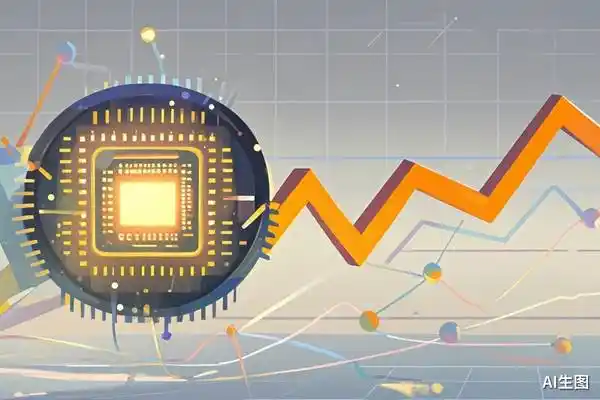
The analog chip market is showing signs of recovery, as evidenced by strong Q2 2026 earnings and guidance from major players like TI, STMicroelectronics, NXP, and onsemi. Revenue growth, improved order backlogs, and declining inventory levels across the supply chain indicate the start of a new upward cycle. Industrial markets led the recovery, followed by data centers and a notable pickup in automotive demand in Q2. The rebound is broad-based but uneven, with specific product areas like automotive analog, power management, and AI server power chains seeing tighter supply and pricing power, while consumer-focused and general-purpose segments remain competitive. A critical turning point is the normalization of inventory. After a prolonged multi-level destocking phase from OEMs to end customers, channel inventories have returned to healthy levels (e.g., NXP at 11 weeks). This has triggered restocking, particularly in automotive, and is now being supplemented by genuine end-demand from new system designs. AI is emerging as a key growth driver, creating new demand in two areas: 1) high-power data center infrastructure (power conversion, thermal management, signal integrity for GPUs, and optical modules) and 2) "Physical AI" in automotive, robotics, and industrial equipment (sensors, motor drivers, power management). This provides a growth vector less dependent on traditional consumer cycles. While some price increase notices have been issued, the revenue impact in Q3 is expected to be minimal, with volume driving growth. The recovery's sustainability will depend on the strength of underlying end-demand now taking over from inventory replenishment.

marsbit4 dk önce

Analog Chips Are Picking Up

marsbit4 dk önce

From 'Speculative Asset' to 'Next-Generation Financial Backbone': Is Crypto Evolving into a New TradFi World?

From "Speculative Asset" to "Next-Generation Financial Infrastructure": Is Crypto Evolving a New TradFi World? The crypto industry has long been dominated by the question: "What's the next asset to rise?" However, since 2026, a confluence of developments across different sectors suggests a fundamental shift. Crypto's capabilities in issuance, custody, trading, payment, and settlement are evolving beyond serving crypto assets themselves and are beginning to serve broader financial activities and the machine economy. A new layer of infrastructure is emerging beneath the speculative market. This transformation is driven by several key components reaching maturity and beginning to interconnect: 1. **Stablecoins as Programmable Money Interfaces:** Evolving from a tool for crypto trading, stablecoins are becoming a programmable form of money that applications can directly integrate and call like an API, facilitating global, 24/7 payments and settlements. 2. **RWA (Real-World Assets) as Programmable Objects:** Tokenization is moving beyond simple asset mapping. Initiatives like DTCC and Nasdaq are working to connect tokenized securities with real-world ownership, custody, and legal rights, allowing blockchain to host parts of traditional asset lifecycles. 3. **Prediction Markets for Price Discovery:** These markets aggregate dispersed information into real-time probability prices for future events, providing a price discovery layer that traditional finance often lacks. 4. **AI Agents as Economic Actors:** AI agents capable of autonomous decision-making are becoming new economic participants. Their need for frequent, low-value, automated payments is a natural fit for stablecoins and low-cost blockchains. Together, these elements form the early layers of a potential next-generation financial infrastructure: asset issuance/mapping, 24/7 payment/settlement, continuous trading/price discovery, and identity/permission management. The regulatory conversation is also shifting from whether crypto should exist to defining rules for its operation. However, the journey from a functional system to a reliable, widely-trusted infrastructure is long. Critical challenges remain, including establishing legal finality for on-chain actions, defining liability boundaries for AI agents, overcoming liquidity fragmentation, ensuring privacy for institutional use, and building the complex credit and risk management frameworks inherent to traditional finance. In summary, while speculation remains, crypto is undeniably building foundational capabilities beneath it. The most significant trend of 2026 is not a single breakout sector, but the convergence of previously independent pieces—programmable assets and money, continuous markets, autonomous software agents, and clearer regulation—into a more coherent system for real-world financial activity.

marsbit9 dk önce

From 'Speculative Asset' to 'Next-Generation Financial Backbone': Is Crypto Evolving into a New TradFi World?

marsbit9 dk önce

NEAR Co-Founder Proposes Creation of Protocol Sovereign Fund

NEAR co-founder Ilya Polosukhin has proposed creating a sovereign protocol fund to support ecosystem development through targeted funding. The fund aims to improve the project's sustainability, moving away from the current model where most L1 blockchains, including NEAR, pay for network security via token inflation, diluting non-staking holders. Inspired by sovereign wealth funds in countries like Singapore and Norway, the NEAR fund would use protocol revenue and treasury assets to generate yield, covering security costs and other public goods, ultimately aiming to lower inflation and potentially transition to a fixed token supply model. The initial phase would involve allocating around 30 million NEAR (approximately $50 million) to the fund. It would use protocol revenue to buy back NEAR and invest in yield-generating protocols. Profits would fund ecosystem initiatives like validator support and MPC provider payments. Unlike traditional sovereign funds holding fiat assets, this fund would primarily hold NEAR tokens, introducing additional risk that Polosukhin believes can be mitigated through diversified yield strategies. Token holders could participate in the fund's returns via the existing House of Stake delegation mechanism. The launch is planned to be gradual, with checkpoints to verify the model's effectiveness before allocating more capital. Polosukhin has opened the proposal for a two-week community discussion, emphasizing that final parameters will be determined by stakeholders, including validators and token holders.

cryptonews.ru12 dk önce

NEAR Co-Founder Proposes Creation of Protocol Sovereign Fund

cryptonews.ru12 dk önce

İşlemler

Spot

Popüler Makaleler

COTI Nasıl Satın Alınır

HTX.com’a hoş geldiniz! COTI (COTI) satın alma işlemlerini basit ve kullanışlı bir hâle getirdik. Adım adım açıkladığımız rehberimizi takip ederek kripto yolculuğunuza başlayın. 1. Adım: HTX Hesabınızı OluşturunHTX'te ücretsiz bir hesap açmak için e-posta adresinizi veya telefon numaranızı kullanın. Sorunsuzca kaydolun ve tüm özelliklerin kilidini açın. Hesabımı Aç2. Adım: Kripto Satın Al Bölümüne Gidin ve Ödeme Yönteminizi SeçinKredi/Banka Kartı: Visa veya Mastercard'ınızı kullanarak anında COTI (COTI) satın alın.Bakiye: Sorunsuz bir şekilde işlem yapmak için HTX hesap bakiyenizdeki fonları kullanın.Üçüncü Taraflar: Kullanımı kolaylaştırmak için Google Pay ve Apple Pay gibi popüler ödeme yöntemlerini ekledik.P2P: HTX'teki diğer kullanıcılarla doğrudan işlem yapın.Borsa Dışı (OTC): Yatırımcılar için kişiye özel hizmetler ve rekabetçi döviz kurları sunuyoruz.3. Adım: COTI (COTI) Varlıklarınızı SaklayınCOTI (COTI) satın aldıktan sonra HTX hesabınızda saklayın. Alternatif olarak, blok zinciri transferi yoluyla başka bir yere gönderebilir veya diğer kripto para birimlerini takas etmek için kullanabilirsiniz.4. Adım: COTI (COTI) Varlıklarınızla İşlem YapınHTX'in spot piyasasında COTI (COTI) ile kolayca işlemler yapın.Hesabınıza erişin, işlem çiftinizi seçin, işlemlerinizi gerçekleştirin ve gerçek zamanlı olarak izleyin. Hem yeni başlayanlar hem de deneyimli yatırımcılar için kullanıcı dostu bir deneyim sunuyoruz.

92 Toplam GörüntülenmeYayınlanma 2024.12.13Güncellenme 2025.03.21

COTI Nasıl Satın Alınır

Tartışmalar

HTX Topluluğuna hoş geldiniz. Burada, en son platform gelişmeleri hakkında bilgi sahibi olabilir ve profesyonel piyasa görüşlerine erişebilirsiniz. Kullanıcıların COTI (COTI) fiyatı hakkındaki görüşleri aşağıda sunulmaktadır.

活动图片