a16z:如何改善 Web3 治理?

Unitimes2022-07-12 tarihinde yayınlandı2022-07-12 tarihinde güncellendi

Özet

Web3 为社区治理创建了一个全新“实验室”,公共激励和私人激励相互交织,项目也具有开源和营利性,公共产品与私人项目得以共存。

Web3 为社区治理创建了一个全新“实验室”,公共激励和私人激励相互交织,项目也具有开源和营利性,公共产品与私人项目得以共存。在 Web3 中,治理是连续的,参与是完全开放的,执行是迅速的。

Web3 治理由不同类别的参与者定义,因为客户是所有者。结果,一种新的数字参与形式浮出水面,这种形式具有广泛的实验性和快速的迭代周期。

然而,迄今为止,Web3 治理的参与度并不高,而且利益集团也很容易捕获、操纵群体决策。为了解决这个问题,我们或许可以从系统治理历史中找到一些经验教训。

虽然 Web3 是个新事物,但治理却不是。过去几千年来,社会和组织所面临的治理挑战几乎相同——萌芽于雅典教会,公民聚集在一起做出集体政策决定,崛起于荷兰东印度公司,好的治理可以分散风险并大规模聚集资本,通过在股东和债权人之间增加一层法律隔离,推动了一个组织设计和私有化治理的全新时代。
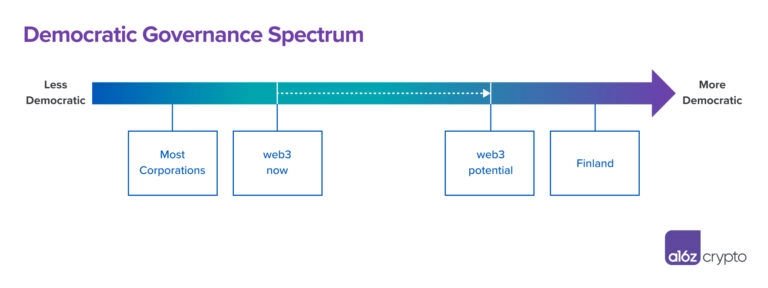
在本文中,a16z 利用自身在政治学和政治经济学研究方面的专业知识,以及长期在 DAO 中观察和积极参与 Web3 治理的经验来探索去中心化治理的关键挑战,并为构建未来成熟的去中心化治理体系提供一条前进的道路。

代议制如何改善 Web3 去中心化治理

一些人认为,代议制 Web3 治理不如直接治理好,但这是一个误区:通过减少对社区成员的要求,代议制 Web3 治理实际上可以赋予他们更多的权力,引导和集中他们的活动以鼓励参与并防止利益集团夺取系统。

同样的逻辑也适用于公司治理,苹果公司并不会要求股东对下一代 iPhone 的技术框架进行投票。亚马逊也不会公开征求股东对其履行每一步发展计划给予反馈意见。取而代之的是,一小组股东会定期做出决定,例如选举一个董事会,该董事会的任务是代表股东发挥监督作用。

当前 Web3 治理的痛点可能是系统复杂性,我们期望在 Web3 治理中看到更复杂和更广泛的表现形式继续发展,从第一性原理角度来看,如果 Web3 社区需要实施生态系统中参与者之间形成的系统设计和社会契约,就需要使用特定工具。

虽然 Web3 治理不同于传统治理原型,但也可以从传统框架中吸取精华以构建更具包容性和效率的组织,比如:

1、明确定义内部单位的角色;

2、要求代表具有某些专业知识来做出有关决策;

3、将战略资本分配决策留给所有成员,作为对组织本身的检查。
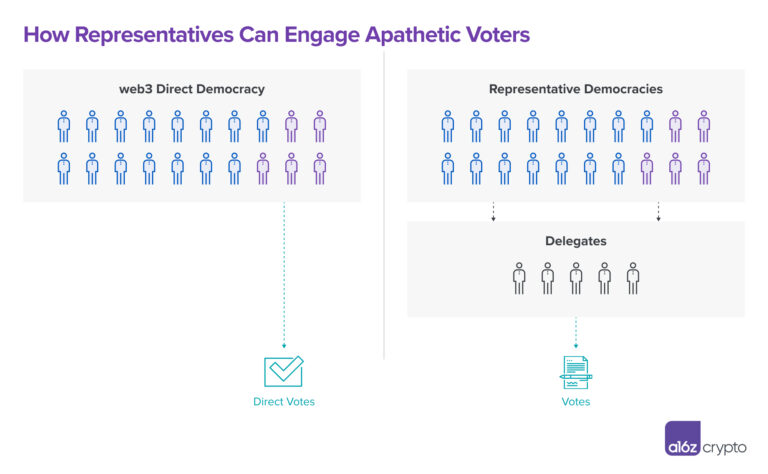
反过来,这些变化也可以促进 Web3 治理的可扩展性,以具有代表性的方式有效组织治理,并且不会牺牲组织的决定性、敏捷性或包容性。

启动问责制飞轮

代议制 Web3 治理只有在解决委托代理问题时才能发挥作用:代表必须想赢得连任,社区成员必须掌握必要的信息,以确定他们的代表是否值得连任。同样,在公司治理中,董事会成员必须为公司的长期利益行事,否则可能会面临被股东罢免的风险,即使这种罢免并不常见。

Web3 让我们以不同的方式思考这个问题。Web3 里没有董事会,而且许多参与者是匿名的,参与和脱离组织的门槛很低。一般来说,社区成员越知情、越细心,代表们做好工作的动力就越强。而当代表做得更好,利益相关者就会更相信组织制度,也更愿意投入时间和精力去关注组织,这又进一步增强了代表做好工作的动力。如果可以良性循环,系统本身可以实现自我强化,也就是说:良好的治理会产生更多的良好治理——我们称之为问责飞轮。

Web3 有一个强大的工具来促进问责制,即 Token (代币),Token 可以用作向生态系统内的利益相关者分配经济、社会和政治权利的全新工具,就像初创企业激励拥有所有权的员工一样,Token 可以用来激励贡献者和用户继续在网络上创造价值。
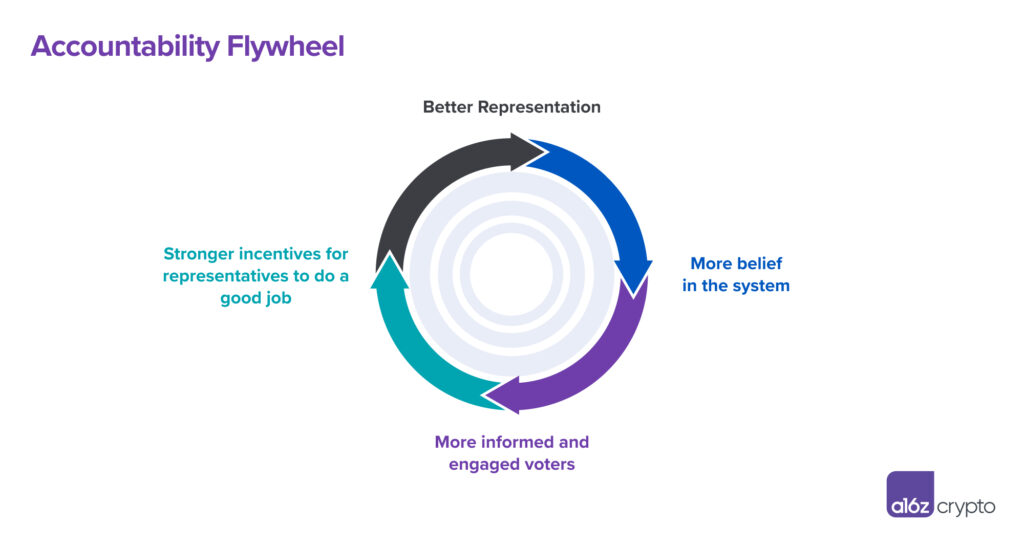
但是仅仅依靠 Token 还不足以激发问责制飞轮,我们还可以通过以下两点提供帮助:

1、通过适当地补偿贡献者和用户、确定他们的角色,并可能保证他们在一定的任期内来鼓励有能力和敬业的代表。

2、Token 可以发挥关键作用,通过设计一个 Token 释放时间表来维持长期激励,类似于给公司董事会成员提供基于绩效的股票期权。

如何表达 Web3 治理话语权?

那些代表 Token 持有者的人,通常是 Web3 系统的一个重要组成部分,但他们不是唯一的代表。正如 Vitalik Buterin 在 2016 年撰写关于分权治理的文章中所指出的那样,除了大型 Token 持有人之外,社区里还有许多其他重要的声音,而纯粹的 Token 投票可能并不包含这些声音。Web3 治理设计 (一个 Token 一票) 反而成了一个难以解决的问题,因为 Token 权重通常偏向创始团队和机构投资者,而那些持有很少 Token、或是没有 Token 的利益相关者反而在积极参与协议。

另一方面,非 Token 持有者不承担其行为的经济后果,尤其是在开放的治理体系中,这就让 Token 治理变成了一把双刃剑。那么,如何解决这些问题呢?实际上,Web3 领域已经开始进行优化试验了,比如:

1、将治理 Token 直接分发给相关群组。

典型示例:任何向对协议做出有意义贡献的人员都被追溯到,然后就能对其进行空投奖励。

2、创建单独的治理职能。

典型示例:Optimism 的“公民之家”(Citizen’s House),这是一个由社区贡献者组成的投票室,每个人通过不可转让 Token 投票,公民之家将会为公共品项目拨款。

3、为特定群组保留一些激励,例如全职贡献者、活跃论坛成员或用户群。

典型示例:目前 Web3 社区还没有,但这是一个合乎逻辑的未来场景,可以将Web3系统治理不局限于 Token 投票。

4、通过其他方式向非代币持有人授予权力

典型示例:Lido 的治理提案赋予 LDO 持有人和 stETH 持有人双重治理权力,后者将对某些类型的提案拥有否决权。

Web3 治理的一个有用模型:间接责任

现阶段,几乎所有 Web3 原生组织都没有利用间接问责制,但其实他们应该这么做,而且可以尝试两种通用方法:

赋予代表(无论是任命的还是民选的)正式的监督权。

这种方法可能最接近传统公司治理模型,不够,在 Web3 中代表可能比公司董事会拥有更多的权力,并且可以要求 Token 持有者在适当的情况下进行更广泛的直接投票。

正如传统公司章程中所概述的那样,关键的监督权力是“钱包的权力”。在Web3治理中,这意味着监督社区金库的权力,并且有能力为组织内的某些职位、项目和团体提供资金或取消资金。

创建一个执行委员会,要么让持有委托 Token 最多的代表参与治理,要么允许代表雇用的全职员工,执行委员会将负责监督员工队伍并为组织制定统一的愿景。

这种模式更像是西方国家的议会模式,或者美国的“议会经理”式市政府。

需要注意的是,在设计任何治理系统时,参与者不应制造可能需要将证券法应用于基础Token以保护持有人和用户的信息不对称,尤其是社区需要确保治理设计不会导致基础Token价值过度依赖于此类代表的“管理努力”,否则 Token 就可能被美国证券交易委员会视为证券。

结语

Web3 是个新东西,但治理不是。

几个世纪以来,基于从传统治理中学到的东西,我们一直在不断优化改进,Web3 组织可以利用代表性的力量,平衡专业知识,并开发一个更好的监督和信任的机制。

更重要的是,Web3 组织不应止步于此。与传统的治理形式相比,Web3 治理可以走得更远、更快。在现实世界中,民主实验是缓慢的,比如要弄清楚一种宪法形式是否比另一种更好可能需要花费几十年甚至几个世纪的时间。但在 Web3 中,协议可以不断实验来开发和测试新的表现形式,从而推动治理周期变得更短。

Web3 治理提供了一个绝好的机会,让平台可以被更好的管理,继而能与交易对手达成更可信、更持久的承诺,释放新形式经济活动的巨大增长潜力。
İlgili Okumalar

ChangXin Technology: A Cyclical Stock Standing Atop the Cycle Peak

Changxin Technology: A Cyclical Stock at the Peak On July 27, 2026, Changxin Technology topped the A-share market with a market capitalization of 3.28 trillion yuan, surging 465% on its first trading day. The company, which lost 16.3 billion yuan in 2023, reported an estimated net profit of 50-57 billion yuan for the first half of 2026. Its dramatic reversal mirrors the volatile DRAM (Dynamic Random Access Memory) cycle. The DRAM industry is inherently cyclical, with booms and busts every 3-4 years. This is due to product standardization and a significant time lag in supply adjustment. When prices rise, manufacturers expand capacity, but new production takes 2-3 years to come online, often leading to oversupply and price crashes when demand cools. Changxin's performance perfectly tracks this cycle. It recorded deep losses in 2023-2024 during the industry downturn, turned its first annual profit in 2025, and saw profits skyrocket in Q1 2026. This surge is primarily price-driven. The AI boom has led major players like Samsung and SK Hynix to shift 70-80% of new capacity to high-margin HBM (High Bandwidth Memory), creating a severe shortage and price explosion in general-purpose DRAM markets where Changxin competes. However, a massive global capacity expansion is underway. The top three manufacturers have announced nearly $70 billion in capital expenditure for 2026. Changxin itself plans to expand from three to seven 12-inch wafer fabs. This investment will translate into significant new supply in 2-3 years. While DRAM prices are expected to remain high through 2026-2027, price growth is already slowing, and a potential downturn is forecast for around 2028 as new capacity ramps up. A key challenge for Changxin is catching up in the critical HBM segment. While it has delivered HBM3 samples, leaders are already mass-producing more advanced HBM3E. Success in HBM is crucial for gaining true cyclical resilience. In conclusion, Changxin is a commendable company that has broken foreign monopolies in DRAM. Its long-term growth narrative—driven by import substitution and AI—is valid. Yet, its current valuation of 5-6x forward P/E, typical for a cyclical stock at its peak, suggests much future growth is already priced in. AI may extend the current cycle but cannot eliminate the industry's inherent volatility. For investors, the critical question is preparedness for the inevitable downturn when the cycle turns.

marsbit1 dk önce

ChangXin Technology: A Cyclical Stock Standing Atop the Cycle Peak

marsbit1 dk önce

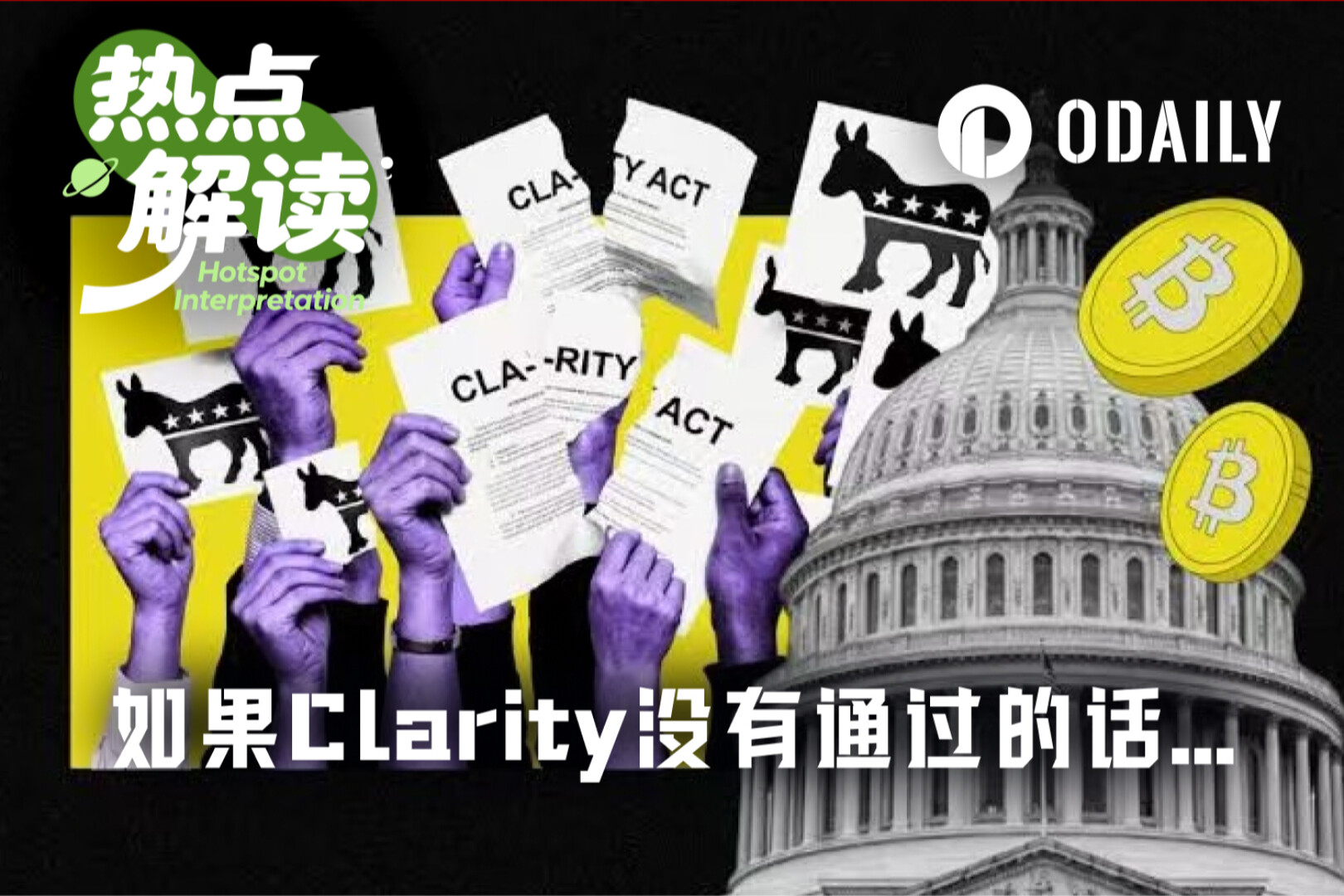
What If the CLARITY Act Ultimately Fails to Pass?

This article examines the potential consequences if the CLARITY Act, a major US crypto market structure bill, fails to pass in the Senate. Having cleared the House in July 2025 and a key committee in May 2026, the bill's passage into law this year is now considered uncertain, with prediction markets showing its probability dropping from 82% in February to 35%. The article analyzes three main areas of impact should the bill fail. First, for the crypto market, analysts believe a negative reaction is limited and partially priced in already, with Bitcoin's recent weakness attributed more to macro factors. The specific details of the failed bill would matter more than its failure alone. Second, for US stocks, Coinbase (COIN) could see short-term pressure, with analysts citing a potential drop to the $140-$160 range, though its long-term thesis is not solely tied to the bill. For Circle, failure might be neutral or even positive long-term, as a passed bill could invite more stablecoin competition. Bitcoin-treasury firms like Strategy (MSTR) are seen as more directly tied to Bitcoin's price than the legislation. Third, in Washington, the failure is framed within a broader political struggle. Democratic resistance is partly linked to concerns over former President Trump's crypto holdings, making the bill a political tool. If it fails in 2026, the industry would likely rely on existing frameworks like the GENIUS Act and agency-level rules. Missing the August window likely pushes any significant progress to 2027, a period of political reshuffling after midterm elections, making consensus harder to achieve.

Odaily星球日报1 saat önce

What If the CLARITY Act Ultimately Fails to Pass?

Odaily星球日报1 saat önce

SK Hynix Q2 Profit Soars Sixfold, Still 'Misses Expectations'; Secures Long-Term Agreements with 10 Clients, HBM4 to Accelerate Volume Ramp in Second Half

SK Hynix reported record-breaking Q2 2026 financial results, with operating profit soaring 557% year-over-year to 60.5 trillion won and revenue increasing 257% to 79.3 trillion won, driven by strong demand for AI server memory, HBM, and enterprise SSDs. The operating profit margin reached 76.3%. However, both figures fell short of analyst expectations, leading to a drop in its share price. The company attributed the earnings miss to three factors: a high sales mix of HBM, which limited upside from surging prices of general-purpose DRAM; a deceleration in memory price increases compared to Q1; and long-term supply agreements (LTAs) with major customers that lock in prices, reducing sensitivity to spot market gains. SK Hynix has signed LTAs with about 10 clients, covering roughly half of its sales. Despite the miss, the company remains optimistic about AI-driven demand. Its net profit of 93.9 trillion won was significantly boosted by a one-time gain from the partial sale of its Kioxia stake. Financially, it strengthened its cash position, ending the quarter with a net cash position of 69.4 trillion won. Looking ahead, SK Hynix plans capital expenditures at the high end of its 40-50 trillion won range for 2026 to expand capacity for HBM and advanced NAND products, including accelerating the mass production of HBM4 in the second half of the year.

marsbit1 saat önce

SK Hynix Q2 Profit Soars Sixfold, Still 'Misses Expectations'; Secures Long-Term Agreements with 10 Clients, HBM4 to Accelerate Volume Ramp in Second Half

marsbit1 saat önce

İşlemler

Spot
活动图片