In-Depth Research Report on Prediction Markets: The Liquidity Paradigm, Industry Leap, and the New Primitives Revolution

HTX Learn2025-12-04 tarihinde yayınlandı2025-12-04 tarihinde güncellendi

Özet

Prediction markets began with academic and betting-exchange experiments such as the Iowa Electronic Markets (IEM) and platforms like Betfair, then evolved into Ethereum-based on-chain experiments such as Augur, and more recently matured into today's duopoly structure dominated by, on one side, the decentralized route represented by Polymarket and, on the other, the regulated financial route represented by Kalshi, while in vertical domains like sports, crypto-assets and creator economy, new platforms such as Opinion, Limitless and PMX Trade have emerged. The innovation with real potential is shifting from “building another platform” toward the primitive-level commoditization and infrastructure construction of event contracts — encompassing perpetuals, options, indices, lending, and “smart AMMs” built around YES/NO shares; as well as the so-called “pickaxe business" such as data terminals, aggregation routing, bots, middleware, and compliance-tech. In the future, prediction markets may evolve into the “information-pricing layer” embedded in social media, news platforms, and financial terminals — with entrepreneurial and investment opportunities concentrated in key infrastructure directions like oracles and contract­ governance, liquidity and capital efficiency, distribution and interaction, as well as compliance and AI integration.

I. Historical Evolution & Industry Landscape of Prediction Markets

Prediction markets are mechanisms for pricing future events and have evolved from academic experiments and gray betting exchanges to independently recognized asset-class markets combining informational value, liquidity scale, and financial attributes in the past more than three decades. Their core structure is “price as probability" — using real money to reflect the aggregate judgment of market participants about the likelihood of a given event. A binary contract settled by 1 U.S. dollar or 0 U.S. dollar, traded between 0 and 1 U.S. dollar, directly reflects the market consensus. For example, a contract priced at 0.62 U.S. dollar implies the market estimates roughly a 62% chance the event will occur. Such markets — which aggregate the views of decentralized participants using real money — effectively create a quantifiable, verifiable, and real-time public information good. Unlike purely recreational gambling or house-structured binary options, they serve as hybrid information financial infrastructure, combining market efficiency, collective intelligence, and dynamic trading capabilities. Rather than a zero-sum gambling game, prediction markets generate “positive-sum information output”: Platforms typically collect only small fees while the core value comes from the aggregated probability signal produced by the market. That signal can be referenced by media, used by research institutions, leveraged by enterprises for risk management, or directly embedded in other financial derivatives or Web3 protocols as pricing nodes, giving it strong externalities and societal value.

The roots of modern prediction markets trace back to the Iowa Electronic Markets (IEM), launched in 1988 at the University of Iowa. This was an early experiment led by academic institutions, allowing participants to trade small-stake contracts that represented a candidate’s winning probability or vote-share, with a clear aim to enhance the accuracy of prediction. Numerous studies show that between 1988 and 2004, the Iowa Electronic Markets (IEM) outperformed most conventional polls in predicting U.S. presidential elections, with its probability signals often showing real trends earlier.
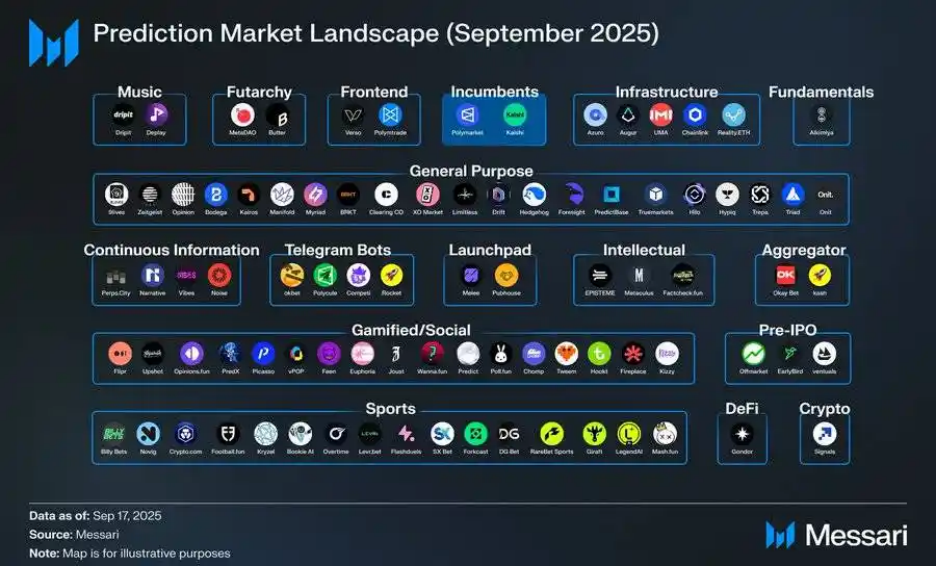
The real industrial-scale leap for prediction markets was driven by a new generation of platforms emerging under the maturity of Layer-2, stablecoins, and cross-chain infrastructure after 2020, epitomized by the “duopoly structure” formed by Polymarket and Kalshi in 2024–2025. Polymarket marks the full maturity of the decentralized route: Built on Polygon and multi-chain expansions, it adopts an order-book (CLOB) model, enables low-friction deposits, gas-free trades, and uses UMA-style optimistic oracles to deliver a user experience that is both seamless and censorship-resistant. During the 2024 U.S. Presidential Election, its monthly trading volume reportedly reached as high as $2.6 billion, and yearly aggregate trades surpassed tens of billions of dollars. Its viral impact across media and social-network channels created a flywheel featuring “opinion → position → dissemination”, making Polymarket the go-to platform for Web3 users entering prediction markets. Even after regulatory pressure from the CFTC, Polymarket repositioned itself for the U.S. market by acquiring the licensed exchange QCEX, further underscoring that compliance has become a core direction for the sector. In parallel, Kalshi represents a completely different path: a compliance-first approach, regulatory certainty, and deep penetration into mainstream finance channels. In 2021, Kalshi was designated as a Designated Contract Market (DCM) by the Commodity Futures Trading Commission (CFTC), and subsequently secured a Derivatives Clearing Organization (DCO) license, thus becoming an event-contract exchange fully compliant under U.S. federal regulation. Its centralized matching structure resembles that of traditional exchanges: It supports USD and USDC deposits and offers event contracts directly on mainstream investor interfaces through partnerships with brokers like Robinhood. After the 2025 surge in sports and macroeconomic event contracts, Kalshi’s weekly trading volume reportedly climbed to $800-900 million, with market share reaching 55–60%, cementing its role as the de facto domestic infrastructure for U.S. prediction markets. Unlike Polymarket's on-chain openness, Kalshi's strength lies in compliance certainty, which attracts institutional participation, builds brand trust, and enables distribution via traditional channels. However, Polymarket and Kalshi together form an orthogonal dual core of "on-chain composability‘’ and ”compliant usability”.

Beyond the duopoly, a wave of new platforms and vertical-market experiments has rapidly emerged, further expanding the market boundaries. For instance, leveraging BSC-ecosystem traffic and airdrop incentives, Opinion reportedly reached hundreds of millions of dollars in volume within its first week of launch; Limitless (on Base chain) uses short-cycle price-prediction markets to meet the demand of crypto traders for volatility exposure; in the Solana ecosystem, PMX Trade tokenizes Yes/No contracts, exploring a deep integration between prediction markets and DEX liquidity. Vertical-specific platforms with sports-oriented networks like SX Network, BetDEX and Frontrunner, have become major niches thanks to high frequency and high user stickiness; and “creator-economy prediction markets” represetned by Kash, Melee and XO Market are turning influencers’ opinions directly into tradeable assets. Meanwhile, TG bots and aggregation tools represented by Flipr, Polycule, and okbet are emerging as another fast-growing frontier. They compress complex prediction-market interactions into chat interfaces and provide cross-platform price tracking, arbitrage, and fund-flow monitoring, forming a “1inch + Meme-Bot”–style new ecosystem for prediction.

Overall, over thirty years of evolution, prediction markets have completed three major leaps: from academic experiments to commercial betting exchanges, and from on-chain experiments to a dual-core structure combining regulatory compliance and scale, and ultimately to a richly diversified ecosystem across vertical scenarios such as sports, crypto markets, creator economy. The window of opportunity for general-purpose platforms is narrowing, while the real incremental growth is more likely to come from deep verticalization, data & tooling layers around the ecosystem, and the extent to which prediction-market signals integrate with other financial systems. In short, prediction markets are rapidly moving from a “gray toy market” toward becoming “key infrastructure for global information and finance systems".


II. Structural Challenges Facing Prediction Markets

After more than three decades of iterations, prediction markets have evolved from experimental products into financial-grade infrastructure gradually adopted by global users and institutions. Yet their development to date still confronts three structural bottlenecks that cannot be bypassed: regulation, liquidity, and oracle governance. These three factors are not independent; instead, they interact with, and constrain each other. Together they determine whether prediction markets can evolve from “gray innovation” into a “compliant, transparent global information and derivatives system". Regulatory uncertainty limits institutional capital entry; insufficient liquidity undermines the validity of probability signals; and if oracle governance cannot provide reliable and credible resolution mechanisms, the entire system risks descending into manipulation and disputed outcomes, failing to become a trusted external source of information.

Regulation represents the foremost bottleneck — particularly pronounced in the United States. Prediction markets may be classified variously as commodity derivatives, gambling, or security-style investment contracts. Each classification triggers a distinct regulatory pathway. If deemed commodities/derivatives, such platforms fall under the supervision of the CFTC and must obtain DCM (Designated Contract Market) and DCO (Derivatives Clearing Organization) licenses — a high-bar, costly process, but passing this regulatory hurdle affords them legitimate federal status, as exemplified by Kalshi. If treated as gambling, platforms must secure licenses in each of the 50 states, raising compliance costs exponentially and effectively blocking the possibility of becoming a nationwide platform. If regarded as securities, they trigger stringent regulation by the securities regulator, posing severe legal risks for DeFi prediction protocols that integrate token designs or yield promises. The fragmented and overlapping regulatory framework in the U.S. leaves prediction markets trapped in a recurring gray area of debate. For example, the litigation between Kalshi and the the New York State Gaming Commission hinges on whether CFTC has exclusive regulatory authority over event contracts. The ruling decides whether Kalshi can operate smoothly across U.S. and the regulation path for U.S. prediction markets over the next decade. Moreover, the enforcement against Polymarket and the classification of event-contracts on Crypto.com’s sports markets by CFTC demonstrate that regardless of whether a platform’s front end appears decentralized, as long as it offers access to U.S. users and facilitates trades, it will be considered unregistered derivatives or binary-options activity, and be subject to legal liability under U.S. regulations.

Outside the U.S., most jurisdictions continue to apply a “binary framework” where prediction markets are either regulated under gambling laws or under financial derivatives legislation. But very few have enacted laws specifically tailored to prediction markets. In countries such as the U.K. and France, online event betting may be permitted under gambling regulation, but regulatory tools such as geo-blocking, payment restrictions and ISP filtering make it difficult for unauthorized platforms to reach mainstream users. For entrepreneurs, claiming “technical neutrality” no longer suffices to evade regulation. Besides, offshore companies, DAOs, or decentralized front ends cannot guarantee immunity from regulatory oversight either. Consequently, the long-term survival strategies are limited: either (1) secure licensing like Kalshi; or (2) remain entirely offshore, fully open-source, decentralized and accept the tradeoff of being excluded from mainstream markets; or (3) pivot to providing techinical services such as KYC, risk control, prediction-data APIs to licensed institutions. The prevailing regulatory uncertainty constrains institutional capital inflows, limits connections with traditional finance, and impedes the true scaling of prediction markets globally.


III. Value Innovation and Future Opportunities of Prediction Markets

After multiple rounds of reshuffling under the constraints of regulation, liquidity, and oracle governance, the truly valuable innovation in prediction markets is now shifting from “competition among individual platforms” toward the “primitive layer” and the “infrastructure layer". In simple terms, over the past decade, the industry focused on “building new prediction-market websites”. However, over the next decade, incremental value is likely to come from “abstracting event contracts into informational derivatives, and embedding them into the broader DeFi and financial system", turning prediction markets from a standalone application into modular, composable “DeFi-Lego blocks". The binary event contracts are only the beginning. Once such contracts become standardized, composable, and collateralizable asset units, an entire layer of derivatives, including perpetuals, options, indices, structured products, lending and leverage, can naturally emerge around the prediciton markets. The “event-markets” explored by D8X, Aura and even parts of dYdX v4 essentially project “whether an event occurs” into a 0–1 price space, and allow high-leverage trading, enabling traders to not only bet on event direction, but also trade volatility and sentiment. Gondor-style protocols go further. By allowing users to collateralize YES/NO shares from Polymarket to borrow stablecoins, they transform previously static long-term event positions into reusable collateral assets; the protocols then dynamically adjust LTV and liquidation logic based on market probabilities, thereby financializing “opinions” into reusable capital instruments. On top of that, index or structured-product mechanisms like PolyIndex bundle a basket of events into an ERC-20 index token. Users can thereby obtain a comprehensive exposure to a themed set of events with one click such as a “U.S. Macro-Policy Uncertainty Index” or a “Basket of AI Regulation and Subsidy Implementation Events". In an asset-management context, prediction markets thus evolve from isolated individual markets into a new asset class that can be incorporated into portfolios.

From a medium-to-long-term value perspective, the most promising “pickaxe-style opportunities” concentrate across four layers: 1) Truth & Rule Layer — Oracles and Arbitration Protocols. How to avoid a recurrence of controversies like those of UMA in terms of economic incentives and governance structure, and how to provide standardized, modular tools that allow common users to create “event markets with clear rules and arbitrable outcomes”, will directly determine the extent to which prediction markets earn acceptance and trust from institutions and public-sector entities. 2) Liquidity & Capital-Efficiency Layer: Custom AMMs for prediction markets, unified liquidity pools, collateralized lending and yield-aggregation protocols could turn dormant event positions into reusable collateral assets, bringing a new asset into DeFi and offering platforms stronger economic moats. 3) Distribution & Interaction Layer: Future paths such as social-embedded SDKs/APIs, media-plug-in components, professional terminals and strategy tools determine the “on-ramp form” for prediction markets, and decide who could capture continuous fees and technology-service revenues at the intersection of information flow and trading flow. 4) Compliance Tech & Security Layer: Fine-grained geo-fencing, KYC/AML, risk-monitoring and multi-jurisdiction automated reporting could enable licensed institutions to safely integrate prediction-market data within regulatory boundaries, so that event prices can genuinely feed into asset management, investment research and risk-management workflows. Finally, the rise of AI may provide a new feedback loop binding prediction markets with capital markets. On one hand, AI models could act as “super traders", using superior information processing and pattern recognition to trade on prediction markets, thereby improving market pricing efficiency. On the other hand, prediction markets can serve as a “real-world scoring ground” for AI capabilities. By evaluating AI performance in terms of actual P&L and long-term calibration accuracy, they can provide external, hard-constraint metrics for “AI research reports, AI advisory services and AI strategies". For investors, projects that understand the design of derivatives, can safely operate within regulatory boundaries, and successfully bridge AI with traditional finance are likely to become key infrastructure assets for the next cycle of the “informational derivatives” sector.


IV. Conclusion

From betting pools of pope elections in the 16th century, to president-predicting bets on the Wall Street in the 20th century, to early academic experiments like Iowa Electronic Markets (IEM), betting exchanges like Betfair, and now to modern platforms such as Polymarket and Kalshi — the evolution of prediction markets is, in essence, a human attempt to approximate “true probabilities” more closely via institutions and incentives. Today, as the trustworthiness of mainstream media declines and social-platform signals become more noisy, prediction markets concretize the “cost of wrong remarks”: They compress dispersed global information and judgments into a quantifiable, verifiable probability curve. The curve is not a perfect “truth machine”, but it provides a public signal that is more verifiable than slogans or emotions. Looking ahead, the ultimate outcome of prediction markets may not be the emergence of a single platform larger than Polymarket, but rather their evolution into an “information and opinion interaction layer” embedded across social media, news websites, financial terminals, games, and creator tools — as ubiquitous as the “like” button — where every opinion can naturally correspond to a tradable probability. In a world where both humans and AI participate, prediction markets could continuously produce incentivized, constrained “collective forecasts”, feeding back into decision-making and governance. To reach that stage, the sector must first cross three thresholds: regulation, liquidity, and oracle governance. It is those thresholds that serve the stage for next-generation infrastructure and emerging primitives. For entrepreneurs and investors, the prediction market is by no means a “completed market". On the contrary, it has just finished its first phase evolving from a concept to an early industrial prototype. Whether it becomes a “Web3-level information infrastructure” depends on the next 5–10 years of continued innovation and institutional adaptation in rules, liquidity designs, and oracle mechanisms. In this multibillion-dollar information war, winners will often not be those who shout the loudest, but those who quietly build the “pickaxes” and pave the “roads” most solidly.


Trend Kriptolar

İlgili Okumalar

Apple Sues OpenAI Sparking Feud, Musk Slams Altman for Fraud, Altman Retorts with 'Space Data Center' Boast

Apple Sues OpenAI as Musk-Altman Feud Escalates The public feud between Elon Musk and OpenAI CEO Sam Altman intensified, coinciding with their respective AI companies launching flagship models in the same week, highlighting fierce competition. On July 11, Musk posted on X, accusing Altman of taking "fraud to the next level" regarding OpenAI's commercial practices. Altman fired back, sarcastically suggesting Musk was the one selling "short-term space datacenter" concepts to public market investors. Musk countered with allegations that Altman "stole an open-source AI charity" and, amid Apple's recent lawsuit, "stole all of Apple's phone tech." He mockingly referenced Altman needing a "parole officer's" approval to travel. This exchange occurred against the backdrop of a significant legal development: Apple filed a lawsuit against OpenAI in a California federal court, alleging the AI company deliberately solicited Apple employees to leak confidential information on unreleased products to aid its own hardware plans. Apple demands OpenAI cease this activity, destroy proprietary materials, and redesign upcoming products. OpenAI responded, stating it has no interest in other companies' trade secrets and remains focused on innovation. This lawsuit could profoundly impact their two-year partnership where OpenAI provides key tech for Apple Intelligence and Siri. The rivalry extended to product releases. OpenAI launched GPT-5.6, while Musk's SpaceXAI unveiled Grok 4.5. Both are positioned as AI agents capable of multi-step tasks. GPT-5.6 is noted for strengths in broad reasoning, business workflows, and cybersecurity. Grok 4.5 is highlighted for higher efficiency in autonomous programming and developer workflows, with lower usage costs than GPT-5.6, though OpenAI's model reportedly still leads in areas like abstract reasoning. The differing strengths offer distinct choices for enterprises and developers based on their specific needs.

marsbit5 saat önce

Apple Sues OpenAI Sparking Feud, Musk Slams Altman for Fraud, Altman Retorts with 'Space Data Center' Boast

marsbit5 saat önce

İşlemler

Spot

Popüler Makaleler

ETH 2.0 Nedir

ETH 2.0: Ethereum için Yeni Bir Dönem Giriş ETH 2.0, Ethereum 2.0 olarak da bilinir, Ethereum blok zincirinde önemli bir yükseltmeyi işaret eder. Bu geçiş yalnızca bir yüz değiştirme değil; ağın ölçeklenebilirliğini, güvenliğini ve sürdürülebilirliğini temelinden geliştirmeyi hedeflemektedir. Enerji yoğun Proof of Work (PoW) konsensüs mekanizmasından daha verimli olan Proof of Stake (PoS) mekanizmasına geçişle birlikte, ETH 2.0 blok zinciri ekosistemine dönüştürücü bir yaklaşım vaat etmektedir. ETH 2.0 Nedir? ETH 2.0, Ethereum'un yeteneklerini ve performansını optimize etmeye odaklanmış özel, birbirine bağlı güncellemelerin bir derlemesidir. Yenileme, mevcut Ethereum mekanizmasının karşılaştığı kritik zorlukları, özellikle işlem hızı ve ağ tıkanıklığı ile ilgili sorunları ele almak üzere tasarlanmıştır. ETH 2.0'ın Amaçları ETH 2.0'ın ana amaçları, üç temel unsuru geliştirmeye odaklanmaktadır: Ölçeklenebilirlik: Ağın saniye başına işleyebileceği işlem sayısını önemli ölçüde artırmayı hedefleyen ETH 2.0, mevcut yaklaşık 15 işlem/saniye sınırlamasını aşmayı ve potansiyel olarak binlerce işleme ulaşmayı planlamaktadır. Güvenlik: Geliştirilmiş güvenlik önlemleri, özellikle siber saldırılara karşı daha iyi direnç sağlama ve Ethereum'un merkeziyetsiz görünümünü koruma açısından ETH 2.0 için hayati öneme sahiptir. Sürdürülebilirlik: Yeni PoS mekanizması, sadece verimliliği artırmakla kalmayıp aynı zamanda enerji tüketimini de önemli ölçüde azaltma hedefiyle tasarlanmış olup, Ethereum'un operasyonel çerçevesini çevresel kaygılarla uyumlu hale getirmektedir. ETH 2.0'ın Yaratıcısı Kimdir? ETH 2.0'ın yaratılması Ethereum Vakfı'na atfedilebilir. Ethereum'un gelişimini destekleme konusunda kritik bir rol oynayan bu kar amacı gütmeyen kuruluş, dikkat çekici kurucu ortağı Vitalik Buterin tarafından yönetilmektedir. Daha ölçeklenebilir ve sürdürülebilir bir Ethereum vizyonu, bu yükseltmenin arkasındaki itici güç olmuştur ve protokolü geliştirmek için kendini adamış küresel bir geliştici ve meraklı topluluğunun katkılarını içermektedir. ETH 2.0'ın Yatırımcıları Kimlerdir? ETH 2.0 yatırımcıları ile ilgili detaylar kamuoyuna açıklanmamış olsa da, Ethereum Vakfı'nın blok zinciri ve teknoloji alanında çeşitli kuruluşlar ve bireyler tarafından desteklendiği bilinmektedir. Bu ortaklar arasında merkeziyetsiz teknolojilerin ve blok zinciri altyapısının geliştirilmesine karşılıklı ilgi duyan girişim sermayesi şirketleri, teknoloji firmaları ve hayır kurumları yer almaktadır. ETH 2.0 Nasıl Çalışır? ETH 2.0, onu öncüsünden ayıran bir dizi önemli özelliği tanıtmasıyla dikkat çekmektedir. Proof of Stake (PoS) PoS konsensüs mekanizmasına geçiş, ETH 2.0'ın en belirgin değişikliklerinden biridir. İşlem doğrulama için enerji yoğun madenciliğe dayanmak yerine, PoS kullanıcıların ağa yatırdıkları ETH miktarına göre işlemleri doğrulayıp yeni bloklar oluşturmalarına olanak tanır. Bu, enerji verimliliğinin artırılmasına yol açarak tüketimi yaklaşık %99,95 oranında azaltmakta ve Ethereum 2.0'ı önemli ölçüde daha çevre dostu bir alternatif haline getirmektedir. Shard Zincirleri Shard zincirleri, ETH 2.0'ın diğer bir kritik yeniliğidir. Bu daha küçük zincirler, ana Ethereum zinciri ile paralel olarak çalışarak birden fazla işlemin aynı anda işlenmesine olanak tanır. Bu yaklaşım, ağın genel kapasitesini artırarak Ethereum'u rahatsız eden ölçeklenebilirlik sorunlarını ele alır. Beacon Zinciri ETH 2.0'ın temelinde, ağı koordine eden ve PoS protokolünü yöneten Beacon Zinciri yer almaktadır. Bu, bir tür organizatör olarak işlev görür: doğrulayıcıları denetler, shard'ların ağa bağlı kalmasını sağlar ve blok zinciri ekosisteminin genel sağlığını izler. ETH 2.0 Zaman Çizelgesi ETH 2.0'ın yolculuğu, bu önemli yükseltmenin evrimini gösteren birkaç önemli dönüm noktası ile tanımlanmıştır: Aralık 2020: Beacon Zinciri'nin başlatılması, PoS'un tanıtımını işaret etmiş ve ETH 2.0’a geçiş için sahneyi hazırlamıştır. Eylül 2022: "The Merge" tamamlanması, Ethereum ağının başarılı bir şekilde PoW'den PoS çerçevesine geçiş yaptığı kritik bir anı temsil etmekte ve Ethereum için yeni bir dönemi müjdelemektedir. 2023: Shard zincirlerinin beklenen dağıtımı, Ethereum ağının ölçeklenebilirliğini daha da artırmayı hedeflemekte ve ETH 2.0'ı merkeziyetsiz uygulamalar ve hizmetler için sağlam bir platform haline getirmeyi pekiştirmektedir. Ana Özellikler ve Faydalar Geliştirilmiş Ölçeklenebilirlik ETH 2.0'ın en önemli avantajlarından biri, geliştirilmiş ölçeklenebilirliğidir. PoS ve shard zincirlerinin kombinasyonu, ağın kapasitesini artırarak, eski sistemle kıyaslandığında çok daha fazla işlem hacmi karşılayabilmesini sağlamaktadır. Enerji Verimliliği PoS'un uygulanması, blok zinciri teknolojisinde enerji verimliliği yönünde büyük bir adım teşkil etmektedir. Enerji tüketimini ciddi şekilde azaltarak, ETH 2.0 yalnızca işletme maliyetlerini düşürmekle kalmaz, aynı zamanda küresel sürdürülebilirlik hedefleriyle daha yakın bir uyum sağlar. Geliştirilmiş Güvenlik ETH 2.0'ın güncellenmiş mekanizmaları, ağ genelinde güvenliğin artırılmasına katkıda bulunmaktadır. PoS'un uygulanması ve shard zincirleri ile Beacon Zinciri aracılığıyla geliştirilen yenilikçi kontrol önlemleri, potansiyel tehditlere karşı daha yüksek bir koruma sağlar. Kullanıcılar için Düşük Maliyetler Ölçeklenebilirlik geliştikçe, işlem maliyetleri üzerindeki etkiler de belirgin hale gelecektir. Artan kapasite ve azalan tıkanıklığın, kullanıcılar için düşük ücretler anlamına gelmesi beklenmekte ve Ethereum'u günlük işlemler için daha erişilebilir hale getirmektedir. Sonuç ETH 2.0, Ethereum blok zinciri ekosisteminde önemli bir evrimi işaret etmektedir. Ölçeklenebilirlik, enerji tüketimi, işlem verimliliği ve genel güvenlik gibi temel sorunları ele alırken, bu güncellemenin önemi abartılamaz. Proof of Stake'e geçiş, shard zincirlerinin tanıtımı ve Beacon Zinciri'nin altyapı çalışmaları, Ethereum'un merkeziyetsiz piyasalarının artan taleplerini karşılayabileceği bir geleceği göstermektedir. Yenilik ve ilerleme ile şekillenen bir sektörde, ETH 2.0, blok zinciri teknolojisinin daha sürdürülebilir ve verimli bir dijital ekonomi için yol açmadaki yeteneklerinin bir kanıtıdır.

216 Toplam GörüntülenmeYayınlanma 2024.04.04Güncellenme 2024.12.03

ETH 2.0 Nedir

ETH 3.0 Nedir

ETH3.0 ve $eth 3.0: Ethereum'un Geleceği Üzerine Derinlemesine Bir İnceleme Giriş Hızla evrilen kripto para ve blok zinciri teknolojisi ortamında, ETH3.0, sıklıkla $eth 3.0 olarak adlandırılmakta, önemli bir ilgi ve spekülasyon konusu haline gelmiştir. Bu terim, netleştirilmesi gereken iki temel kavramı kapsamaktadır: Ethereum 3.0: Bu, mevcut Ethereum blok zincirinin yeteneklerini artırmayı hedefleyen olası bir gelecekteki güncellemeyi temsil eder, özellikle ölçeklenebilirlik ve performansı iyileştirmeye odaklanmaktadır. ETH3.0 Meme Token: Bu ayrı kripto para projesi, Ethereum blok zincirini kullanarak meme merkezli bir ekosistem oluşturmayı amaçlamakta ve kripto para topluluğu içinde etkileşimi artırmaktadır. ETH3.0'ün bu yönlerini anlamak, yalnızca kripto meraklıları için değil, aynı zamanda dijital alandaki daha geniş teknolojik trendleri gözlemleyenler için de hayati öneme sahiptir. ETH3.0 Nedir? Ethereum 3.0 Ethereum 3.0, zaten kurulmuş olan Ethereum ağına önerilen bir güncelleme olarak duyurulmaktadır; bu ağ, kuruluşundan bu yana birçok merkeziyetsiz uygulamanın (dApp'ler) ve akıllı sözleşmelerin belkemiği olmuştur. Tasarlanan iyileştirmeler, esasen ölçeklenebilirlik üzerine yoğunlaşmakta – shardlama ve sıfır bilgi kanıtları (zk-proofs) gibi ileri teknolojileri entegre etmektedir. Bu teknolojik yenilikler, saniyede eşi benzeri görülmemiş sayıda işlem (TPS) gerçekleştirmeyi kolaylaştırmayı amaçlamakta olup, muhtemelen milyonlara ulaşarak mevcut blok zinciri teknolojisinin karşılaştığı en büyük sınırlamalardan birine çözüm getirmektedir. İyileştirme yalnızca teknik değil, aynı zamanda stratejiktir; Ethereum ağını, merkeziyetsiz çözümlere olan artan talep ile belirginleşen bir geleceğe hazırlamak için tasarlanmıştır. ETH3.0 Meme Token Ethereum 3.0'ın aksine, ETH3.0 Meme Token, internet meme kültürünü kripto para dinamikleriyle birleştirerek daha hafif ve eğlenceli bir alanda hareket etmektedir. Bu proje, kullanıcıların Ethereum blok zincirinde meme alım, satım ve ticaret yapmalarına izin vererek, yaratıcılık ve ortak ilgi alanları aracılığıyla topluluk etkileşimini teşvik eden bir platform sunmaktadır. ETH3.0 Meme Token, blok zinciri teknolojisinin dijital kültürle nasıl kesişebileceğini göstererek, hem eğlenceli hem de finansal olarak sürdürülebilir kullanım senaryoları oluşturmayı hedeflemektedir. ETH3.0'un Yaratıcısı Kimdir? Ethereum 3.0 Ethereum 3.0'a yönelik girişim, esas olarak Ethereum topluluğundaki bir geliştirici ve araştırmacı konsorsiyumu tarafından yönlendirilmektedir ve bunlar arasında Justin Drake de bulunmaktadır. Ethereum'un evrimine yönelik içgörüleri ve katkılarıyla tanınan Drake, Ethereum'u “Beam Chain” olarak adlandırılan yeni bir konsensüs katmanına geçirme konusundaki tartışmalarda öne çıkan bir figür olmuştur. Geliştirmeye yönelik bu iş birliği yaklaşımı, Ethereum 3.0'ın tek bir yaratıcının ürünü olmadığını, aksine blok zinciri teknolojisini ilerletmeye odaklanmış kolektif bir dehanın tezahürü olduğunu göstermektedir. ETH3.0 Meme Token ETH3.0 Meme Token'ın yaratıcısına dair detaylar şu anda izlenemez durumdadır. Meme tokenların doğası, genellikle daha merkeziyetsiz ve topluluk odaklı bir yapıya yol açmakta olup, bu da spesifik bir atıf eksikliğini açıklayabilir. Bu durum, yeniliğin genellikle iş birliği yerine bireysel çabalardan ortaya çıktığı kripto topluluğunun genel felsefesiyle uyumludur. ETH3.0 Yatırımcıları Kimlerdir? Ethereum 3.0 Ethereum 3.0'a olan destek, esasen Ethereum Vakfı ve hevesli bir geliştirici ve yatırımcı topluluğu tarafından sağlanmaktadır. Bu temel birliktelik, yıllar süren ağ operasyonlarıyla inşa edilen güven ve itibarından yararlanarak önemli bir meşruiyet sağlamaktadır. Kripto para dünyasının hızla değişen ikliminde, topluluk desteği, gelişim ve benimsemeyi yönlendirmede kritik bir rol oynamakta ve Ethereum 3.0'ı gelecekteki blok zinciri ilerlemeleri için ciddi bir rakip haline getirmektedir. ETH3.0 Meme Token Mevcut kaynaklar, ETH3.0 Meme Token'ı destekleyen yatırım temelleri veya kuruluşları hakkında net bilgiler sağlamasa da, bu durum meme tokenlar için tipik olan finansman modelini göstermektedir; bu model genellikle tabandan destek ve topluluk katılımına dayanır. Bu tür projelerdeki yatırımcılar genellikle toplum odaklı yenilik potansiyeli ve kripto topluluğunda bulunan iş birliği ruhuyla motive olmuş bireylerden oluşmaktadır. ETH3.0 Nasıl Çalışır? Ethereum 3.0 Ethereum 3.0'ın ayırt edici özellikleri, önerilen shardlama ve zk-proof teknolojisinin uygulanmasında yatmaktadır. Shardlama, blok zincirini daha küçük, yönetilebilir parçalara veya “parçalara” ayırma yöntemidir; bu parçalar işlemleri ardışık değil, eşzamanlı olarak işleyebilir. Bu işlem yükünün merkeziyetsizliği, tıkanıklığı önlemeye yardımcı olur ve ağın yoğun yük altında bile yanıt verebilir olmasını sağlar. Sıfır bilgi kanıtı (zk-proof) teknolojisi, işleme katılan temel verileri ifşa etmeden işlem doğrulaması sağlamasıyla başka bir sofistike katman ekler. Bu yön, sadece gizliliği artırmakla kalmaz, aynı zamanda ağın genel verimliliğini de artırır. Bu güncellemeye, ağın yeteneklerini ve faydasını daha da artırarak sıfır bilgi Ethereum Sanal Makinesi (zkEVM) entegrasyonunun da eklenmesi gündeme gelmektedir. ETH3.0 Meme Token ETH3.0 Meme Token, meme kültürünün popülaritesinden yararlanarak kendini farklılaştırmaktadır. Kullanıcıların sadece eğlence için değil, aynı zamanda potansiyel ekonomik kazançlar için meme ticareti yapmalarına olanak tanıyacak bir pazar yeri oluşturur. Stake etme, likidite sağlama ve yönetim mekanizmaları gibi özelliklerin entegrasyonu sayesinde, proje topluluk etkileşimini ve katılımını teşvik eden bir ortam oluşturur. Eğlence ve ekonomik fırsatların eşsiz bir karışımını sunarak, ETH3.0 Meme Token, kripto tutkunlarından gündelik meme meraklılarına kadar çeşitli bir kitleyi çekmeyi hedeflemektedir. ETH3.0 Zaman Çizelgesi Ethereum 3.0 11 Kasım 2024: Justin Drake, ölçeklenebilirlik iyileştirmeleri etrafında şekillenen yaklaşan ETH 3.0 güncellemesine işaret ediyor. Bu duyuru, Ethereum'un gelecekteki mimarisi hakkında resmi tartışmaların başlangıcını simgeliyor. 12 Kasım 2024: Ethereum 3.0'a yönelik beklenen önerinin, Bangkok'taki Devcon'da açıklanması planlanıyor ve bu, daha geniş topluluk geri bildirimi ve gelişim için olası sonraki adımların zeminini hazırlıyor. ETH3.0 Meme Token 21 Mart 2024: ETH3.0 Meme Token, CoinMarketCap'ta resmi olarak listeleniyor, bu da kamusal kripto alanına adım atarak meme merkezli ekosisteminin görünürlüğünü artırıyor. Ana Noktalar Sonuç olarak, Ethereum 3.0, gelişmiş teknolojiler aracılığıyla ölçeklenebilirlik ve performansla ilgili sınırlamaların üstesinden gelmeye odaklanan Ethereum ağındaki önemli bir evrimi temsil etmektedir. Önerilen güncellemeleri, gelecekteki talepler ve kullanılabilirlik için proaktif bir yaklaşımı yansıtmaktadır. Öte yandan, ETH3.0 Meme Token, kripto para alanındaki topluluk odaklı kültürün özünü kapsamakta, meme kültürünü kullanarak kullanıcı yaratıcılığını ve katılımını teşvik eden etkileşimli platformlar oluşturmayı hedeflemektedir. ETH3.0 ve $eth 3.0'un farklı amaçlarının ve işlevlerinin anlaşılması, kripto alanındaki gelişmeleri takip eden herkes için hayati öneme sahiptir. Her iki girişim de benzersiz yollar çizerek, blok zinciri yeniliğinin dinamik ve çok yönlü doğasını birlikte vurgulamaktadır.

206 Toplam GörüntülenmeYayınlanma 2024.04.04Güncellenme 2024.12.03

ETH 3.0 Nedir

ETH Nasıl Satın Alınır

HTX.com’a hoş geldiniz! Ethereum (ETH) satın alma işlemlerini basit ve kullanışlı bir hâle getirdik. Adım adım açıkladığımız rehberimizi takip ederek kripto yolculuğunuza başlayın. 1. Adım: HTX Hesabınızı OluşturunHTX'te ücretsiz bir hesap açmak için e-posta adresinizi veya telefon numaranızı kullanın. Sorunsuzca kaydolun ve tüm özelliklerin kilidini açın. Hesabımı Aç2. Adım: Kripto Satın Al Bölümüne Gidin ve Ödeme Yönteminizi SeçinKredi/Banka Kartı: Visa veya Mastercard'ınızı kullanarak anında Ethereum (ETH) satın alın.Bakiye: Sorunsuz bir şekilde işlem yapmak için HTX hesap bakiyenizdeki fonları kullanın.Üçüncü Taraflar: Kullanımı kolaylaştırmak için Google Pay ve Apple Pay gibi popüler ödeme yöntemlerini ekledik.P2P: HTX'teki diğer kullanıcılarla doğrudan işlem yapın.Borsa Dışı (OTC): Yatırımcılar için kişiye özel hizmetler ve rekabetçi döviz kurları sunuyoruz.3. Adım: Ethereum (ETH) Varlıklarınızı SaklayınEthereum (ETH) satın aldıktan sonra HTX hesabınızda saklayın. Alternatif olarak, blok zinciri transferi yoluyla başka bir yere gönderebilir veya diğer kripto para birimlerini takas etmek için kullanabilirsiniz.4. Adım: Ethereum (ETH) Varlıklarınızla İşlem YapınHTX'in spot piyasasında Ethereum (ETH) ile kolayca işlemler yapın.Hesabınıza erişin, işlem çiftinizi seçin, işlemlerinizi gerçekleştirin ve gerçek zamanlı olarak izleyin. Hem yeni başlayanlar hem de deneyimli yatırımcılar için kullanıcı dostu bir deneyim sunuyoruz.

3.7k Toplam GörüntülenmeYayınlanma 2024.12.10Güncellenme 2026.06.02

ETH Nasıl Satın Alınır

Tartışmalar

HTX Topluluğuna hoş geldiniz. Burada, en son platform gelişmeleri hakkında bilgi sahibi olabilir ve profesyonel piyasa görüşlerine erişebilirsiniz. Kullanıcıların ETH (ETH) fiyatı hakkındaki görüşleri aşağıda sunulmaktadır.

活动图片