Fasanara Digital 与 Glassnode:2025 年第四季度机构市场展望

深潮2025-12-02 tarihinde yayınlandı2025-12-03 tarihinde güncellendi

风险投资活动仍与山寨币周期紧密相关,主要集中在交易所、核心基础设施、扩容方案等成熟且受关注的领域。

撰文:Glassnode

编译:AididiaoJP,Foresight News

在当前市场经历回撤与宏观压力的背景下,我们与 Fasanara Digital 共同发布合作报告,分析了核心生态系统基础设施,包括现货流动性、ETF 资金流、稳定币、代币化资产及去中心化永续合约等在第四季度的演变趋势。

数字资产正处于本轮周期中结构性最重要的阶段之一。在深层现货流动性、历史性资本流入及受监管 ETF 需求的推动下,比特币已跨越过去三年的扩张阶段。市场重心出现转移:资金流趋于集中、交易场所日益成熟、衍生品基础设施在冲击中展现更强韧性。

基于 Glassnode 的数据洞察与 Fasanara 的交易视角,本报告梳理了 2025 年市场结构的演变。我们重点分析了现货、ETF 及期货市场的流动性重构、杠杆周期的规模变化,以及稳定币、代币化与链下结算如何重塑资本流动。这些趋势共同勾勒出一个与前几轮周期显著不同且持续演进的市场架构。以下是核心内容摘要:

核心要点

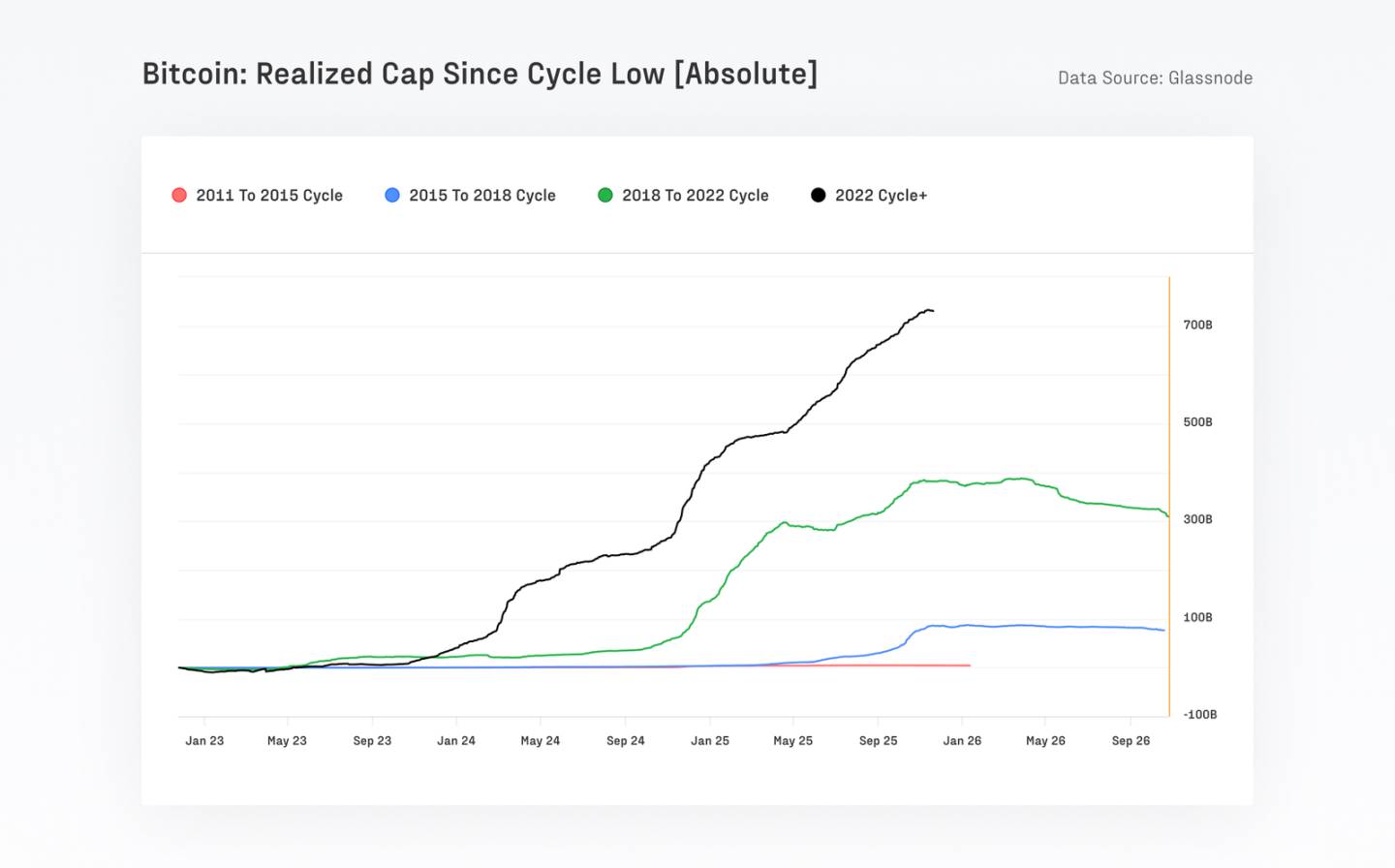
  • 比特币吸引了超过 7320 亿美元 的新资金,规模超过以往所有周期总和,推动其已实现市值升至约 1.1 万亿美元,期间价格上涨超 690%。

  • 比特币长期波动率已接近减半,从 84% 降至 43%,反映市场深度与机构参与度持续提升。

  • 过去 90 天内,比特币结算总值约 6.9 万亿美元,与 Visa、万事达卡等传统支付网络的季度交易量持平甚至更高。随着交易活动向 ETF 与经纪商迁移,链上活跃度有所转移,但比特币与稳定币仍在链上结算中占据主导。

  • ETF 日交易量已从不足 10 亿美元 的基础水平增长至 超过 50 亿美元,峰值时单日突破 90 亿美元(例如 10 月 10 日去杠杆事件后)。

  • 代币化现实世界资产(RWA)规模在一年内从 70 亿美元 增长至 240 亿美元,其与传统加密资产相关性较低,有助于提升 DeFi 的稳定性与资本效率。

  • 去中心化永续合约市场经历爆发式增长且势头持续:DEX 永续合约市场份额从约 10% 提升至 16–20%,月交易量已突破 1 万亿美元。

  • 风险投资活动仍与山寨币周期紧密相关,主要集中在交易所、核心基础设施、扩容方案等成熟且受关注的领域。

本轮周期以比特币为主导,由现货驱动,并由机构资金支撑

比特币市场占比正接近 60%,显示资金回流至高流动性主流资产,山寨币则相应回调。自 2022 年 11 月以来,比特币占比自 38.7% 上升至 58.3%,而以太坊占比则降至 12.1%,延续了自 2022 年合并以来其表现持续落后于比特币的趋势。

比特币自周期低点至高点吸引了 7320 亿美元 新资金,规模超过以往所有周期总和。以太坊及其他山寨币同样表现强劲,涨幅最高超过超 350%,但并未像以往周期那样跑赢比特币。
流动性加深、长期波动率下降,但杠杆冲击依然存在

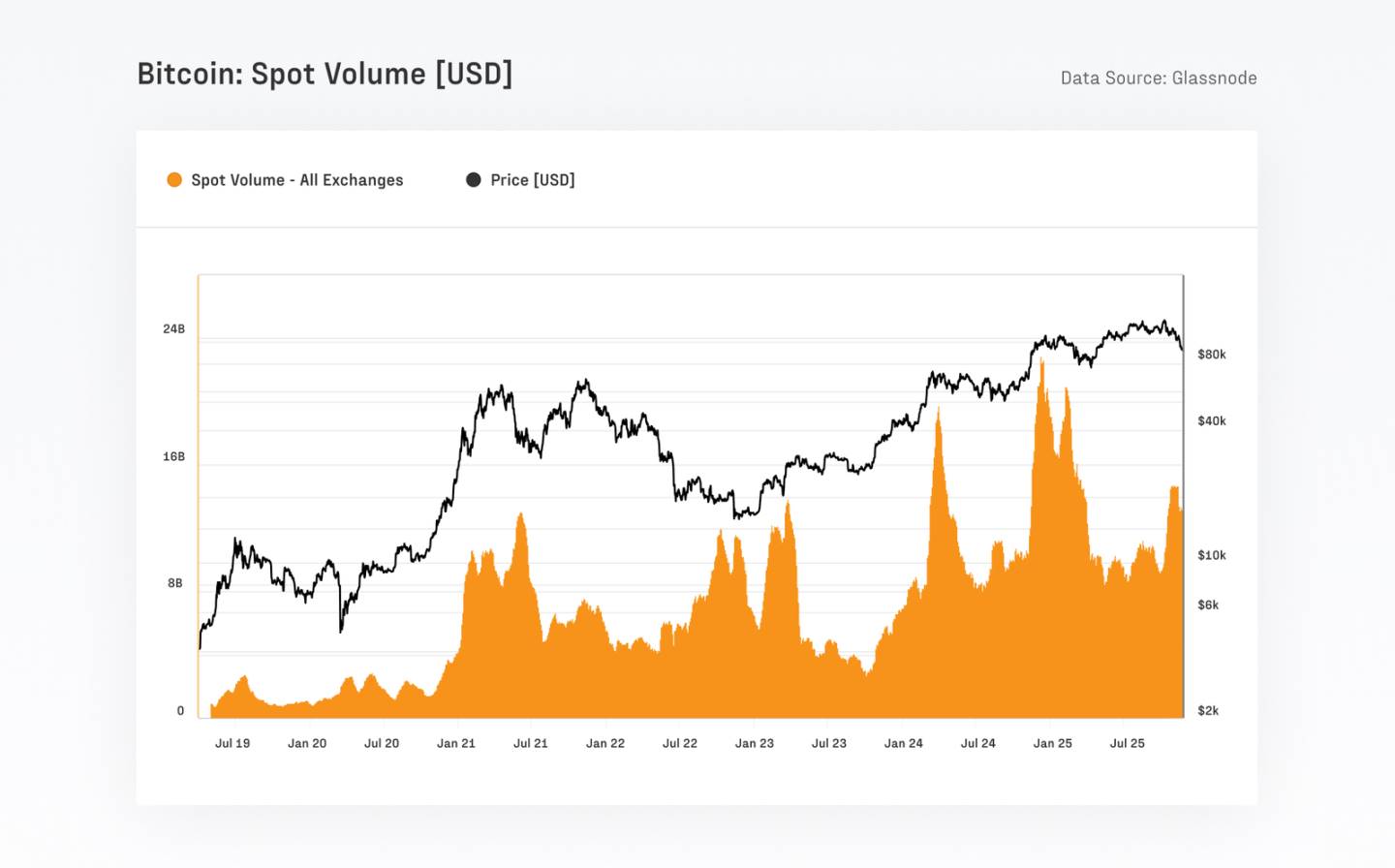
比特币市场结构显著增强,现货日交易量从上一轮周期的 40–130 亿美元 提升至当前的 80–220 亿美元。长期波动率持续下降,1 年期已实现波动率从 84.4% 降至 43.0%。与此同时,期货未平仓合约规模创下 679 亿美元 的历史记录,其中 CME 占比约 30%,体现出显著的机构参与痕迹。
链上活动向链下迁移,但比特币与稳定币仍是链上结算主力

美国现货 ETF 获批后,比特币链上日活跃实体数量从约 24 万 下降至 17 万,这主要反映活动转向经纪商与 ETF 平台,而非网络使用量萎缩。尽管存在迁移,比特币在过去 90 天内仍结算约 6.9 万亿美元 价值,与 Visa、万事达卡等主流支付网络的季度处理量相当。经 Glassnode 实体调整后,实际经济结算量仍达约 每季度 0.87 万亿美元,相当于 每日 78 亿美元。

与此同时,稳定币继续为整个数字资产生态提供流动性支撑。前五大稳定币总供应量已达 2630 亿美元 的历史高位。USDT 与 USDC 合计日均转账量约 2250 亿美元,其中 USDC 流通速度明显更高,反映其更多用于机构与 DeFi 相关的资金流动。

代币化资产正在拓展市场金融基础设施

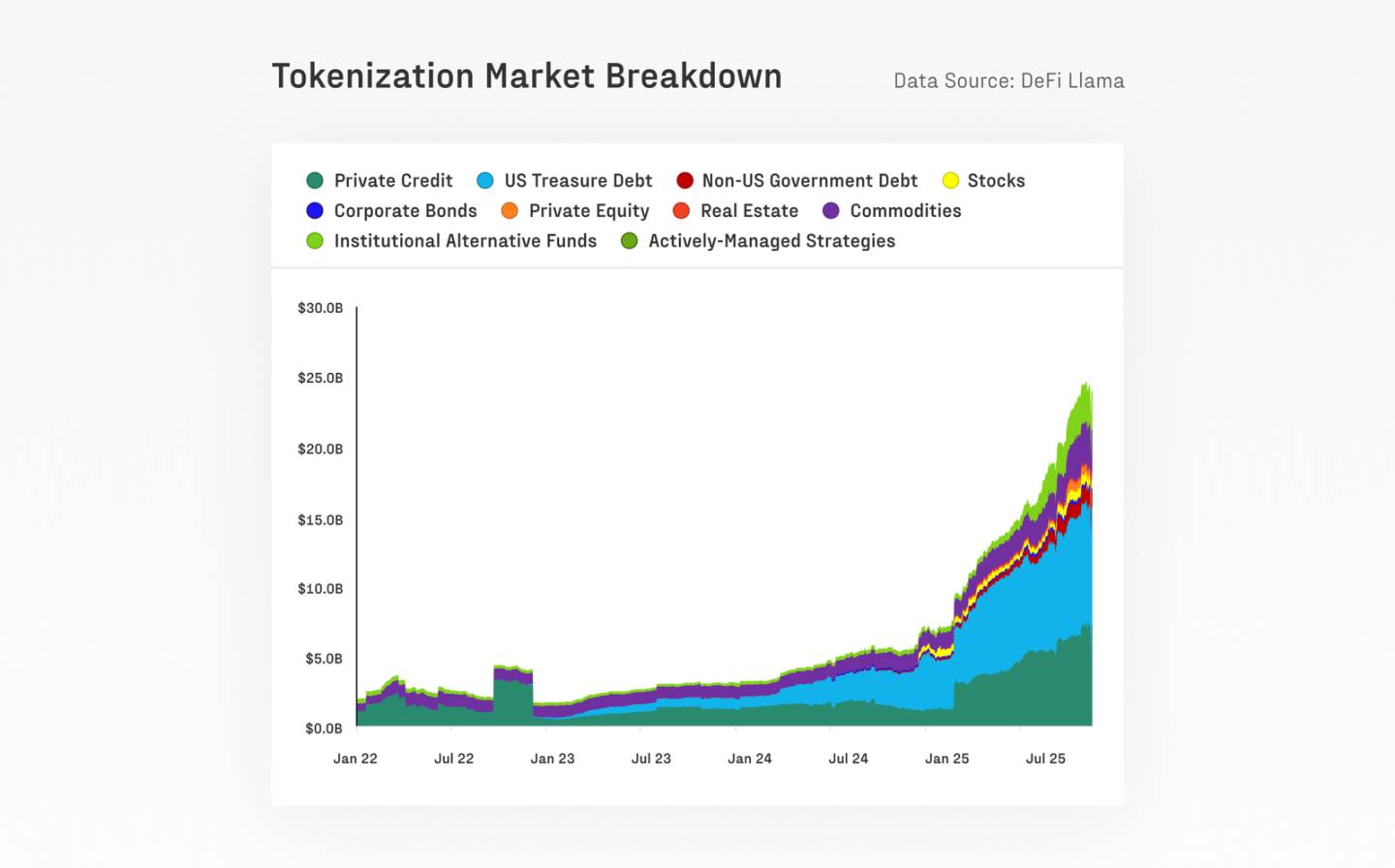
过去一年,代币化现实世界资产(RWA)规模从 70 亿美元 大幅增长至 240 亿美元。以太坊仍是这类资产的主要结算层,目前承载约 115 亿美元 的此类资产。规模最大的单一产品贝莱德的 BUIDL 已增长至 23 亿美元,年内规模增长超过四倍。

随着资金持续流入,代币化基金已成为增长最快的资产类别之一,为资产管理机构开辟了新的分发渠道。这反映出资产上链范围正在扩大,以及机构对代币化作为分发与流动性渠道的接受度不断提高。
İlgili Okumalar

USDT Market Cap Overtakes Ethereum, What Signal Does This Convey?

The article discusses the significance of USDT's market capitalization rivaling that of Ethereum. It clarifies that this does not indicate Ethereum provides economic security for USDT, as stablecoin security relies on the issuer, Tether, not the underlying blockchain. The trend also does not reflect a flaw in Ethereum's value, as ETH and USDT serve fundamentally different purposes—one as a yield-bearing asset for network fees, the other as a dollar-pegged medium of exchange. The core argument is that the dominant, enduring demand in crypto is for permissionless dollar transfers, a simple utility that doesn't require complex blockchain technology. USDT's growth, despite its issuer's controversial background, proves users prioritize widespread availability and ease of use over the technical merits or decentralization of the hosting chain. While stablecoin aggregate market cap continues to rise, the combined market cap of major smart contract platform native tokens (like Ethereum, Solana) has remained stagnant, showing a decoupling between the demand for simple dollar liquidity and the value assigned to the underlying settlement layers. The conclusion is that the market values the utility of permissionless dollars above all else, with users largely indifferent to the issuer's credibility or the hosting blockchain's governance, as long as the stablecoin is functional and accessible.

marsbit53 dk önce

USDT Market Cap Overtakes Ethereum, What Signal Does This Convey?

marsbit53 dk önce

Top 8 DEXs of July 2026

This article presents the top 8 decentralized exchanges (DEXs) for July 2026, highlighting their key features and evolution within the DeFi space. DEXs, which enable peer-to-peer cryptocurrency trading via smart contracts without intermediaries, are praised for offering users greater control, privacy, transparency, and global access compared to centralized platforms. The listed DEXs are: 1. **Shadow Exchange**: A Sonic-native DEX specializing in concentrated liquidity for efficient trading and reduced slippage. 2. **Uniswap**: A leading protocol using an Automated Market Maker (AMM) model across multiple blockchains. 3. **SushiSwap**: An evolved platform offering token swaps, yield farming, and governance via its SUSHI token across 40+ networks. 4. **Orca**: A user-friendly AMM on Solana featuring capital-efficient "Whirlpools" for concentrated liquidity. 5. **Meteora**: A Solana-based DEX focusing on dynamic liquidity infrastructure and vaults for advanced strategies. 6. **Raydium**: A hybrid exchange on Solana combining AMM pools with a central limit order book for deep liquidity. 7. **Hyperliquid**: A Layer 1 blockchain hosting a non-custodial perpetual futures exchange using an on-chain order book. 8. **PancakeSwap**: A multi-chain AMM hub originating on BNB Chain, now supporting thousands of trading pairs across several networks. The article concludes by noting the significant role of DEXs in crypto, their expansion beyond simple swaps into areas like derivatives and cross-chain interoperability, and advises users to conduct their own research before engaging with any platform.

ambcrypto1 saat önce

Top 8 DEXs of July 2026

ambcrypto1 saat önce

USDT Market Cap Approaches Ethereum's: What Signal Does This Convey?

The market capitalization of USDT has nearly reached that of Ethereum, making it the second-largest cryptocurrency after Bitcoin. This prompts an examination of what this signifies and what it does not. Firstly, this does not relate to economic security. Unlike some Web3 systems where a governance token's value must underpin the security of its applications (e.g., oracles), USDT's stability is not backed by the value of the underlying blockchains it operates on. Tether, the issuer, controls the assets, and can freeze, reissue, or abandon tokens on a compromised chain. While stablecoins require functional blockchains, a chain's native token market cap does not provide direct security for the stablecoin. Secondly, USDT's growth does not inherently reflect poorly on Ethereum. USDT is a dollar-pegged store of value, while ETH represents a claim on future Ethereum network revenue. Their valuations are driven by different factors. USDT's rising market cap simply indicates strong demand for stablecoin utility, independent of Ethereum's technological merits or competitive position. The core insight is the overwhelming market demand for permissionless dollar transfers. This is the most established and essential use case in crypto. It requires minimal technological sophistication—essentially just a trusted issuer's promise of redemption on a functional chain. This explains why stablecoin supply has grown exponentially while the combined market cap of major non-stablecoin cryptocurrencies like Bitcoin, Ethereum, and others has stagnated for years. Users primarily seek accessible dollar-denominated assets. They largely disregard the issuer's credibility (as seen with Tether's dominance over more credible alternatives like USDC or BlackRock's BUIDL) and are indifferent to the governance or decentralization of the underlying blockchain. As long as a stablecoin is widely accepted and easy to transfer, users will adopt it across any chain. The trend suggests that the market for permissionless stablecoins could continue to expand far beyond the total value of the smart contract platforms that host them, driven by this singular, powerful use case.

Foresight News1 saat önce

USDT Market Cap Approaches Ethereum's: What Signal Does This Convey?

Foresight News1 saat önce

İşlemler

Spot
活动图片