Anthropic научила ИИ-модели искать уязвимости смарт-контрактов и выявила «взломы» на $4,6 млн

cryptonews.ru2025-08-01 tarihinde yayınlandı2025-12-02 tarihinde güncellendi

  • Модели выявили эксплойты в уже взломанных контрактах.
  • ИИ нашел 19 уязвимостей после даты отсечения знаний и две угрозы «нулевого дня».
  • Anthropic выпускает открытый бенчмарк для тестирования безопасности.

Компания Anthropic представила результаты исследования о том, как современные ИИ-модели могут идентифицировать уязвимости в смарт-контрактах. Разработчики протестировали Claude Sonnet 4.5, Claude Opus 4.5 и GPT-5 на наборе SCONE-bench, включающем контрактные уязвимости Ethereum и BNB Chain периода 2020–2025 годов.

В ходе тестов модели успешно смоделировали эксплойты для около половины исторических инцидентов. В пересчете на активы, находившиеся в затронутых контрактах в момент атак, суммарная условная оценка превысила $550 млн.
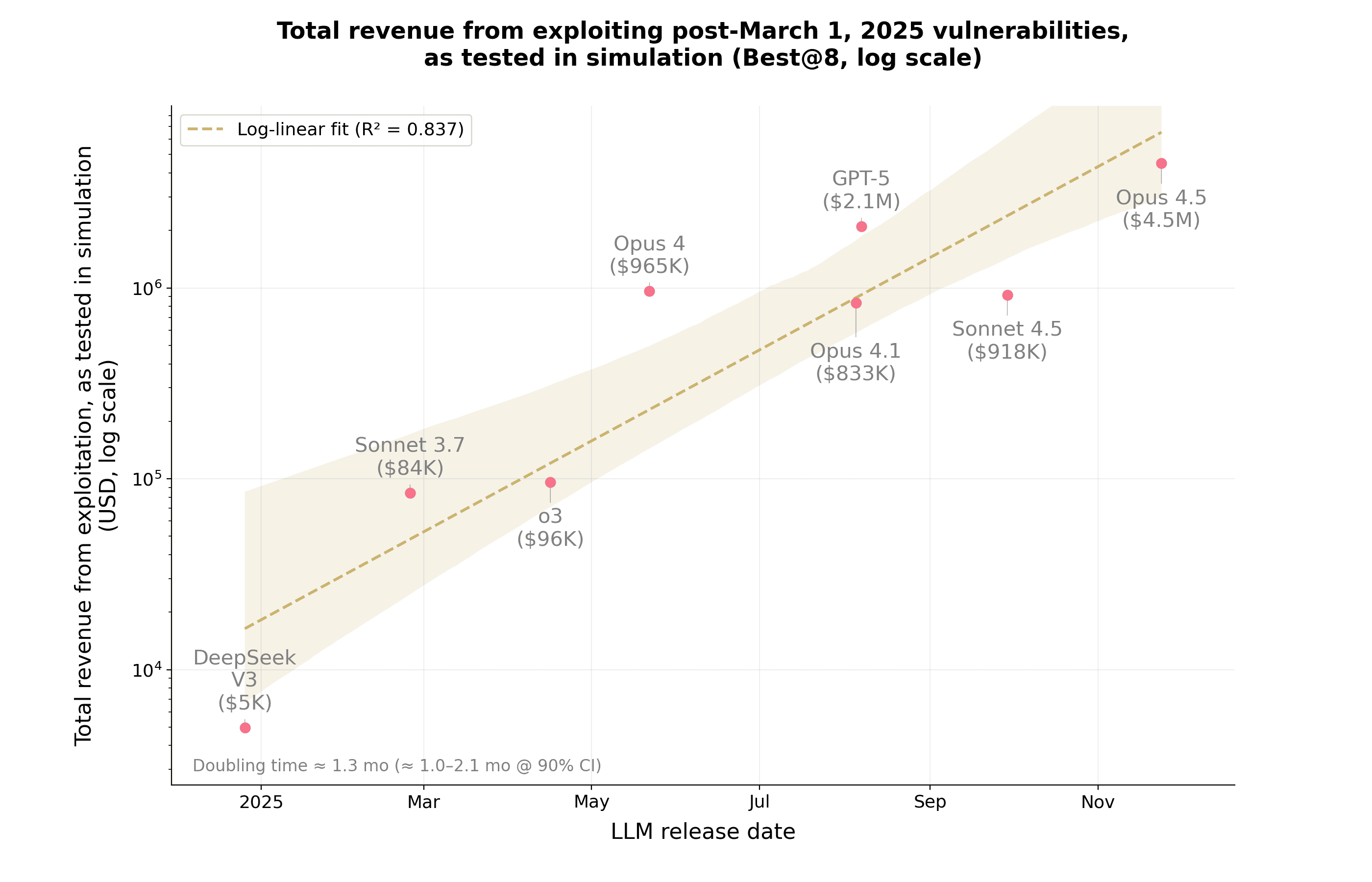
Результаты поиска уязвимостей с использованием различных ИИ-моделей. Данные: Anthropic.

Отдельный блок тестов включал контракты, взломанные после марта 2025 года — даты отсечения знаний моделей. На этой выборке ИИ-агенты выявили 19 уязвимостей из 34, что соответствует оценочному объему средств около $4,6 млн.

Данные случаи не были известны моделям заранее и включали несколько новых типов дефектов, отметили представители компании.

В ходе тестов на бенчмарке SCONE-bench лучше всех показала себя модель Claude Opus 4.5. Она сгенерировала эксплойты для 17 случаев, что составляет 50% выборки, и потенциально означало бы $4,5 млн условной «выручки».

Более старые модели — Claude Sonnet 4.5 и GPT-5 — вместе с Opus 4.5 смогли обнаружить 19 уязвимостей из 34 проверенных контрактов. Это около 55,8% от тестового набора и около $4,6 млн в условных средствах.

Anthropic также проверила, сможет ли ИИ находить неизвестные ранее проблемы в недавно развернутых контрактах. Два таких уязвимости «нулевого дня» были обнаружены среди новых адресов. Это, по словам экспертов, показало способность моделей идентифицировать ошибки без предварительных сигналов или исторических данных.

Компания отмечает, что исследование не направлено на эксплуатацию уязвимостей, а создано для разработки инструментов, позволяющих оценивать способность ИИ-систем распознавать дефекты в коде. Anthropic планирует использовать SCONE-bench как открытый стандарт для тестирования и сравнения возможностей LLM.

Авторы работы предполагают, что такие модели могут применяться в разработке и аудите смарт-контрактов, помогая обнаруживать ошибки до развертывания в сеть.

Anthropic также указывает, что исследование не отражает полного уровня риска, поскольку анализ ограничен выборкой исторических контрактов и контролируемой средой. Компания продолжит расширять бенчмарк и изучать возможность использования ИИ-инструментов для поддержки команд, работающих с безопасностью блокчейн-протоколов.

Напомним, мы писали, что в ноябре потери от криптовзломов достигли почти $195 млн.

İlgili Okumalar

Trump-Backed Company World Liberty Financial Partners with Chinese AI Company of Limited Access to Provide Artificial Intelligence Services

According to a Reuters report, Trump-backed cryptocurrency company World Liberty Financial is linked to WorldClaw, a Hong Kong-based platform providing access to Chinese AI models that the U.S. government has flagged as security threats. WorldClaw's platform features AI models from Chinese companies like Alibaba, Baidu, Z.ai, DeepSeek, and Moonshot, some of which are designated by U.S. entities as tied to the Chinese military or subject to export restrictions. The connection is facilitated by World Liberty's dollar-pegged stablecoin, $USD1, which is accepted for payment on WorldClaw. The Trump family benefits from interest generated by the stablecoin's reserves, and token sales have earned them over $1.4 billion. A World Liberty executive previously advised WorldClaw on integrating $USD1. Security experts warn that using these Chinese AI models could expose users to surveillance or malicious code. WorldClaw claims over 10,000 users and processes 50 million queries daily, partly due to the lower cost of Chinese models. Both companies and the White House deny any conflict of interest, stating the platform helps American AI firms access international markets and that listing models does not imply endorsement. External critics, however, argue it is hypocritical to profit from Chinese AI tools while the U.S. government aims to counter the rise of Chinese AI.

cryptonews.ru1 saat önce

Trump-Backed Company World Liberty Financial Partners with Chinese AI Company of Limited Access to Provide Artificial Intelligence Services

cryptonews.ru1 saat önce

Moscow's Mining Ban Takes Effect: What Will Be the Consequences?

Mining has been banned in Moscow, the Moscow region, and parts of the Kursk region from August 15, with the prohibition set to last until December 31, 2032. The measure, requested by regional authorities, aims to prevent electricity shortages caused by energy-intensive mining equipment. This follows the legalization of cryptocurrency mining in Russia in November 2024, with restrictions now in place across 16 regions. Initially a blanket ban, an exception was introduced in March 2025 for miners using their own power generation, such as gas piston units or diesel generators, independent of the national grid. Major industry players had already begun shifting to on-site gas generation near gas fields to bypass grid limitations. While a trend emerged in 2025 to combine mining with AI computing infrastructure, this was complicated by authorities granting data centers (with a ban on mining inside them) preferential status as communication facilities. Experts state the new Moscow-area ban will significantly reshape Russia's mining geography but have a minimal global impact on Bitcoin's hash rate. The primary consequence will be a stronger industry shift to regions with energy surpluses, clear connection terms, and willingness to handle such loads. Moscow was already a contentious location due to high competition for power from data centers, industry, and urban infrastructure. For the Kursk region, the ban is also linked to infrastructure stability in border areas. The ban accelerates a market split. Large, legal operators will relocate equipment or seek sites with self-generation, while smaller or semi-legal miners operating in urban or industrial networks face higher costs and potential displacement into illegality. Industry participants note that post-2024 legalization had an unintended effect, with some major companies closing due to financial issues. Russian miners also face global pressures like low Bitcoin prices relative to mining costs, rising electricity prices, and the approaching 2028 halving, forcing some to shut down equipment.

cryptonews.ru1 saat önce

Moscow's Mining Ban Takes Effect: What Will Be the Consequences?

cryptonews.ru1 saat önce

İşlemler

Spot
活动图片