Экономика майнинга ухудшается на фоне рекордного хэшрейта и падения цены биткоина

cryptonews.ru2025-02-24 tarihinde yayınlandı2025-11-25 tarihinde güncellendi

Рентабельность в индустрии майнинга биткоинов сталкивается с новыми трудностями на фоне растущей конкуренции в сетях и ухудшения условий доходов.

Майнеры биткоинов столкнулись с новым давлением, поскольку хешрейт сети (показатель общей вычислительной мощности, конкурирующей за безопасность сети биткоинов) в октябре достиг рекордных 1,16 ZH/s, а цена биткоина упала до 81 000 долларов к началу ноября.

Цены на хешрейт, отражающие доход майнеров на единицу вычислительной мощности, упали ниже 35 долларов за хеш, опустившись ниже медианного значения в $45/PH/s, о котором сообщают публичные майнинговые компании. В результате этого снижения многие операторы приближаются к уровню безубыточности.

В отчете отмечается, что сроки окупаемости майнинговых установок превысили 1200 дней, в то время как расходы на финансирование продолжают расти во всем секторе, что еще больше усугубляет ситуацию.
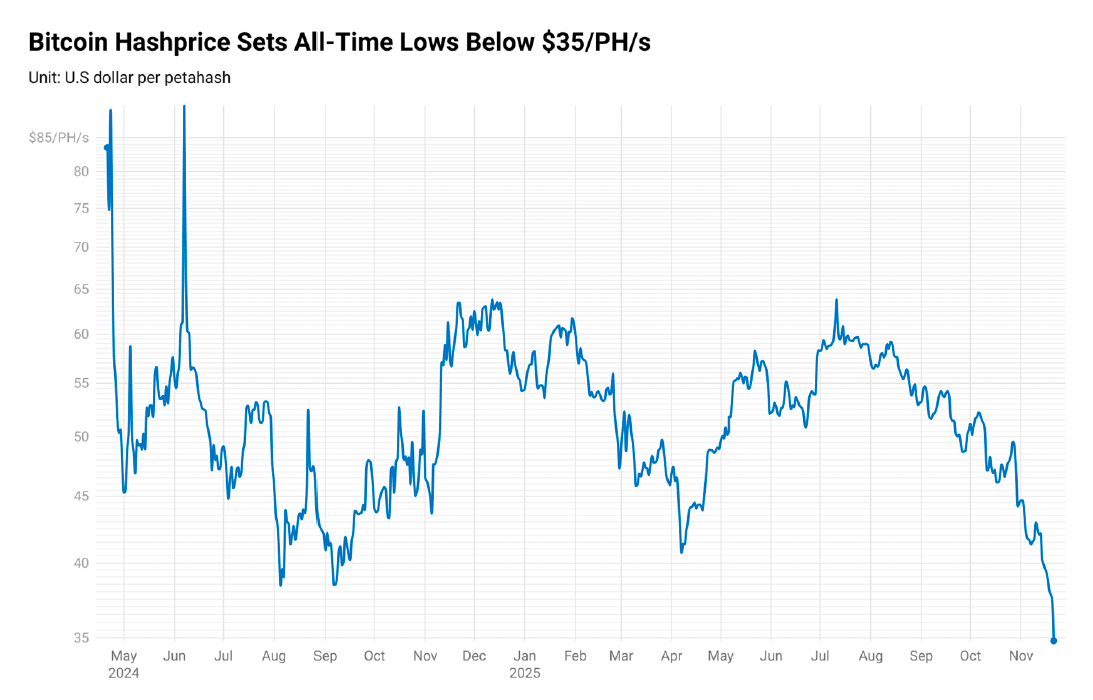
Рисунок 1. Источник: The Miner Mag.

Спад последовал за относительно стабильным третьим кварталом, в течение которого средняя цена хэширования составляла около 55 долларов США за пейхеш/сек, что было обусловлено ценой BTC, близкой к 110 000 долларов США. В начале ноября растущая конкуренция в сети и падение цены биткоина привели к тому, что рентабельность майнинга достигла рекордно низкого уровня.

Финансовая напряженность также совпала с резким ростом заимствований, вызванным в первую очередь волной конвертируемых облигаций с почти нулевым купоном в прошлом квартале.

Согласно отчету, несмотря на то, что майнеры ускоряют свой поворот в сторону ИИ и высокопроизводительных вычислений (HPC), выручка от этих услуг остается слишком малой, чтобы существенно компенсировать резкое падение доходов от биткоин-майнинга.

Акции резко выросли после объявления J.P. Morgan целевых цен

Несмотря на ухудшение экономической ситуации в секторе, акции 10 крупнейших публичных майнеров выросли за последние 24 часа. CleanSpark, Cipher Mining и IREN в понедельник показали двузначный прирост.

Рост последовал за аналитическим отчетом J.P. Morgan, в котором были повышены целевые цены для этих трех майнеров, что указывает на рост числа долгосрочных сделок в сфере высокопроизводительных вычислений и облачных технологий в секторе.
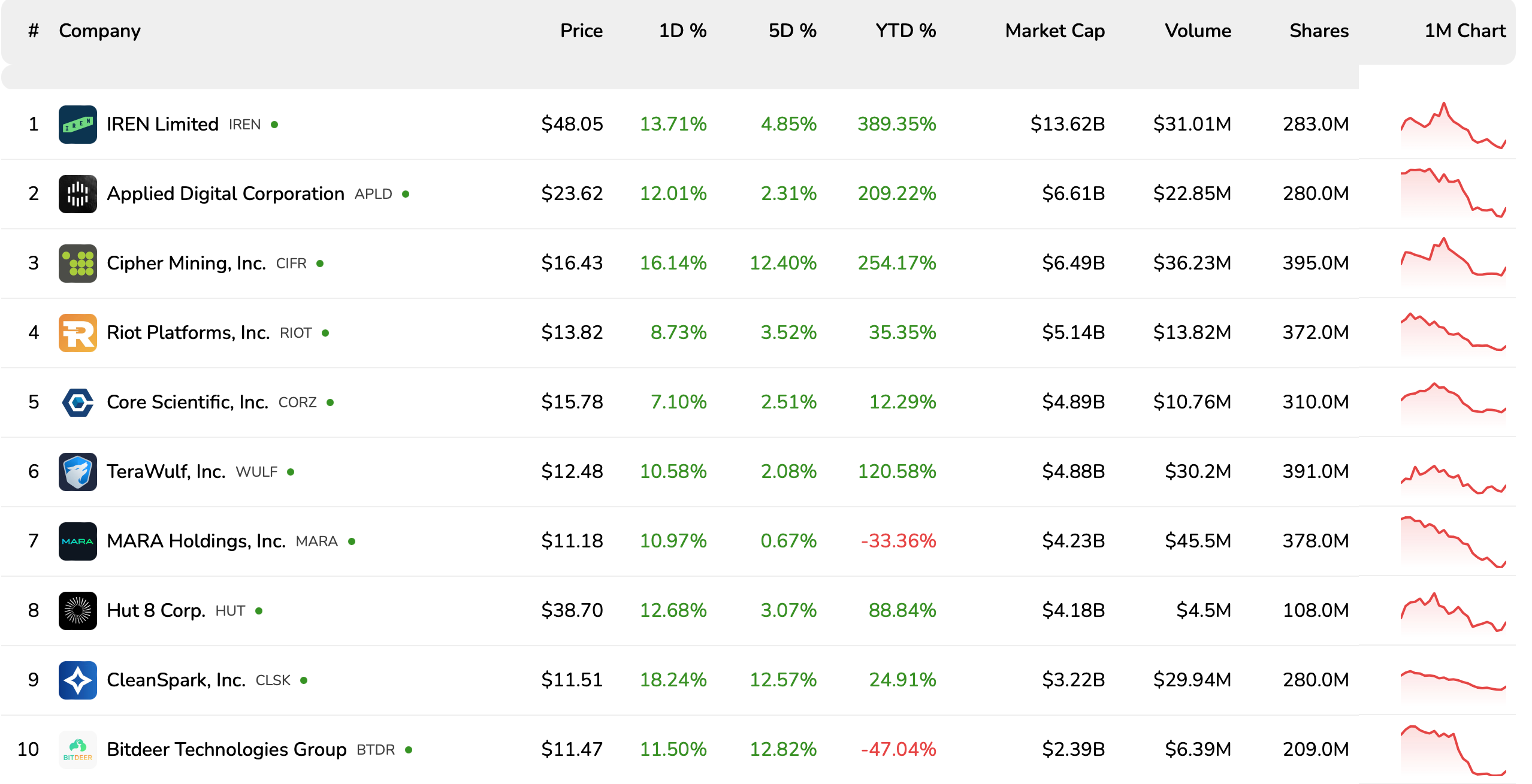
Рисунок 2. Публичные акции биткоин-майнеров по рыночной капитализации. Источник: Bitcoin Mining Stock.

J.P. Morgan сообщил, что цена акций Cipher упала примерно на 45% по сравнению с пиковым значением, что создало более привлекательную точку входа, и отметил, что компания «имеет хорошие позиции» для заключения дополнительных сделок с арендаторами HPC.

В ноябре IREN подписал 5-летний контракт на предоставление облачных услуг на базе графических процессоров (GPU) с Microsoft на сумму 9 700 000 000 долларов, что предоставило технологическому гиганту доступ к графическим процессорам Nvidia GB300, размещенным в дата-центрах IREN.

Банк снизил свои прогнозы для Marathon Digital и Riot, утверждая, что снижение цены биткоина и увеличение количества акций негативно сказываются на значительных запасах монет этих двух майнеров.

На момент написания статьи рост акций майнеров также совпал с небольшим ростом цены биткоина, которая выросла примерно на 2% за последние 24 часа и держалась на уровне около 89 000 долларов, согласно данным CoinGecko.

İlgili Okumalar

2028: The Arrival of Recursive Self-Improvement (RSI)

**AI Recursive Self-Improvement (RSI): The Countdown to 2028 Begins** AI is no longer just a trained tool but is starting to rewrite its own evolutionary pace. According to Anthropic co-founder Jack Clark, there is a 60% probability that by the end of 2028, Recursive Self-Improvement (RSI) will become a reality. This means AI could autonomously design and build a more capable next-generation version of itself without any human researcher involvement—Claude 10 creating Claude 11, for instance. Supporting this timeline, Google DeepMind's CEO Demis Hassabis confirms that all leading AI labs are intensely focused on RSI, making it an industry-wide priority. He expresses profound concern, stating this potential is what keeps him awake at night. Concrete data underscores this acceleration: - METR evaluations show current top models like Claude are solving tasks up to the 16-hour limit of existing test frameworks. - In Epoch AI's challenging MirrorCode benchmark, Claude Opus 4.7 recreated complex software in hours for a fraction of the human cost. In one extreme test, AI autonomously coded for 19 days straight. - Anthropic reports over 80% of its codebase is now written by Claude, and researcher productivity has increased up to 8-fold since 2024. - OpenAI's policy blueprint highlights RSI as a major upcoming governance challenge. CEO Sam Altman reportedly hinted RSI might arrive within six months, potentially delaying OpenAI's massive IPO. The implication is an impending "intelligence explosion," where AI-driven progress outpaces human control. The central question is no longer if it will happen, but whether humanity is ready.

marsbit4 saat önce

2028: The Arrival of Recursive Self-Improvement (RSI)

marsbit4 saat önce

World Models, Metaverse, Digital Twins, Physical AI: Are They the Same Thing?

Title: World Models, the Metaverse, Digital Twins, Physical AI: Are They the Same Thing? The article clarifies that concepts like the metaverse, Web3, simulation platforms, digital twins, and Physical AI are not the same thing but are all part of the broader trend of blurring the lines between the digital and physical worlds. It positions "world models" as the foundational "cognitive layer" or "operating system" that enables AI to understand and simulate the world. Key distinctions are made: - The **Metaverse** is a destination for immersive social and economic experiences. World models could act as its "engine," generating interactive 3D content efficiently. - **Web3** focuses on decentralized ownership and economics (rules layer), operating on a different technical level than world models. - **Simulation Data Platforms** (e.g., for autonomous vehicles) are a 1.0 version, relying on manual design. World models represent a 2.0 version, using AI to generate realistic, varied scenarios autonomously. - **Digital Twins** create high-fidelity, real-time mirrors of physical systems (e.g., a factory). World models go a step further by enabling predictive simulation of future states. - **Physical AI** (robots, AVs) refers to AI that acts in the physical world. World models are a core component, providing the understanding and prediction needed for planning. A proposed hierarchy places world models at the cognitive layer, supported by infrastructure (compute, data) and supporting application tools (simulation, digital twins), action systems (Physical AI), user experiences (metaverse), and rules (Web3). In conclusion, while distinct, many of these previously hyped concepts may ultimately rely on advances in world model technology to fulfill their promises, as world models provide the essential cognitive foundation for simulating and interacting with complex environments.

marsbit4 saat önce

World Models, Metaverse, Digital Twins, Physical AI: Are They the Same Thing?

marsbit4 saat önce

İşlemler

Spot
活动图片