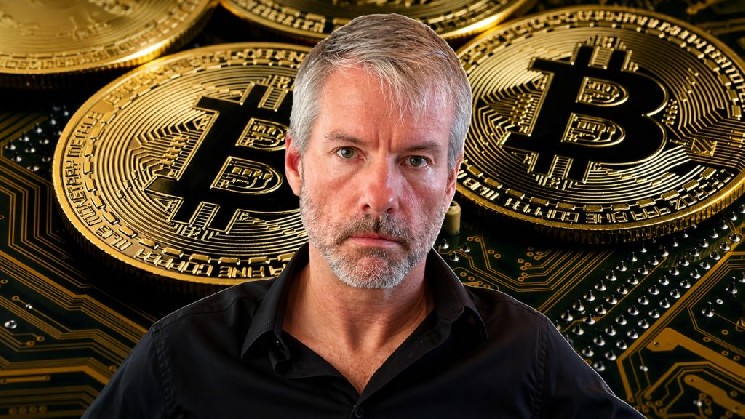
Michael Saylor nei guai? Schiff prevede la bancarotta di MicroStrategy mentre Bitcoin crolla

bitcoinist2025-11-20 tarihinde yayınlandı2025-11-20 tarihinde güncellendi

Özet

La strategia aggressiva su Bitcoin di Michael Saylor è finita sotto la lente d'ingrandimento dopo il recente crollo del mercato....

Trusted Editorial content, reviewed by leading industry experts and seasoned editors. Ad Disclosure

La strategia aggressiva su Bitcoin di Michael Saylor è finita sotto la lente d’ingrandimento dopo il recente crollo del mercato. Si rincorrono le speculazioni sul futuro della sua azienda, MicroStrategy (MSTR), e sul destino del suo enorme tesoro in BTC se la principale criptovaluta dovesse continuare a scendere.

Peter Schiff: “MicroStrategy fallirà comunque”

Il noto economista Peter Schiff ha lanciato un attacco durissimo su X (ex Twitter), definendo l’azienda di Saylor una “truffa” e prevedendo che finirà in bancarotta, a prescindere da cosa farà il prezzo di Bitcoin.

Ma perché c’è tanta preoccupazione? Il motivo è tecnico, ma cerchiamo di comprenderlo nel modo più semplice possibile:

Immaginate MicroStrategy come una cassaforte piena di Bitcoin.

  • In passato (Situazione Normale): Gli investitori si fidavano così tanto di Saylor che erano disposti a pagare le azioni dell’azienda più del valore dei Bitcoin contenuti nella cassaforte. Questo si chiama “pagare un premio”.
  • Cosa sta succedendo ora: La situazione si è ribaltata. Il valore delle azioni in borsa è sceso al di sotto del valore effettivo dei Bitcoin che l’azienda possiede.

Perché è un brutto segno?

È come se qualcuno vendesse una scatola contenente 100€, ma chiedesse solo 90€ per comprarla. Quando il mercato “sconta” così tanto il prezzo di un’azienda, significa che gli investitori vedono rischi enormi all’orizzonte e non credono più che la strategia di Saylor sia sostenibile. Schiff sostiene che questo sia l’inizio della fine per il modello di business dell’azienda.

Acquisti record nonostante le perdite

Con il mNAV ora scambiato sotto la parità (sotto a 1), crescono i timori sulla tenuta dell’azienda in un mercato ribassista prolungato. La scorsa settimana, Arkham Intelligence aveva suggerito che Saylor stesse vendendo BTC, voci che il CEO ha prontamente smentito come false.

Al contrario, Saylor ha rilanciato: ha dichiarato che l’azienda ha acquistato Bitcoin ogni giorno la scorsa settimana, confermando la notizia con l’annuncio di un acquisto massiccio da 835 milioni di dollari. Si tratta dell’operazione più grande da luglio (quando comprarono 2,46 miliardi in BTC).

Il problema? Il prezzo. Questi ultimi acquisti sono stati effettuati a un prezzo medio di $102.171, ben al di sopra delle quotazioni attuali.

Questo ha portato una fetta significativa delle riserve di MicroStrategy in rosso. Secondo i dati di CryptoQuant:

  • Il 43% dei Bitcoin detenuti dall’azienda è attualmente in perdita.
  • Il 57% è ancora in profitto.
  • Il prezzo medio di acquisto dell’intero portafoglio si attesta ora a $74.433.

Bitcoin potrebbe scendere sotto il prezzo medio di carico?

Il veterano del trading Peter Brandt ha lanciato un avvertimento severo: Bitcoin potrebbe crollare sotto i $50.000.

Se ciò accadesse, l’intero portafoglio di Saylor finirebbe sott’acqua (in perdita). Brandt ha spiegato che la recente violazione del trend parabolico rialzista suggerisce una correzione profonda, che metterebbe a dura prova la resilienza di MicroStrategy.

Se il prezzo di BTC dovesse scendere sotto la media di acquisto dell’azienda ($74.433) e rimanerci, i rischi diventerebbero concreti:

  • Dom Kwok, esperto crypto, sostiene che l’azienda potrebbe essere costretta a vendere BTC per pagare gli interessi sul debito. Ha sottolineato che le “treasury companies” non possono operare a lungo quando il mNAV scende sotto a 1, rischiando l’insolvenza.
  • L’analista Mana ha rincarato la dose, avvertendo che il mercato sta per assistere al “crollo di MicroStrategy”, consigliando agli investitori di scaricare le azioni MSTR mentre gli utili dell’azienda soffrono.

Al momento della scrittura, Bitcoin ha mostrato un segnale di ripresa, scambiando intorno ai $91.800, in rialzo nelle ultime 24 ore secondo i dati di CoinMarketCap. La partita tra Saylor e il mercato è ancora aperta.


Editorial Process for bitcoinist is centered on delivering thoroughly researched, accurate, and unbiased content. We uphold strict sourcing standards, and each page undergoes diligent review by our team of top technology experts and seasoned editors. This process ensures the integrity, relevance, and value of our content for our readers.
Clara Rosati

Clara Rosati

Copywriter
Follow

Ha conseguito una laurea magistrale con una tesi sull’evoluzione della tecnologia blockchain, approfondendo in particolare le sue applicazioni nei sistemi economici digitali. Ha collaborato con diverse testate scrivendo articoli su criptovalute, finanza decentralizzata e innovazione tecnologica, e ha partecipato come relatrice a conferenze dedicate all’ecosistema Ethereum.

Trend Kriptolar

İlgili Okumalar

Upbit is Anxious: A Hasty Counterattack Aimed at Regaining Stablecoin Market Share

Title: Upbit's Rushed Counterattack to Reclaim Stablecoin Market Share Facing a dramatic shift in South Korea's stablecoin market, leading exchange Upbit launched a promotional campaign from July 26 to August 9, waiving the 0.05% trading fee for stablecoins paired with the Korean Won (KRW) and rapidly listing new stablecoins like RLUSD and USDG. This move is a direct response to its plummeting market share in this sector. Historically a duopoly with Bithumb, the market has been reshaped since October 2025 when Coinone permanently removed fees for USDC trading. By June 2026, Coinone led with 34.8% of stablecoin volume, followed by Bithumb (31.1%) and Upbit (30.1%). This contrasts sharply with the overall crypto market, where Upbit commands 60%. The data shows stablecoin demand is highly sensitive to fees, as users primarily buy them to transfer capital overseas for derivatives trading or forex arbitrage. South Korean exchanges have seen a net outflow of stablecoins for 18 consecutive months, totaling approximately 14.9 trillion KRW, underscoring their role as a cross-border capital conduit. Upbit's limited-time promotion initially boosted its daily stablecoin volume by 162%, but the surge was almost entirely in USDT (98.1% of volume). The newly listed stablecoins saw negligible, fleeting interest. Furthermore, the promotional effect quickly waned in the second week, with volume dropping 33% on weekdays. A concurrent weakening of the KRW also contributed to the trading spike, independent of the fee waiver. The analysis suggests that once the promotion ends, Upbit is unlikely to retain its temporary gains unless it matches Coinone's permanent zero-fee policy, forcing a choice between market share and fee revenue. Upbit's strategic push may be less about immediate profit and more about preparing for future regulatory shifts. With South Korea's *Digital Asset Basic Act* on the horizon, which will regulate KRW-backed stablecoins, and following Dunamu's (Upbit's parent) integration into Naver Financial to build a payment ecosystem, securing a dominant position in the dollar stablecoin distribution channel holds long-term strategic value. However, potential regulatory conflicts could prevent Upbit from listing a future Naver-issued KRW stablecoin, making the current fight for dollar stablecoin flow even more critical.

marsbit2 saat önce

Upbit is Anxious: A Hasty Counterattack Aimed at Regaining Stablecoin Market Share

marsbit2 saat önce

Michael Saylor Compares Bitcoin and Gold!

Michael Saylor, founder of MicroStrategy, argues that Bitcoin fundamentally changes how wealth is stored and transferred by transforming digital scarcity into economic value. He describes Bitcoin as the first digital monetary network, combining computers, digital networks, and cryptography. It digitizes monetary assets, allowing their supply to be controlled by public protocols rather than institutions, thus converting economic value into information transmissible over global networks. Comparing Bitcoin to gold, Saylor states that while increasing Bitcoin's supply is harder, its integration with software and transfer is easier. He highlights Bitcoin's proof-of-work mechanism, which ties it to the physical world by consuming real energy to secure the ledger, making past transactions immutable. This creates a shared security system involving miners, energy companies, and investors. Saylor suggests "digital monetary energy" is a more accurate term than "digital gold." He emphasizes that the Bitcoin network is an adaptive ecosystem of miners, nodes, developers, and users. Its core design is intentionally simple, focused on maintaining a secure ledger for scarce digital assets, with complex functionalities built in higher-layer applications. This architecture allows Bitcoin to serve as a foundation for transmitting value and fostering innovation in payments and financial services. Saylor notes Bitcoin's deeper impact lies in creating digital sovereignty, where private keys give individuals permissionless control over their economic power, with ownership verified mathematically, not by institutions. He concludes that while gold's physical scarcity makes it money, Bitcoin's digital scarcity does the same, characterizing Bitcoin as the monetary energy of the digital age.

cryptonews.ru3 saat önce

Michael Saylor Compares Bitcoin and Gold!

cryptonews.ru3 saat önce

İşlemler

Spot

Popüler Makaleler

LA Nasıl Satın Alınır

HTX.com’a hoş geldiniz! Lagrange (LA) satın alma işlemlerini basit ve kullanışlı bir hâle getirdik. Adım adım açıkladığımız rehberimizi takip ederek kripto yolculuğunuza başlayın. 1. Adım: HTX Hesabınızı OluşturunHTX'te ücretsiz bir hesap açmak için e-posta adresinizi veya telefon numaranızı kullanın. Sorunsuzca kaydolun ve tüm özelliklerin kilidini açın. Hesabımı Aç2. Adım: Kripto Satın Al Bölümüne Gidin ve Ödeme Yönteminizi SeçinKredi/Banka Kartı: Visa veya Mastercard'ınızı kullanarak anında Lagrange (LA) satın alın.Bakiye: Sorunsuz bir şekilde işlem yapmak için HTX hesap bakiyenizdeki fonları kullanın.Üçüncü Taraflar: Kullanımı kolaylaştırmak için Google Pay ve Apple Pay gibi popüler ödeme yöntemlerini ekledik.P2P: HTX'teki diğer kullanıcılarla doğrudan işlem yapın.Borsa Dışı (OTC): Yatırımcılar için kişiye özel hizmetler ve rekabetçi döviz kurları sunuyoruz.3. Adım: Lagrange (LA) Varlıklarınızı SaklayınLagrange (LA) satın aldıktan sonra HTX hesabınızda saklayın. Alternatif olarak, blok zinciri transferi yoluyla başka bir yere gönderebilir veya diğer kripto para birimlerini takas etmek için kullanabilirsiniz.4. Adım: Lagrange (LA) Varlıklarınızla İşlem YapınHTX'in spot piyasasında Lagrange (LA) ile kolayca işlemler yapın.Hesabınıza erişin, işlem çiftinizi seçin, işlemlerinizi gerçekleştirin ve gerçek zamanlı olarak izleyin. Hem yeni başlayanlar hem de deneyimli yatırımcılar için kullanıcı dostu bir deneyim sunuyoruz.

470 Toplam GörüntülenmeYayınlanma 2025.06.04Güncellenme 2026.06.02

LA Nasıl Satın Alınır

Tartışmalar

HTX Topluluğuna hoş geldiniz. Burada, en son platform gelişmeleri hakkında bilgi sahibi olabilir ve profesyonel piyasa görüşlerine erişebilirsiniz. Kullanıcıların LA (LA) fiyatı hakkındaki görüşleri aşağıda sunulmaktadır.

活动图片