HSBC будет открывать токенезированные депозиты для пользователей из США и ОАЭ

cryptonews.ru2025-11-18 tarihinde yayınlandı2025-11-19 tarihinde güncellendi

HSBC расширяет деятельность в области цифровых технологий и планирует вывести токенизированные депозиты на новые международные рынки. По данным Bloomberg, банк намерен предложить профильную услугу корпоративным клиентам в США и ОАЭ в первой половине 2026 года. Это решение отражает растущий интерес мировых финансовых компаний к блокчейн-технологиями, которые способны существенно ускорить платежные процессы и повысить прозрачность операций.

Руководитель платежного подразделения HSBC Маниш Коли отметил, что токенизированные депозиты позволят проводить мгновенные транзакции в любое время, включая международные переводы. По его словам, компании стремятся модернизировать управление денежными потоками, что побуждает банки искать более гибкие решения. Услуга уже запущена в Гонконге, где первым клиентом стала организация Ant International. Сейчас же идет процесс запуска профильной услуги в Сингапуре, Великобритании и Люксембурге.

Токенизированные депозиты — это цифровая форма банковских вкладов, размещенная в блокчейне и полностью обеспеченная резервами самого банка. Такой подход делает расчеты мгновенными и открывает возможности для внедрения программируемых механизмов платежей. В отличие от стейблкоинов, выпускаемых небанковскими структурами, депозитные токены остаются в поле традиционного регулирования и позволяют клиентам рассчитывать на стабильный процентный доход, что особенно важно для корпоративного сектора.

HSBC также рассматривает возможность использования токенизированных депозитов в автономных казначейских системах. Они базируются на алгоритмах и элементах искусственного интеллекта для более эффективного управления ликвидностью.

Такие решения позволяют сократить время обработки финансовых операций и повысить точность бизнес-планирования, что становится все более актуальным для крупных международных компаний.

İlgili Okumalar

Just Now, OpenAI's Largest Pre-trained Model Doug Exposed

On August 9, X user ChrisGPT reported that OpenAI is advancing a new large-scale pre-training model codenamed **Doug**, which is said to be its largest such project to date and distinct from GPT-6. ChrisGPT later suggested GPT-6 is likely Astra, a model OpenAI recently paused due to safety concerns, with Doug potentially launching by November. This aligns with a July 9 research memo from SemiAnalysis, which stated OpenAI has overcome pre-training issues and is actively developing a much larger model codenamed Doug. If accurate, this signals a potential shift: after nearly two years of relying primarily on post-training, reinforcement learning (RL), and inference-time compute for capability gains—evidenced by models like o1, o3, and the GPT-5 system—OpenAI may be restarting large-scale foundational model scaling. The backdrop includes competitive pressure from Google's Gemini 3 release in November 2025, which reportedly prompted internal focus at OpenAI. In December 2025, The Information reported OpenAI was developing a pre-training model codenamed **Garlic**, which showed promising results and incorporated key bug fixes. This project reportedly paved the way for an "even bigger and better model"—likely Doug. In summary, Doug may represent OpenAI's return to significant base model scaling, building on resolved pre-training challenges and aiming to push capabilities beyond the limits of the current GPT-4o-era foundation enhanced by advanced post-training techniques.

marsbit20 dk önce

Just Now, OpenAI's Largest Pre-trained Model Doug Exposed

marsbit20 dk önce

OpenAI Researcher: We Don't Read Papers Anymore

An OpenAI researcher's remark that top AI labs "no longer read papers" sparked widespread discussion, highlighting a deepening crisis of trust in academic publishing. This sentiment followed exposure of questionable practices in an ICLR paper, where exceptional results were linked to undisclosed "tricks." A large-scale "experimental review" by SAI of 168 Oral papers from ICML 2026 revealed severe reproducibility issues. Of the 105 papers fully replicated, only 8 successfully verified over 80% of their claims, with a median verification rate of just 28-30%. Common problems included non-runnable code, missing files, incomplete documentation, and results mismatching those reported. Some papers even relied on now-offline models, making verification impossible. Specific cases involved an 8x inflation in claimed trained parameters and missing evaluation models from released code. Verifying a single ICML Oral paper had a median cost of around $8,900, with 17 exceeding $100,000. This creates a perverse incentive: flawed research carries high rewards (citations, jobs) with minimal risk of exposure, as verification is prohibitively expensive or impossible without code. While industry researchers at well-resourced labs may rely less on papers due to internal experiments and resources, academic and early-career researchers remain heavily dependent on publications for PhD applications, faculty positions, and entry into top labs. This creates a paradoxical system where papers are increasingly distrusted as reliable knowledge sources yet retain their gatekeeping value in career advancement. The situation underscores a critical need for systemic reforms to ensure scientific integrity and reproducibility in AI research.

marsbit30 dk önce

OpenAI Researcher: We Don't Read Papers Anymore

marsbit30 dk önce

Bitcoin Price Remains Virtually Unchanged Amid Mass Coldcard Withdrawals and BIP-110 Failure

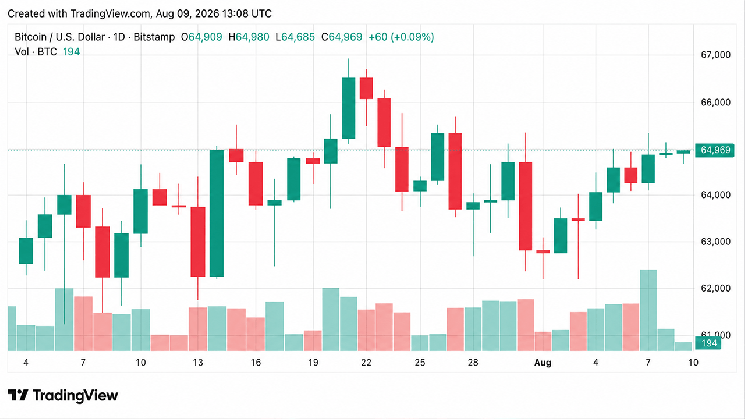
Bitcoin's price remained unusually stable, trading in a narrow range between roughly $64,500 and $65,250 over the weekend of August 9, 2026, despite two significant events. First, a security flaw in Coldcard hardware wallets led to substantial thefts, with high-confidence estimates ranging from 1,596 to 1,719 BTC (approx. $133M). The market appeared to view this as a product-specific security failure rather than a systemic Bitcoin issue, as the stolen coins were a tiny fraction of circulating supply and network operations continued normally. Second, the attempted activation of BIP-110, which required 55% miner signaling, failed dramatically, achieving only about 2.53% support. A minority chain formed but quickly stalled, controlling only a tiny fraction of the network's hash rate while inheriting Bitcoin's full mining difficulty, leaving it effectively dead in the water. Throughout both episodes, Bitcoin's price showed no sharp reaction. Technical indicators like the RSI and MACD were neutral, with immediate support seen at $64,000-$64,500 and resistance at $65,000-$65,500. The most notable aspect was the lack of a significant price move following a major wallet vulnerability and an actual chain split. Traders are now watching for a breakout from the $64,000-$66,000 corridor, which may depend more on liquidity, institutional ETF flows, and macroeconomic data than on these past events.

cryptonews.ru3 saat önce

Bitcoin Price Remains Virtually Unchanged Amid Mass Coldcard Withdrawals and BIP-110 Failure

cryptonews.ru3 saat önce

İşlemler

Spot
活动图片