Crypto Titan Grayscale Joins IPO Rush In The US: What Investors Need To Know

bitcoinist2025-11-14 tarihinde yayınlandı2025-11-14 tarihinde güncellendi

Özet

Following the conclusion of the recent US government shutdown, Grayscale, the industry's leading asset manager, has made a significant move...

Trusted Editorial content, reviewed by leading industry experts and seasoned editors. Ad Disclosure

Following the conclusion of the recent US government shutdown, Grayscale, the industry’s leading asset manager, has made a significant move by filing for its initial public offering (IPO) with US regulators. 

This step aligns with a trend where several crypto-focused companies have been increasingly entering the IPO race, reflecting the growing prominence of digital assets within the financial landscape.

Grayscale’s IPO Revelation

Grayscale initiated the IPO process confidentially back in July, which allowed the company to withhold public disclosure of its financial information until now, with the official IPO filing now unveiled for public scrutiny. 

With assets under management totaling $35 billion as of September 30, Grayscale disclosed a net income of $203.3 million in the initial nine months of 2025.

However, despite its substantial assets under management, Grayscale has faced a decline in profitability and revenue over the past year. In the corresponding period of 2024, the company reported a higher net income of $223.7 million. 

The revenue for the first three quarters of the year stood at $318.7 million, marking a 20% decrease from the $397.9 million recorded in the same time frame back in 2024.

The ongoing surge of crypto firms entering the public market has been notable in the backdrop of a crypto-friendly administration by President Donald Trump, which has facilitated a closer integration of digital assets into mainstream financial operations. 

Noteworthy names such as stablecoin issuer Circle (CRCL), crypto exchanges Gemini (GEMI) and Bullish (BLSH), and Figure Technology led by Mike Cagney have all made their debut in the New York Stock Exchange (NYSE) this year.

A New Chapter For The Crypto Asset Manager

While Grayscale’s IPO marks a significant milestone, the company, like many others in the crypto sector, has encountered challenges due to the extreme market volatility experienced this year. 

Price upswings in cryptocurrencies like Bitcoin (BTC) and Ethereum (ETH) have impacted the performance of crypto-related firms. Post-IPO, Circle and Bullish have witnessed decreases in share value from their peak prices, while Gemini is trading below its offering price as concerns regarding mounting losses persist.

Grayscale’s IPO filing acknowledges the company’s concentrated exposure to the digital asset industry, emphasizing its reliance on market conditions, which remain notably volatile. 

The performance of its exchange-traded funds (ETFs), particularly the Grayscale Bitcoin Trust and the Grayscale Ethereum ETF, has fluctuated significantly throughout the year due to continuous market uncertainties.

With plans to trade on the New York Stock Exchange under the ticker symbol “GRAY,” Grayscale’s IPO has garnered notable attention, with Morgan Stanley, BofA Securities, Jefferies, and Cantor serving as the lead underwriters for the deal. 

Grayscale
The daily chart shows the drop in the total crypto market cap valuation to $3.29 trillion. Source: TOTAL on TradingView.com

Featured image from DALL-E, chart from TradingView.com

Editorial Process for bitcoinist is centered on delivering thoroughly researched, accurate, and unbiased content. We uphold strict sourcing standards, and each page undergoes diligent review by our team of top technology experts and seasoned editors. This process ensures the integrity, relevance, and value of our content for our readers.

Ronaldo is a seasoned crypto enthusiast with over four years of experience in the field. He is passionate about exploring the vast and dynamic world of decentralized finance (DeFi) and its practical applications for achieving economic sovereignty. Ronaldo is constantly seeking to expand his knowledge and expertise in the DeFi space, as he believes it holds tremendous potential for transforming the traditional financial landscape.

İlgili Okumalar

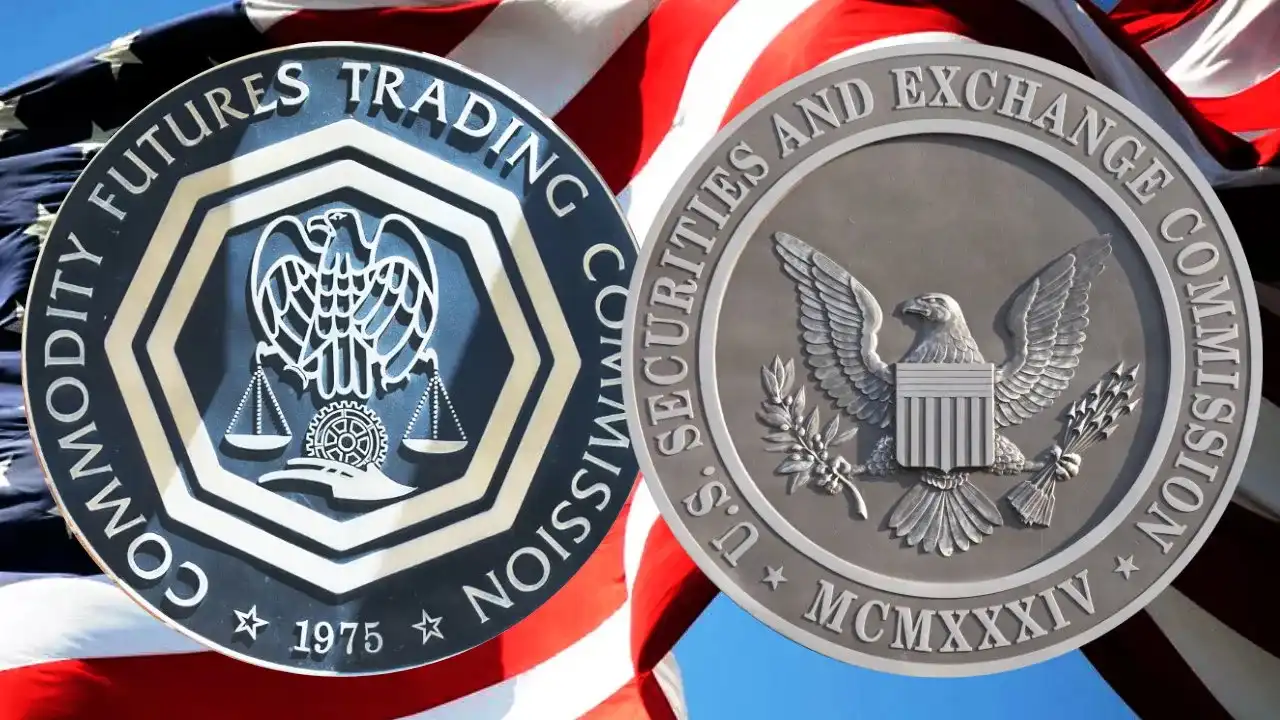
U.S. Crypto Regulatory 'Civil War' Ceasefire: A Turning Point in the Decade-Long Power Struggle Between SEC and CFTC

For over a decade, the U.S. cryptocurrency industry has operated under regulatory uncertainty, with two key questions unresolved: what exactly are crypto assets, and which agency should regulate them? The Securities and Exchange Commission (SEC) and the Commodity Futures Trading Commission (CFTC) have long held overlapping and conflicting claims over crypto oversight, creating a "regulatory fog" that hindered innovation and pushed businesses to more predictable jurisdictions. Recently, signs of change have emerged. The SEC introduced a new classification framework in November 2025, categorizing digital assets into four types—digital commodities, digital collectibles, digital tools, and tokenized securities—acknowledging that not all crypto assets are securities. More significantly, the SEC and CFTC signed a Memorandum of Understanding (MOU) to enhance coordination in areas like crypto regulation, investor protection, and federal policy. Although non-binding, the MOU signals a move toward resolving jurisdictional conflicts and creating an "adaptive regulatory framework" tailored to digital assets. This shift is partly a response to global competition, as other financial centers develop clearer crypto regulations. Additionally, the growing integration of crypto with traditional finance—through stablecoins and real-world asset tokenization—demands a more structured regulatory approach. If successful, these efforts may lead to a unified federal framework, ending long-standing ambiguities and positioning the U.S. to better compete in the evolving digital financial landscape.

marsbit12 dk önce

U.S. Crypto Regulatory 'Civil War' Ceasefire: A Turning Point in the Decade-Long Power Struggle Between SEC and CFTC

marsbit12 dk önce

Matrixport Research: After Five Consecutive Months of Bitcoin Decline, Conditions for a Market Rebound Are Gradually Forming

Matrixport Research: Conditions for a Market Rebound Gradually Forming After Bitcoin's Consecutive Five-Month Decline Amid low trading volumes and weak market sentiment, with many investors shifting focus to traditional assets like gold and oil, underlying market conditions are quietly improving. Bitcoin has declined for five consecutive months—a historically rare occurrence—which has often preceded阶段性反弹 (stage-wise rebounds) in the past. Similarly, the total market cap of altcoins has fallen to a range that has historically triggered multiple rebound initiations. Although the overall altcoin model has not yet turned bullish, the number of altcoins reclaiming their 30-day moving average and showing improved momentum through quantitative screening has significantly increased. With stablecoin funds flowing back into the market, overall liquidity conditions are also improving, pointing to a potential market inflection window. From a historical perspective, Bitcoin often experiences阶段性反弹 (stage-wise rebounds) after three consecutive months of decline in a bear market. A sustained decline of four to six months with little recovery is relatively rare. The market is currently in such an extreme sequence, increasing the probability of a short-term counter-trend recovery. Simultaneously, the valuation of the altcoin sector has entered a range where周期性反弹 (cyclical rebounds) have historically been more likely. When the total altcoin market cap deviates approximately 30% from its 90-day moving average, the market is often in a bottom-building phase, followed by sustained recovery in Bitcoin and altcoins. Although trading volume remains low, the price structure of some altcoins has begun to improve, and Bitcoin is potentially building a阶段性底部 (stage-wise bottom) near $66,000. If prices hold the current support zone and gradually break through key resistance levels, the recovery process is expected to continue. Despite the overall weak performance of altcoins this cycle, some structural changes are emerging. More altcoins are reclaiming their 30-day moving average and beginning to outperform Bitcoin—often an early signal of improved market momentum. The number of altcoins selected through quantitative momentum screening has also increased significantly, with some tokens simultaneously exhibiting improved momentum and fundamental catalysts. More importantly, the market funding environment is changing. The previous dynamic dominated by liquidations and capital outflows is gradually shifting towards capital回流 (inflows). The re-expansion of stablecoin liquidity is a key signal; in the past month, Circle's USDC alone recorded approximately $8 billion in net inflows, indicating that capital is re-entering the crypto market. As liquidity gradually improves, the probability of capital being reallocated to Bitcoin and Ethereum is also rising, which will provide support for a broader market. Overall, while crypto market sentiment remains subdued, multiple key conditions are gradually forming. After a historically rare streak of monthly declines, Bitcoin appears to be building a potential bottom; stablecoin funds are回流 (flowing back), improving market liquidity. Simultaneously, the altcoin market breadth is expanding, with more tokens reclaiming their 30-day momentum threshold. Although the altcoin model has not yet officially turned bullish, trading setups meeting screening conditions have risen to their highest level in months. If Bitcoin confirms a trend breakout above key points, the probability of a broader阶段性反弹 (stage-wise rebound) will further increase.

Matrixport52 dk önce

Matrixport Research: After Five Consecutive Months of Bitcoin Decline, Conditions for a Market Rebound Are Gradually Forming

Matrixport52 dk önce

İşlemler

Spot
Futures
活动图片