Эксперт спрогнозировал ралли биткоина благодаря «вертолетным» деньгам Трампа

cryptonews.ru2025-08-09 tarihinde yayınlandı2025-11-10 tarihinde güncellendi

Президент США Дональд Трамп анонсировал программу «дивидендов» для американцев за счет поступлений от торговых пошлин.

«Каждый получит дивиденды в размере как минимум $2000, за исключением граждан с высокими доходами», — написал политик в своей соцсети Truth Social.

В настоящее время Верховный суд страны рассматривает законность предлагаемых президентом тарифных мер.

Трейдеры на рынках прогнозов скептически оценивают шансы на одобрение. На Polymarket и Kalshi показатель составляет 23%.

Источник: Polymarket.

По словам аналитиков The Kobeissi Letter, выплаты могут получить около 85% взрослого населения США, или 220 млн человек. В таком случае общая сумма дивидендов составит $440 млрд.

Stimulus checks are back:

President Trump just announced the "tariff dividend," a payment of AT LEAST $2,000 per American.

We expect 85%+ of US adults to receive this, resulting in $400+ BILLION handed out.

All as US debt nears $40 trillion.

What's next? Let us explain. pic.twitter.com/1xVSyq4UUN

— The Kobeissi Letter (@KobeissiLetter) November 9, 2025

Эксперты предупредили об инфляционных рисках. Аналогичные стимулы в 2020 году разогнали инфляцию до 10%. Сейчас она составляет 3%.

Мнения

Гендиректор Damped Spring Advisors Энди Констан отметил, что Трамп не обладает полномочиями единолично утверждать подобные выплаты. Решения принимает законодательная власть.

All these guys are motherfucking panicked. This 2000 can not be legislated so is fake news https://t.co/CcYaZOBfF8

— Andy Constan (@dampedspring) November 9, 2025

Эксперт выразил сомнение, что Конгресс одобрит инициативу президента.

Специалисты в области налогов и бюджета отметили несоответствие между объемом собранных тарифных поступлений и заявленными целями выплат.

По оценке вице-президента по федеральной налоговой политике Эрики Йорк, на обещанные Трампом дивиденды потребуется как минимум $300 млрд. Торговые пошлины пока принесли только $120 млрд.

В контексте общего влияния тарифов на бюджет финансовые перспективы программы выглядят еще более сомнительными, заявила эксперт. Она пояснила, что каждый полученный от торговых пошлин доллар обходится бюджету в 24 цена из-за сокращения поступлений от подоходного налога и социальных взносов.

С учетом косвенного эффекта чистая бюджетная выручка снижается примерно до $90 млрд.

Влияние

Соучредитель Morgan Creek Digital Энтони Помплиано считает, что в случае реализации инициатива Трампа окажет положительное влияние на фондовый и криптовалютный рынки.

The President of the United States just announced a $2,000+ dividend to American citizens that are not high income.

Stocks and bitcoin only know to go higher in response to stimulus. pic.twitter.com/ZDoOfywK3R

— Anthony Pompliano 🌪 (@APompliano) November 9, 2025

Ранее аналитики Bitfinex выразили схожее мнение, проведя параллель с событиями 2020 года. Тогда связанные с пандемией COVID-19 выплаты стимулировали приток средств от розничных инвесторов и стали одним из факторов роста биткоина.

В марте 2020 года президент США подписал инициативу на $2 трлн. Она предполагала выплаты до $1200 гражданам с скорректированным валовым доходом до $75 000.

За тот период цена биткоина подскочила на 1050% — с $6000 в марте 2020 года до $69 000 к ноябрю 2021 года. Однако рост также совпал с количественным смягчением ФРС. Регулятор объявил о программе выкупа облигаций на $4 трлн, увеличив объем денежной массы.

Текущая выплата «дивидендов» тоже может сопровождаться с благоприятной для криптовалют политикой Федрезерва. Инвесторы ожидают, что на заседании 10 декабря регулятор снизит ключевую ставку еще на 25 базисных пунктов.

Источник: CME FedWatch.

Напомним, возможное завершение шатдауна в США взбодрило крипторынок.
İlgili Okumalar

From Speculation to Risk Management: Predictive Markets Are Filling the Gap in Commercial Insurance

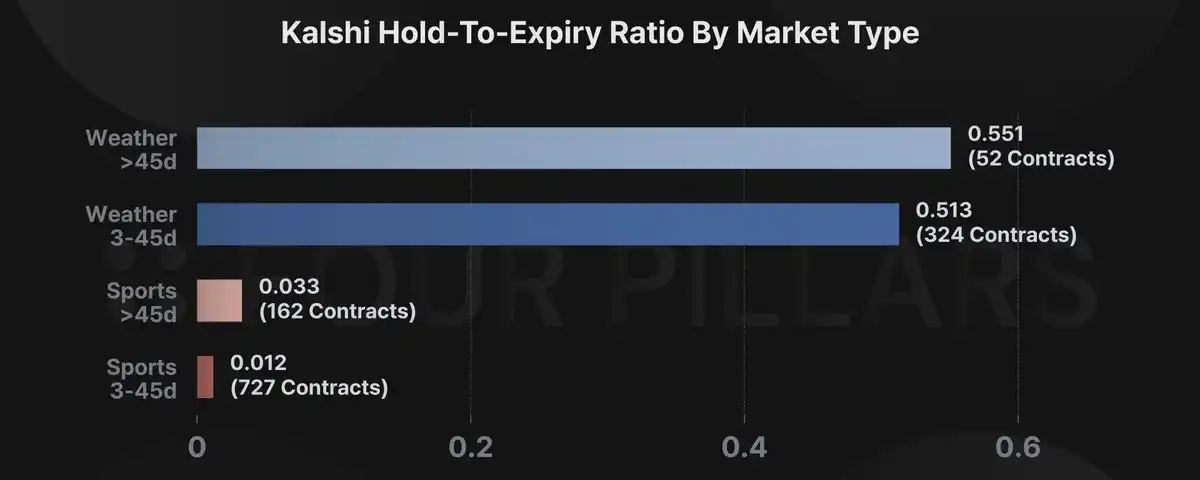
From Speculation to Risk Management: Predictive Markets Filling the Commercial Insurance Gap The emergence of AI risk management tools like Blanket is exploring the potential of predictive markets as a genuine insurance tool for businesses. These markets, with their simple contract structure—paying $1 if an event occurs, $0 if not—allow the real-time market price to reflect collective probability assessments. Businesses can use them to hedge against operational risks (e.g., abnormal weather, energy price fluctuations) that are often not covered by traditional business interruption insurance, which typically requires physical damage. A key question is whether these markets are genuinely used for hedging or remain primarily speculative. Analysis of Kalshi markets from August 2025 to August 2026 compared weather contracts (a potential hedge instrument) against sports contracts (largely speculative) and traditional CME grain futures. Three behavioral metrics were examined: 1. **Daily Turnover Rate:** Weather contracts showed the lowest rate (0.210), lower than corn futures (0.266) and significantly lower than sports contracts (0.315), suggesting longer holding periods. 2. **Hold-to-Expiry Ratio:** Weather contracts had a much higher ratio (over 0.5) compared to near-zero ratios for sports contracts, indicating a stronger tendency to hold positions until settlement, consistent with hedging behavior. 3. **Position Buildup Timing:** Weather market positions reached 50% of their peak much earlier in their lifecycle than sports market positions, aligning with the early risk-locking behavior seen in traditional futures hedging markets. The data indicates that the Kalshi weather market exhibits transaction patterns distinct from pure speculation and more aligned with hedging markets, suggesting real hedging demand exists alongside speculative activity. Crucially, speculation provides the essential liquidity and pricing mechanism that enables the hedging function. The future growth of predictive markets as viable risk management infrastructure depends not on eliminating speculation, but on building real enterprise hedging demand atop this existing liquidity base.

marsbit3 dk önce

From Speculation to Risk Management: Predictive Markets Are Filling the Gap in Commercial Insurance

marsbit3 dk önce

Fields Medalist: AI Currently Mainly "Challenges" to Break Major Mathematical Conjectures

Fields Medalist Timothy Gowers observes that current AI breakthroughs in mathematics often come from a "contrarian" approach: actively searching for counterexamples to disprove major conjectures. Recent high-profile achievements—such as progress on the Erdős unit distance problem, the Jacobian conjecture, the existence of non-sofic groups, and multicolor Ramsey numbers—largely involve AI constructing specific counterexamples or novel objects that violate long-held assumptions. Gowers explains this tendency stems from AI's two key strengths: vast knowledge across mathematical domains, enabling unexpected cross-tool synthesis (e.g., applying algebraic number theory to a discrete geometry problem), and the ability to conduct low-cost, extensive trial-and-error searches in huge combinatorial spaces. Unlike human mathematicians who rely on intuition (a "nose") to prune unpromising paths, AI excels at breadth-first exploration—testing countless constructions until it finds a qualifying example. However, Gowers notes current limitations: AI often proposes superficially plausible but flawed approaches and may get stuck refining "more precise subproblems" without true progress. He envisions a future where AI not only solves problems but generates fundamentally new, elegant methods that inspire further human research—a sign it has evolved from a search tool into a genuine creative partner in mathematics.

marsbit3 dk önce

Fields Medalist: AI Currently Mainly "Challenges" to Break Major Mathematical Conjectures

marsbit3 dk önce

Hegotá EIP Comprehensive Overview: Where is Ethereum's Next Hard Fork Headed?

The article outlines Ethlabs' recommended priorities for the upcoming Ethereum Hegotá hard fork, following Glamsterdam. The core focus areas are: 1. **Stronger censorship resistance** via EIP-7805 FOCIL (already in SFI stage). 2. **A faster Ethereum** by shortening the slot time via EIP-8198 Quick Slots (S-tier recommendation). This aims to reduce transaction confirmation latency and improve cross-chain interoperability. 3. **Native account abstraction** through EIP-8141 Frame Transactions (A-tier). This enables passkey wallets, gas sponsorship, and batched transactions. Its flexibility allows for custom validation logic and future post-quantum security but presents ecosystem coordination challenges. 4. **Continued L1 scaling** by optimizing resource pricing with proposals like EIP-8131 & EIP-8279 (S-tier) to prepare for future gas limit increases. The article uses a tiered system (S, A, B, D) to rank proposed EIPs based on their value and implementation feasibility. It advises strictly controlling the scope of Execution Layer (EL) changes in Hegotá to reserve developer bandwidth for future large-scale upgrades like decoupled consensus. Other notable proposals include EIP-8363 for staking issuance changes (requiring broad community consensus), various post-quantum preparation EIPs, and zkEVM optimizations. Ethlabs emphasizes that Ethereum upgrades are complex, high-risk endeavors requiring coordination across the entire ecosystem.

marsbit22 dk önce

Hegotá EIP Comprehensive Overview: Where is Ethereum's Next Hard Fork Headed?

marsbit22 dk önce

Is the US Stock Market Rising Too Smoothly? BTIG Warns of Elevated Risk of Systematic Correction in August to October

U.S. Stocks at Risk of Systemic Pullback in August-October, Warns BTIG BTIG's chief technical market strategist warns that the market is entering the most dangerous seasonal window of midterm election years—August through October—trading at all-time highs with extremely low volatility. Historically, since 1990, the equal-weight S&P 500 (SPW) has experienced at least a 7% pullback in this period almost every midterm year, with 2006 being the lone exception. This pattern is often triggered by unforeseen external shocks. Multiple technical indicators flash warning signs. The maximum drawdown for the Invesco S&P 500 Equal Weight ETF (RSP) since March has not exceeded 2.25%, an unusually calm period signaling risk buildup. RSP currently trades about 11% above its 200-day moving average, a stretched level historically. Furthermore, the NYSE has recorded zero "80% downside volume days" in 2024, a record-long streak far below the annual average of 21, indicating a lack of selling pressure that may be overdue. Market complacency is evident with the CBOE put/call ratio near multi-year lows and the VIX at yearly lows, showing minimal demand for downside protection. A macroeconomic divergence adds to concerns: despite recent soft economic data, long-term Treasury yields remain near cycle highs, contradicting the equity market's optimistic pricing. BTIG suggests this is an attractive time to reduce risk or hedge broad equity exposure. For sector positioning, healthcare has historically shown resilience during midterm year pullbacks, while caution is advised on chasing energy's breakout and semiconductors are expected to continue seeking support near their 200-day average.

marsbit32 dk önce

Is the US Stock Market Rising Too Smoothly? BTIG Warns of Elevated Risk of Systematic Correction in August to October

marsbit32 dk önce

2026 Global Overview of Crypto Asset Taxation

Global Cryptocurrency Tax Overview for 2026 As cryptocurrencies integrate into the mainstream financial system, tax treatments across jurisdictions have moved from initial regulatory gaps towards institutionalization. The OECD's 2020 report, *Taxing Virtual Currencies*, was a key early comparative study. Since then, more jurisdictions have clarified tax rules through existing laws, specific regulations, or guidance, increasing the procedural and technical complexity of crypto taxation. Currently, crypto taxation is predominantly built upon traditional tax frameworks, typically applying income tax, capital gains tax, corporate tax, and indirect taxes based on asset nature and transaction activity. The maturity of rules varies: basic trading and mining are well-covered, while DeFi, NFTs, and other on-chain activities involve more complex asset exchanges and profit recognition, with corresponding tax rules remaining underdeveloped. Significant disparities exist in tax treatment and effective tax burdens across jurisdictions. Crypto assets can trigger direct taxes, indirect taxes, and property-related levies. Factors such as holding period, transaction type, income nature, and taxpayer status further influence the tax outcome. The global crypto tax landscape is thus evolving from the initial question of "whether to tax" towards more nuanced classification and treatment of different assets, transactions, and economic activities. The scope of crypto tax rules continues to expand. From 29 jurisdictions with guidance in 2021, the number grew to 43 by 2025. Existing rules are also becoming more detailed. However, rule coverage remains uneven—common activities like buying/selling are widely addressed, whereas staking, DeFi, and NFTs have significantly less guidance, as seen in jurisdictions like Germany and Australia. Tax liabilities are highly complex, determined by a combination of factors including taxpayer status, income classification, holding periods, and applicable deductions or exemptions. The concept of a "crypto-tax-friendly" jurisdiction is therefore relative and depends on specific user activities and circumstances.

marsbit35 dk önce

2026 Global Overview of Crypto Asset Taxation

marsbit35 dk önce

İşlemler

Spot
活动图片