ETC Proof of Work Course: 36. POW Is Not What Makes a Blockchain Unscalable

项目方ETC(Ethereum Classic)2024-08-14 tarihinde yayınlandı2025-11-10 tarihinde güncellendi

Ethereum Classic Blog

ETC Proof of Work Course: 36. POW Is Not What Makes a Blockchain Unscalable

Donald McIntyre
Education, Series

You can listen to or watch this video here:

banner

In the previous class, 35, we explained why proof of work (POW) blockchains must be attackable to be secure, we went over the way POW works and how the bias to subjectivity could put at risk the consensus mechanism.

It is the format and security of POW based Nakamoto Consensus that puts constraints to the amount of data that can be distributed across secure blockchains, thus their unscalability.

This means that it is not the work in POW that makes blockchains unscalable, so in this class, 36, we will explain the elements that make them limited in this dimension.

What Is Scalability?

Scalability means to process more transactions per unit of time.

Bitcoin (BTC) processes from 7 to 14 transactions per second, Ethereum Classic (ETC) can process from 7 to 17 transactions per second, but Visa processes 24,000 transactions per second.

This gap of Proof of Work (POW) blockchains with respect to the large traditional payment systems has made a lot of people worry about the lack of scalability in these networks and blame the work in POW for it.

Many people think that POW is unscalable because it requires a lot of work, therefore it must process less transactions.

However, POW is not the cause!

The inefficiency is caused by the rule of full replication of the database in all nodes globally, which requires smaller and slower blocks. Proof of Stake (POS) and Proof of Authority (POA) networks that require full replication have exactly the same inefficiency.

Full Replication Is the Culprit
1

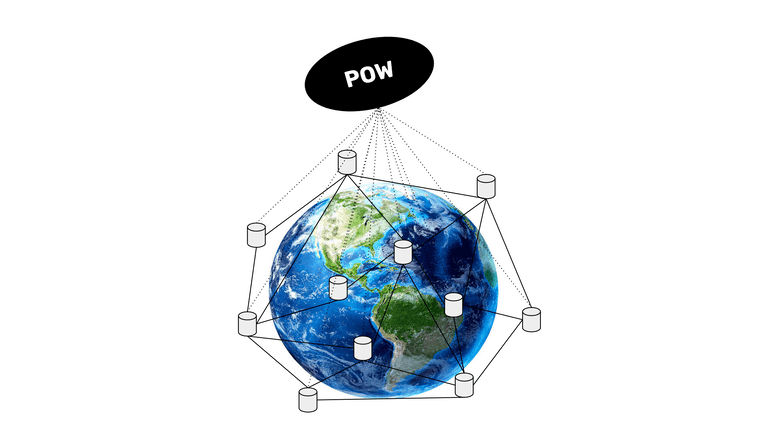
In a truly secure POW blockchain, both transactions and blocks are fully retransmitted to all participating nodes in the system. This is done so that all can keep and maintain an identical copy of the whole database.

This full replication of the database is the key security strategy of the blockchain model. The idea is to have all the accounts, balances, and smart contracts replicated in as many computers around the world as possible so they may be as decentralized as possible, and impossible to take down by man or natural events.

However, full replication of databases; let alone ledgers with accounts, balances, and smart contracts; in a totally decentralized way was not possible before, making the systems insecure and dependent on trusted third parties.

The solution to accomplish full replication globally in a totally decentralized way was the Proof of Work algorithm, which is a component of the Nakamoto Consensus design.

But POW is not what makes blockchains such as Bitcoin and Ethereum Classic unscalable. Full replication globally is the reason these networks have a cap of transactions they can process per day.

This is why Ethereum moved to POS but is still unscalable.

Any Truly Decentralized Blockchain Must Be Unscalable

Any truly decentralized POW blockchain will have to be unscalable.

The Nakamoto Consensus design specifies that all data must be replicated in all nodes, and all nodes must hold exactly the same copy of the database.

This puts a physical constraint in the size and frequency of blocks to ensure full propagation and synchronicity of all the nodes globally.

Restricted size and frequency of blocks means a limited amount of transactions will fit per block, thus making these systems unscalable.

It is important to understand that POW can process any size of block at any frequency. It is because of restrictions in retransmission and full replication, not POW, that blocks must be small and less frequent.

How Does Full Replication (And Not POW) Restrict Scalability?

Below we list several reasons why blocks must be small and less frequent in fully replicated networks, therefore produce less transactions per second:

1. Bloating: If blocks were larger and faster, then the database would grow larger very quickly and that would put pressure on node operators who have to keep up with sufficient computational storage to maintain their nodes. This would reduce the number of nodes in the chain and increase centralization. It would also go against common principles in the industry which are to “run your own node” and “verify everything” as people would prefer to use third party nodes rather than their own.

2. Technical: Related to bloating and centralization, the technical reasons why larger and faster blocks would be disadvantageous are that they would require higher bandwidth, thus limiting the areas in the world and kinds of operators who could process the data; they would require more powerful CPUs for validating the blocks, large data centers with big bandwidth, limiting the reach to operators with more capacity; and the initial blockchain download time (IBD) for new entrants or re-entrants would be very long, creating an additional barrier to participating in the system.

3. Miner economics: As the monetary policy in Bitcoin and ETC is decreasing and capped, miners will depend on fee revenues in the future. If blocks were larger and faster, then transaction fees would be lower. With scarce block space and low frequency, then fees will be higher thus financing the security that miners provide to these networks with their hashing power.

4. Block propagation: If blocks were larger, block propagation would be slower. This would benefit the larger, well geographically positioned miners in the world and eliminate the smaller miners in remote areas from the network, and would make mining centralized.

Layer 2 Systems Can Make Proof of Work Scalable

The solution to scalability is either to build layer 2 systems that may process more transactions, net them out, and then settle them at the POW base layer, or for users just to pay higher fees if they wish to use the security of POW blockchains.

Examples of layer 2 systems that may make Bitcoin and ETC more scalable are channel payments systems such as Lightning Network, regular centralized apps that settle on the POW blockchains such as centralized exchanges, and layer 2 decentralized networks that use proofs to anchor their systems on the base layer POW blockchains, such as Polygon and BitVM.


Thank you for reading this article!

To learn more about ETC please go to: https://ethereumclassic.org

Trend Kriptolar

İlgili Okumalar

Why Is the World Nervous About Japan Raising Interest Rates?

In June 2026, the Bank of Japan raised its policy rate to 1%, marking its first hike to this level since 1995. While this rate remains low compared to global peers like the US and Europe, the move signals a profound shift for a nation that has been a global source of ultra-cheap funding for decades. Japan's long-standing near-zero or negative interest rates had facilitated massive "yen carry trades," where international investors borrowed low-cost yen to invest in higher-yielding assets worldwide, such as US tech stocks and emerging market bonds. This made Japan a critical, often overlooked, source of global liquidity. Japan's ultra-loose policy stemmed from structural challenges post-1990s asset bubble: aging demographics, chronic low inflation/deflation, and high public debt. Recent shifts, including sustained wage growth (exceeding 5% in recent years) and inflation consistently above the 2% target, have created a "wage-price spiral" possibility, prompting the policy normalization. The global market's concern lies not in the absolute rate but in the potential unwinding of the yen carry trade. As Japanese borrowing costs rise, the economics of these leveraged global investments change, potentially triggering deleveraging and capital outflows from risk assets. Market anxiety focuses on the end of a thirty-year consensus that Japan would perpetually provide cheap funding. Ultimately, the global impact will depend on the interplay with US monetary policy. While Japan is tightening, the significant interest rate differential with the US remains. The key future dynamic is whether simultaneous Japanese hikes and eventual US rate cuts will narrow this gap, forcing a major recalibration of global capital flows and asset pricing built on an era of abundant, cheap yen liquidity.

marsbit5 saat önce

Why Is the World Nervous About Japan Raising Interest Rates?

marsbit5 saat önce

İşlemler

Spot
Futures

Popüler Makaleler

ATWO Nedir

I. Proje TanıtımıArena Two, hayranların gerçek zamanlı etkinlik sonuçlarında aktif, tokenleştirilmiş bir rol oynamasına olanak tanıyan merkeziyetsiz bir etkileşimli platformdur. Hayranları pasif izleyicilere indirgeyen geleneksel yayıncılık modellerinin aksine, Arena Two, hayranların doğrudan gerçek zamanlı oy kullanmalarını ve sahadaki sonuçları etkilemelerini sağlamak için blok zinciri teknolojisini kullanır.II. Token BilgileriToken adı: ATWO(Arena Two)III. İlgili BağlantılarWeb sitesi:https://arenatwo.com/Keşif araçları:https://basescan.org/token/0x499D35eBE6cEe9B2Ac35Fd003fcBbeeB9CFc7B32Twitter:https://x.com/arenatwoXNot: Proje tanıtımı, resmi proje ekibi tarafından yayınlanan veya sağlanan materyallerden gelmektedir ve yalnızca referans amaçlıdır, yatırım tavsiyesi niteliği taşımaz. HTX, ortaya çıkan doğrudan veya dolaylı kayıplardan sorumluluk kabul etmez.

277 Toplam GörüntülenmeYayınlanma 2026.05.18Güncellenme 2026.06.02

ATWO Nedir

ATWO Nasıl Satın Alınır

HTX.com’a hoş geldiniz! Arena Two (ATWO) satın alma işlemlerini basit ve kullanışlı bir hâle getirdik. Adım adım açıkladığımız rehberimizi takip ederek kripto yolculuğunuza başlayın. 1. Adım: HTX Hesabınızı OluşturunHTX'te ücretsiz bir hesap açmak için e-posta adresinizi veya telefon numaranızı kullanın. Sorunsuzca kaydolun ve tüm özelliklerin kilidini açın. Hesabımı Aç2. Adım: Kripto Satın Al Bölümüne Gidin ve Ödeme Yönteminizi SeçinKredi/Banka Kartı: Visa veya Mastercard'ınızı kullanarak anında Arena Two (ATWO) satın alın.Bakiye: Sorunsuz bir şekilde işlem yapmak için HTX hesap bakiyenizdeki fonları kullanın.Üçüncü Taraflar: Kullanımı kolaylaştırmak için Google Pay ve Apple Pay gibi popüler ödeme yöntemlerini ekledik.P2P: HTX'teki diğer kullanıcılarla doğrudan işlem yapın.Borsa Dışı (OTC): Yatırımcılar için kişiye özel hizmetler ve rekabetçi döviz kurları sunuyoruz.3. Adım: Arena Two (ATWO) Varlıklarınızı SaklayınArena Two (ATWO) satın aldıktan sonra HTX hesabınızda saklayın. Alternatif olarak, blok zinciri transferi yoluyla başka bir yere gönderebilir veya diğer kripto para birimlerini takas etmek için kullanabilirsiniz.4. Adım: Arena Two (ATWO) Varlıklarınızla İşlem YapınHTX'in spot piyasasında Arena Two (ATWO) ile kolayca işlemler yapın.Hesabınıza erişin, işlem çiftinizi seçin, işlemlerinizi gerçekleştirin ve gerçek zamanlı olarak izleyin. Hem yeni başlayanlar hem de deneyimli yatırımcılar için kullanıcı dostu bir deneyim sunuyoruz.

191 Toplam GörüntülenmeYayınlanma 2026.05.18Güncellenme 2026.06.02

ATWO Nasıl Satın Alınır

ZEST Nedir

I. Proje Tanıtımı1. Zest Protocol Nedir?Zest Protocol, kullanıcıların BTC ile getiri kazanmasına veya BTC'yi teminat göstererek varlık ödünç almasına olanak tanıyan, Stacks Layer 2 üzerinde inşa edilmiş Bitcoin yerel bir kredi protokolüdür. Protokolün akıllı sözleşmeleri Clarity dilinde yazılmıştır, tamamen zincir üzerinde çalışır ve açık kaynaklıdır; tasarımı Aave v3'ten ilham alınarak yapılmıştır. Zest, şu anda 800'den fazla BTC'nin yatırıldığı ve zirve TVL'sinin 100 milyon doları aştığı Stacks'teki en büyük DeFi protokolüdür. Mayıs 2026'da protokol, Stacks'tan Bitcoin ana ağına kredi verme yeteneklerini genişleten Bitcoin Teminat Kasaları'nı tanıttı. Bu, kullanıcıların BTC'yi Bitcoin ağından çıkarmadan stabilcoin ödünç almasına olanak tanır ve kendine ait saklama ile kredi vermeyi mümkün kılar.2. Zest Protocol Nasıl Çalışır?Zest Protocol, iki piyasadan oluşmaktadır. Stacks piyasası, kullanıcıların sBTC, STX ve USDC gibi varlıkları yatırarak getiri kazanmasına veya aşırı teminatlı krediler almasına olanak tanıyan Aave v3 üzerine inşa edilmiştir. Varsayılan maksimum LTV %50'dir (%70 sBTC için). Bitcoin piyasası, yeni başlatılan Bitcoin Teminat Kasaları aracılığıyla çalışır. Kullanıcılar, Bitcoin zincirinde kendine ait saklama kasalarında BTC'yi kilitleyerek stabilcoin ödünç alırlar. Teminat, tüm süreç boyunca Bitcoin ana ağında kalır ve kullanıcılar pozisyon tasfiye edilmedikçe saklama hakkını korur.3. Zest Protocol'ü Kim Kurdu?Tycho Onnasch (Kurucu Ortak): Oxford Üniversitesi'nden mezun. Stacks Açık İnternet Vakfı için araştırma ve hibe çalışmalarında yer aldı. Trust Machines'da eski yönetici ve Deedmob'un kurucusu. LinkedIn Profili: https://www.linkedin.com/in/tychokoonnasch/.Fernando Foy (Kurucu Ortak): Daha önce Objectif Emploi'de IT danışmanlığı yaptı. LinkedIn Profili: https://www.linkedin.com/in/fernando-foy/.Emil E. (Kurucu Ortak): Warwick Üniversitesi'nden Fizik alanında Yüksek Lisans derecesine sahiptir. Trust Machines'da eski mühendislik ortağı, Web3 projeleri için tam yığın geliştirici ve HSBC'de veri bilimcisi olarak çalıştı. LinkedIn Profili: https://www.linkedin.com/in/emil-e-49771a145/.Finansman Detayları: Mayıs 2024'te, Zest Protocol, Tim Draper liderliğindeki 3.5 milyon dolarlık bir tohum finansmanı turunun tamamlandığını duyurdu; Binance Labs, Flow Traders, Trust Machines ve diğerlerinin katılımıyla.4. $ZEST Tokenomikası$ZEST, Zest Protocol'ün yerel token'ıdır ve toplam arzı 1 milyar token ile sabit olup enflasyon mekanizması yoktur.Topluluk (27.83%): Airdrop'lar ve kullanıcı teşvikleri için kullanılır;Eko Sistem Gelişimi (24.82%): Likidite, ortaklıklar, pazarlama, borsa listelemeleri vb. için kullanılır;Yatırımcılar (22.35%): Zest Protocol'ün erken gelişimini destekleyen yatırımcı taraflarını destekler;Takım (25%): Ana katkıda bulunanlar için ayrılmıştır.Vesting Takvimi: Takım ve Yatırımcı token'ları, 1 yıllık bir kilitlenme süresine tabi olup ardından 3 yıl boyunca lineer olarak serbest bırakılacaktır.5. Anahtar Dönüm Noktalarının Zaman Çizelgesi2022: Zest Protocol resmi olarak kuruldu.Mart 2024: Güvenlik denetimi tamamlandı ve Stacks kredi piyasası ana ağda başlatıldı.Şubat 2026'da, Stacks Market V2 başlatıldı ve Risk Grupları tanıtıldı.Mayıs 2026'da, Bitcoin Teminat Kasaları tanıtıldı ve şu anda operasyonel bir ana ağ prototipi mevcuttur. Bu, kullanıcıların kendine ait saklama BTC'lerini Bitcoin L1 üzerinde teminat olarak kullanarak EVM zincirlerinde stabilcoin ödünç almalarını sağlar; köprüleme, sarma ve üçüncü taraf saklama işlemlerini sona erdirir. Bu dağıtım iki aşamaya ayrılmıştır. Aşama 1: BTC hareketini kısıtlamak için önceden imzalanmış işlemleri kullanır; Aşama 2: Doğrulama için BitVM kullanır. II. Token BilgisiToken adı: ZEST(Zest Protocol)III. İlgili BağlantılarWeb sitesi:https://www.zestprotocol.com/Keşif Araçları:https://bscscan.com/token/0x5506599c722389a60580b5213ea1da60d64754a1Twitter:https://twitter.com/ZestProtocolNot: Proje tanıtımı, resmi proje ekibi tarafından yayımlanan veya sağlanan materyallerden alınmıştır, yalnızca referans amaçlıdır ve yatırım tavsiyesi niteliği taşımaz. HTX, sonuçlanan doğrudan veya dolaylı kayıplardan sorumluluk kabul etmez.

200 Toplam GörüntülenmeYayınlanma 2026.05.19Güncellenme 2026.06.02

ZEST Nedir

Tartışmalar

HTX Topluluğuna hoş geldiniz. Burada, en son platform gelişmeleri hakkında bilgi sahibi olabilir ve profesyonel piyasa görüşlerine erişebilirsiniz. Kullanıcıların A (A) fiyatı hakkındaki görüşleri aşağıda sunulmaktadır.

活动图片














