На Circle Arc проводится первый в Южной Корее эксперимент со стейблкоином воны

cryptonews.ru2025-01-29 tarihinde yayınlandı2025-10-30 tarihinde güncellendi

Южнокорейский криптокастодиан BDACS планирует выпустить стейблкоин, обеспеченный вонами, «KRW1» на недавно запущенном блокчейне Circle Arc.

Компания из Пусана подписала меморандум о взаимопонимании (МОВ) с Circle о разработке и развертывании KRW1 на Arc, создав так называемую «органическую структуру сотрудничества», как сообщило в среду информационное агентство Yonhap.

«Это сотрудничество — важный шаг на пути к выходу корейских инноваций на мировой рынок», — заявил Рю Хон Ёль, генеральный директор BDACS.

«Развертывая KRW1 на Circle Arc, мы открываем корейским компаниям возможность участвовать в глобальной сети стейблкоинов», — добавил он.

Согласно отчёту, BDACS зарегистрировала торговую марку KRW1 в декабре 2023 года, заложив основу для запуска стейблкоина. Компания официально запустила KRW1 в сентябре после проверки концепции с Woori Bank, в ходе которой стейблкоин был впервые выпущен на блокчейне Avalanche. Согласно сентябрьскому пресс-релизу, каждый токен KRW1 полностью обеспечен южнокорейскими вонами, хранящимися на эскроу-счете в Woori Bank, а подтверждение наличия резервов в режиме реального времени осуществляется благодаря интеграции банковских API.

Лучшие стейблкоины по рыночной капитализации. Источник: CoinMarketCap

Тестовая сеть Arc уже запущена

Это произошло на следующий день после запуска публичной тестовой сети Arc от Circle. В заявлении, сделанном во вторник, Circle описала Arc как «экономическую операционную систему для интернета», разработанную для интеграции глобальной финансовой инфраструктуры непосредственно в блокчейн.

В тестовой сети Arc уже приняли участие более 100 международных организаций, включая BlackRock, Goldman Sachs, Visa, Mastercard и State Street.

Сеть отличается предсказуемыми комиссиями за транзакции на основе долларов США, точностью исполнения менее секунды и опциональными настройками конфиденциальности, что позволяет беспрепятственно использовать как USDC, так и другие активы, привязанные к фиатной валюте.

Эмитенты стейблкоинов из Японии, Бразилии, Мексики и Филиппин уже тестируют свои национальные токены на Arc, и корейский KRW1 теперь присоединяется к этому списку.

Эксперт критикует план банков по запуску стейблкоинов в Корее

Санмин Со, председатель фонда Kaia DLT, раскритиковал предложение Банка Кореи (BOK) о том, чтобы местные банки возглавили внедрение стейблкоинов, обеспеченных вонами, назвав его «нелогичным».

Банк Кореи приводит аргумент, что банки уже подпадают под строгое регулирование, включая требования к капиталу, валютному контролю и противодействию отмыванию денег, минимизируя риски, связанные с внедрением стейблкоинов. Также было предложено создать совместный орган по политике с участием валютных и финансовых органов для надзора за эмитентами и объемами эмиссии.

Однако Со отверг аргументацию центрального банка. Вместо того, чтобы ограничивать эмиссию только банками, он предложил четкие правила для всех потенциальных эмитентов, как банковских, так и небанковских, которые соответствуют определенным нормативным стандартам.


Trend Kriptolar

İlgili Okumalar

In the AI Era, What's Left for Bitcoin?

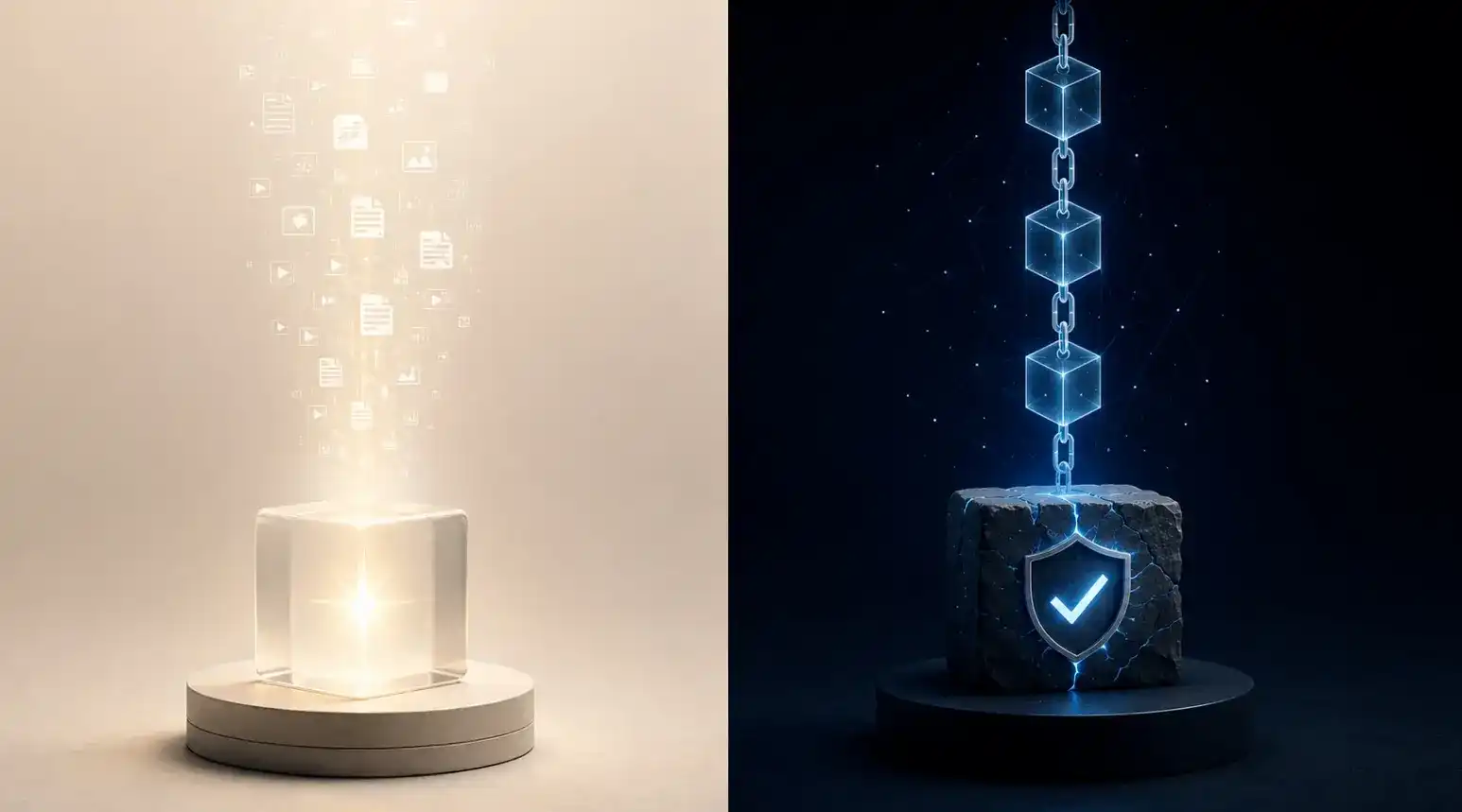
As Bitcoin falls below $60,000, the author reflects on the relationship between AI and Bitcoin, seeing them as two sides of the same coin. In the AI era, the cost of generating content has plummeted, making fake text, images, and videos increasingly easy and cheap to produce. This has led to a fundamental shift: while AI dramatically lowers the cost of information production, it also undermines trust and authenticity online. What becomes truly valuable is not more content, but the ability to verify what is real—"verifiability." This perspective offers a new lens for Bitcoin. Its massive energy consumption, often criticized as wasteful, is reinterpreted. While AI burns energy to enhance "capability" and efficiency, Bitcoin burns energy to produce "verifiability." Its purpose is not to be trusted but to enable a system where no trust in intermediaries—banks, platforms, or developers—is needed. Every transaction and the entire ledger's history is secured by cryptography and a decentralized network of nodes, making it independently verifiable. AI cannot forge a transaction on the Bitcoin network because the system is designed for proof, not generation. The author draws a historical parallel to the Renaissance: the printing press drastically reduced the cost of copying knowledge, while double-entry bookkeeping reduced the cost of trust in commerce. Today, AI is the new printing press, reducing content creation costs to near zero. Blockchain, and Bitcoin as its pioneer, may be the modern equivalent of double-entry bookkeeping—a foundational technology for verifying digital asset ownership and historical records without centralized authorities. Thus, AI and blockchain are not competitors. AI lowers the cost of creation; blockchain lowers the cost of verification. In an age where AI can generate anything, true scarcity may lie not in more content, but in independently verifiable facts. Whether the market will reprice Bitcoin accordingly remains uncertain, but its core value proposition as a "machine for producing verifiability" becomes strikingly relevant.

marsbit18 dk önce

In the AI Era, What's Left for Bitcoin?

marsbit18 dk önce

In the Age of AI, What's Left for Bitcoin?

Author: Sevclub, Seven Research Amid Bitcoin's recent drop below $60k, the author reflects on a growing sense that AI and Bitcoin are two sides of the same coin. Today, encountering any content triggers a new default question: "Was this made by AI?" The cost of generating convincing text, images, and video is now negligible. While the internet lowered information *distribution* costs, AI is crashing information *production* costs to near zero. The consequence is a flood of content where truth and falsehood are increasingly indistinguishable. In this environment, what becomes truly valuable is not more information, but the ability to verify what is real—"verifiability." This reframes the common criticism that Bitcoin "wastes electricity." AI consumes power to produce "capability" (e.g., more powerful models). Bitcoin consumes power to produce something else: "verifiability." Bitcoin's core purpose isn't about belief or trust in any institution, developer, or even its creator. It's about enabling independent verification. Every bitcoin's origin, every transaction, and the integrity of the entire ledger are secured by mathematics, cryptography, and a global network of nodes. AI can fabricate convincing media, but it cannot falsify a transaction on the Bitcoin network. The expended energy makes篡改历史 (tampering with history) prohibitively expensive, purchasing a globally verifiable ledger. The author draws a historical parallel to the Renaissance. The printing press drastically reduced the cost of copying knowledge, while double-entry bookkeeping reduced the cost of trust in commerce—one enabled creation, the other verification. Today, AI is the new printing press, driving content production costs toward zero. The question becomes: what is this era's "double-entry bookkeeping"? Blockchain appears to be the leading candidate. It doesn't verify which news is true or which image is real, but it provides a foundational layer for independently verifying asset ownership and historical records in the digital realm without centralized authorities. Therefore, AI and blockchain are not in competition. AI lowers the cost of *generation*. Blockchain (and Bitcoin as a prime example) lowers the cost of *verification*. One creates, the other proves. Whether Bitcoin ultimately succeeds remains uncertain, facing potential challenges from quantum computing, regulation, and technical evolution. However, the author now sees it less as a "machine for making bitcoin" and more as a "machine for making verifiability." In an age where AI can generate anything, true scarcity may no longer be "more content," but "more independently verifiable facts." Whether the market will price this accordingly is a separate question.

链捕手26 dk önce

In the Age of AI, What's Left for Bitcoin?

链捕手26 dk önce

İşlemler

Spot

Popüler Makaleler

ARC Nasıl Satın Alınır

HTX.com’a hoş geldiniz! AI Rig Complex (ARC) satın alma işlemlerini basit ve kullanışlı bir hâle getirdik. Adım adım açıkladığımız rehberimizi takip ederek kripto yolculuğunuza başlayın. 1. Adım: HTX Hesabınızı OluşturunHTX'te ücretsiz bir hesap açmak için e-posta adresinizi veya telefon numaranızı kullanın. Sorunsuzca kaydolun ve tüm özelliklerin kilidini açın. Hesabımı Aç2. Adım: Kripto Satın Al Bölümüne Gidin ve Ödeme Yönteminizi SeçinKredi/Banka Kartı: Visa veya Mastercard'ınızı kullanarak anında AI Rig Complex (ARC) satın alın.Bakiye: Sorunsuz bir şekilde işlem yapmak için HTX hesap bakiyenizdeki fonları kullanın.Üçüncü Taraflar: Kullanımı kolaylaştırmak için Google Pay ve Apple Pay gibi popüler ödeme yöntemlerini ekledik.P2P: HTX'teki diğer kullanıcılarla doğrudan işlem yapın.Borsa Dışı (OTC): Yatırımcılar için kişiye özel hizmetler ve rekabetçi döviz kurları sunuyoruz.3. Adım: AI Rig Complex (ARC) Varlıklarınızı SaklayınAI Rig Complex (ARC) satın aldıktan sonra HTX hesabınızda saklayın. Alternatif olarak, blok zinciri transferi yoluyla başka bir yere gönderebilir veya diğer kripto para birimlerini takas etmek için kullanabilirsiniz.4. Adım: AI Rig Complex (ARC) Varlıklarınızla İşlem YapınHTX'in spot piyasasında AI Rig Complex (ARC) ile kolayca işlemler yapın.Hesabınıza erişin, işlem çiftinizi seçin, işlemlerinizi gerçekleştirin ve gerçek zamanlı olarak izleyin. Hem yeni başlayanlar hem de deneyimli yatırımcılar için kullanıcı dostu bir deneyim sunuyoruz.

245 Toplam GörüntülenmeYayınlanma 2025.01.09Güncellenme 2026.06.02

ARC Nasıl Satın Alınır

Tartışmalar

HTX Topluluğuna hoş geldiniz. Burada, en son platform gelişmeleri hakkında bilgi sahibi olabilir ve profesyonel piyasa görüşlerine erişebilirsiniz. Kullanıcıların ARC (ARC) fiyatı hakkındaki görüşleri aşağıda sunulmaktadır.

活动图片