OceanPal привлекла $120 млн для запуска ИИ-компании на базе NEAR

cryptonews.ru2025-11-27 tarihinde yayınlandı2025-11-27 tarihinde güncellendi

  • OceanPal завершила частную инвестиционную сделку объемом $120 млн.
  • Средства пойдут на развитие ИИ-инфраструктуры через дочернюю компанию SovereignAI.
  • Фирма планирует аккумулировать до 10% токенов NEAR.
  • В проекте участвуют NEAR Foundation, Kraken, Fabric Ventures и другие.

Компания OceanPal объявила о проведении частного размещения акций на $120 млн. Привлеченные средства направят на развитие дочерней компании SovereignAI, которая займется коммерциализацией ИИ-инфраструктуры на базе блокчейна NEAR.

«В результате этой сделки OceanPal через SovereignAI станет публичной инвестиционной компанией, обеспечивающей доступ к токену NEAR и ключевой ИИ-инфраструктуре, необходимой для развития автономной агентной экономики», — говорится в заявлении.

В пресс-релизе сказано, что протокол NEAR используют для построения агентного искусственного интеллекта с функциями конфиденциальности, автоматизации и управления активами.

Кроме того, SovereignAI планирует аккумулировать не менее 10% от общего предложения токенов NEAR. Это должно обеспечить компании контроль над ИИ-инфраструктурой нового поколения и позволить создание конфиденциального облака для бизнеса, интегрированного с блокчейном, говорится в заявлении.

Компанию возглавляют соCEO OceanPal Сал Тернулло и новый операционный директор Дэвид Швед. В консультативный совет SovereignAI вошел Илья Полосухин — CEO NEAR Foundation.

Также известно, что сделку поддержали криптовалютные инвесторы, включая Kraken, Proximity, Fabric Ventures и G20 Group. Финансовыми советниками и агентами по размещению выступили Clear Street и Cohen & Company Capital Markets (CCM). Консультантом OceanPal была Sealion Capital.

Напомним, ранее Bitwise подала заявку в Комиссию по ценным бумагам и биржам США на запуск спотового NEAR-ETF.


Trend Kriptolar

İlgili Okumalar

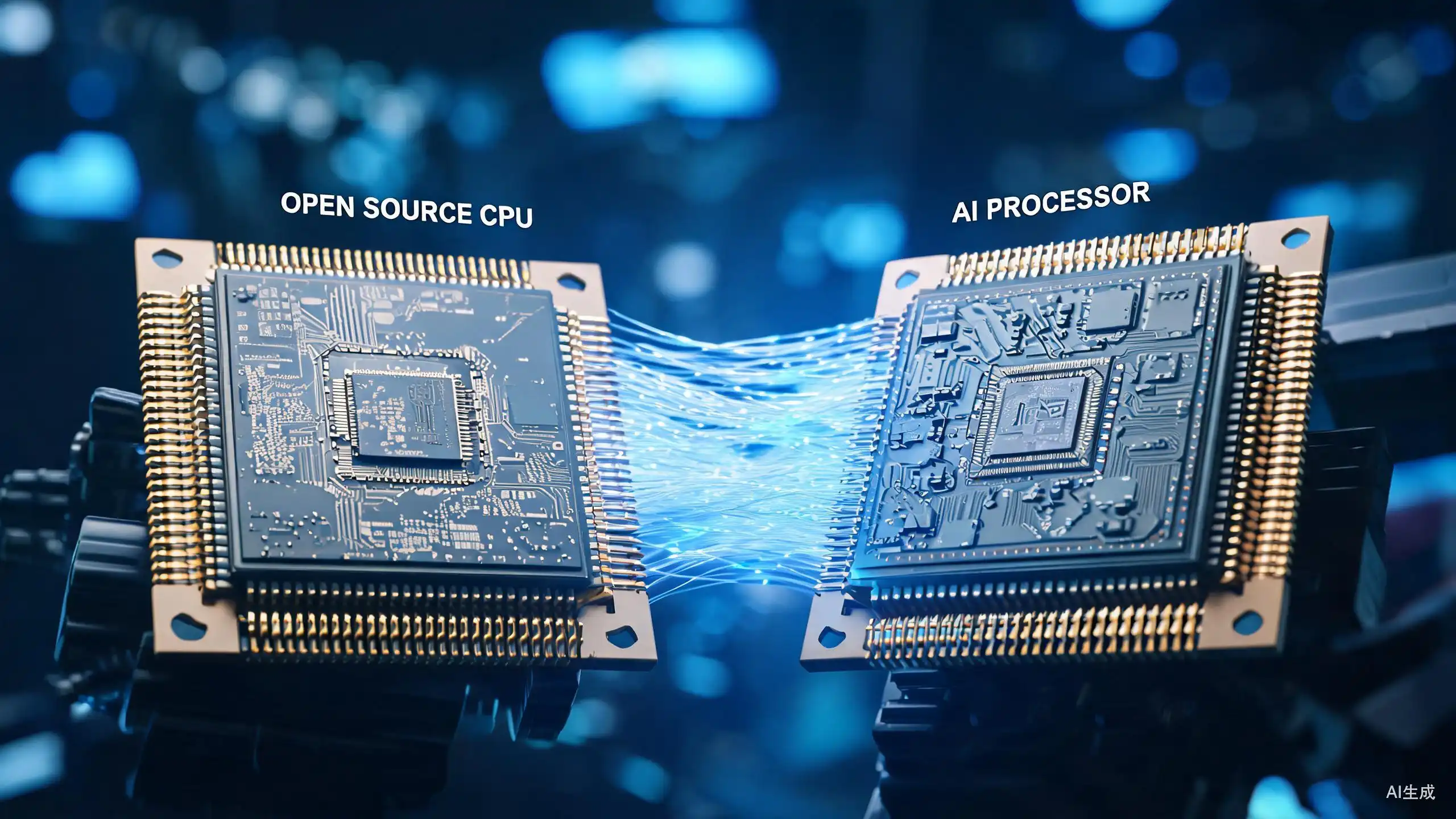
NVIDIA CPU Advances, China's RISC-V Responds: Semiconductor Deep Dive - Part Four

NVIDIA is set to launch its new Vera AI data center CPU in China as early as August, with high pricing. While this move offers a new option, it highlights China's continued dependence on foreign-controlled Arm architecture. In response, the Chinese semiconductor industry is increasingly turning to RISC-V as a strategic alternative for achieving high-performance computing autonomy. The article explores the concept of the "impossible triangle" in CPU development—balancing prosperity, control, and autonomy—and posits that RISC-V's open-source, modular nature offers a unique path to achieving all three. While RISC-V is already dominant in embedded systems, the focus is now shifting to data centers and AI workloads. China has become a global hotspot for RISC-V development, driven by AI-driven compute demand, supply chain concerns from export controls, cost benefits of open-source, and strong policy support. Multiple Chinese companies have reportedly crossed the key performance threshold of 15 SPECint per GHz, a benchmark for entering the high-performance CPU club. Progress extends beyond single-core benchmarks. Companies are developing complete computing subsystems, including commercial-grade coherent network-on-chip (NoC) technology and server processors with up to 40 cores that strictly adhere to the RVA23 standard to ensure software compatibility. Real-world applications are emerging in areas like video transcoding and edge AI. However, significant challenges remain. The RISC-V ecosystem faces fragmentation, immature toolchains and verification processes, and gaps in single-core performance and energy efficiency compared to mature x86 and Arm architectures. The formidable software moat, epitomized by NVIDIA's CUDA, is a long-term hurdle. In conclusion, while RISC-V cannot immediately replace offerings like NVIDIA's Vera, it represents a viable long-term path for China to develop a self-sufficient, high-performance CPU ecosystem. The journey is acknowledged to be long and arduous, requiring sustained effort to overcome technical and ecosystem challenges.

marsbit2 saat önce

NVIDIA CPU Advances, China's RISC-V Responds: Semiconductor Deep Dive - Part Four

marsbit2 saat önce

My Coding Betting Dashboard is Profiting, but Polymarket is Truly Not a Good Place for 'Arbitrage'

The author built a custom monitoring dashboard for Polymarket, a prediction market platform, and tested it with $1,600, achieving over 30% returns. However, the core argument is that Polymarket is not a good venue for traditional arbitrage. The dashboard has two main sections: a "Portfolio Dashboard" for tracking active positions with key metrics like total capital, P&L, and a risk-control module using a tier system (T1, T2, T3), and an "Opportunity Watchlist" for monitoring markets. The article details a critical structural trap in binary markets: a bet with a high perceived probability of success still carries a 100% loss risk if wrong. The author's T1/T2/T3 system is designed to manage this by limiting position sizes based on conviction and time horizon, emphasizing that high confidence should not equal high concentration. A key insight is the danger of "pseudo-diversification"—betting on different markets driven by the same underlying variable. The author concludes that Polymarket offers few true low-risk, arbitrage opportunities. It is instead a high-risk environment where wins can create a false sense of mastery, leading to large losses. The platform is better viewed as a training ground for honing judgment through disciplined, framework-driven betting rather than a reliable income source. The tools help transform intuition into structured, rule-based decisions to mitigate the risk of catastrophic errors.

marsbit5 saat önce

My Coding Betting Dashboard is Profiting, but Polymarket is Truly Not a Good Place for 'Arbitrage'

marsbit5 saat önce

WeChat AI Card Hands-On Guide: Has the AI Shopping Era Arrived?

**"WeChat AI Card" Practical Test Guide: Has the Era of AI Shopping Arrived?** WeChat has officially launched the "AI Exclusive Card," a feature integrated into its Workbuddy AI assistant. This card is designed to handle payments for AI-initiated purchases. Our hands-on test reveals it's not yet a tool for fully autonomous AI shopping, but rather a controlled payment layer for AI agents. The AI Card functions as an isolated sub-wallet within WeChat Pay. Users must bind the card and transfer funds into it from their main wallet. Crucially, every transaction requires explicit user confirmation via smartphone scan; AI cannot spend autonomously. Currently accessible through the Workbuddy agent, the card targets specific digital consumption scenarios: purchasing paid content (reports, data), calling paid APIs/tools, and subscribing to services. Its design prioritizes security and control by separating funds and mandating approval for each payment. We tested a real-world scenario: ordering bubble tea via Workbuddy using a "Meituan Life Assistant" skill. The process encountered multiple hurdles: high "skill" usage costs (exceeding daily free credits), and most importantly, while a payment was successfully initiated, the AI purchased an incorrect product (a mismatched group-buy coupon instead of the desired drink). This highlights the current limitation: the **AI Card only solves the payment step**. The broader challenge lies in the **AI agent's execution chain**—accurately understanding intent, navigating third-party platforms, selecting the right product, and ensuring proper fulfillment. The payment succeeded, but the purchase failed to meet the user's need. In conclusion, the WeChat AI Exclusive Card is a cautious, early-step experiment in AI commerce. It provides a secure, user-controlled payment method for agent interactions but is not yet capable of reliable, end-to-end complex purchases. For now, it's best used for low-value, low-risk digital services with careful user verification at each step. The vision of AI handling complete shopping tasks remains a work in progress.

marsbit7 saat önce

WeChat AI Card Hands-On Guide: Has the AI Shopping Era Arrived?

marsbit7 saat önce

İşlemler

Spot
Futures

Popüler Makaleler

NEAR Nasıl Satın Alınır

HTX.com’a hoş geldiniz! NEAR Protocol (NEAR) satın alma işlemlerini basit ve kullanışlı bir hâle getirdik. Adım adım açıkladığımız rehberimizi takip ederek kripto yolculuğunuza başlayın. 1. Adım: HTX Hesabınızı OluşturunHTX'te ücretsiz bir hesap açmak için e-posta adresinizi veya telefon numaranızı kullanın. Sorunsuzca kaydolun ve tüm özelliklerin kilidini açın. Hesabımı Aç2. Adım: Kripto Satın Al Bölümüne Gidin ve Ödeme Yönteminizi SeçinKredi/Banka Kartı: Visa veya Mastercard'ınızı kullanarak anında NEAR Protocol (NEAR) satın alın.Bakiye: Sorunsuz bir şekilde işlem yapmak için HTX hesap bakiyenizdeki fonları kullanın.Üçüncü Taraflar: Kullanımı kolaylaştırmak için Google Pay ve Apple Pay gibi popüler ödeme yöntemlerini ekledik.P2P: HTX'teki diğer kullanıcılarla doğrudan işlem yapın.Borsa Dışı (OTC): Yatırımcılar için kişiye özel hizmetler ve rekabetçi döviz kurları sunuyoruz.3. Adım: NEAR Protocol (NEAR) Varlıklarınızı SaklayınNEAR Protocol (NEAR) satın aldıktan sonra HTX hesabınızda saklayın. Alternatif olarak, blok zinciri transferi yoluyla başka bir yere gönderebilir veya diğer kripto para birimlerini takas etmek için kullanabilirsiniz.4. Adım: NEAR Protocol (NEAR) Varlıklarınızla İşlem YapınHTX'in spot piyasasında NEAR Protocol (NEAR) ile kolayca işlemler yapın.Hesabınıza erişin, işlem çiftinizi seçin, işlemlerinizi gerçekleştirin ve gerçek zamanlı olarak izleyin. Hem yeni başlayanlar hem de deneyimli yatırımcılar için kullanıcı dostu bir deneyim sunuyoruz.

375 Toplam GörüntülenmeYayınlanma 2024.12.10Güncellenme 2026.06.02

NEAR Nasıl Satın Alınır

Tartışmalar

HTX Topluluğuna hoş geldiniz. Burada, en son platform gelişmeleri hakkında bilgi sahibi olabilir ve profesyonel piyasa görüşlerine erişebilirsiniz. Kullanıcıların NEAR (NEAR) fiyatı hakkındaki görüşleri aşağıda sunulmaktadır.

活动图片