MegaETH公售今晚开启:获利良机还是浪费时间?

marsbit2025-10-26 tarihinde yayınlandı2025-10-27 tarihinde güncellendi

MegaETH 将于今日(10 月 27 日)21:00(UTC+8)在 Echo 旗下的 Sonar 平台上启动公开售卖。MegaETH 的总供应量为 100 亿枚,本次公开售卖 5 亿枚,支付方式为 USDT。

此次公售,用户可通过英式拍卖竞投,最高出价可达 186,282 美元,最低为 2650 美元。起拍价为 0.0001 美元(FDV 为 100 万美元),最高上限价格 0.0999 美元(FDV 为 9.99 亿美元)。

近期(尤其是今日),加密推特上关于以太坊扩容方案 MegaETH 的公开发售讨论日渐增多,公众纷纷摩拳擦掌,真正推动此次热潮的原因是什么?此次公售真的值得参与吗?加密交易员 cyclop 在 X 平台发文对此次公售进行解析,以下为内容详情。

近来散户唯一能盈利的领域大概就是首次代币发行(ICO):

  • $PUMP:任何规模的交易都能获得 1.5 倍收益
  • $XPL:任何规模的交易都能获得 2 倍以上收益
  • $YB:在上限规模内交易可获得 4 倍收益

Memes 已近乎消亡,山寨币市值屡创新低,而 10 月 11 日的暴跌更更是让散户资金进一步枯竭。从市场上随意持有代币是个糟糕的主意。

但只是持有稳定币然后参与 ICO 呢?您只需 2-3 个月的时间就可以使您的整个投资组合的收益翻 2 到 3 倍。

市场情绪发生了变化。如今正式进入 ICO 时代——就像以往的每一个周期一样。

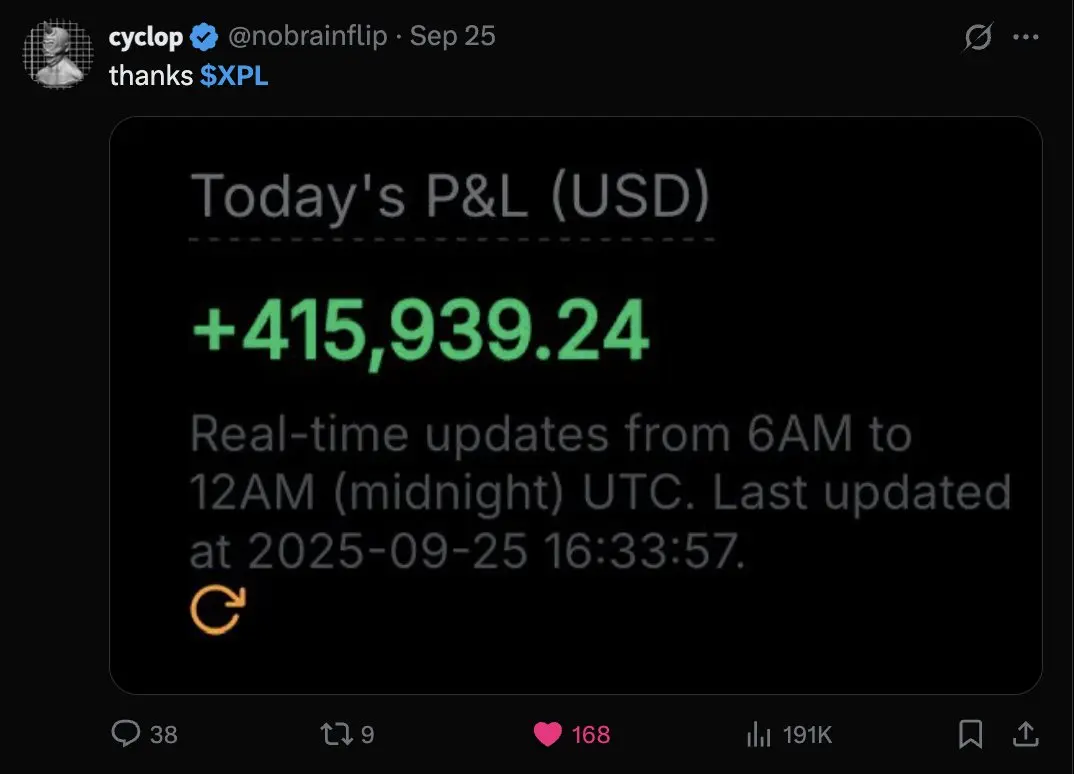
而 Echo 本身现在也正处于疯狂的炒作之中。为什么?因为上次的销售:$XPL(Plasma)。

在 $XPL 的公售中,每存入 1 美元,就能获得 1.5 美元的利润,没有上限。该项目最终上涨 30 倍,仅超额认购了 20 倍。这意味着,每存入 1000 美元,你就能以 5 亿美元的估值购买 $XPL,而在上市后,其市值达到了 150 亿美元:市值上涨了 30 倍。
MegaETH

$XPL 公售最棒的部分在于:任何人都能参与。无论你是否有链上交易历史、影响力,或者与生态系统的联系。只要通过 Echo 的 KYC 并存入资金(先到先得,但在第二阶段有 30 分钟的时间窗口)。

那么,为什么 $XPL 公售如此有利可图,而 $MEGA 会是同样的情况吗?这一次所有人都能盈利吗?

简而言之:不会。原因如下:

$XPL 能盈利是因为当时围绕 Echo 或者 ICO 还没有太多炒作。他们筹集了 10 亿美元,相当于超额认购 20 倍。没有倍数分配,资金均等分配。

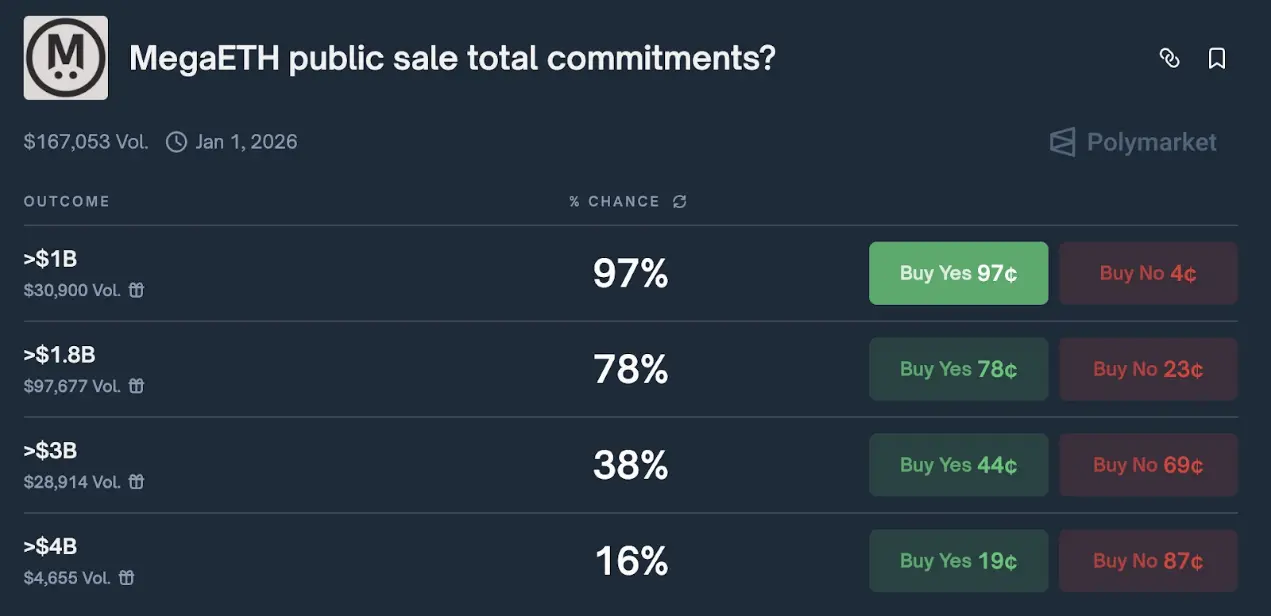
而对于 $MEGA,Polymarket 的估值在 25 亿美元以上,实际上更接近 30 到 40 亿美元。这相当于 60 到 80 倍的超额认购。上市前估值仅为 4.5 倍左右。
MegaETH

这意味着:如果资金均等分配,每存入 1 美元将获得约 0.04 美元的回报。

现在将其与 $XPL 每存入 1 美元将获得 1.5 美元的回报相比,利润约相差 37.5 倍。

所以团队表示,分配金额最低为每人 2650 美元,即至少能赚 1 万美元。

但计算一下:

  • 如果每个人都拿到最低分配金额 2650 美元,那就有 18867 名符合条件的参与者。
  • 如果平均分配金额为 5000 美元,那就有 1 万名获奖者。
  • 与此同时,一天内就有 10 万人注册,预计总申请人数将达到 40 万至 50 万。

MegaETH

这意味着只有约 1/50 的人能获得分配。

换言之,你不能只是投入稳定币然后祈祷。就算你投入 18 万美元,如果没被选中,你也什么都得不到。

个人认为团队会优先考虑特定的用户群体,并给予他们适当的奖励,而不是简单地给每个人分配其存款的 4%。

那么,到底谁能获得分配?

  • 如果你符合他们的优先标准(媒体曝光度高、链上交易历史长),那么你一天内轻松赚取 1 万至 3 万美元。
  • 如果你是真正的 MegaETH 老用户,那显然值得参与。
  • 如果你只是随便想用稳定币碰碰运气,那别指望能赚到钱。

MegaETH

标准

所以,正如加密行业一贯的做法:如果你不是早期参与者,你就只能退出流动性市场。

全力投入 ICO 热潮的最佳时机是 $XPL。如果你现在才醒悟过来——那就太晚了。

归根结底,$MEGA 的公售活动并非彩票,而是一个筛选器。其设计初衷是淘汰大众,将真正的收益机会留给特定群体。

别把炒作和机会混为一谈,这可不是第二个 $XPL,而是大众的 FOMO 罢了:95%的人会一无所获,5%的人能赚到中等偏上的钱。

而残酷的事实是——自己属于哪一类群体你应该知晓。

İlgili Okumalar

The AI Economy I Saw at Stripe Sessions 2026

"At Stripe Sessions 2026, the AI economy's impact is undeniable, echoing the delayed productivity recognition seen with computers in the '90s. Stripe's data shows an AI boom: new business formation has surged vertically since early 2026, with companies generating revenue 5x faster than a year ago. AI firms like Lovable and Cursor scale to billions in months. Two key features define this economy: unprecedented speed and being 'global by default,' with companies reaching 55+ countries in their first year. Stripe's global financial infrastructure is critical for this instant international commerce. The conference's central theme was 'Agentic Commerce'—a future where AI agents become economic participants. Demos showed agents autonomously purchasing data, generating reports, and selling them. This shift introduces micro-payments and continuous 'strategic' spending, as agents lack human cognitive friction. New challenges like fraud targeting AI's real inference costs are met with systems like Stripe's Radar. The transition requires an ecosystem. Stripe is collaborating on protocols like the Machine Payments Protocol (MPP) and joining the Universal Commerce Protocol (UCP) to enable seamless agent-to-agent transactions. Underpinning this vision is Stripe's philosophy: 'money is data,' programmable and operable by agents. Thus, Stripe is not just powering the AI economy but acting as its 'heart-rate monitor,' capturing its rapid pulse through transactions equating to nearly 2% of global GDP."

marsbit8 dk önce

The AI Economy I Saw at Stripe Sessions 2026

marsbit8 dk önce

Three Months of Raising $6 Billion in Funding: What Are the Leading Crypto VCs Betting On?

While the crypto bear market persists, top-tier venture capital firms are making significant moves by raising massive new funds, signaling a strategic bet on the industry's future. Haun Ventures and a16z recently announced funds totaling $1 billion and $2.2 billion, respectively. This follows other major raises from firms like Dragonfly, Paradigm, ParaFi, and Blockchain Capital. In under three months, these six VCs have amassed over $6 billion in fresh capital, a clear example of counter-cyclical investing during a quiet market phase. The fundraising landscape highlights a sharp divergence between large and small VCs. Many mid-sized and smaller funds are struggling with poor returns, limited exit options, and difficulty raising new capital, leading some to scale back or exit. In contrast, leading firms are strengthening their dominance due to structural advantages: superior access to high-quality deals, the ability to invest across all stages, greater capacity for long-term bets and risk, and stronger negotiation power. These new funds are largely converging on key investment themes. The strongest consensus centers on next-generation on-chain financial infrastructure, including stablecoins, real-world asset (RWA) tokenization, prediction markets, and on-chain payments. VCs are focusing on projects with validated demand that can attract traditional finance flows. Another major focus is artificial intelligence (AI), particularly AI agents, as crypto seeks to position its open, composable networks as foundational infrastructure for the emerging AI economy. Ultimately, this wave of bear-market fundraising is a strategic wager on the next cycle. By deploying capital when valuations are lower and market noise is reduced, these top VCs aim to identify and back the foundational projects that will define the industry's future, betting on which companies will become the next generation of leaders.

marsbit16 dk önce

Three Months of Raising $6 Billion in Funding: What Are the Leading Crypto VCs Betting On?

marsbit16 dk önce

AI Agent Practical Guide: How to Power an Entire Company with Three Intelligent Agents?

AI Agent Implementation Guide: How to Use Three Intelligent Agents to Run an Entire Company? Every solopreneur faces the same bottleneck: too much work for one person, yet not enough revenue to hire three full-time employees at $60,000 each. These roles—market research, content creation, and daily operations—are essential and often consume the founder's time. The smartest entrepreneurs are now "building" AI agents for these jobs instead. Using Claude, MCP servers, and agentic workflows, you can build three specialized AI agents: 1. **Research Agent:** Acts as a full-time market intelligence analyst. It proactively monitors competitors, tracks industry trends, identifies opportunities, and delivers a concise weekly briefing. It requires a knowledge base of competitors and market data, tools like web search APIs and access to your files, and a workflow that runs automatically every Monday. 2. **Content Agent:** Manages your entire content production pipeline from ideation to publishing. It generates topics, drafts content, edits for your specific brand voice, repurposes content across platforms, and schedules posts. Key steps include feeding it your best writing samples to learn your style and implementing quality checks to ensure content meets your standards before you add your unique "soul" to it. 3. **Operations Agent:** Serves as your chief of staff, handling time-consuming administrative tasks like email triage, meeting preparation, and generating weekly reports. By connecting to your email, calendar, and project management tools, it can compress hours of daily work into a 15-minute review. The crucial step is enabling these agents to collaborate as a team. A shared knowledge base allows them to work together; for example, the research agent flags a competitor's new feature, the content agent creates a response, and the operations agent drafts a related email to clients. Financially, three human employees cost around $180,000 annually plus overhead, while three AI agents primarily cost your Claude subscription and setup time. While agents lack human judgment, creativity, and empathy, they can handle 70-80% of the workload for these core roles in a startup's first 12-18 months. The guide recommends building one agent per week: start with research, then content, then operations. In three weeks, you can have a 24/7 AI-powered team instead of working alone.

marsbit17 dk önce

AI Agent Practical Guide: How to Power an Entire Company with Three Intelligent Agents?

marsbit17 dk önce

2026 Crypto Funding Reshuffle: Game and DePIN Are Dead, Prediction Market Duo Takes 18% of All Year's Funding with Two Deals

Cryptocurrency Funding in 2026: Gaming & DePIN Falter as Prediction Markets Dominate Data from the first four months of 2026 reveals a stark shift in crypto venture funding. The gaming and DePIN (Decentralized Physical Infrastructure Networks) sectors have seen capital nearly dry up. In contrast, the "Consumer" category, led by two massive deals for prediction market platforms Kalshi ($1B) and Polymarket ($600M), captured a significant share. These two deals alone accounted for 18% of the year's total $8.65 billion raised and exceeded the combined funding of all 47 DeFi projects. Overall, the $8.65B across 305 deals is misleading. A March surge to $4.57B was largely due to two major acquisitions (BVNK at $1.8B and Kalshi). Excluding these, the underlying monthly funding rate is approximately $1B, indicating continued softness. The "Payments" and "Consumer" sectors together consumed 72% of all capital. Another notable trend is the rise of mergers and acquisitions (M&A), with 48 deals nearly matching the 57 seed-round investments. This signals a market pivot from funding new ideas to consolidating around established leaders. The most active investors so far in 2026 are Coinbase Ventures (18 deals), Tether (13 deals), Animoca Brands (11 deals), and GSR (11 deals). Notably, a16z's pace has slowed significantly compared to previous years.

marsbit1 saat önce

2026 Crypto Funding Reshuffle: Game and DePIN Are Dead, Prediction Market Duo Takes 18% of All Year's Funding with Two Deals

marsbit1 saat önce

İşlemler

Spot
Futures
活动图片