Fed signals crypto pivot, floats ‘skinny master account’ for stablecoin players

ambcrypto2025-10-22 tarihinde yayınlandı2025-10-23 tarihinde güncellendi

Key Takeaways

Why is the Fed open to crypto?

According to Gov. Waller, it would reflect the changes that have happened in the sector, including stablecoins. 

What’s the broader benefit of the update to the sector?

Crypto leaders believe it would offer more legitimacy and boost stablecoins and the overall tokenized market. 


Alt HDs

Federal Reserve considers limited access to payment rails for stablecoin firms

Waller says Fed ready to integrate stablecoins into U.S. payment system

The U.S Federal Reserve appears ready to embrace crypto disruption, especially stablecoins. During the first-ever payment innovation conference by the regulator, Fed Governor Christopher Waller instructed the staff to accommodate stablecoin players into the U.S payment rails. 

Waller suggested a limited “skinny master account” that would allow stablecoin issuers and other innovative firms access Fed’s payment rails while mitigating risks. It would also eliminate the need for partner banks. 

Waller added that the sector has gone mainstream and the regulator will embrace it for payment innovations. 

“This is an acknowledgement that distributed ledgers and crypto-assets are no longer on the fringes but increasingly are woven into the fabric of the payment and financial systems.”

Crypto leaders welcome the move

The so-called “master accounts” are like a direct bank account at the Federal Reserve. If fintech and crypto firms get one, then they could hold reserves directly and settle transactions instantly with the Fed. It would also cut overall costs, which increase if they are forced to go through a middleman. 

Some of the beneficiaries of Waller’s proposal would be Ripple, especially since it applied for a Fed master account and banking charter this year. 

The conference was attended by top crypto and tech leaders, and they hailed the move as a game-changer. For his part, Nathan McCauley, CEO and Co-Founder of Anchorage Digital, said

“This will enable a whole host of opportunities to further the US as the leader in payments and stablecoins.”

Fed cryptoFed crypto

Source: X

According to Rob Hadick, General Partner at VC firm Dragonfly, the pivot would make adoption of tokenized assets and stablecoins inevitable. 

Cuy Sheffied, Head of Crypto at Visa, called the move “powerful,” while Fundstrat’s CIO Tom Lee viewed it as a preparation for onboarding Wall Street. 

He said

“This is a step towards facilitating moving Wall Street onto the blockchain.”

Worth pointing out, however, that the Fed, especially during the Biden era, has been cautious about the sector in the past.

In fact, some crypto-focused banks like Custodia Bank were denied access to a Fed master account. The argument? Crypto is “inherently unsafe,” “unsound,” and could pose a financial stability risk. 

Caitlin Long, founder of Custodia Bank, praised Gov. Waller’s pivot. She added that they have tried to get access for five years.  

Fed cryptoFed crypto

Source: X

Under the current pro-crypto administration, most of the regulators, including the Fed, have pivoted. In fact, even banks were barred from supporting digital assets during Biden’s reign.

By April 2025 though, most of the anti-crypto directives had been rolled back

Share

İlgili Okumalar

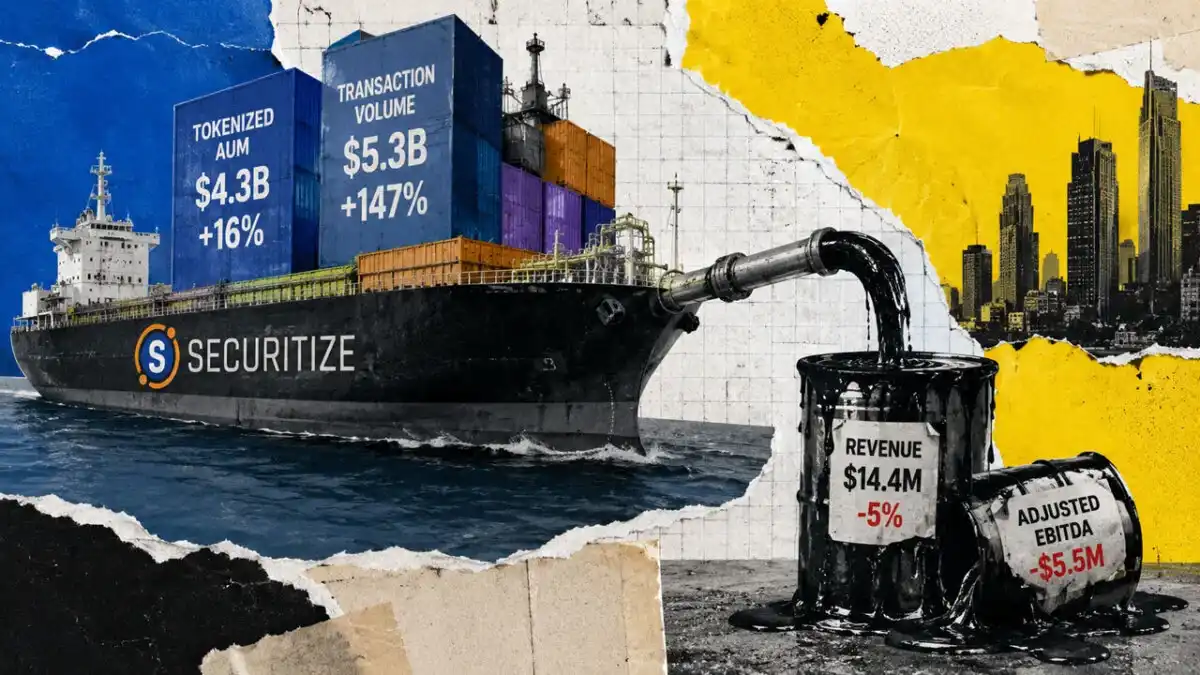
Tokenization Scale Soars to $4.3 Billion, But Why Did Securitize Incur a $5.5 Million Loss?

Securitize's first quarterly report post-IPO reveals a paradox: while its tokenized assets under management hit a record $4.3 billion (up 16% YoY) and platform trading volume surged 147% to $5.3 billion, total revenue fell 5% to $14.4 million. Tokenization revenue specifically dropped ~12% to $7.8 million, leading to an adjusted EBITDA loss of $5.5 million. CFO Francisco Flores explained that most trading volume is not yet monetized, with the majority of tokenization revenue still coming from one-time projects like new protocol integrations. In contrast, asset servicing revenue, a more recurring stream, grew slightly to $6.6 million. The company has lowered its full-year revenue guidance to $70-$80 million from an initial projection of $110 million. Industry experts note this highlights a structural challenge for the tokenization sector. Scaling assets on-chain doesn't automatically scale a profitable business model. Current implementations often rely on costly, customized projects for each new asset or jurisdiction. The future, they argue, lies in building standardized infrastructure that generates recurring "infrastructure revenue" from post-issuance activities like compliance, distributions, and secondary trading—similar to enterprise software. Analysts caution against misinterpreting high trading volumes as indicative of a mature fee-based model, as Securitize's broad volume metric includes many non-monetized actions. The key test for the industry is whether adding billions in new assets can generate sustainable revenue without constant new custom projects.

marsbit2 dk önce

Tokenization Scale Soars to $4.3 Billion, But Why Did Securitize Incur a $5.5 Million Loss?

marsbit2 dk önce

The Five Paradoxes of Artificial Intelligence

**Five Paradoxes of Artificial Intelligence** Artificial intelligence (AI) is an era filled with paradoxes, which we navigate as we advance. **1. The Prediction Paradox** AI experts, from pioneers like Marvin Minsky to contemporary figures like Geoffrey Hinton and Demis Hassabis, have a history of inaccurate forecasts regarding AI's capabilities and timelines, such as achieving human-level machine intelligence or surpassing radiologists. Predictions about Artificial General Intelligence (AGI) vary wildly between optimistic entrepreneurs and skeptical academics, highlighting the inherent unpredictability of technological futures. **2. The Employment Quantification Paradox** Despite numerous studies from institutions like the OECD, IMF, and McKinsey attempting to quantify AI's impact on jobs, estimates of affected employment range from 0.4% to 67%, revealing vast inconsistencies. This paradox arises because isolating AI's effect from other economic, social, and technological factors is virtually impossible, and forecasts depend on static assumptions about a dynamically evolving technology. **3. The Productivity Paradox** While AI is a transformative General Purpose Technology, significant productivity growth has not yet materialized in major economies like the EU and has only matched historical averages in the US. This disconnect between rapid innovation and slow productivity gains, reminiscent of the "Solow Paradox" from the computer age, is often explained by time lags. History shows it takes decades for such technologies to diffuse and trigger complementary innovations that boost productivity. **4. The Data Value Paradox** Data is hailed as the "new oil" and critical for AI, yet its economic value is paradoxical. Its worth is realized only in use, not in straightforward trade. Despite policy emphasis and initiatives for data asset recognition on corporate balance sheets in China, the monetized value remains negligible—accounting for only about 0.06% of major telecom operators' total assets—highlighting the gap between perceived utility and financial valuation. **5. The Industrial Revolution Paradox** For decades, nearly every major new technology, from the internet and nanotechnology to blockchain and now AI, has been proclaimed as the driver of a "Fourth Industrial Revolution." This constant reassignment suggests prior labels were premature. True industrial revolutions are typically identified in hindsight, not in real-time. Furthermore, the coexistence of such a proclaimed transformative revolution with ongoing economic crises would be historically anomalous. Whether AI truly defines a new industrial revolution remains a narrative for the future to decide.

marsbit4 dk önce

The Five Paradoxes of Artificial Intelligence

marsbit4 dk önce

Experts Warn of Mass Crypto Hacks Using AI Agents

Experts warn that AI agents could dramatically lower the cost and scale of attacks against cryptocurrency holders. Speaking at the Wyoming Blockchain Symposium, industry figures noted that automation allows malicious actors to simultaneously search for vulnerabilities in wallets, passwords, and networks across a vast number of potential victims. Ryan Kirkly, co-founder and CEO of Global Settlement Network, criticized the industry for often viewing autonomous agents only as beneficial tools while underestimating their offensive potential. Data from TRM Labs shows the crypto industry experienced a record 207 hacks in the first half of 2026, causing $972 million in losses, with the number doubling from the same period in 2025. Vice President of Technical Operations at Web3 Foundation, Bill Labun, agreed that the efficiency of autonomous systems also benefits attackers. While defenders like the Ethereum Foundation are using AI agents for security audits, the need for human verification remains high due to false positives. A major concern is granting AI agents direct access to financial tools and personal data. New services like MetaMask's Agent Wallet, which allows AI to manage assets within set limits, introduce risks such as prompt injection attacks. Panelists also highlighted risks from metadata leakage, which can compromise privacy even on private networks, and the unresolved issue of legal liability for an AI agent's autonomous and potentially irreversible actions. Lack of user trust, due to AI's tendency to "hallucinate" or generate incorrect information, was cited as a key barrier to widespread adoption.

cryptonews.ru5 dk önce

Experts Warn of Mass Crypto Hacks Using AI Agents

cryptonews.ru5 dk önce

American economic magazine Forbes stated that bitcoin could become a neutral reserve asset for the global economy!

American business and economic magazine Forbes has suggested that Bitcoin could potentially play a significant role as a neutral reserve asset in the global financial system. According to the publication, Bitcoin might offer an alternative to the growing debates surrounding the US dollar's status as the world's reserve currency and the current system's reliance on US government bonds. Forbes notes that the dollar's reserve status grants the US significant advantages but also highlights the inherent "Triffin dilemma," where the US struggles to balance its domestic economic needs with global demand for the reserve currency. The current system draws global capital to the US, allowing for cheaper imports but weakening domestic competitiveness and worsening the trade deficit. The post-gold standard system has been sustained by US bonds, yet fundamental contradictions remain. The magazine argues that stablecoins cannot fully address the reserve asset issue as they are largely backed by US Treasuries. While gold is a neutral reserve asset, it has limitations regarding mobility, verification, and transactional efficiency. In contrast, Bitcoin, with its fixed supply, lack of need for state credit guarantees, and ease of global verification and transfer, is presented as a potential next-generation neutral reserve asset. Forbes states that while the US dollar will continue to be used in international trade, Bitcoin could eventually assume the reserve asset role, reducing the global economy's dependence on any single country's debt instruments. The article also acknowledges that hurdles like price volatility and limited institutional adoption must be overcome. *This is not investment advice.

cryptonews.ru7 dk önce

American economic magazine Forbes stated that bitcoin could become a neutral reserve asset for the global economy!

cryptonews.ru7 dk önce

İşlemler

Spot
活动图片