315 Exposes AI Poisoning, a Business from Putian to Silicon Valley

比推2026-03-16 tarihinde yayınlandı2026-03-16 tarihinde güncellendi

Özet

"315 Exposed: AI 'Poisoning' - A Business from Putian to Silicon Valley" During China's 315 consumer rights expose, a practice called Generative Engine Optimization (GEO) was revealed. GEO involves manipulating AI-generated responses by flooding the internet with promotional content, which AI models then scrape and present as factual recommendations. A tool called "Liqing GEO," sold on Taobao, demonstrated this by fabricating a fake smartwatch with absurd features ("quantum entanglement sensing," "black hole-level battery") and having AI recommend it within hours. This mirrors the early days of Search Engine Optimization (SEO), where paid rankings, notably by Putian-based hospitals on Baidu, dominated search results. Despite regulations, the core model remains: whoever controls the information gateway sells rankings. Now, with AI as the new gateway, SEO has simply become GEO. The business is significant. BlueFocus, a major marketing firm, invested millions in a GEO company, PureblueAI, serving clients like Ant Group and Volvo. While Pureblue claims to optimize real brand information, the technical method—flooding the web with content for AI to scrape—is identical to the "poisoning" tactic. This ambiguity fueled a stock market frenzy in late 2025, with GEO-related stocks like BlueFocus surging over 130% before executives cashed out. Simultaneously, Silicon Valley is formalizing this model. OpenAI announced ads in ChatGPT for free users, with sponsored links appearing below...

Author: David, Deep Tide TechFlow

Original Title: 315 Exposes AI Poisoning, a Business from Putian to Silicon Valley


Last night, 315 exposed a business based on GEO.

Full name: Generative Engine Optimization. You can understand it as:

Paying to have AI say nice things about you.

How is it done?

Brands want AI to prioritize recommending them when consumers ask. So they find GEO service providers, who batch-publish promotional soft articles online. After AI crawls this content, it treats it as real information and recommends it to users.

A CCTV reporter used a software called "Liqing GEO," which can be bought on Taobao.

The reporter fabricated a smart wristband and made up several outrageous product features, like "quantum entanglement sensing" and "black hole-level battery life." The software automatically generated over a dozen promotional soft articles and published them online.
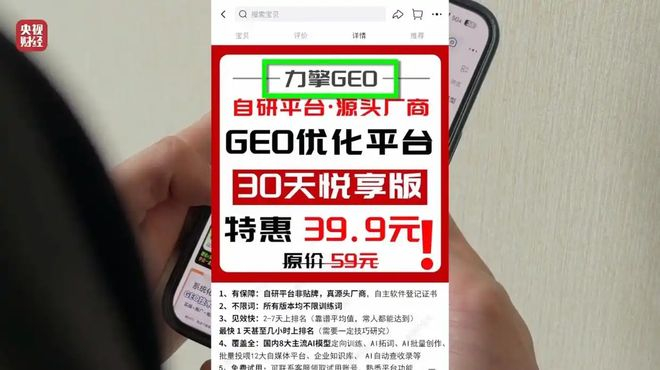
Two hours later, the reporter asked an AI: "Can you recommend a smart health wristband for me?"

The AI ranked this non-existent wristband at the top of the recommendation list.

The company behind this software is Beijing Lisi Culture Media, a one-person company with zero insured employees for many consecutive years.

A tool made by such a company fooled mainstream domestic AI models in just two hours.

315 uncovered AI poisoning, but this business might be much bigger than a single Taobao software.

SEO, the Putian Story

First, this is not new at all.

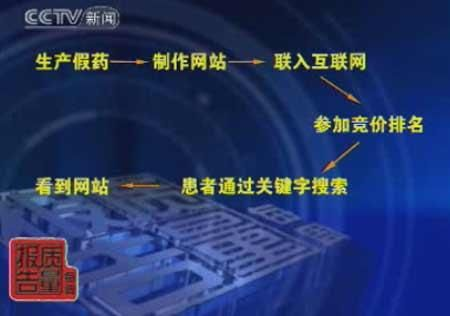
In 2008, CCTV's "News 30 Minutes" exposed Baidu's paid ranking for two consecutive days. Paying money could get your website to the top of search results, even if it was for fake medicine.

Back then, this business was called SEO, Search Engine Optimization.

The biggest buyers were Putian-affiliated private hospitals. In 2013, Putian系 spent 12 billion RMB on Baidu advertising, accounting for nearly half of Baidu's total ad revenue.

Many unqualified medical institutions used SEO to boost themselves to the first page of Baidu search results, appearing alongside Class A tertiary hospitals, making it impossible for ordinary people to tell the difference.

It wasn't until the 2016 Wei Zexi incident, where a university student died after seeking treatment at a top-ranked Putian hospital, that regulators legislated clearly: paid search is advertising.
But this didn't kill the business. It just set the rules, turning it from a gray market operation into a legitimate business. Putian系 still buys rankings, but there's a small label next to the result: "Ad."

But even with the label, people who would click still click.

The fundamental problem with search engines was never the labeling, but users' inherent trust in the top results.

Now people have moved from search engines to AI, thinking AI is more objective and不会被 (won't be) polluted by paid rankings. But whoever controls the gateway to information distribution can sell rankings.

The gateway changed, SEO changed a letter to become GEO, but the logic of selling rankings hasn't changed one bit.

What changed is the price.

GEO, Loved by the Capital Market

Businesses that can't be killed are the capital market's favorite.

In September 2025, BlueFocus, China's largest marketing communication company, invested tens of millions of RMB in a GEO company called PureblueAI Qinglan.

Qinglan helps real brands optimize their ranking and recommendation rate in AI search results. Clients include Ant Group, Tencent Cloud, and Volvo.

The products are real, the company is real, and they work to help AI understand brand information more accurately.

This is completely different from the AI poisoning exposed by 315 involving Liqing. Liqing fabricated products, made up parameters, and tricked AI with false information; Qinglan uses real brand content to adapt to AI's recommendation logic.

But from AI's perspective, the technical path for both things is the same: both involve publishing content online and waiting for AI to crawl it.

AI can't tell which is marketing and which is fabrication. This is the most ambiguous aspect of the GEO business.

When BlueFocus invested in Qinglan, GEO was just an industry term within marketing circles. Three months later, it became a stock market concept.

At the end of December 2025, BlueFocus's stock price hit the daily limit-up.

Brokerages began holding intensive conference calls to interpret GEO, with research reports defining it as "the next generation traffic entrance in the AI era." Capital poured in, not only buying BlueFocus but also driving up stocks of any company related to digital marketing and AI concepts. BlueFocus rose 132% in 9 trading days, and a batch of follower concept stocks also doubled.
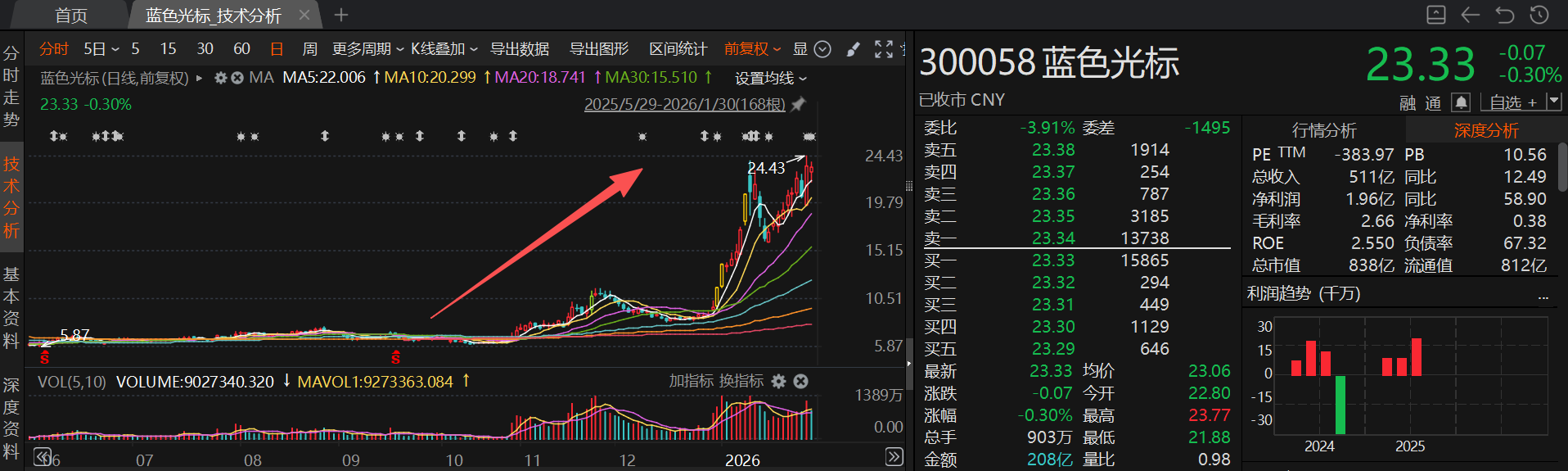
Image Source: CLS News

After the surge, these companies issued risk warnings themselves:

GEO business has no revenue and has no significant impact on company operations. BlueFocus also admitted that AI-driven revenue accounts for a very small proportion of overall revenue.

The implication is that the stock price more than doubled, but the GEO business itself hasn't made much money yet.

At the end of January, BlueFocus's stock price rose from 9.6 yuan to 23.3 yuan, a 143% increase in a month. Right at this time, Chairman Zhao Wenquan announced plans to sell up to 20 million shares. Based on the stock price at the time, this would cash out approximately 467 million RMB.

Public research reports show that last year, the total market size of the domestic GEO industry was about 2.9 billion RMB. The market value increase of BlueFocus's stock alone in one month far exceeded this amount.

315 exposed Liqing system poisoning AI for a few hundred RMB. But the GEO concept went through A-shares and made billions.

Whether it's poisoning or not is hard to say, but the money made is real.

315 Calls it Poisoning, Silicon Valley Calls it Commercialization

In January this year, OpenAI announced on its official blog: ChatGPT will start selling ads.

Free users and $8/month Go users will see ads; paid subscription premium users are unaffected.

On February 9th, ads officially launched. Some ads appear at the bottom of ChatGPT's answers, marked with a small word: Sponsored. The first batch of advertisers includes Ford, Adobe, Target, Best Buy...

You ask ChatGPT what car is good to buy, it gives you an answer, and below the answer hangs a sponsored link from Ford.

OpenAI made it very clear: Ads will not influence the content of ChatGPT's answers. The answer is the answer, the ad is the ad, they are separate.

Does that sound familiar?

Baidu said the same thing back in the day. Paid ranking is paid ranking, organic search is organic search, they are separate. Later, the top five search results were all ads.

OpenAI expects ads to help double its consumer-side annual revenue to $17 billion. ChatGPT has over 800 million weekly active users, 95% of whom are free users, all potential audiences for ads.
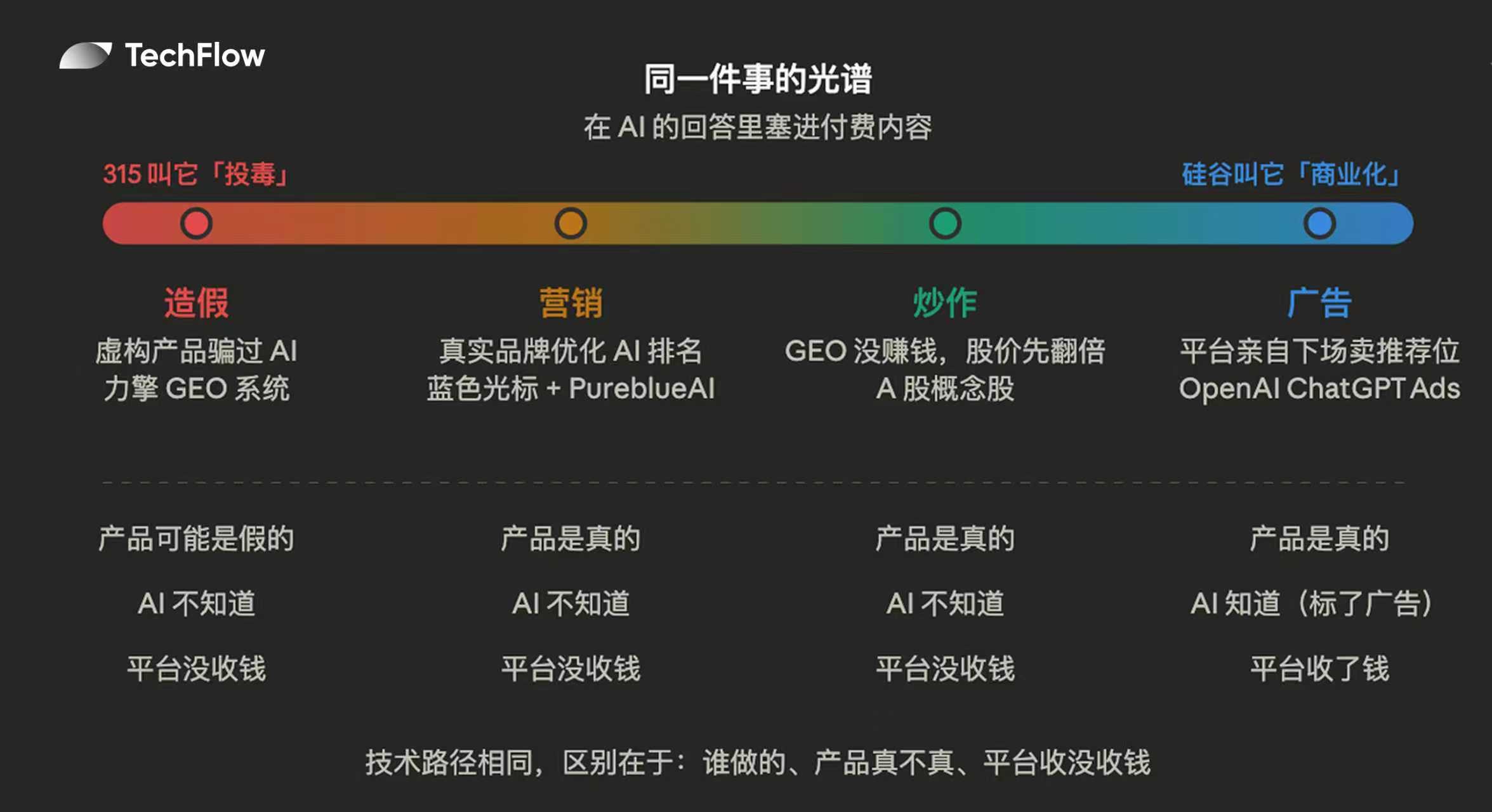
Now looking back at the industry chain exposed by 315: Liqing floods AI with soft articles, making AI recommend non-existent products. OpenAI places sponsored content below AI's answers, making AI recommend products that paid money.

One didn't notify the platform, it's poisoning. One signed a contract with the platform, it's commercialization.

For the user, what's the difference?

One is inside the answer, one is below the answer. One has no label, one has a label saying "Ad".

315 caught Liqing for a few hundred RMB, A-shares speculated on the GEO concept for billions, OpenAI plans to make $17 billion a year from this.

The same thing, its nature changes from poisoning to commercialization, and the price increases tens of thousands of times.

In November 2023, researchers from the Indian Institute of Technology Delhi and Princeton University published a paper on arXiv titled "GEO: Generative Engine Optimization".

This was the first formal academic definition of this concept.

From the paper's publication to the 315 exposure, just over two years. In between, it experienced gray market operations, financing, concept stock surges, chairman cashing out, AI platforms亲自 (personally) stepping in to sell ads...

The path SEO took twenty years, GEO completed in two years.

The difference is, back then it took people years to learn not to fully trust search engine results; now AI is still in its trust红利期 (bonus period), most people haven't realized yet that AI's answers can also be bought.

However, this红利期 (bonus period) might not last too long. Next time you ask AI what's worth buying, remember to think for an extra second:

The answer can be free, but the brain cannot be outsourced.


Twitter:https://twitter.com/BitpushNewsCN

BitPush TG Discussion Group:https://t.me/BitPushCommunity

BitPush TG Subscription: https://t.me/bitpush

Original link:https://www.bitpush.news/articles/7620096

İlgili Sorular

QWhat is Generative Engine Optimization (GEO) as described in the article?

AGenerative Engine Optimization (GEO) is a practice where brands pay to have AI systems prioritize and recommend their products or services. It involves flooding the internet with promotional content that AI models scrape and treat as authentic information, influencing AI-generated recommendations to users.

QHow did the CCTV 315 exposure demonstrate the effectiveness of GEO manipulation?

ACCTV journalists used a software called 'Liqing GEO' to create fictional smart wristbands with absurd selling points like 'quantum entanglement sensing' and 'black hole-level battery life.' The software generated promotional articles and posted them online. Within two hours, mainstream AI models in China recommended the non-existent product when queried.

QWhat historical precedent does the article draw between GEO and earlier internet practices?

AThe article compares GEO to Search Engine Optimization (SEO), particularly highlighting how莆田系 (Putian系) hospitals spent billions on Baidu's paid rankings to appear alongside legitimate hospitals in search results, a practice that continued even after regulations required labeling paid results as 'ads.'

QHow did the GEO concept impact the stock market, specifically for companies like BlueFocus?

AThe GEO concept became a stock market trend after BlueFocus invested in a GEO company. This led to a surge in stock prices, with BlueFocus's stock rising 132% in nine trading days. However, companies later issued risk warnings, clarifying that GEO contributed little to actual revenue, and BlueFocus's chairman announced a significant stock sell-off during the peak.

QHow does OpenAI's approach to advertising in ChatGPT relate to the GEO practices exposed by CCTV?

AOpenAI introduced sponsored ads in ChatGPT's responses for free users, labeled as 'Sponsored.' While OpenAI claims ads do not influence the AI's answers, the article draws a parallel to GEO practice, suggesting that both involve monetizing AI recommendations—one through unauthorized 'poisoning' of data and the other through platform-sanctioned commercialization.

İlgili Okumalar

Those Pre-Bitcoin PoW Protocols Have Recently Been Reimplemented

This article details a recent surge in replicating pre-Bitcoin Proof-of-Work (PoW) protocols, specifically focusing on Hal Finney's 2004 RPOW (Reusable Proofs of Work). Within five days in May 2026, multiple independent builders in the Bitcoin/cypherpunk community launched projects inspired by this early electronic cash proposal. The initiative began with Fred Krueger's `rpow2.com`, a centralized but auditable system that replaced RPOW's original IBM 4758 hardware with Ed25519 signatures. Initially a faithful replica, it later adopted Bitcoin-like features (21M supply cap, difficulty adjustment) and a controversial 5.24% founder allocation. This sparked rapid forks, including `rpow4.com` which incorporated full Bitcoin parameters, a prediction market (`rpowmarket.com`), and a DEX (`rpow2swap.com`). Concurrently, Mike In Space created a prototype of Wei Dai's 1998 b-money proposal (`b-money.replit.app`), pushing the historical exploration even further back. The article contrasts these centralized, server-dependent experiments with Bitcoin's core innovation of decentralized, trustless consensus. It also highlights a parallel development: the `HASH` project on Ethereum, which uses smart contract hooks to enable a purely fair-launch, browser-mineable PoW token with 0% allocations to team or VCs. The collective activity is framed as a meme-driven, educational exploration of cypherpunk history rather than a serious financial movement, with all projects heavily disclaiming any investment value.

marsbit3 dk önce

Those Pre-Bitcoin PoW Protocols Have Recently Been Reimplemented

marsbit3 dk önce

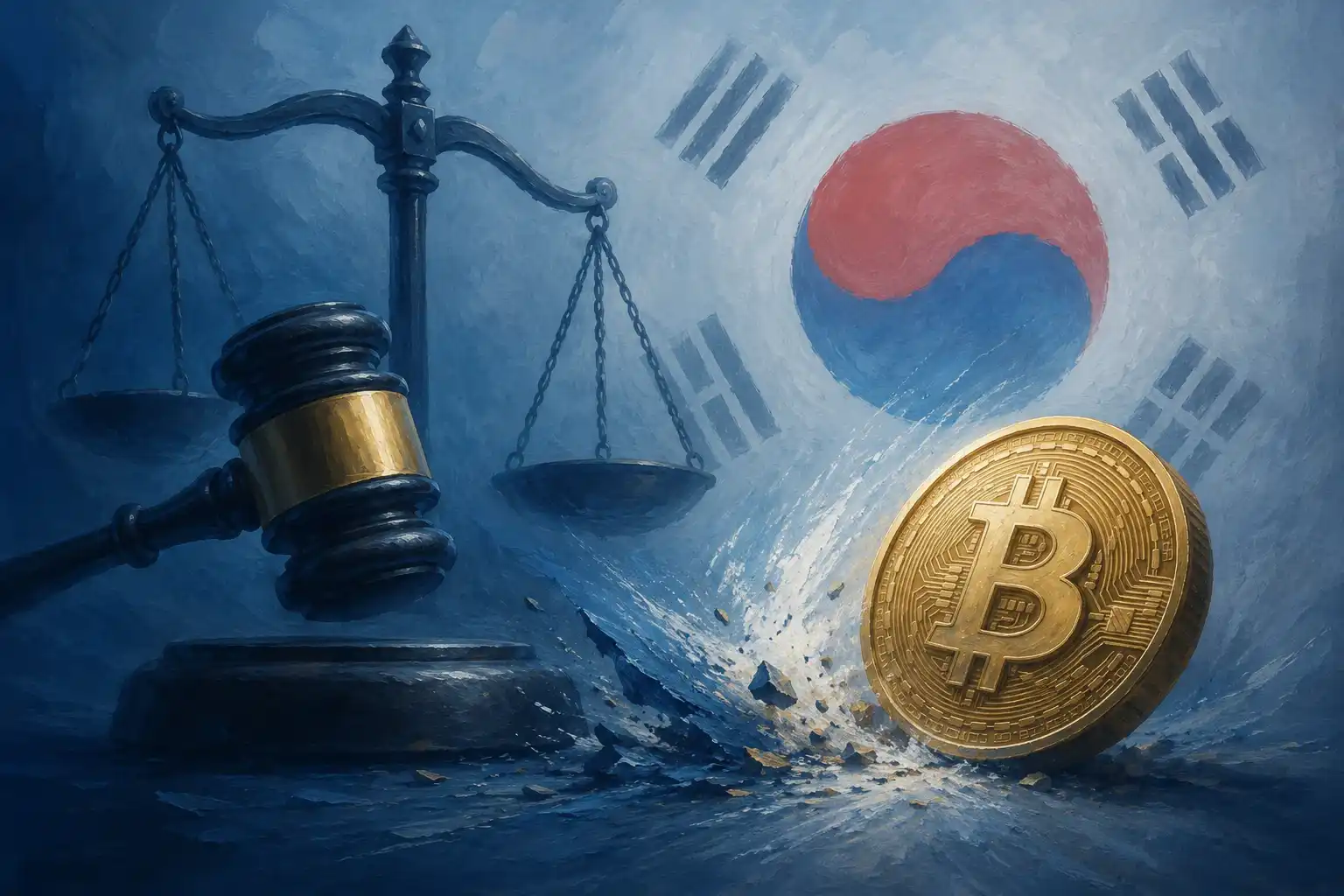
South Korean Exchanges 'Battle' Regulators, Challenging the Boundaries of Enforcement and Legislation

South Korea's cryptocurrency industry is engaged in a rare, direct confrontation with regulators. The Financial Intelligence Unit (FIU), the primary anti-money laundering (AML) watchdog, has recently imposed heavy penalties on major exchanges like Upbit and Bithumb for alleged violations involving unregistered overseas VASPs and AML procedures. However, exchanges are now actively challenging these actions in court and through industry associations. In a significant shift, the Seoul Administrative Court ruled in favor of Upbit's operator, Dunamu, overturning part of an FIU-ordered business suspension. The court found the FIU's penalty criteria and justification insufficiently clear. Similarly, the court suspended the enforcement of a six-month business suspension against Bithumb pending a final ruling, citing potential irreversible harm to the exchange. Beyond legal battles, the industry is contesting proposed legislative amendments. The Digital Asset eXchange Alliance (DAXA) strongly opposes a draft rule that would mandate Suspicious Transaction Reports (STRs) for all crypto transfers over 10 million KRW (~$6,800). DAXA argues this "poison pill" clause violates legal principles and would overwhelm the STR system, increasing reports from 63,000 to an estimated 5.45 million annually for major exchanges, thereby crippling effective AML monitoring. This conflict highlights a structural tension in South Korea's crypto governance: comprehensive digital asset laws are still developing, while regulators rely heavily on AML enforcement. The industry's move from passive compliance to active legal and legislative challenges signifies a new phase, pressing for clearer rules and more proportionate enforcement. While short-term disputes may intensify, this clash could ultimately lead to a more mature and sustainable regulatory framework for South Korea's vibrant crypto market.

marsbit56 dk önce

South Korean Exchanges 'Battle' Regulators, Challenging the Boundaries of Enforcement and Legislation

marsbit56 dk önce

After 50x Storage Surge, Justin Sun Always Looks to the Next Decade

Sun Yuchen, known for his controversial stunts like a $30 million lunch with Warren Buffett (canceled due to a kidney stone) and eating a $6.2 million duct-taped banana, is often overshadowed by a significant fact: his decade-long track record of spotting major investment trends. In 2016, he famously advised young people to invest in Bitcoin, Nvidia, Tesla, and Tencent instead of buying property. A hypothetical $20,000 investment in Nvidia and Tesla from that list would now be worth over 50 million RMB. His latest major call was on November 6, 2025, predicting a "50x storage opportunity" tied to the AI boom, which materialized with Sandisk's stock surging nearly 50-fold by 2026. Looking ahead, Sun now focuses on the next frontier: Physical AI. He identifies four key areas: 1. **Embodied AI/Robotics**: He sees this reaching its "iPhone moment," with companies like UBTech and Galaxy General leading in commercialization. 2. **Drones**: Viewed as the first commercially viable form of Physical AI, revolutionizing sectors from warfare (e.g., AeroVironment's Switchblade) to logistics. 3. **Spatial Computing**: Beyond VR, it's about AI understanding physical space, a foundational technology for robotics and autonomous systems, exemplified by Apple's Vision Pro. 4. **Space Exploration**: After a 2025 suborbital flight with Blue Origin, Sun advocates for space as the ultimate frontier, discussing blockchain's potential role in space asset management and data transactions. His investment philosophy involves betting on entire, inevitable trends rather than single companies. For robotics, he sees Tesla (the body/manufacturer) and Nvidia (the brain/AI platform) as complementary plays. In defense drones, he highlights companies making tanks obsolete (AeroVironment) and those augmenting fighter jets (Kratos). For space, he participated in Blue Origin's flight and anticipates SpaceX's potential IPO to redefine the sector's valuation. Sun Yuchen's vision frames the next two decades not as a revolution in information flow (like the internet), but in the fundamental operation of the physical world through AI-powered robots, autonomous systems, and spatial intelligence, ultimately extending human and AI activity into space. While many still focus on conventional assets, he continues to look toward the next technological horizon.

marsbit1 saat önce

After 50x Storage Surge, Justin Sun Always Looks to the Next Decade

marsbit1 saat önce

The Billionaires Behind the Most Expensive Midterm Election in History

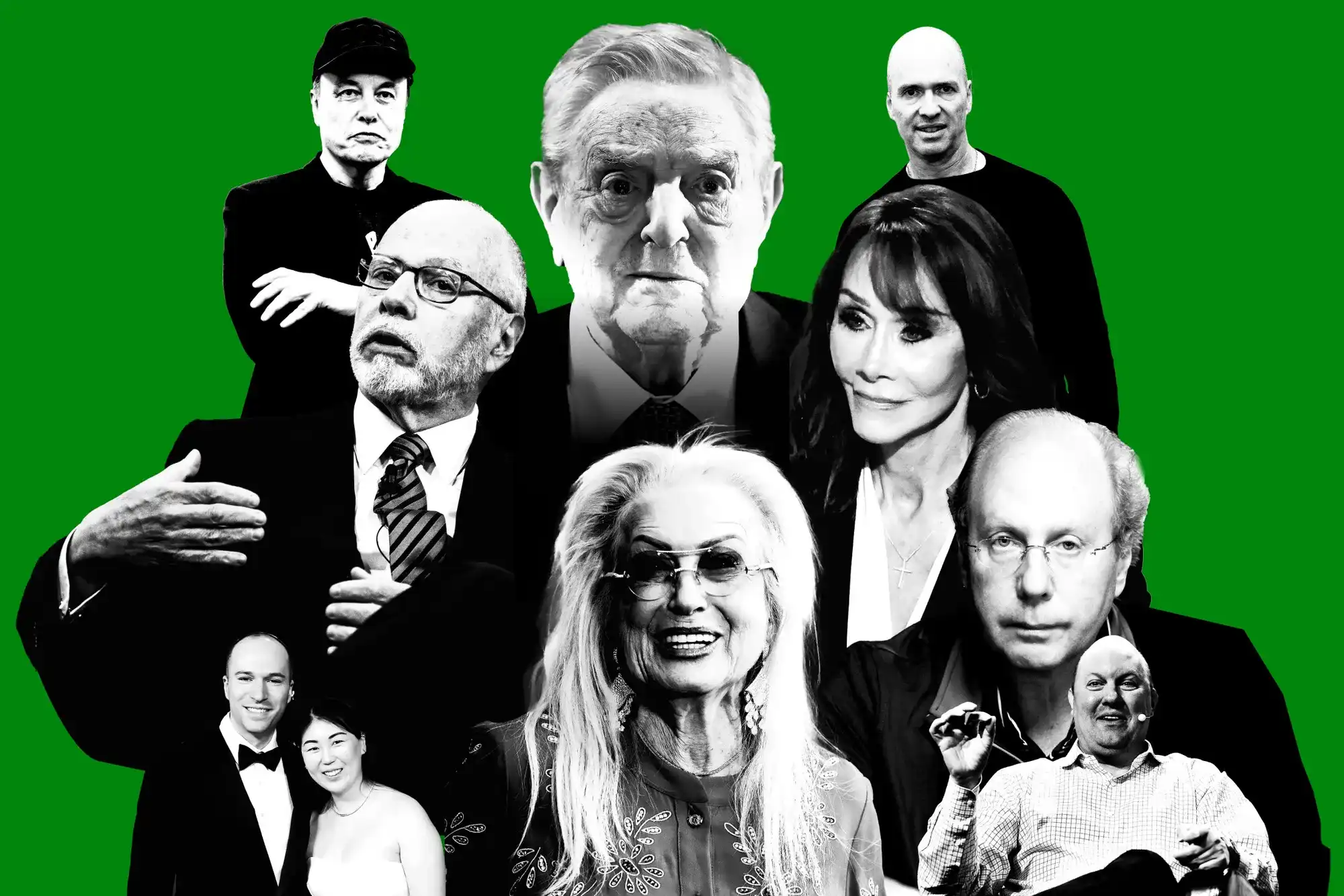
"The Most Expensive Midterm Elections and Their Billionaire Backers" This analysis details the unprecedented scale of spending in the 2026 midterm elections, highlighting the key billionaire donors shaping the political landscape. Jeff Yass, founder of Susquehanna International Group, has contributed over $81 million, ranking third among individual donors behind George Soros ($102.6M) and Elon Musk ($84.8M). Yass is a major donor to Trump's MAGA Inc. and supports school choice and various candidates. Overall, federal committees have raised over $4.7 billion this cycle, with political ad spending projected to reach $10.8 billion. Republican-aligned groups are significantly out-raising their Democratic counterparts. "Dark money" from undisclosed sources continues to grow. The core stakes involve control of Congress and policy direction for Trump's final term. Donors are also motivated by specific issues: Sergey Brin and Chris Larsen are funding opposition to a proposed California wealth tax and supporting crypto-friendly policies. Other top donors include OpenAI's Greg Brockman and his wife Anna ($50M total to MAGA Inc. and an AI-focused PAC), Richard Uihlein ($45.3M to conservative causes), venture capitalists Marc Andreessen and Ben Horowitz (each over $44M to crypto/AI PACs and MAGA Inc.), Miriam Adelson ($42.6M to GOP leadership PACs), Paul Singer ($33.9M), and Diane Hendricks ($25.8M to MAGA Inc.). The article notes that the peak fundraising period is still ahead, with major primaries approaching.

marsbit1 saat önce

The Billionaires Behind the Most Expensive Midterm Election in History

marsbit1 saat önce

İşlemler

Spot
Futures
活动图片