TeraWulf привлекла рекордные $3,2 млрд на развитие ИИ-инфраструктуры

cryptonews.ru2025-12-19 tarihinde yayınlandı2025-12-19 tarihinde güncellendi

Компания TeraWulf оценила ранее объявленное размещение старших обеспеченных облигаций на $3,2 млрд с купонной ставкой 7,75%. Это обеспечило крупнейшее заемное финансирование от компании, занимающейся майнингом биткоинов, для расширения в сферу искусственного интеллекта.

Облигации, выпущенные через дочернюю компанию WULF Compute LLC, подлежат погашению в 2030 году. Они будут проданы по номинальной стоимости квалифицированным институциональным покупателям в соответствии с Правилом 144A Закона о ценных бумагах. Закрытие сделки ожидается 23 октября при соблюдении обычных условий.

Вырученные средства направят на финансирование текущего расширения центра обработки данных TeraWulf Lake Mariner в Баркере, штат Нью-Йорк. Этот проект компания трансформирует в центр высокопроизводительных вычислений для задач искусственного интеллекта.

При ставке 7,75% годовых TeraWulf может столкнуться с выплатой процентов почти в $250 млн в год, что значительно превышает ее текущую выручку. Компания сообщила о совокупной выручке около $140 млн за 2024 год и $82 млн за первую половину 2025 года от майнинга биткоинов. Эти показатели не включают себестоимость, операционные расходы, коммерческие, общие и административные расходы. Масштаб нового долга подчеркивает, насколько агрессивно TeraWulf делает ставку на успех своей стратегии диверсификации в сфере ИИ.

Облигации гарантированы дочерними компаниями WULF Compute и обеспечены залоговыми правами первой очереди на их активы. В залог включены доли в акционерном капитале и специальный счет Fluidstack USA I Inc. До завершения расширения Lake Mariner компания Google LLC предоставит варранты на покупку обыкновенных акций TeraWulf в рамках пакета обеспечения. Это подчеркивает косвенную финансовую связь технологического гиганта с проектом.

Финансирование TeraWulf последовало за ее партнерством с Fluidstack, оператором инфраструктуры, поддерживаемым Google. В рамках сотрудничества в кампусе озера Маринер разместят кластеры графических процессоров для крупномасштабных задач ИИ.

Эмиссия рекордного объема, которая более чем в три раза превышает размещение конвертируемых облигаций на $1 млрд от IREN ранее в этом месяце, ставит TeraWulf в авангарде перехода индустрии майнинга биткоинов к инфраструктуре ИИ и высокопроизводительных вычислений. Однако, учитывая что годовая нагрузка компании по процентам превышает ее остаточную выручку, успех этого перехода определит, окупится ли такая стратегия.


İlgili Okumalar

My Coding Betting Dashboard is Profiting, but Polymarket is Truly Not a Good Place for 'Arbitrage'

The author built a custom monitoring dashboard for Polymarket, a prediction market platform, and tested it with $1,600, achieving over 30% returns. However, the core argument is that Polymarket is not a good venue for traditional arbitrage. The dashboard has two main sections: a "Portfolio Dashboard" for tracking active positions with key metrics like total capital, P&L, and a risk-control module using a tier system (T1, T2, T3), and an "Opportunity Watchlist" for monitoring markets. The article details a critical structural trap in binary markets: a bet with a high perceived probability of success still carries a 100% loss risk if wrong. The author's T1/T2/T3 system is designed to manage this by limiting position sizes based on conviction and time horizon, emphasizing that high confidence should not equal high concentration. A key insight is the danger of "pseudo-diversification"—betting on different markets driven by the same underlying variable. The author concludes that Polymarket offers few true low-risk, arbitrage opportunities. It is instead a high-risk environment where wins can create a false sense of mastery, leading to large losses. The platform is better viewed as a training ground for honing judgment through disciplined, framework-driven betting rather than a reliable income source. The tools help transform intuition into structured, rule-based decisions to mitigate the risk of catastrophic errors.

marsbit46 dk önce

My Coding Betting Dashboard is Profiting, but Polymarket is Truly Not a Good Place for 'Arbitrage'

marsbit46 dk önce

WeChat AI Card Hands-On Guide: Has the AI Shopping Era Arrived?

**"WeChat AI Card" Practical Test Guide: Has the Era of AI Shopping Arrived?** WeChat has officially launched the "AI Exclusive Card," a feature integrated into its Workbuddy AI assistant. This card is designed to handle payments for AI-initiated purchases. Our hands-on test reveals it's not yet a tool for fully autonomous AI shopping, but rather a controlled payment layer for AI agents. The AI Card functions as an isolated sub-wallet within WeChat Pay. Users must bind the card and transfer funds into it from their main wallet. Crucially, every transaction requires explicit user confirmation via smartphone scan; AI cannot spend autonomously. Currently accessible through the Workbuddy agent, the card targets specific digital consumption scenarios: purchasing paid content (reports, data), calling paid APIs/tools, and subscribing to services. Its design prioritizes security and control by separating funds and mandating approval for each payment. We tested a real-world scenario: ordering bubble tea via Workbuddy using a "Meituan Life Assistant" skill. The process encountered multiple hurdles: high "skill" usage costs (exceeding daily free credits), and most importantly, while a payment was successfully initiated, the AI purchased an incorrect product (a mismatched group-buy coupon instead of the desired drink). This highlights the current limitation: the **AI Card only solves the payment step**. The broader challenge lies in the **AI agent's execution chain**—accurately understanding intent, navigating third-party platforms, selecting the right product, and ensuring proper fulfillment. The payment succeeded, but the purchase failed to meet the user's need. In conclusion, the WeChat AI Exclusive Card is a cautious, early-step experiment in AI commerce. It provides a secure, user-controlled payment method for agent interactions but is not yet capable of reliable, end-to-end complex purchases. For now, it's best used for low-value, low-risk digital services with careful user verification at each step. The vision of AI handling complete shopping tasks remains a work in progress.

marsbit3 saat önce

WeChat AI Card Hands-On Guide: Has the AI Shopping Era Arrived?

marsbit3 saat önce

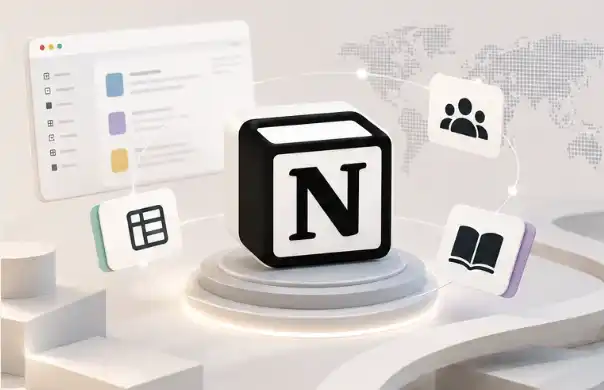
Deconstructing Notion's Growth: From a Note-taking Tool to 100 Million Users—How Notion Built a Triple Growth Flywheel Through Product, Templates, and Community

Notion's growth from a niche note-taking tool to a platform with 100 million users is powered by three interconnected flywheels: Product-Led Growth (PLG), a Template Economy, and Community-Driven Growth. First, Notion's PLG strategy relies on a highly flexible, "plastic" product that users can adapt to countless personal and team workflows. Its freemium model lowers the barrier to entry, while features like page sharing and collaboration drive organic, usage-based viral growth as users naturally invite others. Second, the Template Economy solves the "blank page" problem. Templates, created by both Notion and its community, transform abstract product capabilities into concrete, copyable solutions for specific scenarios (e.g., project management, content calendars). This dramatically lowers activation costs for new users and fuels SEO-driven discovery. Third, a vibrant Community acts as a distributed growth engine. Users and official Ambassadors create tutorials, share use cases, and host local events. This community not only educates users but also fosters a sense of identity around pursuing "better ways of working," strengthening loyalty and enabling global, low-cost expansion. Together, these flywheels create a self-reinforcing ecosystem: a great product attracts users who create templates and community content, which in turn attracts more users and deepens engagement. This system allowed Notion to scale from individuals to teams and enterprises through a bottom-up adoption path. Looking ahead, AI integration promises to accelerate these flywheels further by making templates smarter and the platform a potential AI-native work operating system. Ultimately, Notion's defensible advantage is not just its features, but this deeply entrenched network of user assets, creators, and community trust.

marsbit3 saat önce

Deconstructing Notion's Growth: From a Note-taking Tool to 100 Million Users—How Notion Built a Triple Growth Flywheel Through Product, Templates, and Community

marsbit3 saat önce

$10 Billion, Qualcomm to Acquire Chip Legend Jim Keller's Company

Global mobile chip giant Qualcomm is in advanced talks to acquire AI chip startup Tenstorrent in a deal valued between $8-10 billion, according to media reports. This potential acquisition would be one of the largest in the AI chip sector in recent years. Tenstorrent, led by legendary chip architect Jim Keller, has gained prominence for its RISC-V architecture and AI accelerator designs. The move highlights Qualcomm's strategic push to diversify beyond its core smartphone chip business. As the smartphone market matures, Qualcomm is aggressively targeting growth in automotive, data center, and cloud AI. Acquiring Tenstorrent would allow Qualcomm to rapidly enter the high-end AI computing market, bypassing lengthy in-house development cycles. Tenstorrent's cost-effective system architecture, which avoids expensive HBM memory and relies on standard Ethernet for clustering, offers a potential alternative to Nvidia's costly solutions. Furthermore, Tenstorrent's high-performance RISC-V CPU technology and its focus on the automotive and edge computing segments align with Qualcomm's strategic goals, including its "Snapdragon Digital Chassis" platform. Despite the strategic rationale, the high valuation has sparked some investor caution. The successful integration of Tenstorrent's open-source culture and independent team into Qualcomm's organization, along with the commercialization of its technology, remains a key challenge.

marsbit4 saat önce

$10 Billion, Qualcomm to Acquire Chip Legend Jim Keller's Company

marsbit4 saat önce

CARDS' Brutal Truth of $535M FDV: Only $43M Net Revenue, Profit Margin Halved

The article deconstructs Collector Crypt (CC), a blockchain-based platform for trading tokenized collectible cards, revealing a significant disparity between its high volume and actual business fundamentals. Key findings include: * CC's cumulative revenue of $635M is misleading; 90.6% is instantly returned to users via card buybacks, leaving only $43M in net revenue (6.7% retention). * Trading activity is minimal, with real secondary market trading below $5M. eBay sales as a percentage of volume have declined for six consecutive quarters. * The platform's user base is highly concentrated, with a few dozen high-frequency wallets driving most of the volume, resembling a "casino" with ~420 daily active players. * As volume shifts to higher-priced card packs, the net profit margin has halved from 11.2% to 5.8%. * Token value capture (via burns and buybacks) totals only $1.4M, just 3.4% of net revenue. Meanwhile, operational wallets have off-ramped $45.7M in USDC. * With a Fully Diluted Valuation (FDV) of ~$535M, the token trades at 7.3x net revenue. The float is only 20.5%, with 72% of the supply allocated to insiders and locked until November 2027. The analysis concludes that while CC has found product-market fit as a high-speed gacha machine, it shows little evidence of evolving into a sustainable collector's marketplace, with minimal value accruing to its CARDS token.

marsbit4 saat önce

CARDS' Brutal Truth of $535M FDV: Only $43M Net Revenue, Profit Margin Halved

marsbit4 saat önce

İşlemler

Spot
Futures
活动图片