8 个月,500万:HyperEVM 头号套利机器人获利解析

深潮2025-10-19 tarihinde yayınlandı2025-10-20 tarihinde güncellendi

如何打造 HyperEVM 最强套利机器人?

作者:CBB

编译:深潮TechFlow

2025 年 3 月,加密市场看起来岌岌可危。关税的冲击让局势更加严峻,我们开始思考下一步的最佳机会在哪里。

随着 HyperEVM 生态中还有 40% 的 $HYPE 尚未分配给社区,我们认为这可能是一个潜在的机会。2 月份,我们曾在 UNIT 资产上测试一些市场做市策略,但并不深入,仅仅是小规模操作。

HyperEVM 刚刚上线,配套了一些去中心化交易所(DEX)。我的兄弟提议:“如果我们尝试在 HyperEVM 和 Hyperliquid 之间进行套利,即便这可能会让我们亏钱,但或许能为 Hyperliquid 第三季流动性挖矿铺路?”

我们决定尝试一下。套利机会确实存在,但我们并不确定自己能否真正竞争成功。

为什么 HyperEVM 上存在套利机会?

HyperEVM 的区块时间为 2 秒,这意味着 $HYPE 的价格每 2 秒更新一次。在这 2 秒内,$HYPE 的价格可能会波动。因此,HyperEVM 上的 $HYPE 经常会相较于 Hyperliquid 的价格出现“低估”或“高估”的情况。

初步尝试与结果

我们构建了第一个版本,非常基础。每当 HyperEVM 上的 AMM DEX 池与 Hyperliquid 的现货市场之间出现价格差异时,我们便在 HyperEVM 上发送交易,同时在 Hyperliquid 上进行对冲。

例如:

  • 如果 $HYPE 在 Hyperliquid 上价格上涨,而在 HyperEVM 上被低估:

  • 操作:在 HyperEVM 上用 USDT0 买入“便宜”的 $HYPE → 将 $HYPE 卖出换成 USDC → 在 Hyperliquid 上将 USDC 兑换回 USDT0。

在最初几天里,我们每天在 Hyperliquid 上的交易量大约为 20 万到 30 万美元,且没有亏损。更棒的是,我们还赚了几百美元。

起初,我们只执行利润超过 0.15% 的套利交易(扣除 AMM DEX 和 Hyperliquid 的手续费后)。两周后,随着利润逐渐增加,我们看到了更多潜力,同时也发现了两位竞争者,他们的策略与我们类似,但规模不大。我们决定“干掉”他们。

2025 年 4 月,Hyperliquid 推出了 $HYPE 质押功能,用于交易手续费返现。这是一个完美的更新:我们比竞争者拥有更多的资金体量。我们质押了 10 万 $HYPE,获得 30% 的手续费折扣,并将套利的利润门槛从 0.15% 降低到 0.05%。

我们开始对竞争者施加更大压力,试图让他们放弃,以便我们独享市场机会。同时,我们的目标是在两周内实现超过 5 亿美元的交易量,以提升我们在 Hyperliquid 的交易手续费等级。

随着交易量和利润的双双增长,我们成功突破了 5 亿美元的交易量,这让竞争对手难以招架。我记得有一天,我们的两个竞争对手都关闭了他们的机器人。当时我和兄弟正从巴黎飞往迪拜,疯狂地盯着机器人“印钞”。那 24 小时我们的利润达到了 12 万美元。

尽管交易费用较高,但竞争对手并没有放弃,并迫使我们降低保证金,保证金约为 0.04%,这基本上是他们的费用和我们的费用之间的差距。即便如此,交易量依然强劲,我们的日利润稳定在 2 万到 5 万美元之间。

扩展问题

随着规模扩大,我们开始遇到瓶颈。HyperEVM 的每个区块的 Gas 上限为 200 万,而每次套利交易大约消耗 13 万 Gas,因此每个区块最多只能容纳 7-8 次套利交易。这在更多池子和更多 DEX 上线后显得捉襟见肘。一些交易被卡住,我们需要迅速解决以避免交易队列堆积和账本失衡。 为此,我们采取了以下措施:

  1. 创建 100 多个钱包,每个钱包独立发送套利交易,避免单个钱包的交易队列过长。

  2. 每个区块最多执行 8 个套利交易。

  3. Gas 管控:当 HyperEVM 的 Gas 价格飙升时,我们提高所需的投资回报率(ROI)阈值,以避免因高 Gas 费用导致交易卡住。

  4. 速率限制:如果过去 12 秒内发送的交易数量超过一定值,我们会提高利润要求后再发送新交易。

改进时代

随着我们持续盈利,交易量达到竞争者的 5-10 倍,我们对优化变得痴迷。这并非我们的第一次尝试。今天你可能一边喝啤酒一边“印钞”,明天就可能被某个新势力“送进地狱”。

成为 Hyperliquid 上的 Maker

2025 年 6 月,我的兄弟提出了一个他酝酿数周的想法:在 Hyperliquid 上以 Maker(挂单方)的身份启动套利交易,而不是 Taker(接单方)。

两大好处:

  • 在 HYPE 上关注插针行情 → 创造更多套利机会。

  • 每笔交易节省 0.0245% 的费用 → 从而提高利润。

这是一个具有挑战性的更新,因为我们在 Hyperliquid 上进行了一笔交易,但我们不确定是否能够在 HyperEVM 上进行相反的交易(有人可能比我们更快)。

此前,我们是通过在 HyperEVM 上发送交易启动套利。如果交易失败,我们在 Hyperliquid 上不进行任何操作;如果交易成功,我们才在 Hyperliquid 上执行交易。

但作为挂单方,我们需要承担风险,因为在 Hyperliquid 上的挂单可能会被成交,但无法保证在 HyperEVM 上也能完成对应交易。这种情况可能导致账本失衡,并带来潜在亏损。

一开始,每次测试都会导致 HYPE 值上下浮动 1 万。我们难以理解为何会出现这种失衡,因为我们有时在 20 秒内发送了 100 笔交易,但缺乏数据分析工具来追踪原因,简直一团乱麻。

为了以挂单方的身份执行套利,我们引入了一些新概念,并将其转化为新的代码和参数部分:

  1. 利润范围:确定何时创建订单、何时保留订单以及何时取消或替换订单。

  2. AMM 池选择:明确我们愿意作为挂单方交易的 AMM 池(例如 HyperSwap 上的 HYPE/USDT0 0.05% 池,或 PRJX 上的 HYPE/UBTC 0.3% 池)。

  3. 订单规模与数量:针对每个 AMM 池设定订单的大小和数量限制。

接单方交易的参数如下:
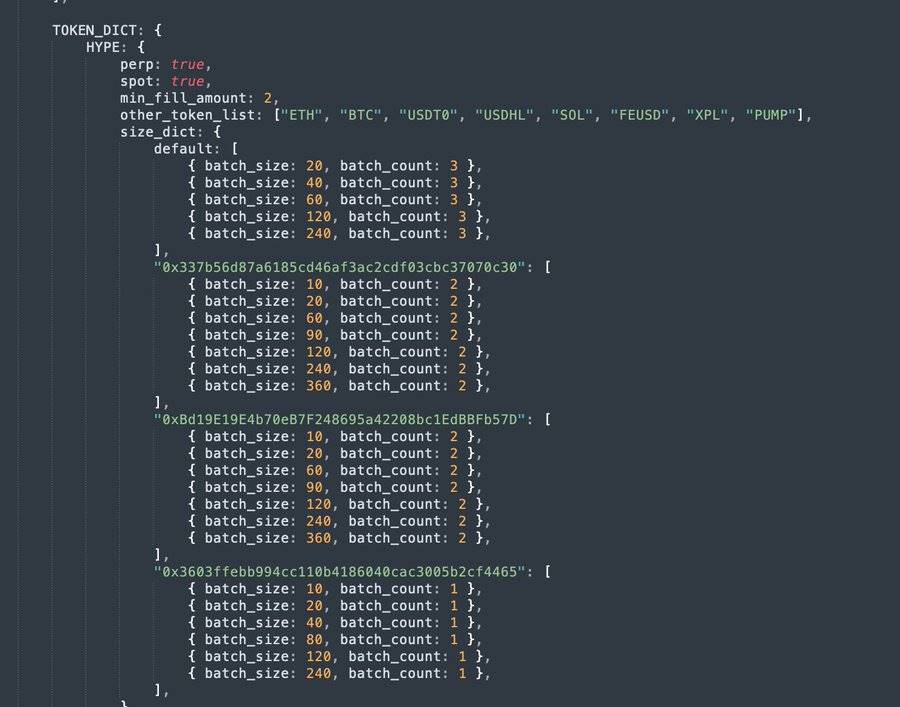
经过多日的精细调整,我们终于避免了大多数账本失衡的问题。即使出现失衡,我们也会立即使用 TWAP(时间加权平均价格)策略来迅速平衡风险。这一改动堪称游戏规则的颠覆者。与此同时,竞争者仍然只采用 Taker 策略,而我们已经将交易量提升至他们的 20 倍。

跳过 Hyperliquid 上的 USDT/USDC 交易

接下来的挑战是关于 USDT0 的特定问题。

在 Hyperliquid 上,USDC 是排名第一的稳定币,而在 HyperEVM 上,USDT0 是排名第一的稳定币。

HyperEVM 上交易量最大、套利机会最多的池子是 HYPE-USDT0 池。但由于我们在 HyperEVM 上需要 USDT0,而在 Hyperliquid 上需要 USDC,我们不得不在 Hyperliquid 上执行两笔交易来平衡这两种资产。

例如,当 HYPE 价格上涨时:

  1. 挂单成交 → 卖出 HYPE 换取 USDC(手续费 0%)

  2. 在 HyperEVM 上用 USDT0 买入 HYPE

  3. 在 Hyperliquid 上作为接单方将 USDC 换回 USDT0(手续费 0.0245%)

但这第三步非常糟糕:

  • 我们需要支付接单方手续费(导致利润减少,竞争力下降)

  • Hyperliquid 上的 USDT0/USDC 市场尚不成熟,点差较大,定价不准确

我们决定尽可能跳过这一步。为此,我们开发了新的参数和逻辑:

  1. USDC 阈值:仅当 USDC 余额超过 120 万时才跳过 USDT0→USDC 的交易。

  2. USDT0 阈值:仅当 USDT0 余额超过 30 万时才跳过 USDC→USDT0 的交易。

  3. 真实价格信息:每分钟请求 Cowswap API 获取真实的 USDT0/USDC 价格,而不是依赖 Hyperliquid 的订单簿。

引入永续合约参与套利交易

在开始之前需要声明:在整个加密货币交易生涯中,我们几乎从未使用过杠杆或永续合约(除了 2018 年在 Bitmex 的一次失败尝试,引人发笑)。因此,我们对其运作方式并不了解。

不过,我们注意到某个时间点 HYPE 永续合约的交易量远高于现货市场,且手续费略低(现货 0.0245%,永续合约 0.019%)。

于是,我们决定尝试将永续合约纳入我们的策略。没有其他竞争者使用永续合约,这意味着我们不会在同样的订单簿流动性上与他们竞争。

在测试永续合约时,我们发现可以通过资金费率(funding rate)赚钱,并在 HYPE 永续合约相较现货溢价或折价时获得更多套利机会。这是竞争者尚未涉足的领域。

我们为此设计了一个全新的系统参数:

  • 边界值:最大 HYPE 多/空头仓位大小 → 避免清算或耗尽 USDC/HYPE 余额。

  • 溢价/折价:永续合约当前的溢价或折价。

  • 最大溢价/折价:如果溢价过高,我们停止创建多头订单,改为现货交易。

  • 渐进 ROI:随着多/空头仓位的增大,我们提高利润要求,避免过快陷入不利的多/空头仓位。

  • ROI 公式:基于永续合约的溢价/折价以及仓位大小动态调整。

这是配置 HYPE 空头仓位的参数界面,看起来相当复杂:
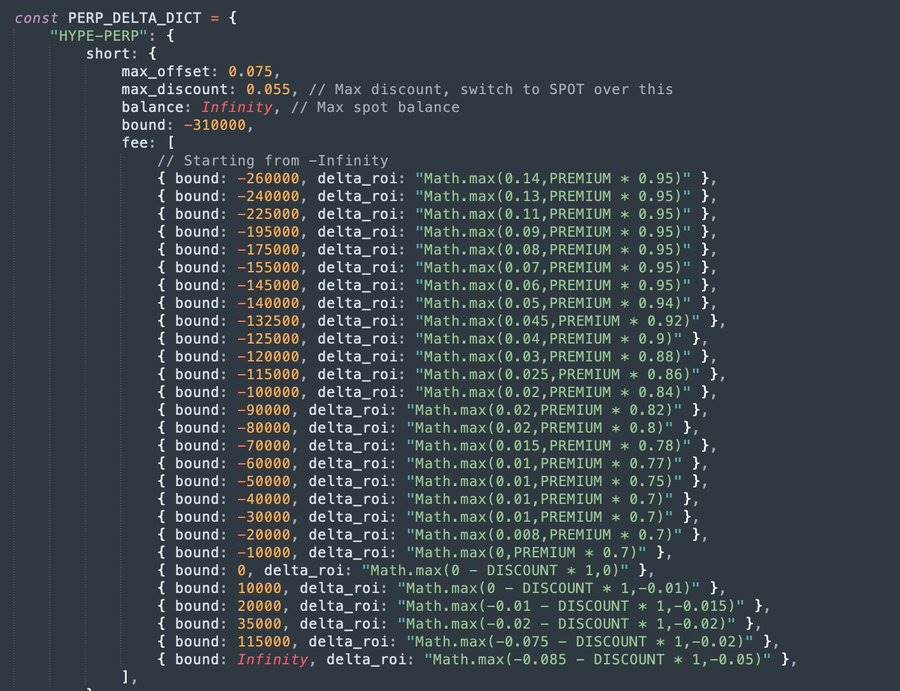
引入永续合约可能是我们最重要的升级之一,仅通过资金费率就赚了约 60 万美元,同时在溢价/折价的套利机会中赚得更多。

关于兄弟二人的协作与动态

很多人问我们是如何分工合作的。我经常被视为团队中的“嘴炮选手”,在 Crypto Twitter 上胡乱发言(这点我不否认);而我的兄弟则被认为是埋头写代码的“技术宅”。

但事情远比这复杂。我们的动态非常类似 Blur 代币激励的合作模式。对于这样的套利机器人,你永远不知道接下来会发生什么。我们每天都会遇到挑战和问题,必须迅速解决。每天都在讨论改进,直到达成一致才会行动。他负责写代码,同时也开发工具让我管理参数。

我完全不会写代码,但我知道如何配置机器人;而他完全不懂如何配置机器人,但他会写代码。

有趣的是,我们在工作中性格截然不同。我兄弟喜欢频繁更新并尝试新功能(在我看来太频繁了),而我则偏保守(在他看来太保守了),倾向于保持现有版本,只要还能“印钞”。

典型对话:

  • 我(非常毒舌):“机器人表现怪怪的……你改了什么吗???”

  • 他:“没有……呃,也许改了一点小东西。”

当两个人在没有正式企业流程的情况下合作开发机器人时,经过 250 次更新后,你会感觉自己创造了一个你已经无法完全理解或掌控的东西。

每次推送新更新时,很难完全预料其会带来的所有影响。

总结

过去的 8 个月,我们全力投入于这个套利机器人的开发与优化。尤其是在 6 月份,当 Wintermute 带着大量流动性和“打工人军团”加入战局时,我们感受到了巨大压力。

我记得 7 月份我们在伊斯坦布尔和博德鲁姆之间度过的 5 天时间,本计划放松休息,但实际上却被锁在房间里,不断改进机器人。

我们成功保持了 8 个月的市场第一,但随着市场份额在 10 月逐渐下降,我们觉得是时候退场了。

最终成果:

  • 500 万美元利润

  • 125 亿美元的 Hyperliquid 交易量

  • 在 HyperEVM 上支付了 120 万美元 Gas 费(占 HyperEVM 启动以来总量的 20%)

  • 超过 2000 小时的努力

  • 占 Unit 总交易量的 5%

我们期待 Hyperliquid 第三季和 Unit 第一季的到来。

感谢阅读!期待在新的链上冒险中再次见到大家。
İlgili Okumalar

How the $900 Billion Anthropic Was Built?

Anthropic, the AI startup behind Claude, is reportedly in early talks to raise at least $30 billion in new funding, targeting a valuation exceeding $900 billion. This would propel it past OpenAI's recent $852 billion valuation. The funding round is expected to close by late May 2026. The company's valuation surge is driven by extraordinary revenue growth, reportedly reaching an annualized $30 billion by March 2026 from $1 billion in December 2024. However, OpenAI questions this figure, suggesting a net revenue closer to $22 billion after cloud platform fees. Despite high revenue, Anthropic's gross margin is reportedly around 40%, and it is not yet profitable, with breakeven projected for 2028. A significant portion of the new capital would fund massive, pre-committed computing infrastructure with partners like Amazon, Google, and Microsoft. This highlights a new AI financing model where high valuations fuel compute spending, which in turn requires even higher future valuations to sustain. Notably, many early-stage investors are reportedly sitting out this round. Bankers privately estimate a potential IPO valuation between $400-500 billion, creating a rare scenario where the final private funding round valuation ($900B+) could far exceed the expected public market debut. Anthropic is targeting an IPO between October 2026 and the first half of 2027. Its public listing is poised to be a critical test for the entire AI sector's valuation logic, potentially validating or challenging the high-stakes "valuation-compute-valuation" cycle that has defined private market investments.

链捕手25 dk önce

How the $900 Billion Anthropic Was Built?

链捕手25 dk önce

UBS Enters the Fray, 20 Swiss Banks Now Offer Crypto Trading, Covering 2.5 Million Accounts

Global wealth management giant UBS has entered the cryptocurrency market, offering Bitcoin and Ethereum trading to select private banking clients in Switzerland as of January 2026. This move is part of a broader trend in Switzerland, where approximately 20 banks now provide crypto services, collectively covering over 2.5 million accounts. Client data from Zurich Cantonal Bank (ZKB) challenges the stereotype of crypto being solely for the young, revealing that the average buyer is aged 30-50 and predominantly male. Notably, over 40% of these clients previously held no investment portfolio, indicating crypto is activating dormant capital. The business case is proving substantial. For several Swiss banks, crypto-related activities already contribute a significant and disproportionate share of profits, with unit economics often outperforming traditional banking services. This institutional adoption in Switzerland reflects a global trend, with a recent survey showing 73% of institutional investors planning to increase crypto allocations in 2026. Switzerland's early regulatory clarity through its DLT Act and established custody infrastructure have provided a foundation for this growth. However, upcoming challenges include the implementation of the OECD's Crypto Asset Reporting Framework (CARF) in 2027 and ongoing reforms by Swiss regulator FINMA. The final shape of these regulations will be crucial in determining whether Switzerland can maintain its leading position in the global banking crypto sector.

marsbit27 dk önce

UBS Enters the Fray, 20 Swiss Banks Now Offer Crypto Trading, Covering 2.5 Million Accounts

marsbit27 dk önce

Circle Releases Arc Network Whitepaper: Can the New Economic Mechanism Drive It to Become the "Clearing Coordination Layer" for Institutional-Grade Stablecoin Payments?

Circle has released the whitepaper for its Arc Network, detailing plans for a new economic coordination layer using the proposed ARC token. Arc is a Layer 1 blockchain designed for enterprise-level stablecoin payments, featuring USDC as its native gas token, a high-performance consensus mechanism for instant transaction finality, and optional enterprise privacy features. Currently operating on a Proof-of-Authority (PoA) model, the network plans a future transition to a Proof-of-Stake (PoS) system. The ARC token is intended to serve as the network's native coordination asset, facilitating governance, enabling staking rewards, and managing fee mechanisms. User fees paid in stablecoins would be converted to ARC, with portions distributed as rewards and burned. The governance model will blend token-based voting with institutional oversight, especially for high-sensitivity matters like security and compliance. While positioning Arc as a potential settlement layer for institutional stablecoin payments, the whitepaper acknowledges challenges. These include the network's current centralization, the unfinished and potentially volatile ARC token economics, and the evolving global regulatory landscape for stablecoins. The development signals a broader industry trend where Web3 infrastructure competition is shifting from pure performance to factors like liquidity, compliance, and institutional-grade stability.

marsbit1 saat önce

Circle Releases Arc Network Whitepaper: Can the New Economic Mechanism Drive It to Become the "Clearing Coordination Layer" for Institutional-Grade Stablecoin Payments?

marsbit1 saat önce

İşlemler

Spot
Futures
活动图片