Дубай обсуждает принципы регулирования машинной экономики с DePIN‑блокчейном peaq

cryptonews.ru2025-10-13 tarihinde yayınlandı2025-10-17 tarihinde güncellendi

Блокчейн-проект peaq и Управление по регулированию виртуальных активов Дубая (VARA) подписали меморандум о взаимопонимании. Цель соглашения — создание нормативной базы для ончейн-робототехники и токенизированных машин, что является следующим шагом в регулировании машинной экономики эмирата.

Peaq, блокчейн первого уровня для децентрализованной физической инфраструктуры, подписал меморандум о взаимопонимании с Управлением по регулированию виртуальных активов Дубая (VARA). Их совместная работа будет нацелена на разработку нормативно-правовой базы для ончейн-робототехники и токенизированных машин.

Согласно пресс-релизу, меморандум касается свободной зоны машинной экономики peaq. Сотрудничество также включает руководство для проектов, которые претендуют на получение лицензий VARA, совместные учебные программы по технологиям и соответствию нормативным требованиям, а также обмен данными для исследований и регулирования.

Запущенная в июле свободная зона машинной экономики представляет собой контролируемую среду. В ней тестируют работу робототехники и искусственного интеллекта в децентрализованных сетях.

Соучредитель Peaq Макс Тейк заявил, что соглашение отражает серьезные намерения сторон построить машинную экономику в правовом поле. Он также отметил, что это предоставит людям возможность участвовать в развитии совершенно нового сектора экономики и получать от этого выгоду.
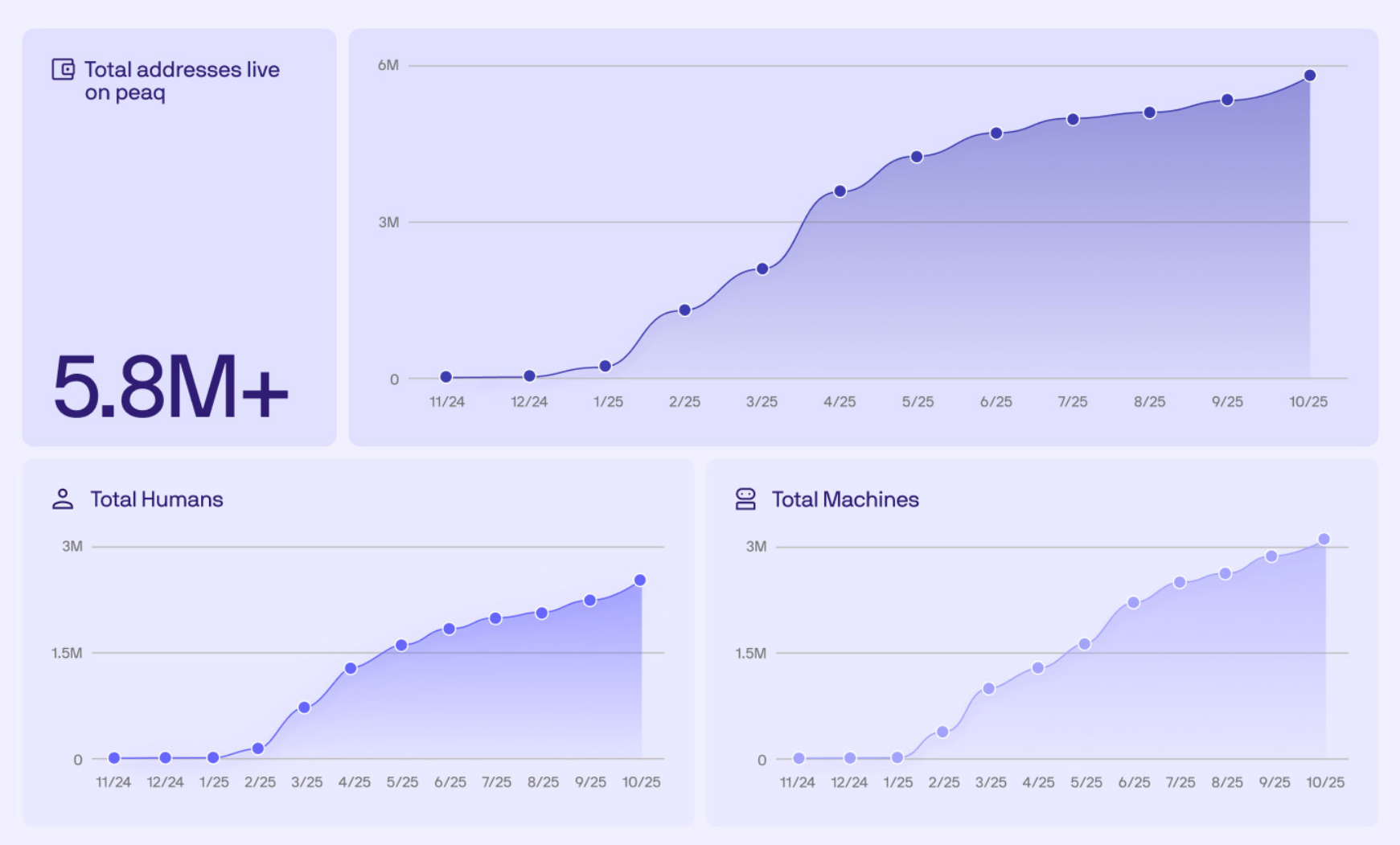

Люди и машины в peaq. Источник: peaq.xyz

Peaq — это блокчейн первого уровня для машинной экономики. В этой сети подключенные устройства и роботы могут владеть активами, обмениваться данными и получать доход. Он служит основой для DePIN и токенизированных реальных активов (RWA).

VARA — это дубайское агентство, регулирующее вопросы криптовалют и цифровых активов. Созданное в 2022 году, оно курирует лицензирование, соблюдение нормативных требований и политику в сфере виртуальных активов на территории всего эмирата.

Это объявление последовало примерно через неделю после того, как VARA заключило стратегическое партнерство с DMCC. Эта свободная экономическая зона, поддерживаемая правительством Дубая, занимается торговлей сырьевыми товарами и бизнесом. Их совместная цель — разработка нормативной базы для токенизированных товаров.

Генеральный директор VARA Мэтью Уайт заявил, что агентство стремится позиционировать Дубай в качестве глобального ориентира для безопасного и устойчивого роста этого нового класса активов.

Дубай и криптоактивы ОАЭ

С момента создания в марте 2022 года для надзора за регулированием криптовалют и Web3, VARA способствовало превращению Дубая и всех Объединенных Арабских Эмиратов в один из ведущих мировых центров цифровых активов и блокчейн-инноваций.

19 мая VARA обновило свои правила для поставщиков услуг виртуальных активов (VASP), работающих в стране, уточнив порядок выпуска и распространения токенизированных реальных активов. Согласно данным юридической фирмы NeosLegal из ОАЭ, новые правила позволят выпускать токенизированные реальные активы и размещать их на вторичных рынках.

В августе VARA и Управление по ценным бумагам и биржам ОАЭ (SCA) заключили стратегическое партнерство для синхронизации подходов к регулированию цифровых активов. Согласно соглашению, лицензии, выданные в Дубае, будут действовать на всей территории ОАЭ.

22 сентября ОАЭ подписали Многостороннее соглашение о компетентных органах в рамках Системы отчетности о криптоактивах (CARF). Оно устанавливает автоматический обмен налоговой информацией о криптоактивах между странами-участницами. Министерство финансов заявило, что система вступит в силу в 2027 году, а первый обмен данными запланирован на 2028 год.

Подход Дубая и ОАЭ к цифровым активам закономерно привлек миграцию состоятельных криптоинвесторов. ОАЭ стали ведущим направлением для миллионеров: ожидается, что в 2025 году туда переедут около 9,8 тыс. человек.

Чейз Эрген, член совета директоров криптоинвестиционной компании DeFi Technologies, прогнозирует, что криптоиндустрия станет второй по величине отраслью в ОАЭ в течение пяти лет.
İlgili Okumalar

Tiger Research: Zuckerberg Begins Betting on Prediction Markets, While Asian Nations Still View Them as Gambling

This article examines the rise of prediction markets, contrasting their growing institutional acceptance in the West with their restrictive regulation in Asia. It details how prediction markets, which originated from informal political betting and academic experiments like the Iowa Electronic Market, aggregate crowd wisdom into probabilistic prices through binary contracts. Their growth accelerated around 2020, reaching over $14 billion in monthly volume. A key driver is the "skin in the game" principle, where users risk their own capital, leading to high accuracy in predicting events like Fed rate decisions and elections, as demonstrated by platforms like Polymarket. Meta's entry, with Mark Zuckerberg reportedly leading the development of the Arena app, signals the market's maturation. In the U.S., court rulings have distinguished prediction markets from gambling, facilitating entry by traditional financial institutions. However, most Asian jurisdictions still classify them as gambling, focusing on social control rather than financial innovation. The article argues this stance creates three problems for Asia: 1) regulatory arbitrage pushes users to riskier offshore platforms, 2) loss of sovereign information infrastructure as valuable social sentiment data accumulates abroad, and 3) abandonment of user protection. It concludes that Asia needs a policy shift from prohibition to constructive regulation, integrating these markets into the formal system to harness their data as a national asset, as initiatives like Limitless Research are beginning to do.

marsbit2 saat önce

Tiger Research: Zuckerberg Begins Betting on Prediction Markets, While Asian Nations Still View Them as Gambling

marsbit2 saat önce

Ethereum's Next Decade in the Eyes of Vitalik

"Lean Ethereum" Long-Term Roadmap Unveiled by Vitalik Buterin On July 5, 2026, Vitalik Buterin published the "Lean Ethereum" roadmap, positioning it as Ethereum's third major evolution following the Merge. This multi-year, multi-phase upgrade aims to fundamentally transform Ethereum's core protocol through staged network upgrades extending to 2029. Key goals include achieving 1 gigagas per second L1 throughput (a massive increase from the current ~32 TPS), near-instant finality, and quantum-resistant cryptography. The plan involves transitioning Ethereum's security model from full transaction re-execution by all nodes to native verification via recursive STARK proofs. A major proposed change is replacing the EVM with a proof-friendly architecture like RISC-V or leanISA, though this remains a point of contention, especially with L2s like Arbitrum favoring alternatives like WASM. Other planned upgrades include a restructured state model with a large, cheap "warehouse" storage layer to drastically reduce fees for migrated applications, multi-dimensional gas pricing, and a new focus on making privacy a first-class, native protocol feature. While the roadmap significantly raises Ethereum's long-term technical ceiling, analysts note it does not directly address ETH's mid-term token economics or value capture. The plan's multi-year timeline means near-term price impact will likely depend on observable progress milestones, such as the successful deployment of the upcoming Glamsterdam gas limit increase, growth in L2 activity and blob usage, and trends in L1 fee revenue and ETH burn.

链捕手3 saat önce

Ethereum's Next Decade in the Eyes of Vitalik

链捕手3 saat önce

In Just 11 Days, Claude Rewrote Millions of Lines of Code, an Epic AI Engineering Feat Sparks Fury

In just 11 days, Bun's founder Jarred Sumner used Anthropic's Claude AI models to rewrite its million lines of code from Zig to Rust. This move sparked significant controversy, particularly from Zig's creator, Andrew Kelley, who publicly criticized Sumner's engineering practices and the decision to use AI for such a massive rewrite. Bun, a high-performance JavaScript/TypeScript runtime and rival to Node.js, was originally written in Zig. After Anthropic acquired Bun, the team encountered persistent stability and memory safety bugs in the Zig codebase. These issues, combined with Zig's strict policy against LLM-generated code, led to the decision to rewrite in Rust. The rewrite was executed using Claude AI tools at an estimated API cost of $165,000, dramatically reducing the expected time and financial cost. Andrew Kelley's response was scathing. He blamed the original bugs on poor engineering habits, calling Bun's Zig code a collection of "hacks on top of hacks." He expressed relief that Bun was no longer associated with Zig, fearing it would misrepresent the language and attract low-quality, AI-generated contributions. The tech community is divided; some view Kelley's critique as unprofessional, while others see it as a defense of engineering integrity. A major concern about the AI-driven rewrite is the resulting code quality. The translation from Zig left approximately 27,000 lines of unsafe Rust code, raising fears about long-term maintainability and technical debt. The debate centers on whether this project is a milestone in AI-assisted development or a future maintenance nightmare.

marsbit4 saat önce

In Just 11 Days, Claude Rewrote Millions of Lines of Code, an Epic AI Engineering Feat Sparks Fury

marsbit4 saat önce

İşlemler

Spot
活动图片