Новая токенизированная фондовая биржа Франции стремится переосмыслить IPO

cryptonews.ru2025-02-16 tarihinde yayınlandı2025-10-17 tarihinde güncellendi

Lightning Stock Exchange (Lise), новая фондовая биржа со штаб-квартирой во Франции, выходит на рынок со смелыми амбициями по запуску полностью токенизированной биржи акций, предназначенной для малых и средних предприятий (МСП).

«Французское управление пруденциального надзора и урегулирования несостоятельности (ACPR) выдало Lise лицензию на торговлю и расчеты по технологии распределенного реестра (DLT), что открывает путь к ее токенизированной бирже акций в Европе», - объявила компания в четверг.

«Это разрешение дает нам право управлять первой токенизированной биржей акций в Европе», - заявил управляющий директор Lise Марк Кепенегян в своем заявлении на LinkedIn.

Lise, поддерживаемая крупными французскими банками, включая BNP Paribas и Bpifrance, является дочерней компанией Kriptown, которая позиционирует себя как «необиржа для стартапов и МСП» с акцентом на цифровые активы.

Что такое лицензия DLT TSS?

Лицензия DLT TSS - это разрешение в рамках Пилотного режима DLT Европейского союза, который представляет собой набор правил для рыночных инфраструктур, использующих технологию распределенного реестра (DLT).

Пилотный режим DLT, вступивший в силу в марте 2023 года, обеспечивает правовую основу для торговли и проведения расчетов по транзакциям с активами криптовалюты, которые квалифицируются как финансовые инструменты в соответствии с Директивой о рынках финансовых инструментов (MiFID II).
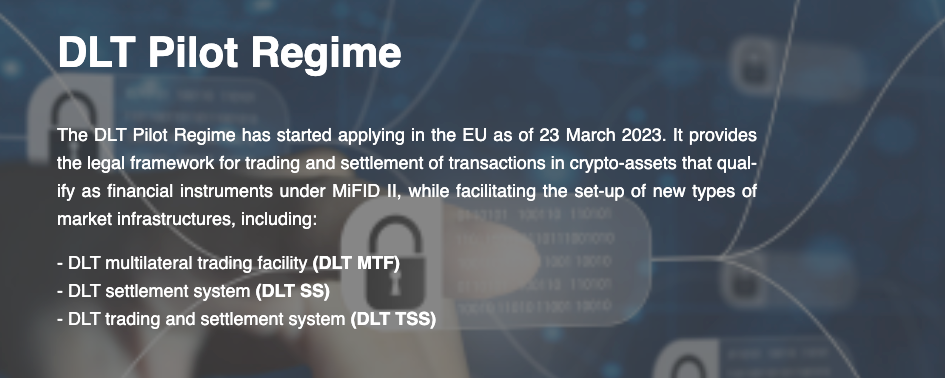
Рисунок 1. Рыночные инфраструктуры в рамках пилотного режима DLT ЕС. Источник: The European Securities and Markets Authority.

«Лицензия DLT TSS позволяет Lise создать рыночную инфраструктуру нового поколения, которая объединяет как рыночные, так и постторговые функции в рамках единой инфраструктуры», - заявила компания.

В частности, компания упомянула сочетание многосторонних торговых площадок (MTF) и центральных депозитариев ценных бумаг (CSD), добавив, что это знаменует собой «глубокий сдвиг в работе финансовых рынков».

Переосмысление IPO с помощью токенизации

Новость о получении Lise лицензии DLT TSS появилась спустя несколько месяцев после того, как компания вышла из тени в апреле 2025 года с целью «фундаментально переосмыслить» концепцию первичного публичного размещения акций (IPO).

«Lise разрабатывает уникальную рыночную инфраструктуру на основе токенизации активов», - заявила тогда компания, подчеркнув, что такой подход обеспечивает высокий уровень безопасности и одновременно снижает затраты, связанные с IPO и публичными листингами.

«Ожидается, что первые токенизированные IPO состоятся в начале 2026 года, после завершения регистрации эмитентов и окончательного тестирования операционной готовности», - сообщил Кепенегян.

Он отметил, что запуск запланирован на 1 квартал 2026 года. Первое токенизированное IPO Lise послужит проверкой концепции модели, и в 2027 году компания планирует провести еще 10 токенизированных IPO.

Crédit Agricole среди инвесторов

Некоторые крупные европейские банки сделали ставку на токенизацию Lise в ходе IPO.

Caceis, банковская группа по обслуживанию активов французского банковского гиганта Crédit Agricole, приобрела миноритарный пакет акций Kriptown в августе, чтобы поддержать запуск Lise.

«Этим шагом Caceis подтверждает свою приверженность стимулированию трансформации финансового сектора и развитию цифровых экосистем, способствующих инновациям, - заявила компания. - Эти инвестиции соответствуют долгосрочной стратегии Caceis в области цифровых активов, которую компания реализует уже несколько лет для поддержки трансформации рыночной инфраструктуры».

Усилия Lise по токенизации в Европе знаменуют собой важную веху в растущей тенденции токенизированных ценных бумаг: в начале 2025 года такие крупные биржи криптовалют, как Gemini и Kraken, дебютировали с продуктами токенизированных ценных бумаг для клиентов из ЕС.


İlgili Okumalar

Quantum Computing Approaches "Q-Day": How Encryption Policy, Investment Logic, and Risk Management Are Reshaping the Landscape

Quantum Computing Nears 'Q-Day': Shaping Encryption Policy, Investment Logic, and Risk Management Quantum technology is increasingly intersecting with cryptocurrency policy and cybersecurity discussions as the potential 'Q-Day'—when quantum computers could break current encryption—approaches. While summer brings fast-paced crypto market dynamics, new U.S. legislation, and AI debates, the emerging dimension is how quantum advancements will reshape the digital asset landscape. The next phase of crypto investment is being shaped by two converging forces: clearer regulatory frameworks and cryptographic evolution driven by quantum computing. Investors stand to benefit from reduced uncertainty, but must also recognize that quantum readiness is becoming a core risk factor. Public blockchains rely on cryptography for security, and sufficiently advanced quantum machines could undermine these foundations. This does not mean imminent network collapse, but investors can no longer dismiss the timeline as irrelevant. Key questions now include whether projects have identified their cryptographic dependencies, formulated migration plans to post-quantum cryptography, and established governance for upgrades. For policymakers, the link is clear. Effective crypto policy must look beyond token classification and disclosure to address the underlying infrastructure. As stablecoins, tokenized assets, and blockchain payments integrate deeper into finance, cryptographic resilience becomes a systemic issue. Failure to prepare could lead to investor losses, operational failures, and legal disputes. Policy should encourage risk disclosure, require major intermediaries to maintain upgrade and response plans, and foster coordination across the ecosystem—rather than impose a single technical fix. The sustainability of cryptocurrencies will increasingly depend on their security infrastructure's ability to adapt to these accelerating technological pressures.

Foresight News22 dk önce

Quantum Computing Approaches "Q-Day": How Encryption Policy, Investment Logic, and Risk Management Are Reshaping the Landscape

Foresight News22 dk önce

Bitcoin's Five-Wave Adjustment Nears End, Opportunities Emerge in HYPE Support Zone | Invited Analysis

**Bitcoin's Five-Wave Adjustment Nears End, HYPE Support Zone Presents Opportunity | Guest Analysis** This week, Bitcoin (BTC) is in the final stage of a five-wave corrective structure. The formation of 'Endpoint 44' is key: a level above $58,110 suggests a high probability of a technical rebound, leading likely to wide-range consolidation. A break below $58,110 without bullish divergence warrants caution for further downside. Mid-term bearish positions are maintained at 20%, with 30% of capital reserved for short-term scalping opportunities based on predefined support/resistance levels and three scenario-based plans (A/B/C). Simultaneously, HYPE has entered the 55-56 segment of its own five-wave correction from its $76.94 high. If 'Endpoint 56' forms above the prior low (Endpoint 54), creating a double-bottom pattern, a rebound is significantly likely. A light long position (under 30% allocation) can be considered upon stabilization in the support zone. Last week's BTC short-term strategy, guided by proprietary quantitative models, successfully executed two short trades (1x leverage), yielding a total return of approximately 6.21%. The market move validated the prior weekly forecast of a retest towards the $59,100 support. **Core Trading Views Summary:** * **BTC:** Focus on the formation of 'Endpoint 44'. A scenario above $58,110 allows for tentative longs. Key resistances: $60,900-$62,300, ~$65,500, $67,300-$69,500. Key supports: ~$58,100, ~$55,000. * **HYPE:** Monitor the final position of 'Endpoint 56'. Key resistances: ~$65.5, ~$71.5. Key supports: ~$58.5, $52-$54 zone. Strategy favors buying on dips upon stabilization in support areas with confirmed model signals, with strict position control. **Risk Disclaimer:** Financial markets are volatile. All analysis, models, and strategies herein are based on personal technical analysis for journaling purposes only, not investment advice. Trade at your own risk.

Odaily星球日报36 dk önce

Bitcoin's Five-Wave Adjustment Nears End, Opportunities Emerge in HYPE Support Zone | Invited Analysis

Odaily星球日报36 dk önce

AI Sweeps the Globe, So Why Is Crypto + AI Facing Gloom?

The article "AI Sweeps the Globe, But Why Is Crypto + AI So Bleak?" analyzes the disconnect between the booming AI industry and the struggling crypto+AI sector. It argues the issue is not flawed logic but severe demand-supply mismatch across four key sub-sectors. Decentralized compute and storage projects offer theoretical benefits like cost savings and data sovereignty but lack a decisive technical edge over entrenched cloud providers (AWS, GCP). Enterprises are unwilling to risk migration for unproven infrastructure that can't guarantee the performance and reliability needed for critical AI workloads. ZKML and privacy solutions address important issues like model verification but solve non-urgent, long-term concerns for most businesses currently focused on core performance and ROI. Demand here is likely to be regulation-driven (e.g., EU AI Act) rather than organic. AI agent infrastructure is developing foundational tech for a future multi-agent economy. However, the current market phase is dominated by internal process automation within single companies, making this technology premature. AI agent payments is highlighted as the only sub-sector where blockchain competes on a level playing field with traditional finance, as neither has adequately solved the challenges of machine-to-machine micropayments and real-time settlement. Overall, crypto+AI projects are building for future needs (data ownership, decentralization, transparency) that don't align with the industry's immediate priorities (performance, cost, stability). The absence of a flagship, large-scale use case further hinders mainstream adoption and capital inflow. The path forward requires either adapting to current market demands or patiently building the foundational infrastructure for the next phase of AI.

marsbit48 dk önce

AI Sweeps the Globe, So Why Is Crypto + AI Facing Gloom?

marsbit48 dk önce

"King of Pump Calls" Arthur Hayes Strikes Again, This Time Targeting Deribit

On June 29, BitMEX co-founder Arthur Hayes purchased approximately 6.16 million SYN tokens via OTC platform Flowdesk for around $2.2 million. Hayes subsequently declared on X that SYN represents one of the most asymmetric investments he has seen since HYPE, stating it's time for an options DEX to challenge the dominant platform Deribit, and identifying Hypercall as that challenger. SYN's price surged over 40% following his comments, with a tenfold increase in June 2026 alone, bringing its FDV to roughly $110 million. The article details Synapse Protocol's evolution from a cross-chain messaging and liquidity network into the chain-based options trading protocol Hypercall. Hypercall, built on the Hyperliquid ecosystem's HyperEVM, aims to be a universal options exchange supporting any asset size with capped loss (limited to premium paid) and no forced liquidations. Deribit, established in 2016, remains the centralized leader in crypto options with an estimated 85% market share in BTC and ETH options and $3.588 billion in assets. Its strengths include deep liquidity and professional tools, but it faces criticisms over custody risk, KYC requirements, and regulatory uncertainty. The analysis positions Hypercall not as an immediate replacement for Deribit's entrenched network effects, but as a potential complementary and differentiated competitor, particularly for DeFi-native assets and new asset classes like RWA. The article concludes by noting Hayes's recent mixed "call" record, including fully exiting and later re-buying HYPE, and the controversial price target for CARDS from his family office Maelstrom, which was followed by a significant price drop.

marsbit1 saat önce

"King of Pump Calls" Arthur Hayes Strikes Again, This Time Targeting Deribit

marsbit1 saat önce

İşlemler

Spot
活动图片