Is Bitcoin really cheap at $19,000? Assessing if it could go further down

Ambcrypto2022-07-02 tarihinde yayınlandı2022-07-02 tarihinde güncellendi

Özet

The current price level represents more than an 80% discount from its all-time high (ATH). Well, a major factor that contributes to the perception that BTC is cheap or discounted at $19,000 is that most of the institutional traders bought in at higher price levels.

El Salvador’s president Nayib Bukele announced on 1 July that his country added 80 Bitcoin [BTC] to its balance sheet. He also noted that the purchase was made at $19,000 per BTC, a price level that he described as cheap.
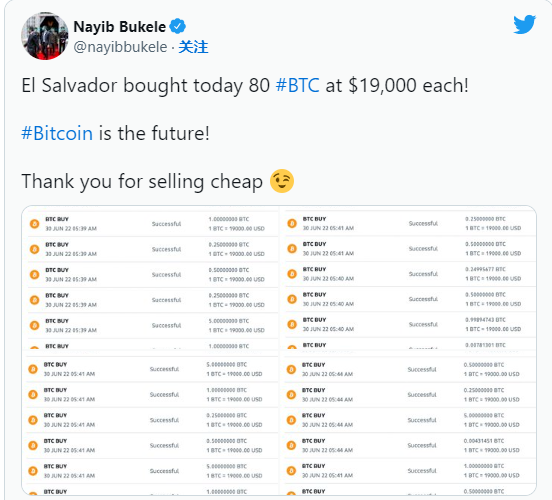
Many other crypto proponents share similar sentiments that Bitcoin is at a discount currently. MicroStrategy is among them, and the organization recently announced the purchase of 480 BTC worth roughly $10 million. There are multiple reasons why the $19,000 price level represents a healthy discount according to some of these high-profile individuals.

The current price level represents more than an 80% discount from its all-time high (ATH). Well, a major factor that contributes to the perception that BTC is cheap or discounted at $19,000 is that most of the institutional traders bought in at higher price levels.

What kind of demand is Bitcoin experiencing?

Bitcoin’s price action has been hovering above $19,000 after the recent crash. This confirms that it found support near this price level after experiencing strong selling pressure since 26 June.

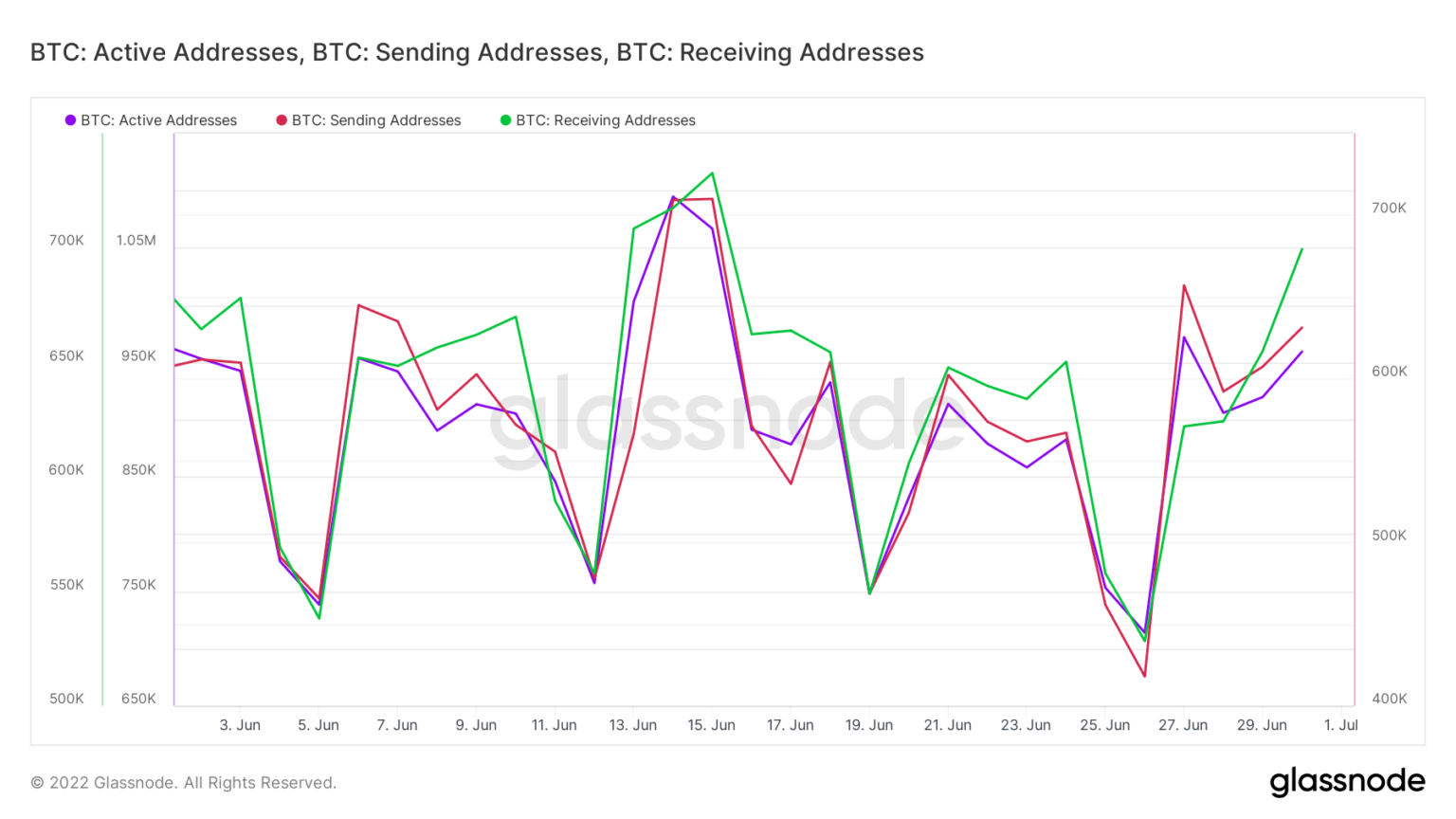
The number of active addresses increased significantly during the same period. However, latest statistics reveal that receiving addresses are higher than selling addresses.
Source: TradingView

Bitcoin had 699,440 receiving addresses and 631,248 sending addresses on 30 June. This confirms that more buyers are convinced that price levels near $19,000 attract more buyers than sellers. This observation is further enhanced by similar observations in Bitcoin’s supply distribution by balance on addresses.

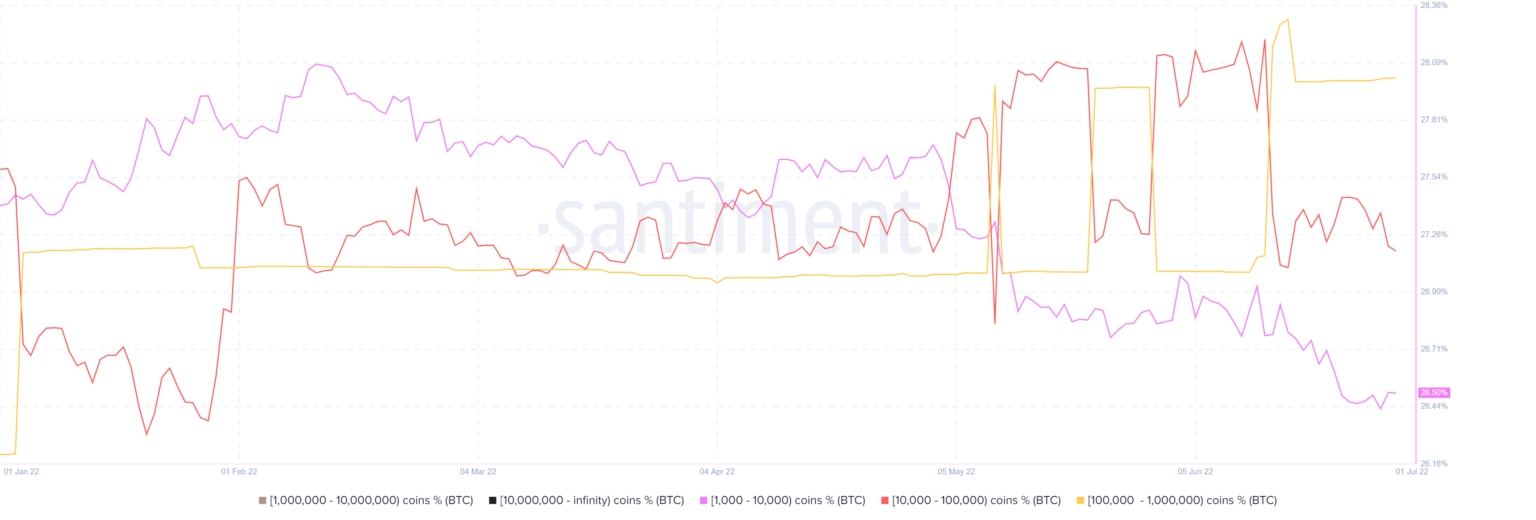
Addresses holding between 1,000 and 10,000 BTC increased their supply from 26.43% on 29 June to 26.5% by 1 July. This category represents the biggest whale bracket that controls Bitcoin by supply. As a consequence, the category has had a substantial impact on price performance.
Source: Santiment

In contrast, addresses holding between 10,000 and 100,000 BTC dropped from 11.37% from 29 June to 11.23% on 1 July. Addresses holding more than 100,000 BTC maintained control of 4.08% of Bitcoin’s supply during the same time period.

Potential outcome if Bitcoin loses the $19,000 support

Although the $19,000 price level is currently holding as a strong support level, unfavorable market conditions may trigger more downside. Such an outcome was observed on 18 June when BTC dropped as low as $17,622. It bounced back quickly as buyers took advantage of the discount. However, prices may drop lower if unfavorable market conditions continue.

One likely outcome if Bitcoin falls below $19000 is an extended panic selling which may trigger a cascade effect. The liquidation of leveraged long positions may also contribute to more downside. The other likely scenario is strong accumulation as investors take advantage of discounted price levels.


İlgili Okumalar

Why Is the World Nervous About Japan Raising Interest Rates?

In June 2026, the Bank of Japan raised its policy rate to 1%, marking its first hike to this level since 1995. While this rate remains low compared to global peers like the US and Europe, the move signals a profound shift for a nation that has been a global source of ultra-cheap funding for decades. Japan's long-standing near-zero or negative interest rates had facilitated massive "yen carry trades," where international investors borrowed low-cost yen to invest in higher-yielding assets worldwide, such as US tech stocks and emerging market bonds. This made Japan a critical, often overlooked, source of global liquidity. Japan's ultra-loose policy stemmed from structural challenges post-1990s asset bubble: aging demographics, chronic low inflation/deflation, and high public debt. Recent shifts, including sustained wage growth (exceeding 5% in recent years) and inflation consistently above the 2% target, have created a "wage-price spiral" possibility, prompting the policy normalization. The global market's concern lies not in the absolute rate but in the potential unwinding of the yen carry trade. As Japanese borrowing costs rise, the economics of these leveraged global investments change, potentially triggering deleveraging and capital outflows from risk assets. Market anxiety focuses on the end of a thirty-year consensus that Japan would perpetually provide cheap funding. Ultimately, the global impact will depend on the interplay with US monetary policy. While Japan is tightening, the significant interest rate differential with the US remains. The key future dynamic is whether simultaneous Japanese hikes and eventual US rate cuts will narrow this gap, forcing a major recalibration of global capital flows and asset pricing built on an era of abundant, cheap yen liquidity.

marsbit2 saat önce

Why Is the World Nervous About Japan Raising Interest Rates?

marsbit2 saat önce

Research Report Analysis: MRVL's Optical AI Booming, Why High Valuation Keeps Morgan Stanley's Star Analyst Sidelined?

Report Recap: MRVL Optical AI Boom - Why High Valuation Led Morgan Stanley's Star Analyst to Stay Neutral? Morgan Stanley analyst Joseph Moore maintained an "Equal-weight" (Neutral) rating on Marvell Technology (MRVL) on May 28, raising the price target from $172 to $195, below the trading price. This stance comes despite Marvell reporting a record quarter and significantly raising its full-year outlook (FY27 revenue ~$11.5B, up ~40%). Moore's neutral view is based on valuation. The $195 target implies ~40x CY2027 P/E. He contrasts MRVL with NVDA: both trade near ~$200, but Nvidia's forward EPS is more than double Marvell's. For MRVL's valuation to hold, it needs consistent earnings upgrades, proof of networking market share gains, or certainty on large-scale custom AI chip shipments—none of which are confirmed yet. Growth is driven by two pillars: **1) Optical Interconnect** (the faster runner): Moore raised FY27 growth expectations to >70%, with the optical module product line nearing a $1B annualized run rate. **2) Custom AI Chips** (the climber): Confidence in FY28 is growing, but a major new customer project only ramps in FY28, with no current revenue visibility. Key risks are the underperforming Storage, Enterprise, and legacy Networking segments. Moore acknowledges the real AI opportunity but believes the current price already reflects it. For the stock to work from here, investors need to see the optical business hit its targets, custom chips ramp as planned, and a recovery in the weaker business units.

marsbit3 saat önce

Research Report Analysis: MRVL's Optical AI Booming, Why High Valuation Keeps Morgan Stanley's Star Analyst Sidelined?

marsbit3 saat önce

İşlemler

Spot
Futures
活动图片