Crypto Meets Retail: Walmart-Linked Fintech Expands Into Digital Assets

bitcoinist2025-10-04 tarihinde yayınlandı2025-10-04 tarihinde güncellendi

Özet

OnePay, the fintech linked to Walmart, plans to add crypto trading to its mobile banking app later in 2025, according...

Trusted Editorial content, reviewed by leading industry experts and seasoned editors. Ad Disclosure

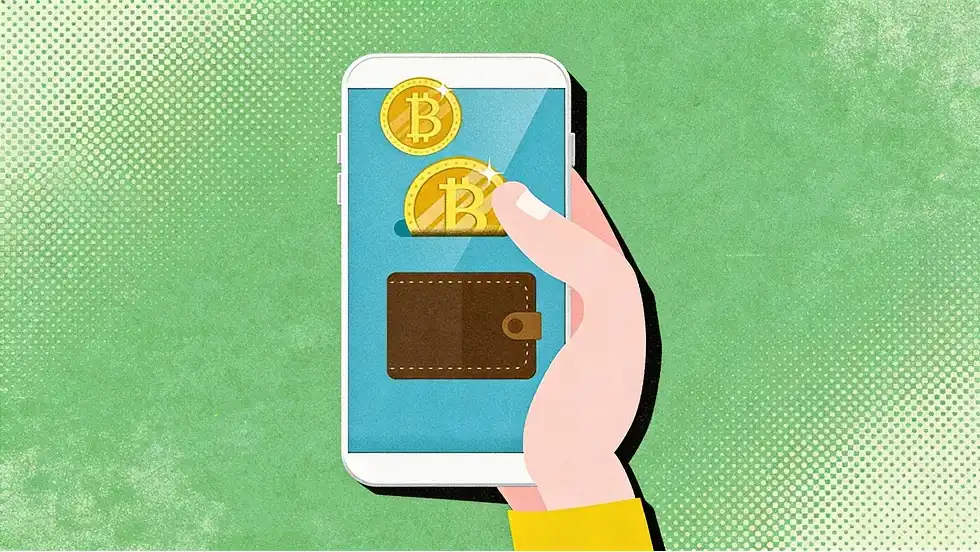
OnePay, the fintech linked to Walmart, plans to add crypto trading to its mobile banking app later in 2025, according to multiple reports. Sources told news outlets that users will be able to buy, sell and hold Bitcoin (BTC) and Ethereum (ETH) inside the app, a move that would expand OnePay’s lineup of financial services beyond savings and cards.

OnePay To Add Crypto Trading

Reports have disclosed that the crypto functions will be powered through a tie-up with Zerohash, a firm that provides custody and settlement services for digital assets. That suggests OnePay will rely on outside infrastructure rather than build all systems itself.

OnePay was launched in 2021 and is majority owned by Walmart, with early backing from Ribbit Capital, and the company has been steadily rolling out banking features since then.

Partnerships And Product Plans

OnePay is working with Synchrony to relaunch Walmart’s credit card offerings, and Reuters reported a Synchrony announcement dated June 9, 2025, about card programs set to return this fall.

The app also aims to offer savings accounts and buy-now, pay-later options alongside the new crypto window. Users may be given the ability to convert crypto to fiat and then use those funds for purchases in Walmart stores or to pay card balances, though the exact mechanics have not been fully detailed by company spokespeople.

BTCUSD now trading at $122,520. Chart: TradingView

How Much Will Users Get Access To At First?

Several outlets suggest OnePay will start with the two largest tokens, BTC and ETH, rather than a long list of coins. Limits, fees and state availability were not disclosed in the reports, and those details could change before any public launch.

Sources said the rollout is expected sometime later in 2025, with the credit card program arriving in fall 2025, but no firm launch date for crypto trading has been announced.

Regulatory Hurdles And Timing

Regulators at the state and federal level are actively watching crypto offerings from consumer apps, and compliance requirements could shape how quickly OnePay moves.

Based On reports, the company has not publicly filed detailed disclosures tied to the crypto service, and both Walmart and OnePay declined to comment to reporters. That leaves open the possibility of a phased release, restricted to certain users or states at first.

What This Means For Shoppers And Users

If the plan proceeds, Walmart customers who already use OnePay could gain another way to access BTC and ETH without signing up for a separate crypto exchange.

Analysts and users will be watching fees, protections for deposits, and whether the app allows spending crypto directly in stores or requires conversion first.

Featured image from OnePay, chart from TradingView

Editorial Process for bitcoinist is centered on delivering thoroughly researched, accurate, and unbiased content. We uphold strict sourcing standards, and each page undergoes diligent review by our team of top technology experts and seasoned editors. This process ensures the integrity, relevance, and value of our content for our readers.

Christian, a journalist and editor with leadership roles in Philippine and Canadian media, is fueled by his love for writing and cryptocurrency. Off-screen, he's a cook and cinephile who's constantly intrigued by the size of the universe.

İlgili Okumalar

Probability in the Price: How World Cup Odds Are Calculated

**The Probability in the Price: How World Cup Odds Are Calculated** Two major systems released their "championship probabilities" before the 2026 World Cup, and they disagreed on the favorite. Prediction market aggregators listed France at around **17%**, while the Opta supercomputer gave European champion Spain **16.1%**. These numbers look similar, but their production methods are fundamentally different. The market's **17%** is the **price** that clears after hundreds of millions of dollars in trading across platforms like Polymarket and Kalshi, where contracts trade between 0 and 100 cents, directly representing implied probability. This liquidity is provided by crypto-native market makers like Wintermute, though the market still has "the liquidity profile of an early-stage" asset class. In contrast, Opta's **16.1%** is a **simulated frequency**. Its model uses team data (including betting market odds as an input) to estimate match probabilities, then runs **10,000 full tournament simulations**, counting how often each team wins. Which is more accurate? There is **no rigorous, cross-tournament academic study** directly comparing their track records. However, a persistent **longshot bias**—where low-probability outcomes are systematically overvalued—observed in traditional betting for nearly a century, has also been found in modern crypto prediction markets. Research shows low-price contracts on Kalshi/Polymer less likely to pay out than their implied odds suggest. Unlike traditional bookmakers, prediction markets operate on **public blockchain ledgers**, making every transaction auditable and enabling such research. However, price formation is also influenced by **regulatory uncertainty**, as seen in recent US state-level bans and legal battles over jurisdiction. In summary, the "probability" you see is either a **market-clearing price** subject to behavioral biases and liquidity constraints, or a **model-simulated frequency** that partially incorporates market data. The question of which method is more reliable remains open, highlighting the importance of asking: **How was this number produced?**

marsbit25 dk önce

Probability in the Price: How World Cup Odds Are Calculated

marsbit25 dk önce

İşlemler

Spot
Futures
活动图片