SEC Meets NYSE and ICE to Discuss Rules and Tokenized Stocks

TheCryptoTimes2025-09-30 tarihinde yayınlandı2025-09-30 tarihinde güncellendi

The U.S. Securities and Exchange Commission (SEC) met with the New York Stock Exchange (NYSE) and Intercontinental Exchange (ICE) on Sept. 26 to discuss rules for products related to Crypto.

The meeting was led by the SEC’s Crypto Task Force and senior executives from NYSE and ICE with talks focusing on how to regulate crypto derivatives and tokenized equities and how these products can fit into the existing system without losing investor protections. 

According to the memorandum of the meeting, key topics included how the SEC and the Commodity Futures Trading Commission (CFTC) should share duties in overseeing crypto assets. They also looked at gaps in current laws, possible exemptions for new products, and how the word “facility” should be defined when trading tokenized shares.

The list of attendees included Elizabeth King, Global Head of Clearing and Chief Regulatory Officer at ICE, Michael Blaugrund, Vice President of Strategic Initiatives at ICE, Jon Herrick, Chief Product Officer at NYSE, and Jaime Klima, General Counsel at NYSE. 

The agenda also listed discussions about investor interests, issuer concerns, and whether certain products might need exemptions to move forward.

Talks on Crypto Derivatives and Tokenized Stocks

Crypto derivatives were a central part of the talks. They are tools that let investors bet on future prices of assets like Bitcoin or Ethereum. 

The SEC wanted to know how to expand these tools safely, since they can give traders more options but also bring higher risks. With NYSE involved, the chance of such products reaching everyday investors becomes much greater.

Tokenized equities were another important topic. These tokens act like digital versions of real company shares. Instead of buying a stock directly, an investor could buy a token that proves ownership.

But there are legal questions about whether tokens count as securities under current law or if new rules must be made. NYSE and ICE asked for clear answers before starting any token-based services.

Through its crypto task force meetings, the SEC is engaging with the digital asset community to understand core issues and develop regulations that balance risk management with the need to encourage innovation. NYSE and ICE are major exchanges from traditional finance, and together with SEC they want to prepare for a future where digital assets are part of daily trading.

Also Read: Robinhood Eyes Europe With Prediction Markets Push


Mobile Only Image

İlgili Okumalar

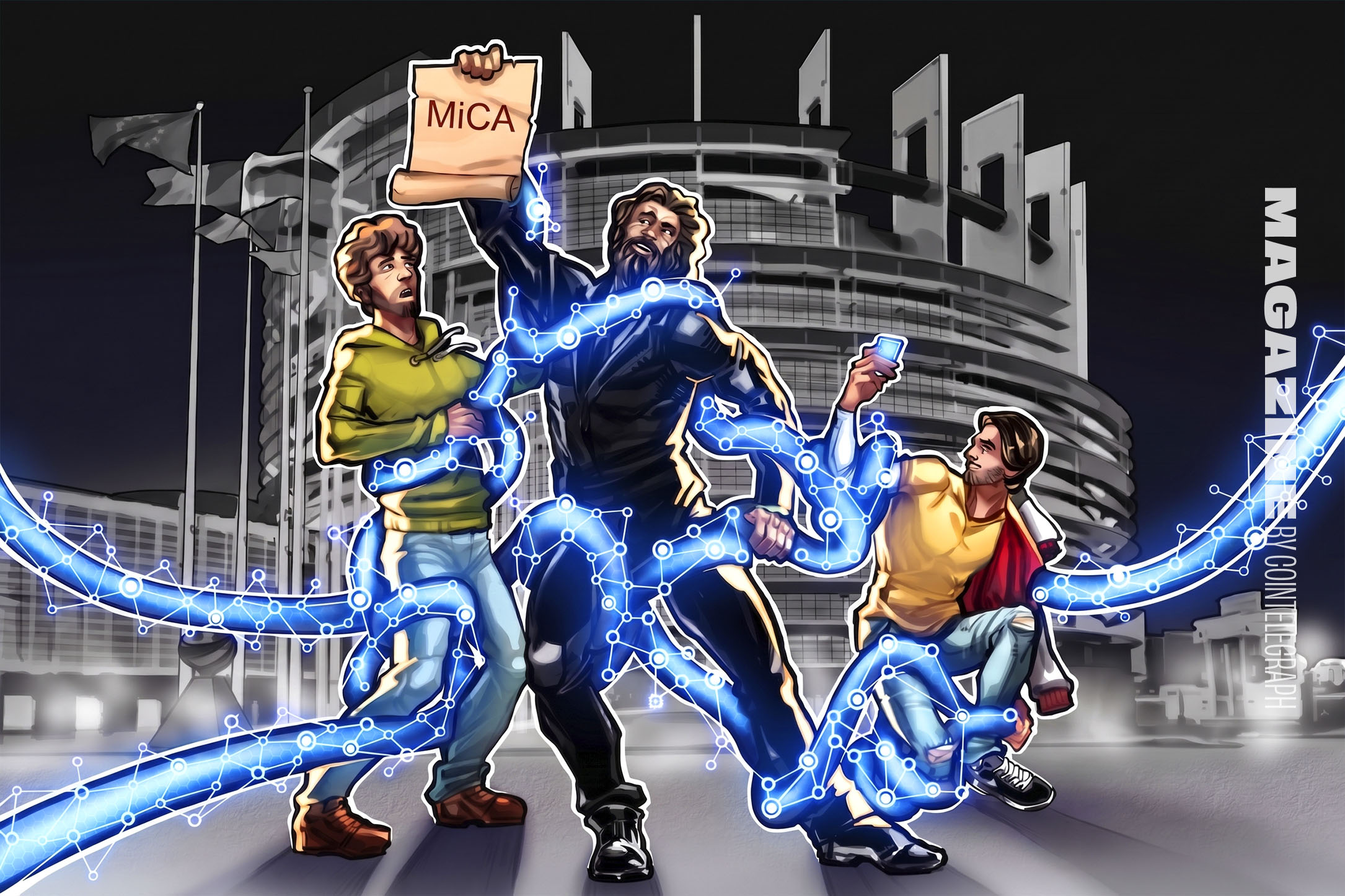
MiCA is coming for DeFi vaults, but regulation will be difficult

The European Commission is exploring whether to extend the Markets in Crypto-Assets (MiCA) regulation to cover decentralized finance (DeFi) lending and borrowing, including lending vaults. These vaults, which channel billions into on-chain credit markets, present significant regulatory challenges because their decentralized structure doesn't map neatly onto existing financial frameworks. Their legal status is currently based on non-binding interpretations that they fall outside MiCA and EU fund rules. The article uses Morpho's decentralized lending protocol as an example, illustrating how responsibilities are divided among various participants (owner, curator, allocator, sentinel), making it difficult to identify a single "provider" to regulate. Experts warn that broadly categorizing "DeFi lending" could inadvertently capture vastly different structures. They argue that any regulatory approach should focus on the specific structure and control mechanisms of a vault, rather than using decentralization as a simple dividing line, and that DeFi lending may require a dedicated, carefully crafted framework distinct from traditional finance. The Commission's consultation closes on September 30, 2026. The core challenge for regulators is not just whether to regulate DeFi lending, but how to design rules that distinguish between different forms of on-chain lending and the entities that control them.

cointelegraph54 dk önce

MiCA is coming for DeFi vaults, but regulation will be difficult

cointelegraph54 dk önce

Grayscale Report: Financial Privacy in the AI Era, Why Zcash Should Not Be Overlooked?

Title: Grayscale Report: Financial Privacy in the AI Era – Why Zcash Should Not Be Overlooked The article argues that privacy is a fundamental, not niche, attribute of functional money. It highlights that technological shifts, like the rise of AI and stablecoins, are driving a new wave of public focus on financial privacy. Zcash, a decentralized digital currency similar to Bitcoin but with built-in privacy via zero-knowledge proofs, is positioned to address this need. Unlike transparent blockchains, Zcash offers users the option to conduct "shielded" transactions that hide sender, receiver, and amount while remaining verifiable. The report details Zcash's evolution, noting key upgrades that improved usability and security. It points to rising on-chain usage of privacy features as evidence of real demand. Currently, ZEC holds a minimal share (~0.4%) of the total crypto market cap. Grayscale suggests this reflects a market assumption that privacy is a marginal concern. The investment thesis hinges on a potential market re-evaluation: if privacy is recognized as a core monetary feature in an era of enhanced surveillance, Zcash's current valuation represents significant upside potential. Key risks discussed include regulatory challenges, historical trusted setup concerns for older pools (mitigated by newer protocols), quantum computing threats, and execution risks associated with future technical upgrades. The conclusion is that while the future scale of private digital currency is uncertain, the market currently prices in little chance of its value increasing substantially, presenting a potential opportunity for investors.

marsbit3 saat önce

Grayscale Report: Financial Privacy in the AI Era, Why Zcash Should Not Be Overlooked?

marsbit3 saat önce

İşlemler

Spot
活动图片