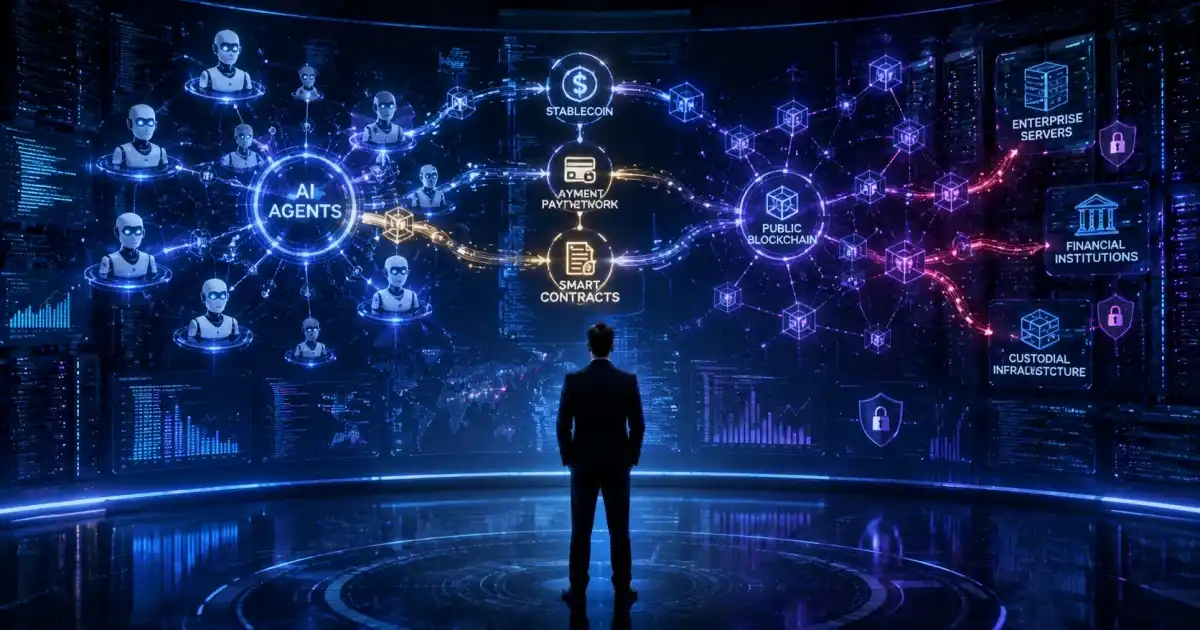
Spot XRP And Dogecoin ETF Approval Odds Hit 100%, Says Bloomberg Expert

bitcoinist2025-09-30 tarihinde yayınlandı2025-09-30 tarihinde güncellendi

Özet

Bloomberg Intelligence senior ETF analyst Eric Balchunas says the odds of spot ETFs for XRP and Dogecoin winning US approval...

Trusted Editorial content, reviewed by leading industry experts and seasoned editors. Ad Disclosure

Bloomberg Intelligence senior ETF analyst Eric Balchunas says the odds of spot ETFs for XRP and Dogecoin winning US approval are now 100%, arguing that last week’s rule change to adopt generic listing standards has rendered the old approval clock irrelevant and left only registration statements awaiting a final sign-off from the SEC’s Division of Corporation Finance.

“Honestly the odds are really 100% now. Generic listing standards make the 19b-4s and their ‘clock’ meaningless. That just leaves the S-1s waiting for formal green light from Corp Finance,” he wrote, adding that applicants for Solana ETFs have already filed another round of amendments, a sign the process is in its final stages. “The baby could come any day. Be ready.”

Balchunas’ call follows a flurry of developments triggered by the SEC’s September 18 approval of “generic listing standards” at NYSE Arca, Nasdaq and Cboe. That decision allows exchanges to list certain commodity-based ETPs—including crypto spot products that meet the criteria—without submitting a separate rule change under Exchange Act Section 19(b).

In effect, the long, deadline-driven 19b-4 process that governed coin-by-coin approvals is no longer required for qualifying products; instead, the remaining gating item is the effectiveness of an issuer’s S-1 registration. The agency framed the change as bringing commodity ETPs onto a more streamlined path, while Commissioner Hester Peirce emphasized that, once an ETP fits the standard, an exchange can list it without prior 19(b) approval.

What This Means For Spot XRP And Dogecoin ETFs

The near-term catalyst for XRP and DOGE specifically emerged from reporting by Eleanor Terrett, who said the SEC has asked issuers of proposed spot ETFs for Litecoin, XRP, Solana, Cardano and Dogecoin to withdraw their pending 19b-4 filings because those forms are no longer needed in the “post-GLS” regime.

“SCOOP: The SEC has asked issuers of LTC, XRP, SOL, ADA, and DOGE ETFs to withdraw their 19b-4 filings following the approval of the generic listing standards, which replace the need for those filings. Am told withdrawals could start happening as soon as this week,” Terrett posted.

She later added, “More context for those asking whether withdrawal is a bad thing: the short answer is no… when the SEC approved the generic listing standards two weeks ago, it eliminated the need for exchanges to file 19b-4 forms to list individual token ETFs, simplifying and speeding up the process.”

Balchunas endorsed that interpretation, calling Terrett’s report a “nice scoop” and noting that analysts had anticipated this shift once generic standards were finalized. “This was something we thought could happen. It makes sense as you don’t need 19b-4s in the post-GLS world. Just not sure how the launch schedule will work yet,” he wrote, suggesting timing is now primarily an issuer and Corp Fin coordination question rather than a statutory countdown.

Evidence that S-1s are indeed the remaining lever is visible on EDGAR. In recent days multiple Solana spot ETF applicants, including VanEck and 21Shares, submitted fresh S-1/A amendments—VanEck’s docket shows an “Amendment No. 4” filed late last week, while 21Shares likewise posted Amendment No. 4—consistent with the end-game polishing typical before effectiveness. While those updates are for Solana, the same filing pathway would apply to any spot XRP or DOGE product under the new standards.

However, none of this guarantees immediate launches or provides a definitive timetable. The operative question now is not whether the SEC can approve such funds under its own rules—it can—but when Corp Fin will declare the S-1s effective and how exchanges and issuers will choreograph first-day listings under the new regime.

At press time, XRP traded at $2.89.
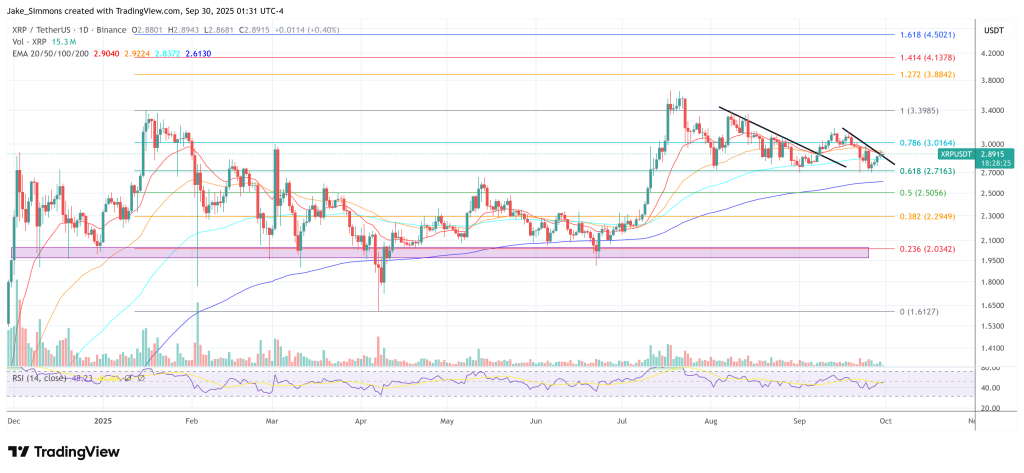
XRP price
XRP eyes breakout, 1-day chart | Source: XRPUSDT on TradingView.com
Featured image created with DALL.E, chart from TradingView.com
Editorial Process for bitcoinist is centered on delivering thoroughly researched, accurate, and unbiased content. We uphold strict sourcing standards, and each page undergoes diligent review by our team of top technology experts and seasoned editors. This process ensures the integrity, relevance, and value of our content for our readers.

Jake Simmons has been a Bitcoin enthusiast since 2016. Ever since he heard about Bitcoin, he has been studying the topic every day and trying to share his knowledge with others. His goal is to contribute to Bitcoin's financial revolution, which will replace the fiat money system. Besides BTC and crypto, Jake studied Business Informatics at a university. After graduation in 2017, he has been working in the blockchain and crypto sector. You can follow Jake on Twitter at @realJakeSimmons.

Trend Kriptolar

İlgili Okumalar

Goldman Sachs' Summary After Silicon Valley Investigation: Agents Enter the Execution Era, AI Competition Shifts to Workflows, World Models Rise

Based on a recent field research in Silicon Valley, Goldman Sachs highlights a key shift in the AI industry: moving from systems that "answer questions" to autonomous AI agents that "execute tasks." Commercial models are transitioning from per-seat subscriptions to usage- and outcome-based pricing. The competition is shifting from raw model capability to mastery over specific business workflows, with value accruing to proprietary data, domain context, and operational expertise. A major hurdle for enterprise Agent deployment is not technical ability but "controllability"—issues of accountability, auditability, and error correction, especially in regulated fields. Workflows with clear rules, verifiable outcomes, and reversible actions (e.g., invoice processing) are being automated first. The model landscape is evolving toward a division of labor. Frontier models (like GPT-4) are expected to handle high-value, high-reliability core tasks, while improving open-source models will likely capture the majority (~90%) of inference tokens for standardized, high-volume tasks due to cost advantages. Finally, attention is moving from Large Language Models (LLMs) to "World Models," which understand physical environments, causality, and dynamic interactions. This shift elevates the importance of proprietary, real-world data (from industrial, scientific, and robotic systems) and could drive a second wave of compute demand. Goldman Sachs projects compute needs could grow ~24x over five years, benefiting cloud and infrastructure providers.

marsbit2 dk önce

Goldman Sachs' Summary After Silicon Valley Investigation: Agents Enter the Execution Era, AI Competition Shifts to Workflows, World Models Rise

marsbit2 dk önce

Fidelity Warns: The Boom in AI Agents May Not Be a Feast for Public Blockchains

Fidelity Digital Assets cautions that the anticipated boom in AI agents does not automatically guarantee a corresponding surge in public blockchain adoption or token value. While AI agents that can autonomously perform tasks like payments and data calls could theoretically utilize blockchain for settlement, a significant gap exists between "can use" and "must use." The analysis highlights six key risks. First, many AI agents, especially in corporate settings, may prefer closed, permissioned systems over public blockchains due to needs for speed, cost, compliance, and control. Second, increased on-chain transactions from AI-driven micropayments may not benefit native tokens if fees remain low or if value is captured by stablecoins and payment service providers instead. Third, while AI lowers development costs and increases the number of projects, more code does not equal more economic value and can lead to market oversaturation. Fourth, AI commoditizes coding, making pure technological advantage less of a sustainable moat; competition may shift to brand, liquidity, and user networks. Fifth, AI can also lower the cost of attacks by making vulnerability discovery easier, potentially outpacing security auditing and increasing ecosystem risk. Sixth, institutions may require "controlled blockchain" systems with robust identity, permissioning, and audit trails, conflicting with the permissionless nature of public chains. Ultimately, Fidelity argues against simply equating AI growth with blockchain prosperity. The narrative requires moving from speculation to a concrete analysis of which infrastructures can convert real AI agent needs into sustainable economic value, critically examining each step of the assumed value chain.

marsbit3 dk önce

Fidelity Warns: The Boom in AI Agents May Not Be a Feast for Public Blockchains

marsbit3 dk önce

Telegram Introduces WEB-Proxy Technology: Masks Traffic as Regular Website Visits

Telegram has introduced a new experimental WEB-Proxy technology designed to circumvent blocking by disguising messenger traffic as regular, secure website visits. Announced on August 21, 2026, the technology routes MTProxy data through an in-app WebView using HTTPS or WebSocket transport, making the data stream indistinguishable from legitimate web surfing. The core innovation is a multiplexed stream sent through a single WebView session. It uses special frame formats to pack multiple logical Telegram connections into one encrypted channel that externally resembles loading a web page. A server-side relay receives this stream, separates it into individual connections for the standard MTProxy, without decrypting content or knowing final destinations, thus preserving privacy. The WEB-Proxy operates on a standard HTTPS domain that also hosts a public website. The proxy bridge page is only activated by a specific URL parameter derived via HMAC-SHA256 from the proxy configuration; all other requests receive the normal site homepage. This provides reliable cover against automated detection systems. Currently a proof-of-concept, the system includes a desktop implementation, an experimental Android client, and plans for iOS support. The technology represents a shift towards more sophisticated integration with legitimate web infrastructure, complicating filtering systems that must choose between blocking HTTPS traffic entirely or allowing service access. Its long-term value will depend on resilience to adaptive traffic analysis and scalability without performance loss.

cryptonews.ru18 dk önce

Telegram Introduces WEB-Proxy Technology: Masks Traffic as Regular Website Visits

cryptonews.ru18 dk önce

MiCA is coming for DeFi vaults, but regulation will be difficult

The European Commission is exploring whether to extend the Markets in Crypto-Assets (MiCA) regulation to cover decentralized finance (DeFi) lending and borrowing, including lending vaults. These vaults, which channel billions into on-chain credit markets, present significant regulatory challenges because their decentralized structure doesn't map neatly onto existing financial frameworks. Their legal status is currently based on non-binding interpretations that they fall outside MiCA and EU fund rules. The article uses Morpho's decentralized lending protocol as an example, illustrating how responsibilities are divided among various participants (owner, curator, allocator, sentinel), making it difficult to identify a single "provider" to regulate. Experts warn that broadly categorizing "DeFi lending" could inadvertently capture vastly different structures. They argue that any regulatory approach should focus on the specific structure and control mechanisms of a vault, rather than using decentralization as a simple dividing line, and that DeFi lending may require a dedicated, carefully crafted framework distinct from traditional finance. The Commission's consultation closes on September 30, 2026. The core challenge for regulators is not just whether to regulate DeFi lending, but how to design rules that distinguish between different forms of on-chain lending and the entities that control them.

cointelegraph2 saat önce

MiCA is coming for DeFi vaults, but regulation will be difficult

cointelegraph2 saat önce

İşlemler

Spot

Popüler Makaleler

XRP 2.0 Nedir

XRP 2.0: Kriptopara Manzarasında Yeni Bir Sınır XRP 2.0'a Giriş Kriptopara alanı sürekli olarak evriliyor, yeni projeler sürekli olarak dikkat ve benimseme için mücadele ediyor. Bu vaatkar girişimlerden biri, ileri düzey blok zinciri teknolojisi ve güçlü şifreleme yöntemlerini kullanmak üzere tasarlanmış yeni bir kriptopara projesi olan XRP 2.0'dır. İsim Ripple’ın XRP'si ile benzerlikler taşısa da, XRP 2.0'un bağımsız olarak çalıştığını, işlem güvenliğini, gizliliği ve ölçeklenebilirliği artırmaya odaklandığını belirtmek önemlidir. Dijital finansal alan giderek merkeziyetsiz çözümleri benimsedikçe, XRP 2.0, web3'e ve genel olarak kriptopara projelerinin genişlemesine anlamlı bir şekilde katkıda bulunmayı hedeflemektedir. XRP 2.0 Nedir? XRP 2.0'ın temelinde, güvenli ve merkeziyetsiz bir dijital para ekosistemi yaratmayı amaçlayan bir kriptopara projesidir. Temel teknolojisi, karmaşık blok zinciri prensiplerini ileri düzey şifreleme teknikleriyle entegre eder. XRP 2.0'ın ana hedefi, hızlı işlem yürütümünü sağlarken kullanıcılar için artırılmış gizlilik korumalarını öncelikli hale getirerek kendini güvenilir ve etkili bir platform olarak kurmaktır. Proje, mevcut kriptoparaların karşılaştığı birçok sınırlamanın çözümü olarak tanıtılmakta ve daha yüksek işlem hacimlerini, geliştirilmiş hız ve gizlilikle yönetebilen bir sistem önermektedir. Bu çok yönlülük, XRP 2.0'ı çeşitli dijital para birimleriyle dolu bir pazarda önemli bir rakip haline getiriyor. XRP 2.0’ın Yaratıcıları Kimdir? XRP 2.0'ın yaratıcısının kimliği 'Wilbur' olarak belirtilmiştir. Ancak, Wilbur veya ona bağlı varlıklar hakkında kapsamlı bilgiler ulaşılmaz durumdadır. Birçok kriptopara yaratıcısının anonimliği, genellikle bir derece gizlilik ve güvenliği korumayı amaçlayan endüstride yaygın bir olgudur. XRP 2.0’ın Yatırımcıları Kimlerdir? Şu anda, XRP 2.0’ı destekleyen yatırım kuruluşları veya organizasyonlarına dair spesifik bilgiler kamuya açık değildir. Kriptopara sektöründe, tanınmış yatırımcılar tarafından desteklenmek bir projenin güvenilirliğini ve başarısını önemli ölçüde etkileyebilir; ancak XRP 2.0'ın finansal destekçileri ile ilgili şeffaflık henüz sağlanmamıştır. XRP 2.0 Nasıl Çalışır? XRP 2.0, güvenli ve merkeziyetsiz işlemler sağlamak için blok zinciri teknolojisi ve gelişmiş şifreleme algoritmalarının bir kombinasyonunu kullanarak öne çıkmaktadır. Yenilikçi yapısı, kullanıcı etkileşimini artırmaya ve geleneksel kriptopara işlemlerinin ötesinde işlevselliği genişletmeye yönelik tasarlanmış benzersiz özellikler içerir. Bu özellikler arasında, XRP 2.0, metin-görüntü ve metin-ses işlevsellikleri gibi yapay zeka destekli yetenekler entegre etmektedir. Bu eklemeler, kullanıcılar için etkileşimli deneyimi artırmayı ve çeşitli sektörlerde daha geniş uygulama alanını teşvik etmeyi amaçlamaktadır. Teknolojik ilerlemeleri, kullanıcı odaklı tasarımla birleştirerek, XRP 2.0, kriptopara çözümlerini operasyonel çerçevelerine entegre etmeyi düşünen çeşitli bireyler ve işletmelerin dikkatini çekmeyi hedeflemektedir. XRP 2.0 Zaman Çizelgesi XRP 2.0'ı anlamak, şu ana kadar tanımladığı dönüm noktalarını incelemeyi gerektirir: 23 Temmuz 2023: XRP 2.0, blok zinciri alanında güvenli ve merkeziyetsiz işlem kabiliyetlerini devrim niteliğinde sunmayı hedefleyen yeni bir kriptopara projesi olarak tanıtıldı. 8 Eylül 2023: XRP20 adlı başka bir projenin lansmanı gerçekleşti, bu, XRP 2.0 ile ilgisi olmayan Ethereum blok zincirinde bir ERC-20 token'ın ortaya çıkışını işaret ediyor. 13 Kasım 2023: XRP Defteri, rippled sunucu yazılımının 2.0.0 versiyonunun yayınlanmasıyla önemli bir güncelleme aldı. Bu gelişmenin XRP 2.0 kriptopara projesi ile bağlantılı olmadığını belirtmek önemlidir. XRP 2.0 Hakkında Anahtar Noktalar XRP 2.0'ın özünü distile etmek için birkaç kritik faktör öne çıkmaktadır: Benzersiz Özellikler: AI destekli metin-görüntü ve metin-ses gibi özelliklerin eklenmesi, XRP 2.0'ın potansiyel uygulamalarını daha da çeşitlendirir. Blockchain Teknolojisi: Çerçeve, işlemler için güvenli ve merkeziyetsiz bir ortam sağlamak üzere gelişmiş blok zinciri mekanizmaları ve şifreleme protokolleri kullanır. Ölçeklenebilirlik ve Gizlilik: XRP 2.0, işlem süreçlerinde artırılmış gizlilik korumalarını ve büyüyen kullanıcı tabanını karşılamak için gerekli ölçeklenebilirliği önceliklendirir. Ripple ile İlişki Yok: Önemli olarak, adıyla birlikte hareket etmemesine rağmen, XRP 2.0’ın Ripple’ın XRP’si ile herhangi bir bağı veya iş birliği bulunmamaktadır; bu, onun kriptopara ekosistemindeki operasyonel çerçevesini ve hedeflerini belirgin bir şekilde ayırmaktadır. Sonuç XRP 2.0, kriptopara alanında güvenlik, gizlilik ve verimlilik kombinasyonu sunmayı hedefleyen iddialı bir girişimi temsil etmektedir. Karmaşık teknolojileri ve kullanıcı dostu özellikleri entegre ederek, proje kriptoparanın günümüz dijital ekonomisinde neler başarabileceğinin ufkunu genişletmeyi hedefliyor. Yaratıcısının anonimliği ve açıklanmayan yatırımcıların eksikliği bazıları için soru işaretleri oluşturabilir, ancak XRP 2.0'ın ileri düzey işlevsellikler ve merkeziyetsizlik konusundaki odaklanması, onu giderek kalabalıklaşan bir kriptopara pazarında çekici kılmaktadır. Kriptopara manzarası evrimini sürdürdükçe, XRP 2.0, güvenli ve ölçeklenebilir blok zinciri çözümlerinin genişlemesinde önemli bir oyuncu olarak ortaya çıkabilir.

309 Toplam GörüntülenmeYayınlanma 2024.04.05Güncellenme 2024.12.03

XRP 2.0 Nedir

XRP Nasıl Satın Alınır

HTX.com’a hoş geldiniz! XRP (XRP) satın alma işlemlerini basit ve kullanışlı bir hâle getirdik. Adım adım açıkladığımız rehberimizi takip ederek kripto yolculuğunuza başlayın. 1. Adım: HTX Hesabınızı OluşturunHTX'te ücretsiz bir hesap açmak için e-posta adresinizi veya telefon numaranızı kullanın. Sorunsuzca kaydolun ve tüm özelliklerin kilidini açın. Hesabımı Aç2. Adım: Kripto Satın Al Bölümüne Gidin ve Ödeme Yönteminizi SeçinKredi/Banka Kartı: Visa veya Mastercard'ınızı kullanarak anında XRP (XRP) satın alın.Bakiye: Sorunsuz bir şekilde işlem yapmak için HTX hesap bakiyenizdeki fonları kullanın.Üçüncü Taraflar: Kullanımı kolaylaştırmak için Google Pay ve Apple Pay gibi popüler ödeme yöntemlerini ekledik.P2P: HTX'teki diğer kullanıcılarla doğrudan işlem yapın.Borsa Dışı (OTC): Yatırımcılar için kişiye özel hizmetler ve rekabetçi döviz kurları sunuyoruz.3. Adım: XRP (XRP) Varlıklarınızı SaklayınXRP (XRP) satın aldıktan sonra HTX hesabınızda saklayın. Alternatif olarak, blok zinciri transferi yoluyla başka bir yere gönderebilir veya diğer kripto para birimlerini takas etmek için kullanabilirsiniz.4. Adım: XRP (XRP) Varlıklarınızla İşlem YapınHTX'in spot piyasasında XRP (XRP) ile kolayca işlemler yapın.Hesabınıza erişin, işlem çiftinizi seçin, işlemlerinizi gerçekleştirin ve gerçek zamanlı olarak izleyin. Hem yeni başlayanlar hem de deneyimli yatırımcılar için kullanıcı dostu bir deneyim sunuyoruz.

2.4k Toplam GörüntülenmeYayınlanma 2024.12.10Güncellenme 2026.06.02

XRP Nasıl Satın Alınır

Tartışmalar

HTX Topluluğuna hoş geldiniz. Burada, en son platform gelişmeleri hakkında bilgi sahibi olabilir ve profesyonel piyasa görüşlerine erişebilirsiniz. Kullanıcıların XRP (XRP) fiyatı hakkındaki görüşleri aşağıda sunulmaktadır.

活动图片