Big Banks Join UK Finance to Test Tokenized Deposits Pilot

TheCryptoTimes2025-09-26 tarihinde yayınlandı2025-09-26 tarihinde güncellendi

UK Finance has launched a live pilot for tokenized sterling deposits (GBTD) as part of efforts to test digital forms of commercial bank money involving six of the country’s biggest banks. 

The official announcement reveals that these digital deposits are essentially a digital form of traditional commercial bank money, offering the same “trust and regulatory protections” as regular deposits but with added benefits like faster payments and improved fraud prevention.

About the GBTD Pilot

The GBTD pilot, running until mid-2026, will test how tokenized money can be used in real-world scenarios. It focuses on three main use cases, including person-to-person payments on online marketplaces, remortgaging processes, and settlement of digital assets. It builds on the earlier work of the UK Regulated Liability Network (RLN) project.

For online marketplaces, the goal is to reduce fraud and increase confidence for buyers and sellers. In remortgaging, the project aims to make property transactions faster, more transparent, and less susceptible to conveyancing fraud. Tokenized deposits could streamline digital asset settlements with instant fund transfers.

Bank participants

Several major UK banks are participating in the GBTD pilot, including Barclays, HSBC, Lloyds, NatWest, Nationwide, and Santander, with technical support from firms like Quant, EY, and Linklaters. 

Quant will provide the underlying technology for the pilot, building on its experience from the earlier Regulated Liability Network project. Quant’s work includes enabling programmable payments and ensuring interoperability between bank ledgers, Faster Payments, Open Banking, and tokenized platforms.

UK Finance emphasized that the pilot aims to give consumers and businesses more control over how money moves, while offering stronger safeguards against fraud. It also ties into broader government initiatives, such as potential digital gilt (DIGIT) and the National Payments Vision (NPV).

The system will work across different digital money platforms and payment networks. It includes a “tokenization-as-a-service” feature, which allows organizations without existing tokenised deposit capabilities to participate.

The project will also host regular events and webinars, giving stakeholders a chance to learn more about progress and get involved. The first webinar is scheduled for 6 October, where further details of the pilot will be shared.

Also Read: China’s Central Bank Opens Shanghai Hub for Digital Yuan Expansion


Mobile Only Image

İlgili Okumalar

Dialogue with Bitwise CIO: Bitcoin May Be Near Bottom, Who Will Drive the Next Rally?

In a recent podcast, Bitwise CIO Matt Hougan analyzed Bitcoin's current market cycle, suggesting it is near a bottom characterized by low volatility and investor indifference. He believes the next major price surge will be driven primarily by wealth management platforms, financial advisors, and family offices, who control trillions in assets and are now gaining access to Bitcoin ETFs. Hougan views Bitcoin as a long-dated, out-of-the-money call option on it becoming a global reserve asset. Its value increases with global monetary system volatility, making it a natural hedge against currency disorder. He outlined Bitcoin's adoption path: first as a global digital store of value (competing with gold), and potentially later as a check against fiat currency abuse by sovereign states. Addressing the muted price action despite institutional ETF inflows, Hougan explained that significant selling by long-term retail holders has offset buying pressure. However, he is optimistic as data shows retail selling has subsided, which, combined with continued institutional inflows, could propel prices higher. Hougan downplayed the future impact of Federal Reserve interest rates and MicroStrategy's actions on Bitcoin's price, arguing they are becoming less relevant. Instead, he pointed to runaway U.S. fiscal deficits and debt as the core long-term drivers. Finally, he discussed the transformative potential of asset tokenization, predicting all traditional assets will eventually trade 24/7 on blockchains. This will merge traditional and crypto markets, increasing efficiency but also introducing crypto-like features such as overnight volatility and easier access to leverage into traditional finance.

marsbit15 dk önce

Dialogue with Bitwise CIO: Bitcoin May Be Near Bottom, Who Will Drive the Next Rally?

marsbit15 dk önce

Dalio Warns of U.S. Bond Supply-Demand Imbalance: Gold and Bitcoin Could Become Hedge Assets in Debt Crisis

Ray Dalio warns of an unsustainable imbalance in US Treasury supply and demand, drawing parallels to the mechanisms of a "big debt cycle" described in his book. Key recent developments include Japan selling US bonds to support the yen, rising US long-term yields amid weak demand, and limited Treasury buybacks. Dalio explains that when debt service burdens become too large relative to income, and bond supply outstrips market demand, a crisis point approaches. Typically, central banks then print money to buy bonds, leading to currency devaluation and inflation. He simplifies the US government's position: with ~$5.5T in revenue, ~$7.5T in spending, a $2T deficit, and $32T in debt, annual debt service is roughly $1T in interest plus ~$10T in maturing principal needing refinancing. Without change, he estimates a potential debt crisis in roughly three years, give or take two. Dalio proposes a "3% three-part solution" to reduce the deficit to 3% of GDP through balanced spending cuts, tax increases, and naturally lower interest rates. He warns that Japan's high debt, often cited as sustainable, has led to poor bond returns and significant currency losses versus gold and the dollar. In response to questions, Dalio states that all reserve currencies eventually decline via this debt cycle mechanism. He advises investors to diversify globally, favor countries with strong finances and stable politics, underweight bonds, overweight gold, and allocate a small portion (e.g., 10-15%) to Bitcoin as hedges against government-created currency devaluation.

marsbit15 dk önce

Dalio Warns of U.S. Bond Supply-Demand Imbalance: Gold and Bitcoin Could Become Hedge Assets in Debt Crisis

marsbit15 dk önce

Mysterious "Whale" Sells $576 Million Worth of Bitcoin Amid BTC Price Approach to $80,000

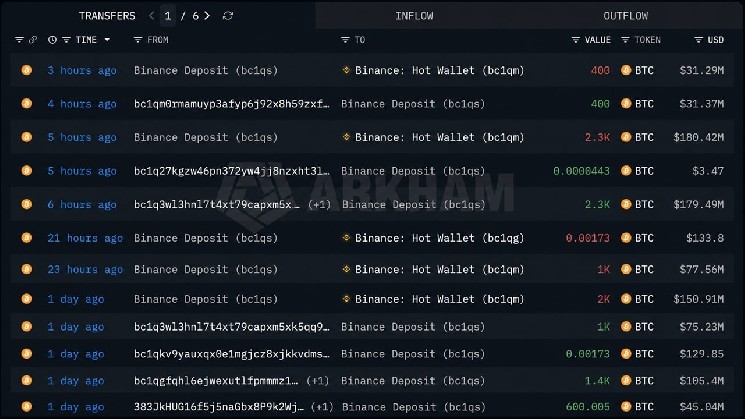
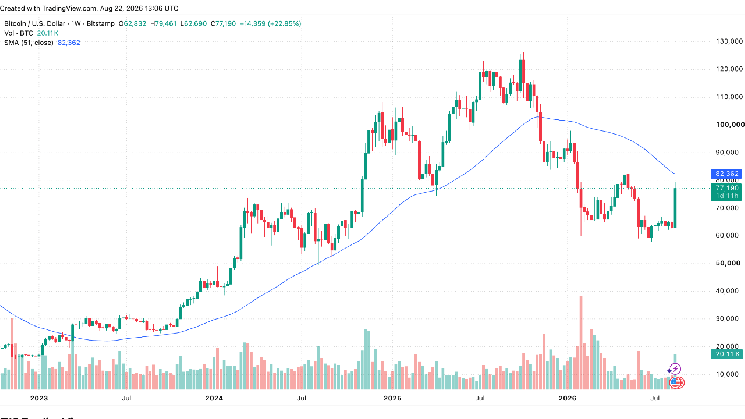
An unidentified crypto "whale" sold 2,700 BTC (worth approximately $211.8 million) in a single transaction, bringing its total sales over three days to 7,700 BTC for roughly $576.6 million. This selling pressure occurs as Bitcoin trades near the $80,000 mark, having recently retreated from nearly reaching that level. While large holders often sell to realize profits during sharp rallies, on-chain data only confirms the movement of coins, not the motive. So far, these sales have had little impact on Bitcoin's upward momentum, with the asset posting double-digit gains recently and its strongest weekly increase since 2024. The rally was fueled by a U.S. Treasury Department announcement to at least double its long-term bond buyback operations starting September 9th, which lowered bond yields and pushed investors toward riskier assets like Bitcoin. This week's selling marks a reversal from a recent accumulation trend, where large holders had added about 43,000 BTC (worth ~$2.75B) over a 60-day period ending in mid-August, helping set the stage for the current price surge. As Bitcoin hovers around $80,000, traders are watching key factors: whether other major holders will follow suit and sell into strength, and if renewed institutional demand from ETFs can absorb the selling pressure. The outcome will likely determine Bitcoin's next major price move.

cryptonews.ru1 saat önce

Mysterious "Whale" Sells $576 Million Worth of Bitcoin Amid BTC Price Approach to $80,000

cryptonews.ru1 saat önce

İşlemler

Spot
活动图片