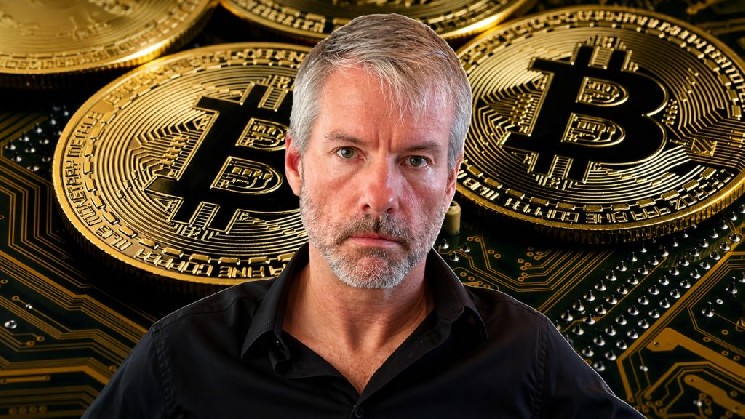
Биткоин по $90 000 или $130 000 — какой сценарий реальнее

cryptonews.ru2025-08-25 tarihinde yayınlandı2025-09-26 tarihinde güncellendi

Крипторынок завершает сентябрь в состоянии неопределенности: биткоин балансирует в диапазоне $110 000–$115 000, а аналитики спорят, готов ли рынок к новой волне роста или впереди очередное снижение

Популярный криптоблогер Coin22 проанализировал положение BTC и поставил свой «диагноз». Рассказываем, какой сценарий выглядит наиболее вероятным на ближайшее время: биткоин по $90 000 или $130 000.

Факторы давления

По словам Coin22, ключевым драйвером остается макроэкономика и политика ФРС США. Недавние заявления Джерома Пауэлла о возможном продолжении снижения ставок повысили вероятность еще двух снижений в этом году до 70%. Однако на рынке сохраняются противоречивые сигналы:

  • за два месяца инвесторы вывели около $30 миллиардов;
  • долгосрочные держатели зафиксировали рекордную прибыль в 3,4 миллиона BTC;
  • киты скинули порядка 147 000 BTC на сумму $16,5 миллиарда после августовского максимума в $124 000.

Техническая картина

Пробой уровня $116 000 подтвердил формирование медвежьего флага, а биткоин потерял поддержку 50- и 100-дневных скользящих средних. Индекс RSI упал с 61 до 44, что указывает на усиление давления продавцов.

Основная зона защиты для быков сейчас находится в районе $110 000–$112 000, а ближайшие уровни поддержки — $107 000 и $105 000.

Позитивные сигналы

Несмотря на фиксацию прибыли со стороны крупных игроков, есть и встречные потоки: японская Metaplanet недавно купила 5 419 BTC, а компания MicroStrategy добавила еще 850 BTC. Кроме того, резервы бирж опустились до 2,4 миллиона BTC — минимума с начала года, что снижает давление продаж.

Что дальше

Автор ролика предупреждает: ближайшие дни станут решающими. Экспирация опционов на $17,5 миллиарда и новый отчет по инфляции могут резко качнуть рынок.

  • При закреплении выше $115 000 биткоин способен протестировать $120 000–$125 000.
  • Потеря поддержки грозит падением к $105 000 и даже $100 000.

Coin22 называет текущую ситуацию затишьем перед бурей: низкая волатильность напоминает периоды 2023 года, когда спокойствие предшествовало росту на сотни процентов. Октябрь, который в криптосообществе называют Uptober (отсылка к тому, что в октябре криптоактивы часто растут), традиционно считается «зеленым» месяцем, но без четких катализаторов бычьего движения рынок может выбрать и противоположный сценарий.

Более вероятным сценарием Coin22 считает движение биткоина вниз — в сторону $100 000 и при неблагоприятном развитии событий даже $90 000. Рост к $130 000 он не исключает, но увязывает его с условием закрепления выше $115 000 и появления сильных катализаторов, которых сейчас нет.
İlgili Okumalar

Upbit is Anxious: A Hasty Counterattack Aimed at Regaining Stablecoin Market Share

Title: Upbit's Rushed Counterattack to Reclaim Stablecoin Market Share Facing a dramatic shift in South Korea's stablecoin market, leading exchange Upbit launched a promotional campaign from July 26 to August 9, waiving the 0.05% trading fee for stablecoins paired with the Korean Won (KRW) and rapidly listing new stablecoins like RLUSD and USDG. This move is a direct response to its plummeting market share in this sector. Historically a duopoly with Bithumb, the market has been reshaped since October 2025 when Coinone permanently removed fees for USDC trading. By June 2026, Coinone led with 34.8% of stablecoin volume, followed by Bithumb (31.1%) and Upbit (30.1%). This contrasts sharply with the overall crypto market, where Upbit commands 60%. The data shows stablecoin demand is highly sensitive to fees, as users primarily buy them to transfer capital overseas for derivatives trading or forex arbitrage. South Korean exchanges have seen a net outflow of stablecoins for 18 consecutive months, totaling approximately 14.9 trillion KRW, underscoring their role as a cross-border capital conduit. Upbit's limited-time promotion initially boosted its daily stablecoin volume by 162%, but the surge was almost entirely in USDT (98.1% of volume). The newly listed stablecoins saw negligible, fleeting interest. Furthermore, the promotional effect quickly waned in the second week, with volume dropping 33% on weekdays. A concurrent weakening of the KRW also contributed to the trading spike, independent of the fee waiver. The analysis suggests that once the promotion ends, Upbit is unlikely to retain its temporary gains unless it matches Coinone's permanent zero-fee policy, forcing a choice between market share and fee revenue. Upbit's strategic push may be less about immediate profit and more about preparing for future regulatory shifts. With South Korea's *Digital Asset Basic Act* on the horizon, which will regulate KRW-backed stablecoins, and following Dunamu's (Upbit's parent) integration into Naver Financial to build a payment ecosystem, securing a dominant position in the dollar stablecoin distribution channel holds long-term strategic value. However, potential regulatory conflicts could prevent Upbit from listing a future Naver-issued KRW stablecoin, making the current fight for dollar stablecoin flow even more critical.

marsbit3 saat önce

Upbit is Anxious: A Hasty Counterattack Aimed at Regaining Stablecoin Market Share

marsbit3 saat önce

Michael Saylor Compares Bitcoin and Gold!

Michael Saylor, founder of MicroStrategy, argues that Bitcoin fundamentally changes how wealth is stored and transferred by transforming digital scarcity into economic value. He describes Bitcoin as the first digital monetary network, combining computers, digital networks, and cryptography. It digitizes monetary assets, allowing their supply to be controlled by public protocols rather than institutions, thus converting economic value into information transmissible over global networks. Comparing Bitcoin to gold, Saylor states that while increasing Bitcoin's supply is harder, its integration with software and transfer is easier. He highlights Bitcoin's proof-of-work mechanism, which ties it to the physical world by consuming real energy to secure the ledger, making past transactions immutable. This creates a shared security system involving miners, energy companies, and investors. Saylor suggests "digital monetary energy" is a more accurate term than "digital gold." He emphasizes that the Bitcoin network is an adaptive ecosystem of miners, nodes, developers, and users. Its core design is intentionally simple, focused on maintaining a secure ledger for scarce digital assets, with complex functionalities built in higher-layer applications. This architecture allows Bitcoin to serve as a foundation for transmitting value and fostering innovation in payments and financial services. Saylor notes Bitcoin's deeper impact lies in creating digital sovereignty, where private keys give individuals permissionless control over their economic power, with ownership verified mathematically, not by institutions. He concludes that while gold's physical scarcity makes it money, Bitcoin's digital scarcity does the same, characterizing Bitcoin as the monetary energy of the digital age.

cryptonews.ru4 saat önce

Michael Saylor Compares Bitcoin and Gold!

cryptonews.ru4 saat önce

İşlemler

Spot
活动图片