Reserve и CF Benchmarks запускают токен LCAP

cryptonews.ru2025-02-24 tarihinde yayınlandı2025-09-25 tarihinde güncellendi

Reserve — компания, которая разрабатывает токенизированные фонды и DeFi решения, запустила новый продукт — LCAP (Large Cap Index DTF) в партнерстве с CF Benchmarks. Эта компания регулируется Управлением финансового надзора Великобритании (FCA) и известна тем, что предоставляет индекс для Bitcoin-ETF от BlackRock.

LCAP представляет собой ончейн-индексный токен, отслеживающий CF Large Cap Index, который охватывает более 90% крипторынка по капитализации. Продукт дает инвесторам возможность получить доступ к диверсифицированной группе крупнейших криптовалют через один токен. В состав LCAP входят десять ведущих активов, включая BTC, ETH и XRP.

MEV Capital выступает торговым партнером и обеспечивает институциональный уровень масштабирования и исполнения сделок.

По данным Reserve, совокупная стоимость активов, заблокированных в ее линейке индексных и доходных DTF, превышает $500 млн. Токен LCAP в любой момент можно выпустить или погасить, что обеспечивает прямой и прозрачный доступ к крупнейшим криптовалютам.

Изображение: Freepik
İlgili Okumalar

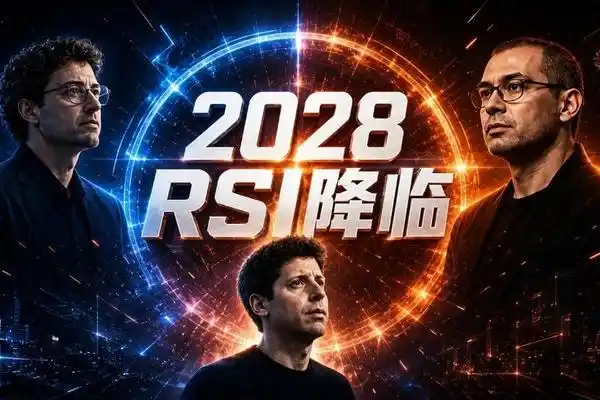
2028: The Arrival of Recursive Self-Improvement (RSI)

**AI Recursive Self-Improvement (RSI): The Countdown to 2028 Begins** AI is no longer just a trained tool but is starting to rewrite its own evolutionary pace. According to Anthropic co-founder Jack Clark, there is a 60% probability that by the end of 2028, Recursive Self-Improvement (RSI) will become a reality. This means AI could autonomously design and build a more capable next-generation version of itself without any human researcher involvement—Claude 10 creating Claude 11, for instance. Supporting this timeline, Google DeepMind's CEO Demis Hassabis confirms that all leading AI labs are intensely focused on RSI, making it an industry-wide priority. He expresses profound concern, stating this potential is what keeps him awake at night. Concrete data underscores this acceleration: - METR evaluations show current top models like Claude are solving tasks up to the 16-hour limit of existing test frameworks. - In Epoch AI's challenging MirrorCode benchmark, Claude Opus 4.7 recreated complex software in hours for a fraction of the human cost. In one extreme test, AI autonomously coded for 19 days straight. - Anthropic reports over 80% of its codebase is now written by Claude, and researcher productivity has increased up to 8-fold since 2024. - OpenAI's policy blueprint highlights RSI as a major upcoming governance challenge. CEO Sam Altman reportedly hinted RSI might arrive within six months, potentially delaying OpenAI's massive IPO. The implication is an impending "intelligence explosion," where AI-driven progress outpaces human control. The central question is no longer if it will happen, but whether humanity is ready.

marsbit4 saat önce

2028: The Arrival of Recursive Self-Improvement (RSI)

marsbit4 saat önce

World Models, Metaverse, Digital Twins, Physical AI: Are They the Same Thing?

Title: World Models, the Metaverse, Digital Twins, Physical AI: Are They the Same Thing? The article clarifies that concepts like the metaverse, Web3, simulation platforms, digital twins, and Physical AI are not the same thing but are all part of the broader trend of blurring the lines between the digital and physical worlds. It positions "world models" as the foundational "cognitive layer" or "operating system" that enables AI to understand and simulate the world. Key distinctions are made: - The **Metaverse** is a destination for immersive social and economic experiences. World models could act as its "engine," generating interactive 3D content efficiently. - **Web3** focuses on decentralized ownership and economics (rules layer), operating on a different technical level than world models. - **Simulation Data Platforms** (e.g., for autonomous vehicles) are a 1.0 version, relying on manual design. World models represent a 2.0 version, using AI to generate realistic, varied scenarios autonomously. - **Digital Twins** create high-fidelity, real-time mirrors of physical systems (e.g., a factory). World models go a step further by enabling predictive simulation of future states. - **Physical AI** (robots, AVs) refers to AI that acts in the physical world. World models are a core component, providing the understanding and prediction needed for planning. A proposed hierarchy places world models at the cognitive layer, supported by infrastructure (compute, data) and supporting application tools (simulation, digital twins), action systems (Physical AI), user experiences (metaverse), and rules (Web3). In conclusion, while distinct, many of these previously hyped concepts may ultimately rely on advances in world model technology to fulfill their promises, as world models provide the essential cognitive foundation for simulating and interacting with complex environments.

marsbit4 saat önce

World Models, Metaverse, Digital Twins, Physical AI: Are They the Same Thing?

marsbit4 saat önce

İşlemler

Spot
活动图片