Pakistan Opens Doors: Crypto Firms Invited To Serve 40 Million Users

bitcoinist2025-09-15 tarihinde yayınlandı2025-09-15 tarihinde güncellendi

Özet

Pakistan’s crypto regulator has formally invited large overseas exchanges and virtual asset service providers to apply for local licenses, opening...

Trusted Editorial content, reviewed by leading industry experts and seasoned editors. Ad Disclosure

Pakistan’s crypto regulator has formally invited large overseas exchanges and virtual asset service providers to apply for local licenses, opening a new chapter for the country’s crypto market.

According to PVARA, the call comes through an Expression of Interest process and it follows the passage of a new Virtual Assets Ordinance this year.

Pakistan: Expression Of Interest Launched

Based on reports, the Pakistan Virtual Asset Regulatory Authority (PVARA) is asking established crypto firms to submit EOIs if they want to operate in the country’s market.

The authority says it will accept applications from global exchanges and VASPs that meet the set rules. This move is intended to create a formal, supervised avenue for international players to serve local customers.

Eligibility And Compliance Rules

Reports have disclosed that applicants must already hold licenses in at least one recognized jurisdiction, such as the US, UK, EU, UAE or Singapore.

They are also expected to show strong anti-money laundering, counter-terrorism financing and KYC procedures as part of their submissions. PVARA has asked firms to provide company profiles, details of operations and security plans when they express interest.

As of today, the market cap of cryptocurrencies stood at $3.94 trillion. Chart: TradingView

Market Size And Numbers

Pakistan’s authorities estimate the country’s virtual-asset user base at about 40 million people, with annual trading volumes around $300 billion, figures that underline the scale of the opportunity and the challenge for regulators.

Those numbers are being cited by PVARA and several local outlets as part of the justification for bringing international exchanges into a supervised system.

Image: TechJuice

Regulatory Background And Timing

The Virtual Assets Ordinance, which set up PVARA, came into effect earlier this year and gives the new authority powers to license and oversee virtual asset activity across Pakistan.

Central bank and finance officials have said the regulations aim to align local rules with global standards advocated by groups such as the FATF. The move follows months of planning that included talks about a possible central bank digital currency pilot.

Industry observers say regulated entry could attract established exchanges and help protect consumers, while also making it harder for illicit activity to hide in unregulated channels.

At the same time, companies face compliance costs and the need to adapt to local rules. Some experts point out that passing rules is one thing; enforcing them is another.

The quality of oversight will decide whether the licensing program meets its aims.

Featured image from PlanetofHotels.com, chart from TradingView

Editorial Process for bitcoinist is centered on delivering thoroughly researched, accurate, and unbiased content. We uphold strict sourcing standards, and each page undergoes diligent review by our team of top technology experts and seasoned editors. This process ensures the integrity, relevance, and value of our content for our readers.

Christian, a journalist and editor with leadership roles in Philippine and Canadian media, is fueled by his love for writing and cryptocurrency. Off-screen, he's a cook and cinephile who's constantly intrigued by the size of the universe.

İlgili Okumalar

AI Democratizes Hacking, Bitcoin Red Team White Hats Race in Speed-Based Attack-Defense Contest

AI is democratizing powerful hacking tools, putting them in the hands of those with little cybersecurity expertise. Cryptocurrency developers are now in a race to find system vulnerabilities before attackers do. The Bitcoin Red Team, a group of 20-25 volunteers including anonymous developers like Calle, has formed to urgently address these AI-augmented security threats within the Bitcoin ecosystem. Calle emphasizes that while the Bitcoin core protocol itself is secure, the real risk lies in the wallets, applications, services, and other third-party software built on top of it—the software most users interact with. Incidents like the Coldcard wallet hack and the emergence of powerful Chinese AI models have accelerated their proactive security auditing efforts. The team both accepts audit requests from Bitcoin projects and proactively scans major open-source projects. They report found vulnerabilities to developers and refine their classification standards. Notably, Calle states the team frequently uses Chinese AI models over US counterparts, as the latter's strict safety guardrails often block cybersecurity research tasks, hindering their utility for finding or fixing vulnerabilities. Calle warns that AI is erasing the information asymmetry that previously protected some vulnerabilities. It lowers the technical barrier, allowing non-experts to exploit simple flaws. He describes the current state of Bitcoin software as "on fire" and believes the direct financial incentive of cryptocurrency makes it a first target in this industry-wide shift, with other sectors to follow. The era of security through obscurity is over.

marsbit4 dk önce

AI Democratizes Hacking, Bitcoin Red Team White Hats Race in Speed-Based Attack-Defense Contest

marsbit4 dk önce

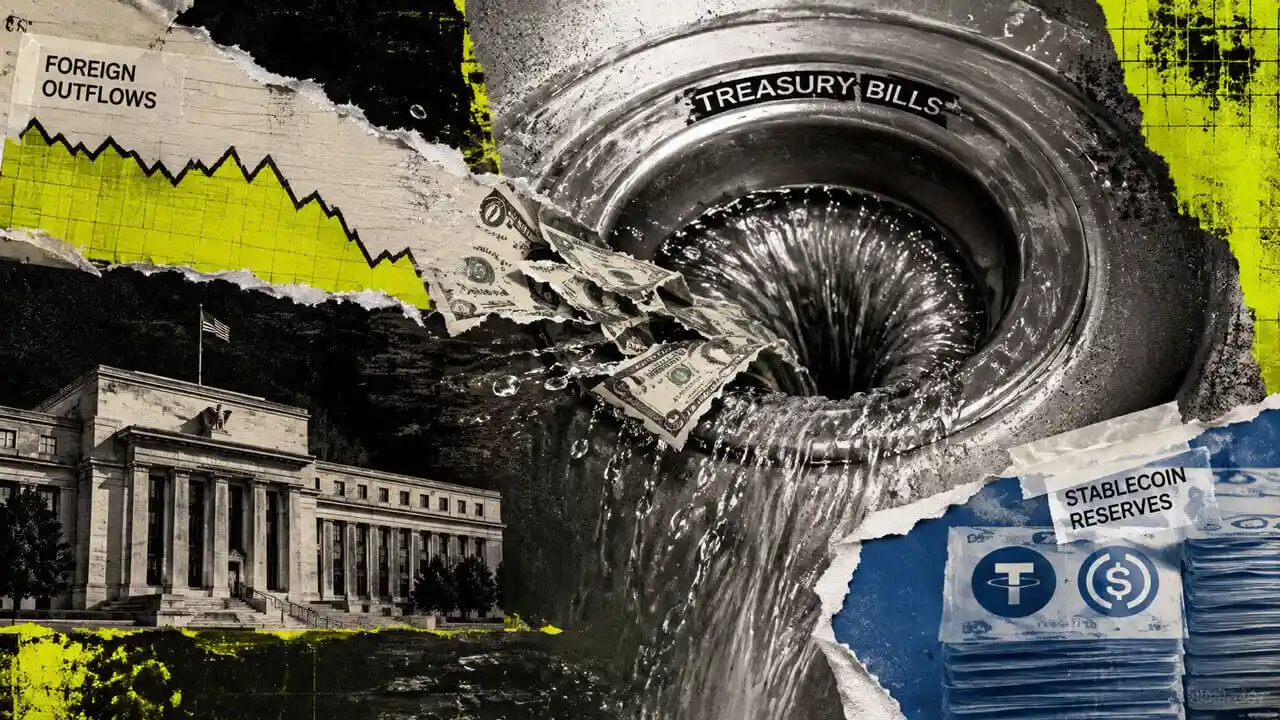
Foreign Capital Sells Off $29 Billion in Short-Term US Treasuries, Why is the US Betting on Stablecoins to "Take Over"?

In June, foreign investors netted $133.5 billion into U.S. financial markets but simultaneously sold $29 billion in short-term U.S. Treasury bills. This divergence highlights a strong preference for U.S. equities over government debt. While overseas buyers purchased $181.4 billion in stocks, demand for Treasuries weakened significantly. This trend explains why the U.S. is looking to stablecoins as a potential new source of demand for its debt. Stablecoin issuers like Tether and Circle back their tokens primarily with highly liquid assets, including short-term Treasuries. As users buy stablecoins, issuers convert that dollar demand into Treasury purchases. Recent U.S. legislative efforts, such as the proposed rules under the *GENIUS Act*, formalize this by mandating stablecoin reserves be held in assets like cash and short-term Treasuries. Currently, stablecoins represent a substantial existing buyer base. For instance, Tether alone held nearly $115 billion in direct T-bill exposure in Q2. However, recent stablecoin supply growth has been minimal and does not account for the $29 billion sell-off by foreign investors in June. For stablecoins to act as a meaningful counterbalance to waning foreign demand, their circulating supply would need to expand significantly. The next TIC report will be crucial to monitor whether foreign selling continues and if stablecoin growth begins to fill the demand gap. Ultimately, the U.S. is strategically positioning the regulated stablecoin sector as a potential new pillar of demand for its government debt.

marsbit4 dk önce

Foreign Capital Sells Off $29 Billion in Short-Term US Treasuries, Why is the US Betting on Stablecoins to "Take Over"?

marsbit4 dk önce

Unitree Investors Jointly Heavy Bet on an Embodied Team

Unibot's early investors, including Meituan, Sequoia Capital, and Matrix Partners, have jointly invested in MiaoDong Technology, another humanoid robotics startup. Founded by former DJI employees—CEO Gao Jianrong, a 9-year DJI veteran who led multiple core business units, and CTO Yang Shuo, who previously worked in Tesla's Optimus team—MiaoDong is known for its combined expertise in hardware productization and advanced robotics cognition. Their core strategy centers on in-house motor R&D and full-stack software-hardware capabilities. The company recently made headlines with its first product, Beni, a wheel-legged "camera robot" designed for low-angle, ground-level filming and personal companionship. Successfully launched on Kickstarter, Beni set a record for the highest fundraising amount in the platform's robotics category. It received a perfect 10/10 rating from influential tech reviewer Marques Brownlee (MKBHD). Beni features capabilities like autonomous obstacle avoidance, the ability to jump 25cm, and self-righting after a fall. MiaoDong plans to leverage the technological and user data feedback from Beni's consumer launch to inform the development of future home-use humanoid robots. The company emphasizes a product-first, user-centric approach, prioritizing real-world applications and reliability over rapid, demo-focused scaling. With Beni set for global release in October and an internal target to sell millions of units, MiaoDong aims to establish itself as a significant player in the embodied AI space through steady, product-driven growth.

marsbit18 dk önce

Unitree Investors Jointly Heavy Bet on an Embodied Team

marsbit18 dk önce

İşlemler

Spot
活动图片