Mega Matrix планирует привлечь $2 млрд для создания казначейства Ethena

cryptonews.ru2025-04-04 tarihinde yayınlandı2025-09-05 tarihinde güncellendi

Mega Matrix, публичная холдинговая компания, перешедшая на цифровые активы, подала в Комиссию по ценным бумагам и биржам США заявку на размещение ценных бумаг на сумму $2 млрд. Финансирование предназначено для стратегии управления казначейством, ориентированной на стейблкоины. Этот шаг иллюстрирует растущий интерес компаний к экспериментам с резервами в виде цифровых активов.

Средства будут направлены в экосистему стейблкоина Ethena, а именно на накопление токена управления протоколом ENA. Mega Matrix утверждает, что этот шаг обеспечит компании доступ к доходам, которые генерирует синтетический стейблкоин Ethena USD (USDe), а также предоставит влияние на управление протоколом.

С точки зрения Комиссии по ценным бумагам и биржам США, регистрация размещения позволяет компании зарегистрировать ценные бумаги для будущего выпуска. Это дает возможность продавать свои акции постепенно, а не единовременно.

В своем заявлении компания подчеркнула, что стратегия ориентирована исключительно на ENA, концентрируя влияние и доходность в одном цифровом активе.

Вместо того чтобы напрямую владеть USDe, Mega Matrix планирует занять значительную позицию в токене ENA. Это может принести выгоду от механизма «переключения комиссий» Ethena — ончейн-функции, которая после активации распределяет часть доходов протокола между держателями ENA.

Компания указала на быстрый рост Circle, ведущего эмитента стейблкоинов, и развитие стратегий управления казначейскими активами в качестве факторов, повлиявших на ее план, ориентированный на Ethena.

Компания также сослалась на Закон США GENIUS, который запрещает эмитентам выплачивать доходность напрямую держателям стейблкоинов. По иронии судьбы, это ограничение стимулировало спрос на синтетические доходные альтернативы, такие как USDe от Ethena.

Именно потому, что закон GENIUS запретил эмитентам выплачивать доход напрямую держателям, инвесторы обращаются к доходным стейблкоинам или стейблкоинам, участвующим в стейкинге, чтобы получить доход. Это пояснил Хулио Морено, руководитель исследовательского отдела CryptoQuant.

Модель Ethena отличается от традиционных стейблкоинов, обеспеченных фиатом, таких как USDC или USDT. USDe представляет собой синтетический стейблкоин, разработанный для поддержания привязки к доллару США с помощью сочетания залогового обеспечения и хеджирования бессрочными фьючерсными контрактами. Такая структура позволяет протоколу получать доходность от ставок финансирования на рынках деривативов.

Хотя рост Ethena все еще отстает от показателей конкурентов с фиатным обеспечением, он впечатляет. В августе разработчик Ethena Labs сообщил, что совокупный валовой процентный доход протокола превысил $500 млн.
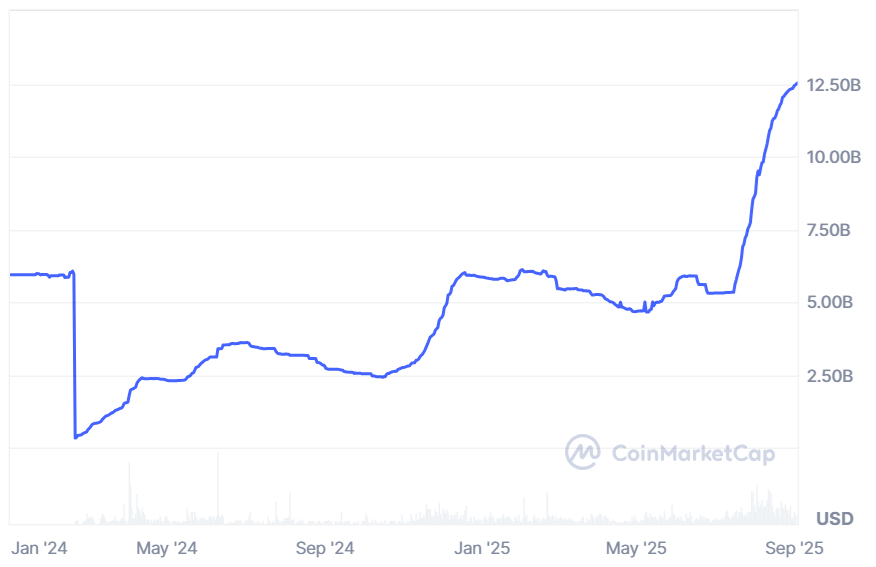

Рост рыночной капитализации Ethena USDe. Источник: CoinMarketCap

С тех пор USDe стал третьим по величине стейблкоином в мире с рыночной капитализацией $12,5 млрд, согласно данным CoinMarketCap.

Компании, занимающиеся казначейством цифровых активов, набирают обороты

Регистрация Mega Matrix на размещение ценных бумаг на $2 млрд выглядит необычно крупной для компании такого размера. На данный момент рыночная капитализация компании составляет около $113 млн, выручка за первый квартал снизилась до $7,74 млн, а чистый убыток увеличился до $2,48 млн. Основным бизнесом компании остается платформа для потокового вещания коротких видео FlexTV.
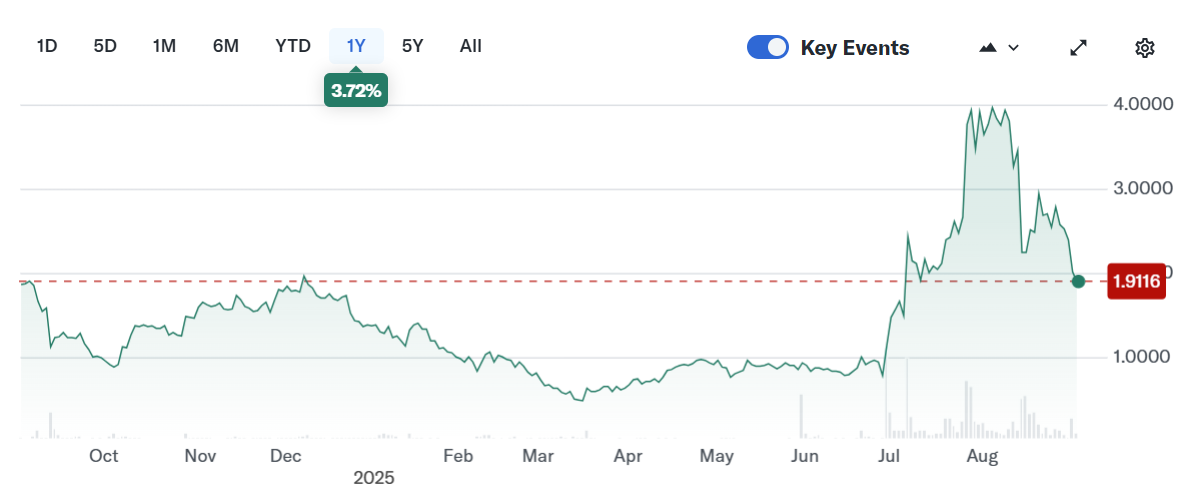

Акции Mega Matrix (MPU). Источник: Yahoo Finance

Обращение к стратегиям казначейства цифровых активов не стало полной неожиданностью, поскольку произошло всего через несколько месяцев после того, как в июне компания потратила $1,27 млн на покупку биткоина.

Тем не менее Mega Matrix не одинока в своем стремлении использовать цифровые активы в качестве балансовой стратегии. Многие небольшие компании либо добавили криптовалюты в свои казначейские активы, либо полностью переключились на цифровые активы.

Один из недавних примеров — ETHZilla, бывшая биотехнологическая компания, которая накопила сотни миллионов долларов в Ethereum, используя различные стратегии финансирования. Среди других компаний, идущих по схожему пути, — BitMine Immersion Technologies, SharpLink Gaming и Bit Digital.

По словам Йосипа Рупены, генерального директора кредитной компании Milo, несмотря на рост, стратегии управления казначейскими активами сопряжены со значительными рисками. Рупена сравнил эту модель с обеспеченными долговыми обязательствами — сложными финансовыми продуктами, сыгравшими ключевую роль во время финансового кризиса 2008 года.

«Есть такой аспект: люди берут довольно надежный продукт, например ипотеку в прошлом или биткоин и другие цифровые активы сегодня, и начинают его модифицировать, направляя в сторону, где инвестор не уверен в масштабах риска», — сказал он.


İlgili Okumalar

Deciphering the Ethereum Foundation's New Structure: Reaffirming Self-Sovereignty Amid Institutionalization Trends

Summary: The Ethereum Foundation (EF) has announced a major restructuring, laying off 20% of its staff and introducing a new five-layer operational framework. This move aims to clarify the EF's mission and reaffirm Ethereum's core principle of self-sovereignty amidst growing institutionalization in the crypto space. The five layers are: 1. **Protocol Layer**: Focuses on maintaining Ethereum's foundational "CROPS" values—Censorship-resistant, Robust, Open, Private, and Secure. This involves core technical work like secure hard forks and mitigating toxic MEV. 2. **Access Layer**: Ensures users can practically exercise self-sovereignty through actions like reading the chain and making transactions. A key principle is the "zero option," meaning a trusted, non-intermediated path must always exist as an alternative to any centralized service. 3. **User Layer**: Bridges the protocol and access layers by grounding EF's work in the real needs of users and organizations. This is seen as crucial for moving beyond a purely research-driven approach and ensuring development effectively serves the ecosystem. 4. **Community Layer**: Responsible for building and maintaining consensus around Ethereum's core values both internally and externally. This involves guarding against centralization, upholding technological neutrality, and preventing short-term commercial interests from undermining CROPS principles. 5. **Institutional Layer**: Manages EF's engagement with institutions, but with the precondition of self-sovereignty. The goal is not to make it easier for institutions to control users, but to demonstrate how Ethereum's technology can enable better integrations. The article argues that while institutional adoption brings legitimacy, it also risks diluting crypto's foundational ethos of decentralization. The new structure represents EF's effort to navigate this tension, upholding its core mission while actively engaging with a broader, more complex ecosystem.

marsbit8 dk önce

Deciphering the Ethereum Foundation's New Structure: Reaffirming Self-Sovereignty Amid Institutionalization Trends

marsbit8 dk önce

OpenRouter: How Did This 'AI Model Relay Station' Achieve a $10 Billion Valuation?

OpenRouter: The Model Router Building a $10B+ Company This article explores OpenRouter, a platform that aggregates access to over 400 AI models from 70+ providers (like OpenAI, Claude, Gemini) through a single API. It has grown into a unicorn with a $1.3B valuation by 2026, processing massive scale—reaching 100 trillion tokens monthly. Its core value isn't just being a "model supermarket." For developers building real-world AI applications, managing multiple models for different tasks (e.g., cheap models for titles, powerful ones for long articles) is complex. OpenRouter acts as a critical "model scheduling layer," handling routing, failover between providers, cost optimization, and enterprise features like zero-data-retention policies and budget controls. OpenRouter's business model is a "toll fee": it charges a small platform fee (5.5%) on purchased credits while passing model costs directly to users. Its revenue scales with the tokens flowing through its system, which saw explosive growth as AI apps evolved. Key growth drivers include: 1) The explosion of specialized models, increasing choice complexity; 2) AI apps shifting focus from performance to cost optimization; 3) The rise of AI agents that require more reliable, multi-step model calls. However, risks remain. Large enterprises or cloud providers (AWS, Google Cloud) could build similar internal gateways. Its position between model suppliers and developers could also create future tension over pricing and data control. To stay ahead, OpenRouter must deepen its enterprise features and prove it's more than just a request forwarder.

marsbit27 dk önce

OpenRouter: How Did This 'AI Model Relay Station' Achieve a $10 Billion Valuation?

marsbit27 dk önce

Bitcoin Falls Below $60,000 Again; After 20 Months, We've Reached a New Low

Bitcoin Drops Below $60,000, Hitting a 20-Month Low Bitcoin fell below the key $60,000 psychological level again, reaching a low of $59,023—its lowest point in approximately 20 months, dating back to October 2024. While it later recovered slightly to around $60,600, this marks its third significant breach of $60,000 this year. The downturn is attributed to two primary factors. First, U.S. spot Bitcoin ETFs are experiencing their longest streak of net outflows since launch, with nearly $5.94 billion withdrawn over 30 days. This creates sustained selling pressure as Authorized Participants sell Bitcoin to meet redemptions. Second, shifting macroeconomic expectations are adding pressure. Strong U.S. job data and hawkish remarks from Fed officials have increased market pricing for potential rate hikes, reversing the earlier liquidity-driven bullish sentiment and prompting a shift away from risk assets like Bitcoin. Analyst views are mixed. 21Shares maintains a bullish long-term outlook, expecting prices to recover towards $100,000, citing historical post-halving cycles and substantial ETF holdings as a base. In contrast, Arthur Hayes predicts a potential bottom around $40,000 within six months due to persistent Fed hawkishness. CryptoQuant suggests, based on on-chain data, that the market may not find a bottom until prices fall below the average investor cost basis around $53,000, potentially extending the bearish phase into late 2026 or early 2027. The immediate focus is on upcoming U.S. inflation data and Fed signals. Lower-than-expected CPI could offer relief, but confirmation of sticky inflation or continued ETF outflows may lead to further downside pressure. Bitcoin's ability to hold above $60,000 remains a critical test for the near-term market direction.

Odaily星球日报1 saat önce

Bitcoin Falls Below $60,000 Again; After 20 Months, We've Reached a New Low

Odaily星球日报1 saat önce

İşlemler

Spot
Futures
活动图片