CARDS 日涨 260% 背后的加密卡牌市场:当宝可梦遇上区块链

深潮2025-09-03 tarihinde yayınlandı2025-09-04 tarihinde güncellendi

Collector Crypt 在整个加密卡牌领域中占据着 95% 以上的市场份额。

撰文:伞,深潮 TechFlow

曾经风靡全球的宝可梦卡牌,如今在区块链上正在再次火爆。

昨日,结合了RWA概念的链上集换式卡牌交易平台Collector Crypt的代币CARDS价格暴涨,带动无数投资者关注到了加密卡牌这个赛道。

事实上,加密卡牌并不是最近才诞生的叙事,根据链上数据显示,单Solana一条链上的TCG(集换式卡牌)总交易量就已经超过了9500万美元。
当加密与卡牌碰撞,会迸发出怎样的火花?

让我们深入探索Crypto+TCG(集换式卡牌)领域,看看有哪些值得关注的项目和资产。

Collector Crypt:Solana生态的TCG之王

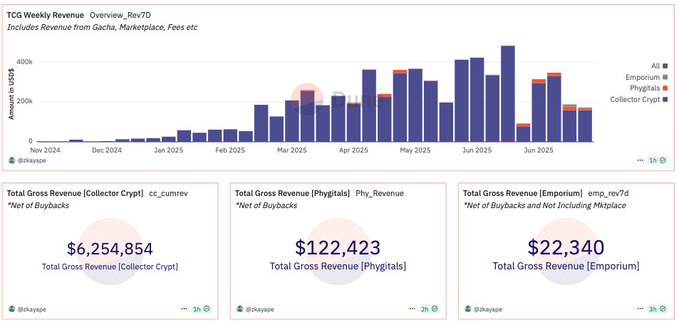
Collector Crypt成立于2021年,作为Solana生态上最早的TCG RWA平台,已经确立了无可争议的赛道龙头地位。该项目月收入超120万美元,年收入接近4000万美元,在整个加密卡牌领域中占据着95%以上的市场份额。

Collector Crypt的核心创新在于其Gacha(扭蛋)机制,也就是现实世界中的抽盲盒。用户支付约50U即可获得一张随机的宝可梦NFT卡牌,每一张NFT都对应着一张真实的实体卡牌,价值区间在30-5000美元之间。这种机制巧妙结合了抽卡带来的刺激感与收藏的满足感。
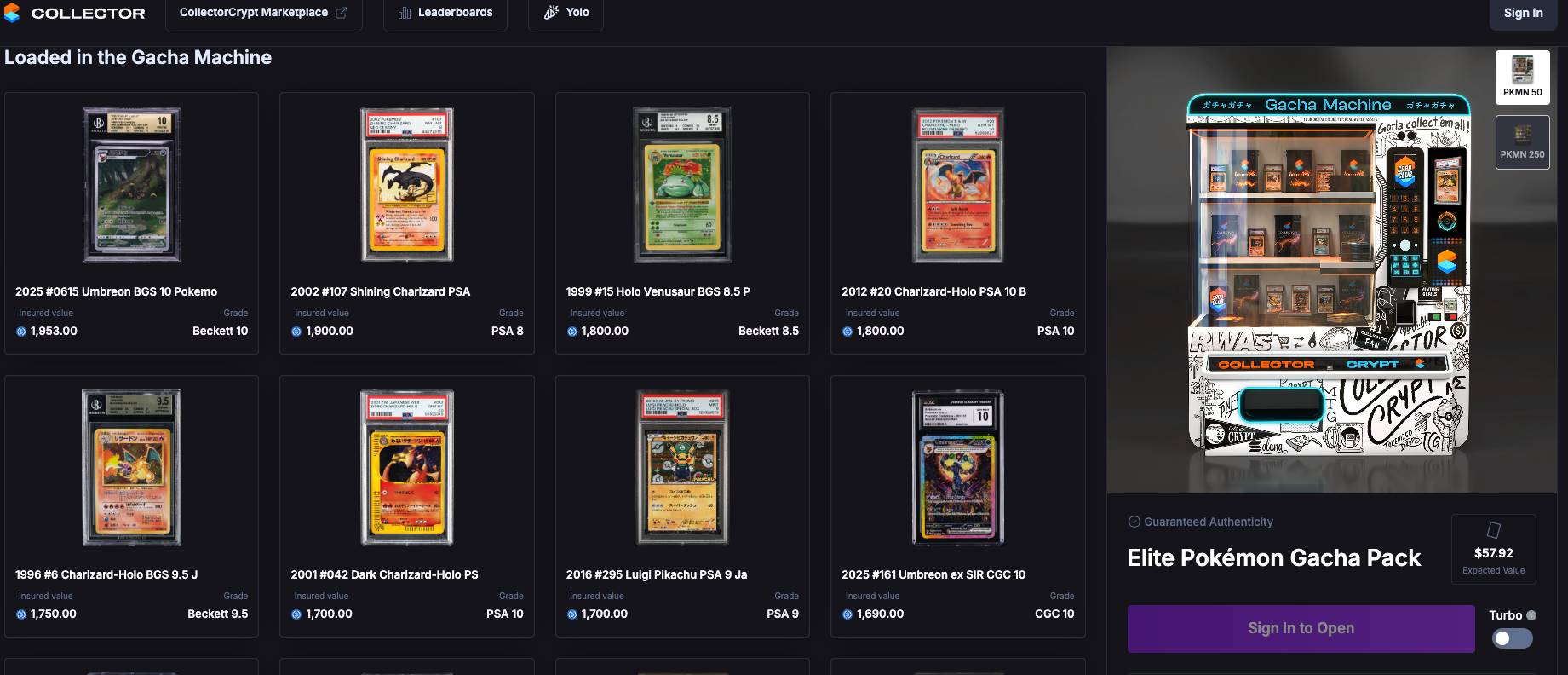
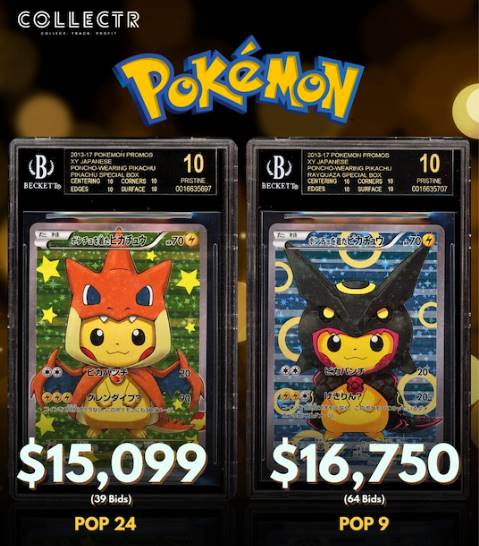
截止至目前,已经有超过3000个独立钱包在Collect Crypt上累计消费超4960万美元进行Gacha抽取,平均每名用户消费高达16500美元,远超其他平台的数据反映出了用户对这一模式的高度认可与强烈消费热情。其中两张穿着斗篷的皮卡丘卡牌更是以15099美元和16750美元的高价成交。
2025年8月29日,Collector Crypt正式发行CARDS代币,成为首个拥有代币的宝可梦交易平台。根据Coingecko数据显示,其代币价格在过去两天内日涨幅分别达260%以及212%,当前市值达到8425万美元,日交易额连续两日翻倍达到1.18亿美元。
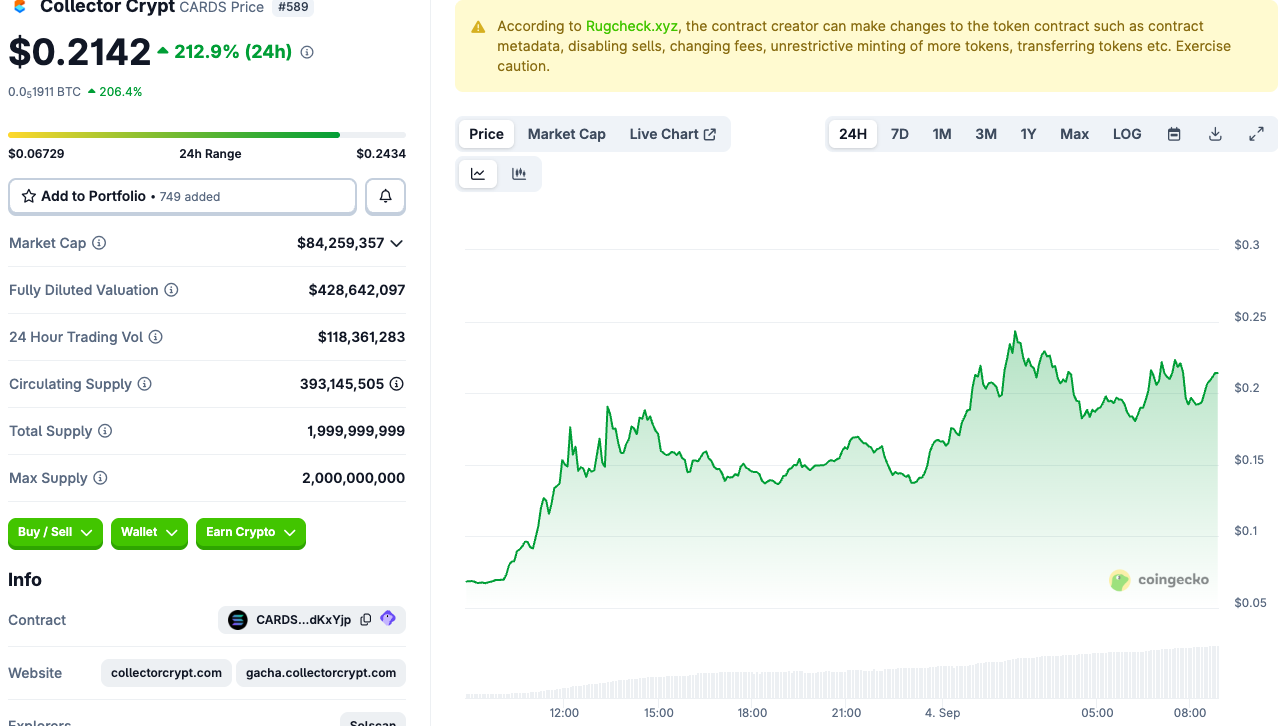
CARDS代币的独特之处在于其平台内价值数百万美元的宝可梦卡牌库存作为背书,为投资者提供了有形资产作为支撑。

除了Gacha机制之外,Collector Crypt还提供业界领先的eBay狙击工具,帮助用户可以以最低价格买到心仪的卡牌,这种全方位的服务生态使其不仅仅成为了最大的加密卡牌交易平台,更是卡牌爱好者的综合服务中心。

Courtyard:跨链集换式卡牌金融探索

Courtyard同为2021年上线的集换式卡牌交易平台,并在今年4月中一度创下全球NFT市场交易额记录,单周交易量达到2070万美元,甚至超越了ETH网络的NFT总交易量。

Courtyard的核心竞争优势在于其Web2原生的用户体验设计,平台支持信用卡等方式进行充值并且零存储费用,以及简洁明了的交易界面,大大降低了传统收藏家进入加密领域的门槛。当前平台日交易额仍保持在100万美元以上的水平。
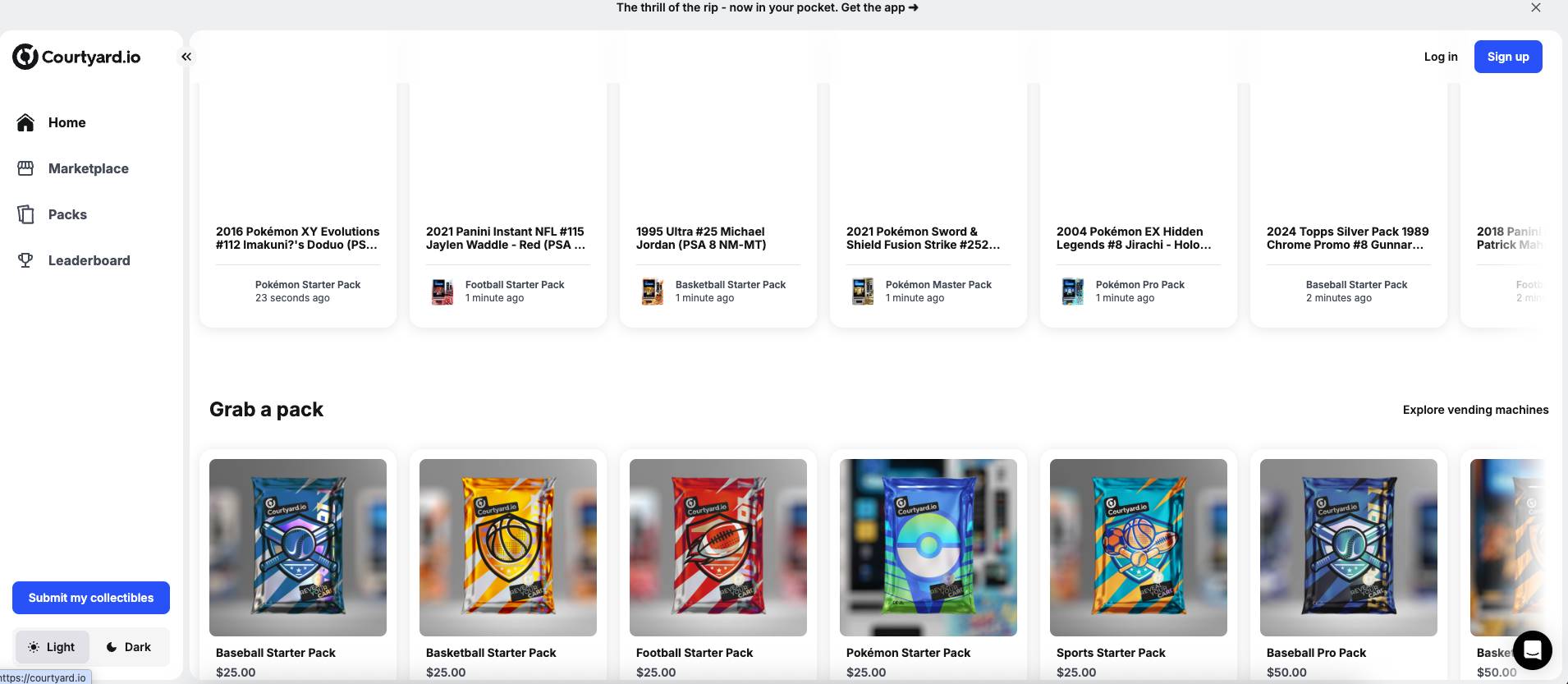
与其他加密卡牌平台不同,Courtyard专注于卡牌收藏家们非常在意的卡牌评级这一需求,平台上的每一张NFT化的卡牌都有完整的PAS认证记录和保险保障,这种专业化的服务模式吸引了大量高价值卡牌持有者的使用。

Phygitals:增长最快的新兴力量

Phygitals虽然是2024年12月才正式上线的新项目,但其增长速度令人瞩目。从今年7月底开始,该平台的周收入急剧上升,目前已经产生超过66.5万美元的扭蛋收入。在短短几个月内,已经吸引了6200个独立钱包用户,其中63%都是2025年的新用户。

相比其他平台的Gacha扭蛋模式,Phygitals与今年5月底创新推出了“LuckyDrwa”的幸运抽奖模式:用户可以以极低的价格购买高价卡牌的“奖券”,奖券售卖结束后将开奖幸运用户获得高价卡牌;而高价卡牌持有者可以发行自己持有卡牌的奖券给其他用户参与LuckyDrwa幸运抽奖。这一过程中抽奖逻辑、发行奖券数量以及结束时间全部写入Solana智能合约以保证公开透明。
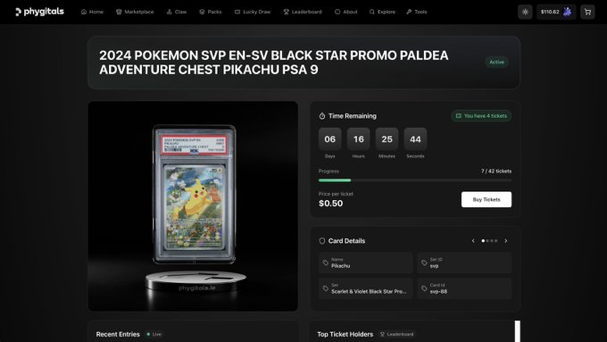
这一创新模式让用户可以通过更频繁、更小额的抽奖获得即时满足感,同时还降低了用户的参与门槛,使Phygitals平台日交易量在当时迅速提升三倍。

同时Phygitals还特别注重社交元素的构建,用户可以通过收藏卡牌解锁成就以及参与排行榜竞争等,并且支持用户持有NFT即时兑换实体卡牌。这种游戏化的社交机制设计使收藏不再是藏家们孤独的个人行为,而是为所有藏家建立起沟通的桥梁,为每一位藏家带来优秀的社区体验。

TCG Emporium:后起之秀的突围之路

TCG Emporium于2025年5月6日正式上线,虽然入局较晚,但其表现却令人印象深刻,在其初期短短90天内,该平台交易量就达到了3600万美元,这一数据已经占据整个Solana TCG生态38%的市场份额。

与这一赛道的前辈们相比,TCG Emporium采用了更低的平台费率策略,通过薄利多销的方式来快速获取市场份额。并且推出了独特的“buy-the-dip”回购机制,当高价值卡牌在二级市场长期挂售却无人问津时,平台会以预言机报价的60%主动进行收购,有效减少了二级市场的价差,提高了市场流动性。

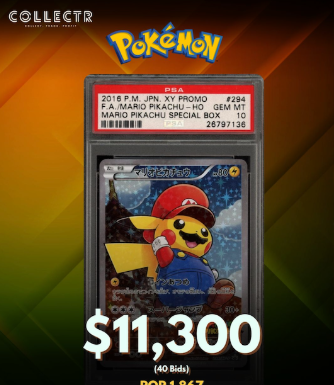
在营销方面,TCG Emporium会展示用户通过扭蛋抽中的高价值卡牌来创造病毒式传播效应,其中包括最高单笔成交价1.13万美元的马里奥皮卡丘卡牌。这一策略也有效推动了平台的品牌传播。
TCG赛道内其他类型项目

除了以上几家TCG交易平台以外,TCG与区块链也碰撞出了其他类型的项目。

Project O

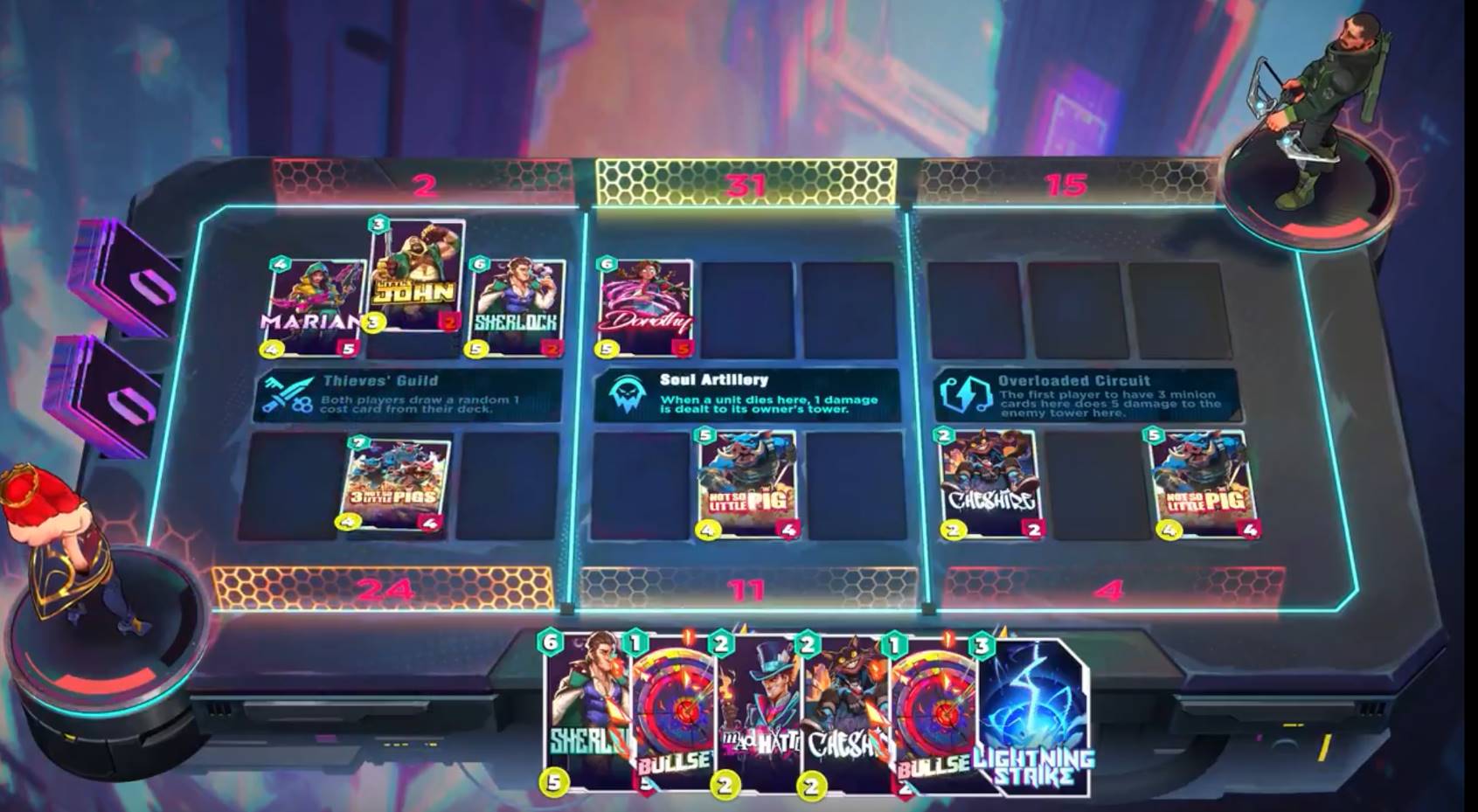
Project O成立于2024年,是一个针对于移动端的集换式卡牌对战游戏,同时也推出了其限量实体卡牌。单局游戏时长7-9分钟,玩家使用13张卡牌在游戏内三线战场进行对战。
SolForge Fusion

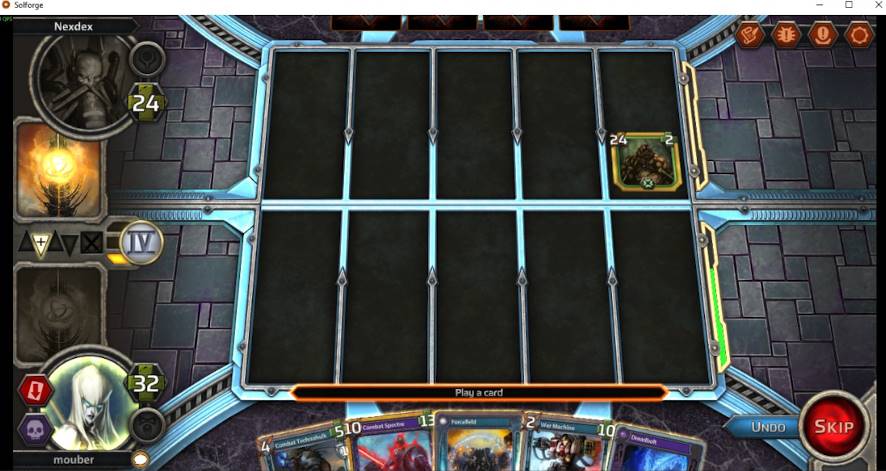
SolForge Fusion由全球知名卡牌游戏《万智牌》创始人Richard Garfield参与设计,采用创新“混合构筑”模式,每个实体初始卡牌套组都有对应的NFT版本,玩家可以通过扫描实体卡牌进行NFT化,实现超过4万种独特的卡牌组合。
通过上述这些项目我们可以看出当前加密卡牌市场正在崛起,而这份崛起的根源不仅是技术创新的融合,更是无数收藏家将自己的情感依托于加密结合的体现。

传统TCG交易市场面临着流动性分散、真假难辨、交易平台手续费高等问题,但当这个市场搬到区块链上,不仅解决了这些痛点,还可以通过智能合约、NFT和DeFi机制等手段为这个数千亿美元规模的市场注入前所未有的活力。

有人曾说“最好Web3应用往往不是全新的概念,而是对现有行为模式的升级和金融化改造。”或许对于集换式卡牌收藏这个行业来说,加密或许可以成为其行业痛点的一个有效解决方案,而当这阵席卷全球的风刮到加密市场中,我们作为投资者也应该关注这一赛道的后续发展。

İlgili Okumalar

Trump, the "Stock Market Manipulator" in U.S. Stocks, Lifts Up the Entire Quantum Computing Sector

"Trump, the 'U.S. Stock Market Mastermind,' Boosts the Entire Quantum Computing Sector" This article details how former U.S. President Donald Trump's policies and public statements have significantly influenced the stock market, particularly in the quantum computing sector. A key example is the U.S. government's direct investment in Intel stock in August 2025, which yielded over $45 billion in gains within seven months. Trump publicly credited himself for this profit. Recently, the Trump administration announced a new $2 billion initiative. Through the Department of Commerce, funding from the CHIPS and Science Act will be provided to nine quantum computing companies in exchange for minority, non-controlling equity stakes. The recipients include IBM ($1B for its subsidiary Anderon), GlobalFoundries ($375M), and listed companies like D-Wave, Infleqtion, and Rigetti ($100M each). Private firms such as Atom Computing and PsiQuantum also received $100M. This "investment-for-equity" strategy marks a shift from pure subsidies to an "active investor" model under the CHIPS Act. The announcement immediately boosted quantum computing stocks. The article frames this as part of Trump's "America First" industrial policy, aimed at securing U.S. technological leadership, similar to past investments in semiconductors, rare earths, and lithium. The author suggests this pattern of government-backed market intervention, alongside Trump's personal stock endorsements, is a hallmark of his approach to driving market gains and may continue in sectors like defense and advanced energy.

marsbit12 dk önce

Trump, the "Stock Market Manipulator" in U.S. Stocks, Lifts Up the Entire Quantum Computing Sector

marsbit12 dk önce

2-Year Return of 225x? Uncovering Mysterious Researcher Serenity's AI 'Choke Point' Investment Strategy

"2 Years, 225x Returns? Decoding Serenity's AI 'Chokepoint' Investment Strategy" This article profiles Serenity (formerly AleaBito on Reddit's WallStreetBets), a pseudonymous researcher known for exceptional returns by applying a "Chokepoint Theory" to AI investments. His methodology involves a bottom-up, reverse-engineering approach of the AI hardware supply chain. He identifies critical, irreplaceable physical bottlenecks (chokepoints) that could cripple entire AI systems if disrupted, bypassing Wall Street's top-down focus on major tech firms. Key examples include pinpointing essential suppliers in the emerging Silicon Photonics and Co-Packaged Optics (CPO) sector—components vital for next-generation AI data center interconnects—such as niche companies providing external laser sources, molecular beam epitaxy equipment, or ultra-pure raw materials. Similarly, he highlights geopolitical "chokepoints" in the humanoid robotics supply chain, where key hardware components and rare earth elements are concentrated in Asia. Serenity validates his investment theses through rigorous adversarial AI debates before publication. He leverages institutional blind spots, directing a sophisticated network of retail followers toward undervalued, under-covered micro-cap stocks across global exchanges, driving significant price movements in names like Sivers ($SIVE), Soitec, and Raspberry Pi ($RPI). While presenting a powerful framework for finding critical system dependencies, the strategy carries inherent risks: extreme concentration on specific technological paths, liquidity issues in small-cap stocks, and accusations of market manipulation. Ultimately, the core takeaway is not to copy his trades, but to adopt his analytical lens: to ask which silent, physical switches hold irreplaceable power within a complex system and invest ahead of the market's recognition of their value.

链捕手14 dk önce

2-Year Return of 225x? Uncovering Mysterious Researcher Serenity's AI 'Choke Point' Investment Strategy

链捕手14 dk önce

Bitroot Public Chain Invited to Attend Tencent Cloud Singapore AI Conference, Discussing the Future Alongside Solana

On May 19, Bitroot, an emerging Layer 1 blockchain, participated in the Tencent Cloud AI Summit in Singapore alongside key industry players like Solana Foundation. The event explored the intersection of AI infrastructure, enterprise applications, AI Agents, and Web3. Bitroot's invitation, despite being pre-mainnet, highlights industry interest in its focus on high-performance, AI-native architecture tailored for future AI Agent execution and verifiable on-chain automation. Bitroot CEO Juan Jose emphasized that AI competition is shifting from model performance to data, real-world application scenarios, and trust infrastructure. He argued that for AI Agents to evolve from assistants to autonomous executors managing transactions and assets, they require low-latency, low-cost, and high-throughput blockchain environments. Bitroot aims to address this through its EVM-compatible design, optimistic parallel execution, and a consensus mechanism targeting high scalability. Currently in its Testnet 5.0 phase, Bitroot reports metrics like over 50,000 peak TPS and sub-0.3 second average block time. Its narrative positions it within a growing landscape where next-generation Layer 1s like Monad and Aptos also compete on performance, while Bitroot differentiates by integrating AI computational capabilities natively across its stack. The summit underscored that the fusion of AI and Web3 is moving from concept to infrastructure competition, where networks balancing performance, security, and verifiability will be crucial for enabling scalable AI-driven applications.

marsbit1 saat önce

Bitroot Public Chain Invited to Attend Tencent Cloud Singapore AI Conference, Discussing the Future Alongside Solana

marsbit1 saat önce

Hedge Fund Q1 Interpretation: Everyone Is Selling Software, Buying Chips

Hedge Funds and Mutual Funds Aligned in Q1: Dumping Software, Buying Chips A clear consensus emerged among major U.S. hedge funds and mutual funds in Q1: they were simultaneously selling software stocks and pouring capital into the semiconductor sector. This aggressive rotation pushed semiconductor exposure in hedge fund long portfolios to a record high. Hedge funds delivered a 7% return year-to-date, while only 30% of large-cap active mutual funds outperformed their benchmarks. The average short interest for S&P 500 constituents rose to 3% of market cap, the highest since 2011. Within technology, the structural shift was stark. Hedge funds' semiconductor weighting hit an all-time high, while software fell to its lowest since 2019. Excluding Microsoft, mutual funds' relative overexposure to semis vs. software was the largest since 2012. Microsoft was among the most net-sold stocks by both groups. Hedge funds net purchased semiconductor names like LRCX and AMAT. Strategies diverged on leverage and cash. Hedge funds increased their net exposure to near a one-year high after an initial cut. Mutual funds raised their cash allocation, though it remains historically low at 1.4%. Sector alignment was high in Industrials (both overweight) but divergent in Tech: hedge funds increased their Tech net tilt by a record 853 basis points, while mutual funds reduced theirs. Clear splits also appeared in Financials and Consumer Discretionary. Four stocks appeared on both Goldman's hedge fund VIP and mutual fund overweight lists: BA, MA, MRVL, and V. This "shared favorites" basket has returned 10% YTD, outperforming the equal-weight S&P 500. Notably, all "Magnificent Seven" stocks are on the hedge fund VIP list but are uniformly underweighted by mutual funds.

marsbit1 saat önce

Hedge Fund Q1 Interpretation: Everyone Is Selling Software, Buying Chips

marsbit1 saat önce

İşlemler

Spot
Futures
活动图片