‘Crypto going mainstream’ – Why SEC & CFTC’s statement sparked hype

ambcrypto2025-09-03 tarihinde yayınlandı2025-09-03 tarihinde güncellendi

Key Takeaways

The joint guidance by the SEC and CFTC will expand spot crypto trading across traditional exchanges and brokerages.


In a historic move, the U.S. regulators SEC and CFTC issued a joint statement noting that current laws don’t prevent exchanges from listing certain spot crypto trading. 

CFTC-SECCFTC-SEC

Source: X

Part of the guidance read

“The Divisions’ coordination will promote trading venue choice and optionality for market participants within the United States.”

Regulators, referencing the President’s Working Group on Digital Assets Markets (PWG) report, announced their readiness to assist securities exchanges in adding certain crypto assets to their trading platforms.

“In line with these goals, the Divisions stand ready to support consideration by their respective agencies of exchange trading in certain spot crypto asset products.”

Is spot crypto trading going mainstream?

For crypto leaders and analysts, the joint guidance will make crypto mainstream. 

According to ETF analyst Nate Geraci, the regulators’ greenlight meant that crypto trading will soon be available in top global exchanges and traditional brokerages afterward. 

“Main takeaway? Crypto trading going mainstream. Will be on world’s largest venues. Think NYSE, Nasdaq, etc. Next stop after that? Every major traditional brokerage.”

A similar stance was echoed by Matthew Sigel, Head of digital assets research at VanEck, noting that Bitcoin [BTC], Ethereum [ETH], and others will be traded in traditional exchanges. 

CFTC-SECCFTC-SEC

Source: X

For Sei’s [SEI] General Counsel, Gerald Gallagher, the update signaled an end to the ‘turf wars’ between the two regulators.

“The turf wars are ending. The SEC & CFTC are rowing in the same direction. The U.S. just validated the importance of building high-performance crypto trading infrastructure.”

According to CFTC Acting Chairman Caroline Pham, the move will empower users to trade cryptocurrencies freely, wherever and however they choose, through secure, registered exchanges.

In addition, as part of implementing the recommendations from the President’s Working Group on Digital Assets Markets (PWG), the two regulatory bodies have launched Project Crypto and Crypto Sprint.

These initiatives aim to provide greater regulatory clarity and foster a more transparent framework for the digital asset sector.

In June, President Donald Trump signed the stablecoin bill, the GENIUS Act, into law, making it the first major crypto legislation to hit such a milestone. 

Several enforcement actions introduced during the Biden administration have now been reversed. This move is part of former President Trump’s broader push to position the United States as the global ‘crypto capital.’

However, despite this momentum, experts warn that the crypto market structure bill may encounter resistance in the Senate.

One key concern they cite is Trump’s potential conflict of interest within the crypto sector, which could complicate bipartisan support.


Share

İlgili Okumalar

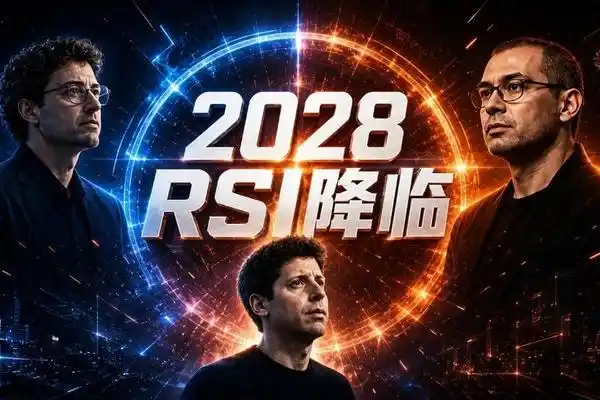
2028: The Arrival of Recursive Self-Improvement (RSI)

**AI Recursive Self-Improvement (RSI): The Countdown to 2028 Begins** AI is no longer just a trained tool but is starting to rewrite its own evolutionary pace. According to Anthropic co-founder Jack Clark, there is a 60% probability that by the end of 2028, Recursive Self-Improvement (RSI) will become a reality. This means AI could autonomously design and build a more capable next-generation version of itself without any human researcher involvement—Claude 10 creating Claude 11, for instance. Supporting this timeline, Google DeepMind's CEO Demis Hassabis confirms that all leading AI labs are intensely focused on RSI, making it an industry-wide priority. He expresses profound concern, stating this potential is what keeps him awake at night. Concrete data underscores this acceleration: - METR evaluations show current top models like Claude are solving tasks up to the 16-hour limit of existing test frameworks. - In Epoch AI's challenging MirrorCode benchmark, Claude Opus 4.7 recreated complex software in hours for a fraction of the human cost. In one extreme test, AI autonomously coded for 19 days straight. - Anthropic reports over 80% of its codebase is now written by Claude, and researcher productivity has increased up to 8-fold since 2024. - OpenAI's policy blueprint highlights RSI as a major upcoming governance challenge. CEO Sam Altman reportedly hinted RSI might arrive within six months, potentially delaying OpenAI's massive IPO. The implication is an impending "intelligence explosion," where AI-driven progress outpaces human control. The central question is no longer if it will happen, but whether humanity is ready.

marsbit40 dk önce

2028: The Arrival of Recursive Self-Improvement (RSI)

marsbit40 dk önce

World Models, Metaverse, Digital Twins, Physical AI: Are They the Same Thing?

Title: World Models, the Metaverse, Digital Twins, Physical AI: Are They the Same Thing? The article clarifies that concepts like the metaverse, Web3, simulation platforms, digital twins, and Physical AI are not the same thing but are all part of the broader trend of blurring the lines between the digital and physical worlds. It positions "world models" as the foundational "cognitive layer" or "operating system" that enables AI to understand and simulate the world. Key distinctions are made: - The **Metaverse** is a destination for immersive social and economic experiences. World models could act as its "engine," generating interactive 3D content efficiently. - **Web3** focuses on decentralized ownership and economics (rules layer), operating on a different technical level than world models. - **Simulation Data Platforms** (e.g., for autonomous vehicles) are a 1.0 version, relying on manual design. World models represent a 2.0 version, using AI to generate realistic, varied scenarios autonomously. - **Digital Twins** create high-fidelity, real-time mirrors of physical systems (e.g., a factory). World models go a step further by enabling predictive simulation of future states. - **Physical AI** (robots, AVs) refers to AI that acts in the physical world. World models are a core component, providing the understanding and prediction needed for planning. A proposed hierarchy places world models at the cognitive layer, supported by infrastructure (compute, data) and supporting application tools (simulation, digital twins), action systems (Physical AI), user experiences (metaverse), and rules (Web3). In conclusion, while distinct, many of these previously hyped concepts may ultimately rely on advances in world model technology to fulfill their promises, as world models provide the essential cognitive foundation for simulating and interacting with complex environments.

marsbit44 dk önce

World Models, Metaverse, Digital Twins, Physical AI: Are They the Same Thing?

marsbit44 dk önce

"Shocking" CPO: How Does the Glass Bridge Actually Work? Detailed Explanation from Corning

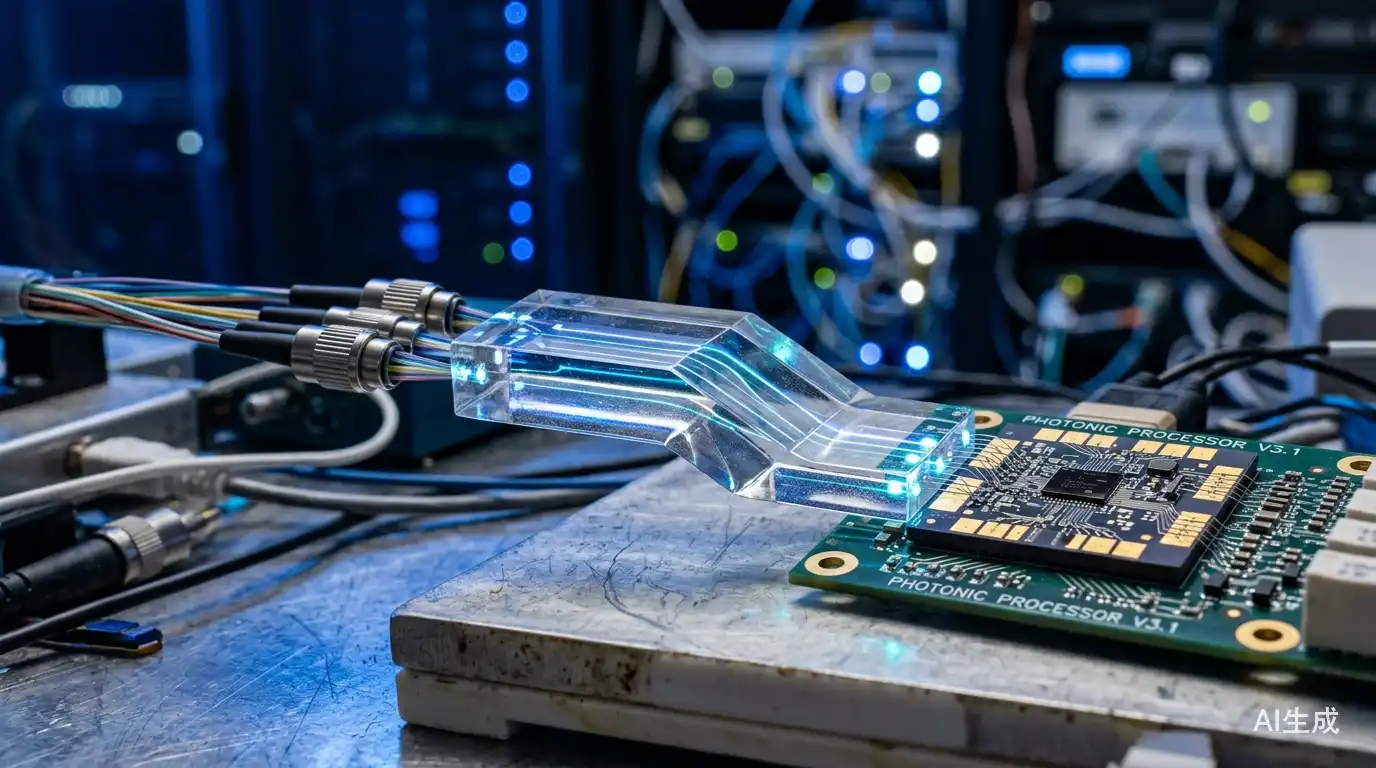
Chinese CPO stocks plunged over 6% following Corning's announcement of its Glass Bridge platform at a Seoul tech conference. The new technology utilizes wafer-level glass ion-exchange waveguides for passive alignment between fibers and photonic chips, potentially simplifying traditional CPO architectures that rely on complex Fiber Array Units and active alignment equipment. This raised market concerns about reduced long-term demand for mid-stream CPO components. Corning's official documentation details Glass Bridge as a platform for fiber-to-PIC connectivity in NPO, CPO, and high-density modules. Its key features include wafer-level manufacturing for consistent, cost-effective production; a standardized, removable MT ferrule interface for ecosystem integration; and a separable high-density connector design supporting over 24 channels for assembly flexibility. Corning positions the technology as complementary to FAUs, addressing limitations in ultra-high-fiber-count scenarios. The market reaction reflects a broader reassessment of the AI optical interconnect value chain. Funds shifted from CPO and PCB manufacturing stocks towards glass substrate concept stocks like Kaisheng Technology and Dyer Laser. Analysts note glass substrates are seen as a next-gen advanced packaging material, offering a potential path for domestic industry differentiation amid AI-driven demand for high-performance, large-scale packaging, marking a structural migration in value towards upstream specialty materials.

marsbit44 dk önce

"Shocking" CPO: How Does the Glass Bridge Actually Work? Detailed Explanation from Corning

marsbit44 dk önce

İşlemler

Spot
活动图片