Ray Dalio Flags Cryptocurrencies as Dollar Hedge Amid Rising Debt

TheCryptoTimes2025-09-03 tarihinde yayınlandı2025-09-03 tarihinde güncellendi

Ray Dalio, the American hedge fund manager and former CEO of Bridgewater Associates, has highlighted the growing role of cryptocurrencies as an alternative currency amid concerns over the U.S. dollar and other reserve currencies’ debt situations.

Dalio issued the clarification after a Financial Times interview, claiming that his answers were misrepresented. In a social media post, he shared the actual questions and answers, stressing the need for accuracy in an era of media distortions. 

He noted that the choice for him is “between not saying anything and playing it safe or trying to speak in an analytical, non-partisan way and risk being politicized. To me, the greater risk is in not speaking up.”

Crypto as a Hedge Against Dollar Risks

Dalio emphasized that cryptocurrencies’ limited supply is a key factor in their appeal. “Crypto is now an alternative currency that has its supply limited, so, all things being equal, if the supply of dollar money rises and/or the demand for it falls, that would likely make crypto an attractive alternative currency,” he said.

He warned that most fiat currencies, especially those with high levels of government debt, will struggle to maintain value over time. Dalio drew parallels with history, noting that fiat currencies suffered devaluation during the 1930–1940 and 1970–1980 periods.

Rising Gold and Crypto Prices

Dalio also highlighted the wider risks posed by high debt levels in reserve currency governments. According to Dalio, the “dollar and the other reserve currency governments’ bad debt situations” are undermining their appeal as reserve currencies and stores of wealth, a factor that has contributed to rising gold and cryptocurrency prices in recent years.

Stablecoins and Treasury Exposure

Regarding stablecoins, Dalio said that their holdings of U.S. Treasuries are unlikely to trigger any systemic risks. He did caution, however, that a drop in the real value of Treasuries is a legitimate concern. As long as stablecoins are well-regulated, this issue is unlikely to cause serious problems.

Dalio’s comments reflect a wider view among financial experts: with many fiat currencies under pressure, cryptocurrencies and gold are increasingly seen as safe stores of value and protection against declining currency strength.

Also Read: Raoul Pal Predicts 4B Crypto Users by 2030 Amid Adoption Surge


Mobile Only ImageMobile Only Image

Trend Kriptolar

İlgili Okumalar

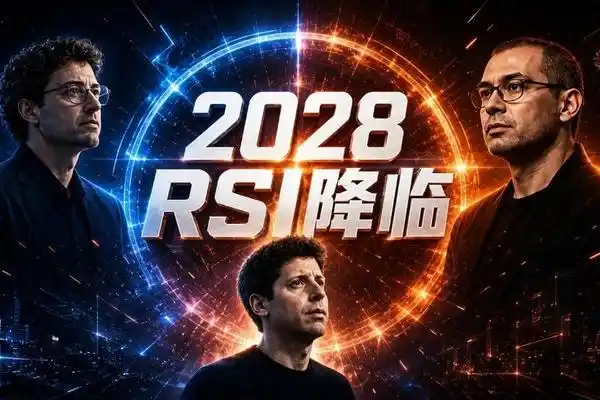
2028: The Arrival of Recursive Self-Improvement (RSI)

**AI Recursive Self-Improvement (RSI): The Countdown to 2028 Begins** AI is no longer just a trained tool but is starting to rewrite its own evolutionary pace. According to Anthropic co-founder Jack Clark, there is a 60% probability that by the end of 2028, Recursive Self-Improvement (RSI) will become a reality. This means AI could autonomously design and build a more capable next-generation version of itself without any human researcher involvement—Claude 10 creating Claude 11, for instance. Supporting this timeline, Google DeepMind's CEO Demis Hassabis confirms that all leading AI labs are intensely focused on RSI, making it an industry-wide priority. He expresses profound concern, stating this potential is what keeps him awake at night. Concrete data underscores this acceleration: - METR evaluations show current top models like Claude are solving tasks up to the 16-hour limit of existing test frameworks. - In Epoch AI's challenging MirrorCode benchmark, Claude Opus 4.7 recreated complex software in hours for a fraction of the human cost. In one extreme test, AI autonomously coded for 19 days straight. - Anthropic reports over 80% of its codebase is now written by Claude, and researcher productivity has increased up to 8-fold since 2024. - OpenAI's policy blueprint highlights RSI as a major upcoming governance challenge. CEO Sam Altman reportedly hinted RSI might arrive within six months, potentially delaying OpenAI's massive IPO. The implication is an impending "intelligence explosion," where AI-driven progress outpaces human control. The central question is no longer if it will happen, but whether humanity is ready.

marsbit3 saat önce

2028: The Arrival of Recursive Self-Improvement (RSI)

marsbit3 saat önce

World Models, Metaverse, Digital Twins, Physical AI: Are They the Same Thing?

Title: World Models, the Metaverse, Digital Twins, Physical AI: Are They the Same Thing? The article clarifies that concepts like the metaverse, Web3, simulation platforms, digital twins, and Physical AI are not the same thing but are all part of the broader trend of blurring the lines between the digital and physical worlds. It positions "world models" as the foundational "cognitive layer" or "operating system" that enables AI to understand and simulate the world. Key distinctions are made: - The **Metaverse** is a destination for immersive social and economic experiences. World models could act as its "engine," generating interactive 3D content efficiently. - **Web3** focuses on decentralized ownership and economics (rules layer), operating on a different technical level than world models. - **Simulation Data Platforms** (e.g., for autonomous vehicles) are a 1.0 version, relying on manual design. World models represent a 2.0 version, using AI to generate realistic, varied scenarios autonomously. - **Digital Twins** create high-fidelity, real-time mirrors of physical systems (e.g., a factory). World models go a step further by enabling predictive simulation of future states. - **Physical AI** (robots, AVs) refers to AI that acts in the physical world. World models are a core component, providing the understanding and prediction needed for planning. A proposed hierarchy places world models at the cognitive layer, supported by infrastructure (compute, data) and supporting application tools (simulation, digital twins), action systems (Physical AI), user experiences (metaverse), and rules (Web3). In conclusion, while distinct, many of these previously hyped concepts may ultimately rely on advances in world model technology to fulfill their promises, as world models provide the essential cognitive foundation for simulating and interacting with complex environments.

marsbit3 saat önce

World Models, Metaverse, Digital Twins, Physical AI: Are They the Same Thing?

marsbit3 saat önce

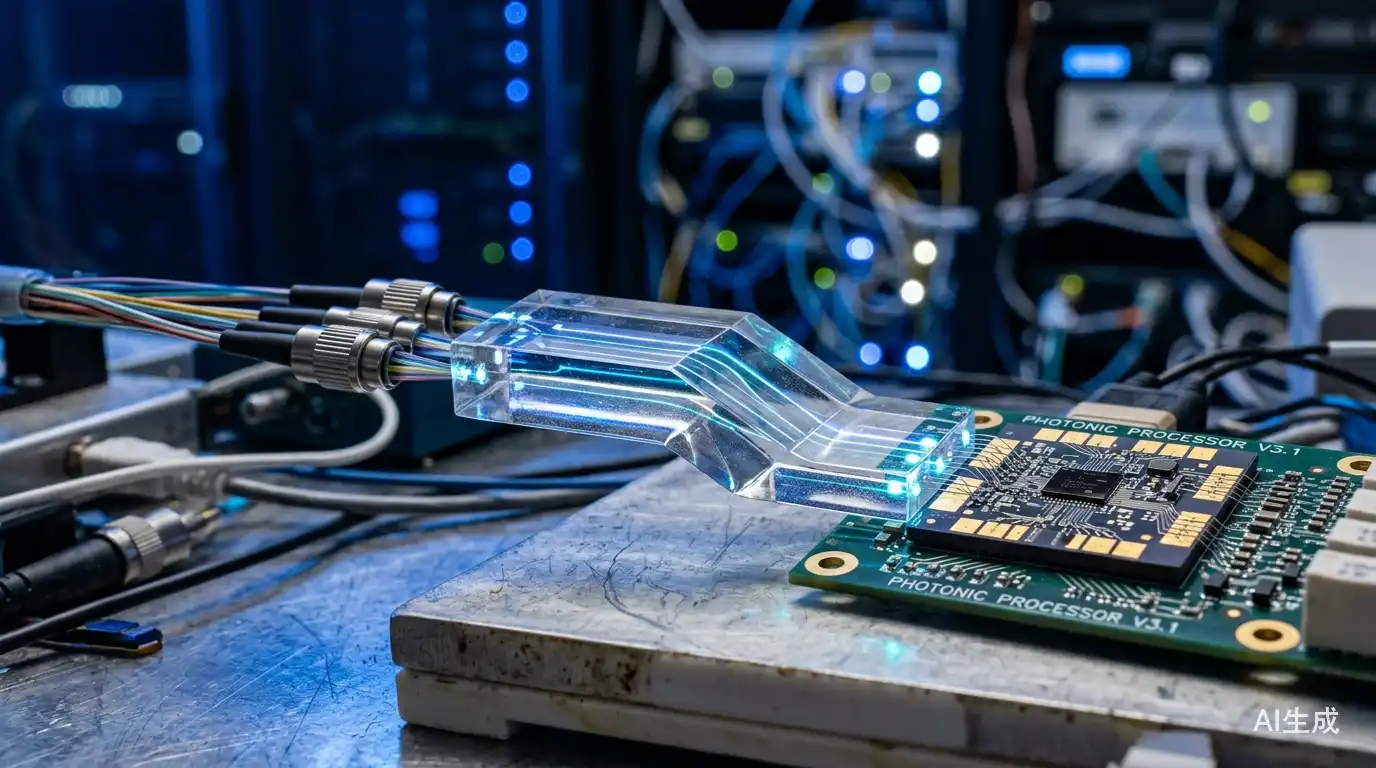
"Shocking" CPO: How Does the Glass Bridge Actually Work? Detailed Explanation from Corning

Chinese CPO stocks plunged over 6% following Corning's announcement of its Glass Bridge platform at a Seoul tech conference. The new technology utilizes wafer-level glass ion-exchange waveguides for passive alignment between fibers and photonic chips, potentially simplifying traditional CPO architectures that rely on complex Fiber Array Units and active alignment equipment. This raised market concerns about reduced long-term demand for mid-stream CPO components. Corning's official documentation details Glass Bridge as a platform for fiber-to-PIC connectivity in NPO, CPO, and high-density modules. Its key features include wafer-level manufacturing for consistent, cost-effective production; a standardized, removable MT ferrule interface for ecosystem integration; and a separable high-density connector design supporting over 24 channels for assembly flexibility. Corning positions the technology as complementary to FAUs, addressing limitations in ultra-high-fiber-count scenarios. The market reaction reflects a broader reassessment of the AI optical interconnect value chain. Funds shifted from CPO and PCB manufacturing stocks towards glass substrate concept stocks like Kaisheng Technology and Dyer Laser. Analysts note glass substrates are seen as a next-gen advanced packaging material, offering a potential path for domestic industry differentiation amid AI-driven demand for high-performance, large-scale packaging, marking a structural migration in value towards upstream specialty materials.

marsbit3 saat önce

"Shocking" CPO: How Does the Glass Bridge Actually Work? Detailed Explanation from Corning

marsbit3 saat önce

İşlemler

Spot

Popüler Makaleler

RAY Nasıl Satın Alınır

HTX.com’a hoş geldiniz! Raydium (RAY) satın alma işlemlerini basit ve kullanışlı bir hâle getirdik. Adım adım açıkladığımız rehberimizi takip ederek kripto yolculuğunuza başlayın. 1. Adım: HTX Hesabınızı OluşturunHTX'te ücretsiz bir hesap açmak için e-posta adresinizi veya telefon numaranızı kullanın. Sorunsuzca kaydolun ve tüm özelliklerin kilidini açın. Hesabımı Aç2. Adım: Kripto Satın Al Bölümüne Gidin ve Ödeme Yönteminizi SeçinKredi/Banka Kartı: Visa veya Mastercard'ınızı kullanarak anında Raydium (RAY) satın alın.Bakiye: Sorunsuz bir şekilde işlem yapmak için HTX hesap bakiyenizdeki fonları kullanın.Üçüncü Taraflar: Kullanımı kolaylaştırmak için Google Pay ve Apple Pay gibi popüler ödeme yöntemlerini ekledik.P2P: HTX'teki diğer kullanıcılarla doğrudan işlem yapın.Borsa Dışı (OTC): Yatırımcılar için kişiye özel hizmetler ve rekabetçi döviz kurları sunuyoruz.3. Adım: Raydium (RAY) Varlıklarınızı SaklayınRaydium (RAY) satın aldıktan sonra HTX hesabınızda saklayın. Alternatif olarak, blok zinciri transferi yoluyla başka bir yere gönderebilir veya diğer kripto para birimlerini takas etmek için kullanabilirsiniz.4. Adım: Raydium (RAY) Varlıklarınızla İşlem YapınHTX'in spot piyasasında Raydium (RAY) ile kolayca işlemler yapın.Hesabınıza erişin, işlem çiftinizi seçin, işlemlerinizi gerçekleştirin ve gerçek zamanlı olarak izleyin. Hem yeni başlayanlar hem de deneyimli yatırımcılar için kullanıcı dostu bir deneyim sunuyoruz.

280 Toplam GörüntülenmeYayınlanma 2024.12.10Güncellenme 2026.06.02

RAY Nasıl Satın Alınır

Tartışmalar

HTX Topluluğuna hoş geldiniz. Burada, en son platform gelişmeleri hakkında bilgi sahibi olabilir ve profesyonel piyasa görüşlerine erişebilirsiniz. Kullanıcıların RAY (RAY) fiyatı hakkındaki görüşleri aşağıda sunulmaktadır.

活动图片