Ethereum gas hits 100 Gwei as WLFI sends ETH fees to 2021 highs!

ambcrypto2025-09-02 tarihinde yayınlandı2025-09-03 tarihinde güncellendi

Key Takeaways

Ethereum gas fees spiked after WLFI’s launch. Does this show ETH’s ongoing fragility during major launches, giving Solana a clear edge?


Ethereum [ETH] kicked off September on shaky footing.

Technically, it slipped 1.8% to $4,215, printing its third lower low since the $4,900 all-time high. That meant in under ten days, ETH cut through support three times, leaving the $4.3k zone hanging by a thread.

The kicker?

This wasn’t a broad market dump. Bitcoin [BTC] actually closed +0.92%. That made the move an “ETH-driven” slide, further underscored by its average Gas Price spiking to 6.85 Gwei on Etherscan.

Ethereum gasEthereum gas

Source: Etherscan

Simply put, Ethereum’s fundamentals took a hit. 

Ahead of World Liberty Financial’s [WLFI] launch, the chain lit up with $1.8 billion in 24 hour volume. The WLFI contract became the heaviest user of ETH gas, with 1.58 million Daily Transactions and over 550k Active Wallets.

In short, the network was slammed.

As a result, Ethereum gas blew from near-zero to triple digits, hitting 100+ Gwei. DEX swaps peaked at $145, and even basic transfers topped $10, the costliest on Ethereum since 2021.

Network congestion puts Ethereum at a disadvantage

Ethereum’s gas spike was a hard reality check.

Even after a monster Q3, up 77%, the network’s congestion showed Ethereum’s fragility during high-profile launches. Solana [SOL], by contrast, stayed bulletproof, with Average Transaction Fees at just $0.004.

The impact was visible in DEX flows.

According to DeFiLlama, Solana trailed Ethereum’s $3.823 billion Daily Volume by only $200 million, a gap of 5.5%.

ETHETH

Source: DeFiLlama

The debate reignites

In short, WLFI reignited the on-chain debate. 

Ethereum’s network strain under heavy transaction volume once again exposed its structural limitations, giving Solana a clear cost advantage.

The key question: Will this divergence start reflecting in price action?

At present, SOL’s rally off its $154 base lagged ETH’s broader Q3 surge. ETH still led market flow, but with congestion mounting, that edge may not last.

Share

Trend Kriptolar

İlgili Okumalar

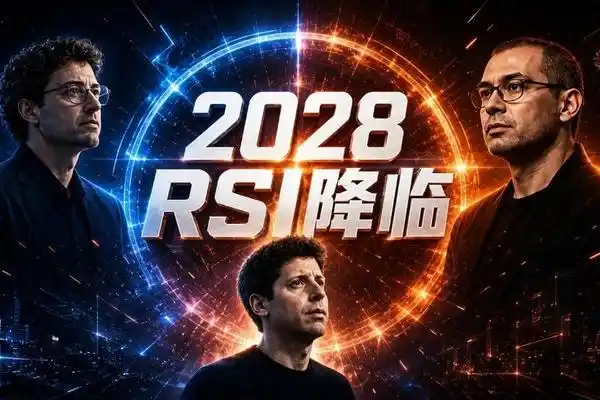
2028: The Arrival of Recursive Self-Improvement (RSI)

**AI Recursive Self-Improvement (RSI): The Countdown to 2028 Begins** AI is no longer just a trained tool but is starting to rewrite its own evolutionary pace. According to Anthropic co-founder Jack Clark, there is a 60% probability that by the end of 2028, Recursive Self-Improvement (RSI) will become a reality. This means AI could autonomously design and build a more capable next-generation version of itself without any human researcher involvement—Claude 10 creating Claude 11, for instance. Supporting this timeline, Google DeepMind's CEO Demis Hassabis confirms that all leading AI labs are intensely focused on RSI, making it an industry-wide priority. He expresses profound concern, stating this potential is what keeps him awake at night. Concrete data underscores this acceleration: - METR evaluations show current top models like Claude are solving tasks up to the 16-hour limit of existing test frameworks. - In Epoch AI's challenging MirrorCode benchmark, Claude Opus 4.7 recreated complex software in hours for a fraction of the human cost. In one extreme test, AI autonomously coded for 19 days straight. - Anthropic reports over 80% of its codebase is now written by Claude, and researcher productivity has increased up to 8-fold since 2024. - OpenAI's policy blueprint highlights RSI as a major upcoming governance challenge. CEO Sam Altman reportedly hinted RSI might arrive within six months, potentially delaying OpenAI's massive IPO. The implication is an impending "intelligence explosion," where AI-driven progress outpaces human control. The central question is no longer if it will happen, but whether humanity is ready.

marsbit5 saat önce

2028: The Arrival of Recursive Self-Improvement (RSI)

marsbit5 saat önce

World Models, Metaverse, Digital Twins, Physical AI: Are They the Same Thing?

Title: World Models, the Metaverse, Digital Twins, Physical AI: Are They the Same Thing? The article clarifies that concepts like the metaverse, Web3, simulation platforms, digital twins, and Physical AI are not the same thing but are all part of the broader trend of blurring the lines between the digital and physical worlds. It positions "world models" as the foundational "cognitive layer" or "operating system" that enables AI to understand and simulate the world. Key distinctions are made: - The **Metaverse** is a destination for immersive social and economic experiences. World models could act as its "engine," generating interactive 3D content efficiently. - **Web3** focuses on decentralized ownership and economics (rules layer), operating on a different technical level than world models. - **Simulation Data Platforms** (e.g., for autonomous vehicles) are a 1.0 version, relying on manual design. World models represent a 2.0 version, using AI to generate realistic, varied scenarios autonomously. - **Digital Twins** create high-fidelity, real-time mirrors of physical systems (e.g., a factory). World models go a step further by enabling predictive simulation of future states. - **Physical AI** (robots, AVs) refers to AI that acts in the physical world. World models are a core component, providing the understanding and prediction needed for planning. A proposed hierarchy places world models at the cognitive layer, supported by infrastructure (compute, data) and supporting application tools (simulation, digital twins), action systems (Physical AI), user experiences (metaverse), and rules (Web3). In conclusion, while distinct, many of these previously hyped concepts may ultimately rely on advances in world model technology to fulfill their promises, as world models provide the essential cognitive foundation for simulating and interacting with complex environments.

marsbit5 saat önce

World Models, Metaverse, Digital Twins, Physical AI: Are They the Same Thing?

marsbit5 saat önce

İşlemler

Spot

Popüler Makaleler

GAS Nasıl Satın Alınır

HTX.com’a hoş geldiniz! GAS (GAS) satın alma işlemlerini basit ve kullanışlı bir hâle getirdik. Adım adım açıkladığımız rehberimizi takip ederek kripto yolculuğunuza başlayın. 1. Adım: HTX Hesabınızı OluşturunHTX'te ücretsiz bir hesap açmak için e-posta adresinizi veya telefon numaranızı kullanın. Sorunsuzca kaydolun ve tüm özelliklerin kilidini açın. Hesabımı Aç2. Adım: Kripto Satın Al Bölümüne Gidin ve Ödeme Yönteminizi SeçinKredi/Banka Kartı: Visa veya Mastercard'ınızı kullanarak anında GAS (GAS) satın alın.Bakiye: Sorunsuz bir şekilde işlem yapmak için HTX hesap bakiyenizdeki fonları kullanın.Üçüncü Taraflar: Kullanımı kolaylaştırmak için Google Pay ve Apple Pay gibi popüler ödeme yöntemlerini ekledik.P2P: HTX'teki diğer kullanıcılarla doğrudan işlem yapın.Borsa Dışı (OTC): Yatırımcılar için kişiye özel hizmetler ve rekabetçi döviz kurları sunuyoruz.3. Adım: GAS (GAS) Varlıklarınızı SaklayınGAS (GAS) satın aldıktan sonra HTX hesabınızda saklayın. Alternatif olarak, blok zinciri transferi yoluyla başka bir yere gönderebilir veya diğer kripto para birimlerini takas etmek için kullanabilirsiniz.4. Adım: GAS (GAS) Varlıklarınızla İşlem YapınHTX'in spot piyasasında GAS (GAS) ile kolayca işlemler yapın.Hesabınıza erişin, işlem çiftinizi seçin, işlemlerinizi gerçekleştirin ve gerçek zamanlı olarak izleyin. Hem yeni başlayanlar hem de deneyimli yatırımcılar için kullanıcı dostu bir deneyim sunuyoruz.

189 Toplam GörüntülenmeYayınlanma 2024.12.12Güncellenme 2026.06.02

GAS Nasıl Satın Alınır

Tartışmalar

HTX Topluluğuna hoş geldiniz. Burada, en son platform gelişmeleri hakkında bilgi sahibi olabilir ve profesyonel piyasa görüşlerine erişebilirsiniz. Kullanıcıların GAS (GAS) fiyatı hakkındaki görüşleri aşağıda sunulmaktadır.

活动图片