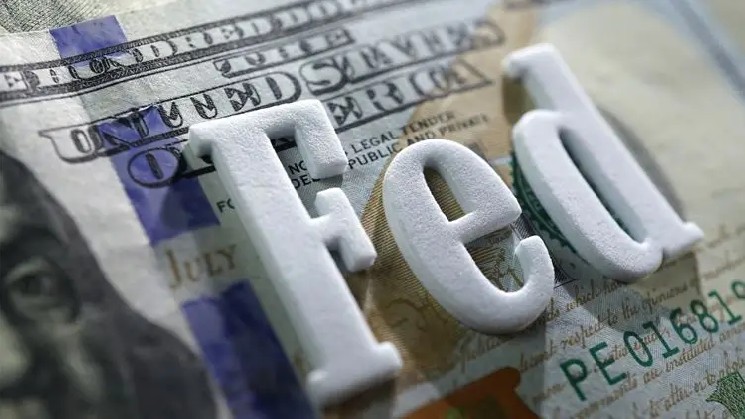
Криптокиты скупили эфир на $456 млн в ходе «естественной ротации» с биткоина

cryptonews.ru2025-12-27 tarihinde yayınlandı2025-12-27 tarihinde güncellendi

Криптовалютные киты, или крупные инвесторы, скупают сотни миллионов долларов в эфире. Аналитики отмечают органическое переключение внимания инвесторов на альткоины с большим потенциалом роста.

Девять «крупных» адресов «китов» приобрели эфир на общую сумму 456 миллионов долларов у Bitgo и Galaxy Digital, сообщила платформа данных о блокчейне Arkham в своем посте во вторник.

По словам Николая Зондергаарда, аналитика платформы криптоаналитики Nansen, растущий спрос «китов» на вторую по величине криптовалюту в мире сигнализирует о «естественном обороте» рынка в сторону эфира и других альткоинов с большим потенциалом роста.

«Во многом это похоже на естественный поворот событий: инвесторы фиксируют прибыль от роста биткоина и переходят в другие токены, чтобы воспользоваться потенциальным ростом», — сказал аналитик.

«Эфир, в частности, выигрывает, поскольку в настоящее время он пользуется большой популярностью и получает импульс со стороны компаний, занимающихся казначейством эфира», — добавил он.

Хотя недавние движения «китов» эфира «заметны», «более общая тенденция заключается в том, что потоки средств выходят за рамки биткоина, поскольку участники рынка ищут дальнейшие возможности», — сказал аналитик.
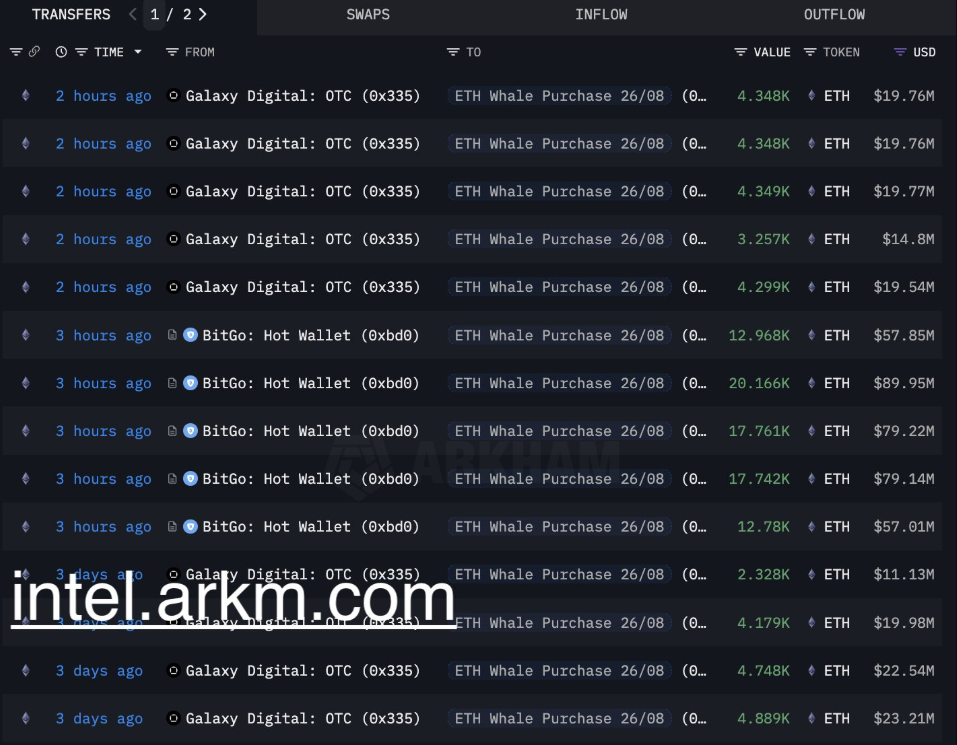

Источник: Arkham

Тем не менее, растущая фиксация прибыли от биткоина может быть предвестником того, что «инвесторы будут больше интересоваться эфиром», добавил Зондергаард.

Криптоаналитик Вилли Ву также указал на растущую ротацию капитала из биткоина в эфир.
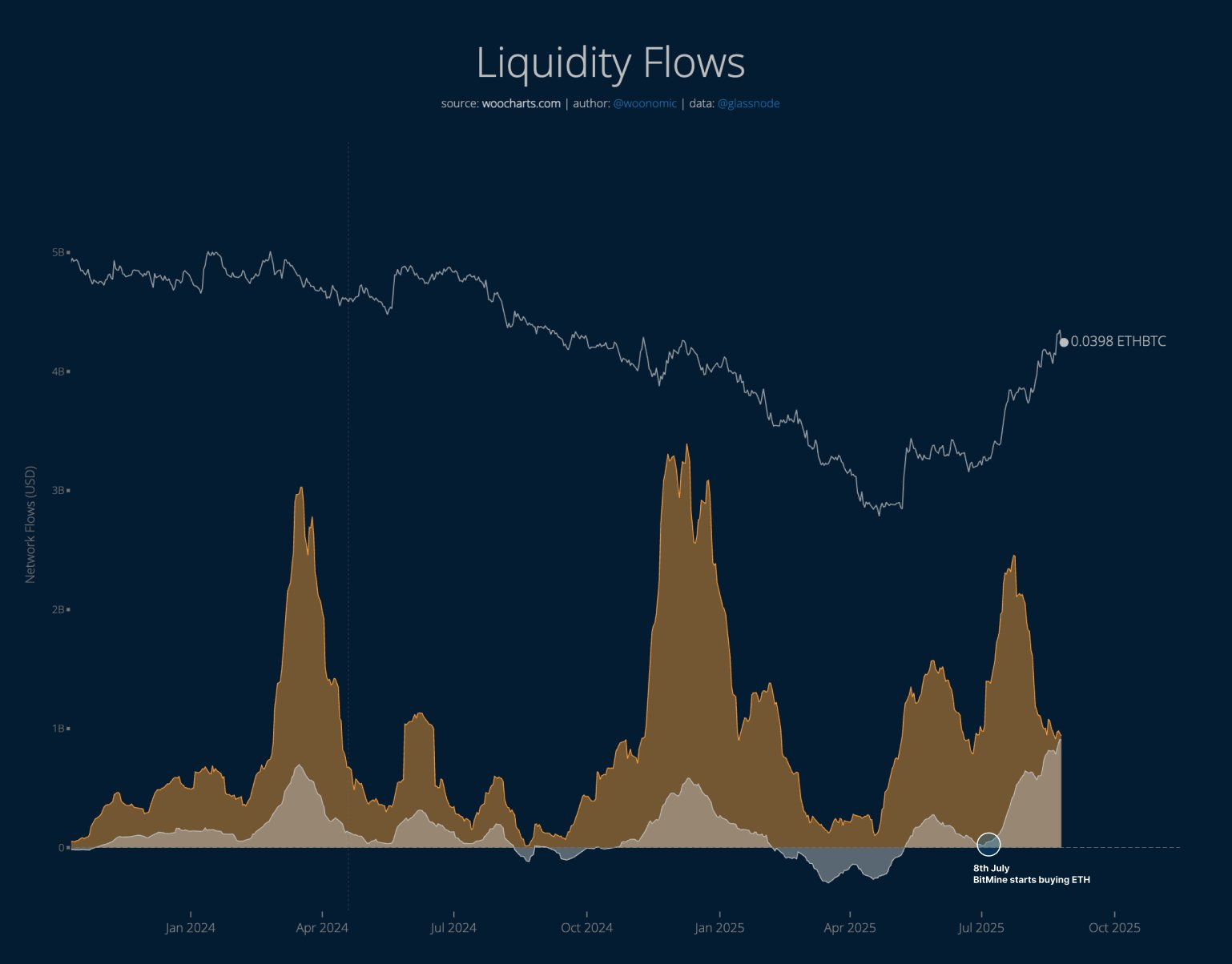

Источник: Вилли Ву.

«Приток средств в ETH, составляющий 0,9 миллиарда долларов в день (серебро), приближается к притоку в BTC (оранжевый)», — написал аналитик в публикации во вторник. Он добавил, что последняя волна притока средств «началась с того, что BitMine, компания Тома Ли, занимающаяся казначейством ETH, начала накапливать ETH».

Эти комментарии появились через неделю после того, как биткоин-кит, владеющий состоянием более 11 миллиардов долларов, продал биткоины на сумму 2,59 миллиарда долларов. Средства были переведены в спотовый Ethereum на сумму 2,2 миллиарда долларов и в бессрочную длинную позицию по Ethereum на 577 миллионов долларов на децентрализованной бирже Hyperliquid (HYPE), как сообщается в отчете.

Умные трейдеры покупают альткоины

Самые успешные в отрасли по доходности трейдеры криптовалют, отслеживаемые на платформе Nansen для анализа блокчейна как «трейдеры, ориентированные на разумные инвестиции», уже переходят в альткоины, подогревая ожидания инвесторов относительно сезона альткоинов 2025 года.

Рассматривая наиболее значительные приобретения токенов с высокой капитализацией, трейдеры, ориентированные на умные инвестиции, приобрели токены Chainlink (LINK) на сумму 1,2 миллиона долларов, токены Ethena (ENA) на сумму 967 тысяч долларов и токены Lido DAO (LDO) на сумму 614 тысяч долларов, согласно данным Nansen.
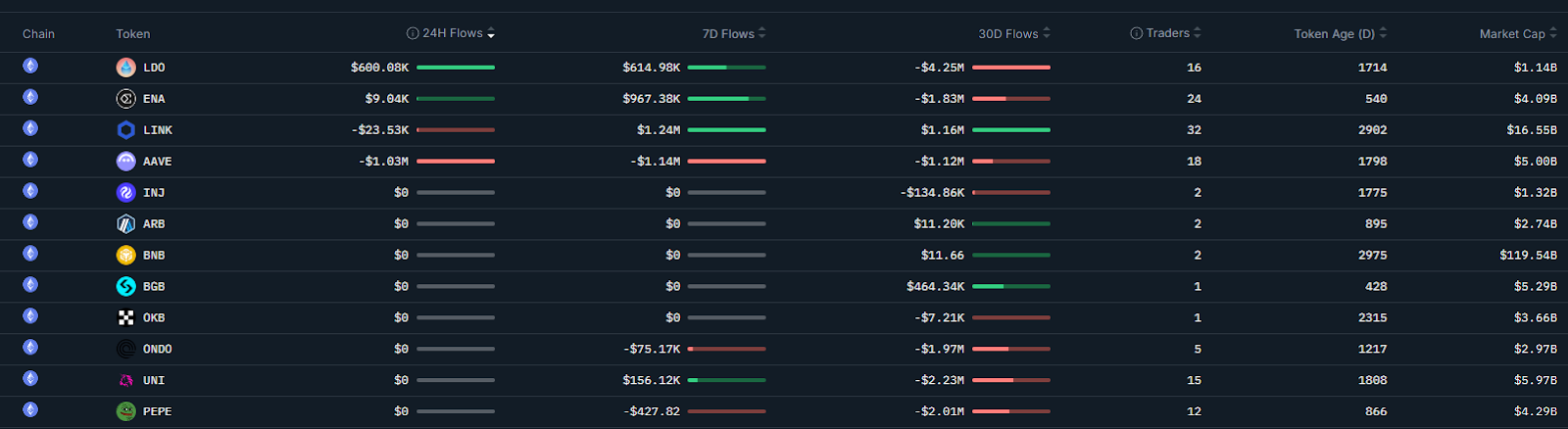

Какие основные активы скупают трейдеры. Источник: Nansen

Рост приобретений LINK, возможно, стал следствием подачи компанией Bitwise Asset Management заявки в Комиссию по ценным бумагам и биржам США на запуск биржевого инвестиционного фонда на базе LINK, о чем сообщалось во вторник.

Однако эти совокупные приобретения альткоинов меркнут по сравнению с 28 миллионами долларов, приобретенными «спящим китом», который не проявлял активности с 2021 года, о чем сообщалось во вторник.


İlgili Okumalar

Just Now, OpenAI Offers a Collective "Credit Refill" to Codex and ChatGPT Work Paying Users

In a move coinciding with heightened tensions with Cursor, OpenAI has announced a usage quota "reset" for Codex and ChatGPT Work paid users. This follows the discovery and repair of multiple system bugs that were causing significant, unexpected token consumption. The fixes address eight key issues that made quotas deplete faster than users anticipated, with practical efficiency gains estimated at 10%-50%. Major problems included: * **Ineffective Context Compression:** Old images weren't cleared, causing repeated, wasteful compression cycles. * **Runaway Agent Goals:** Agents sometimes continued executing tasks or retrying failed tools after completion, consuming 15%-70% of weekly quotas in extreme cases. * **Memory System Loops:** A backend memory worker bug could cause tasks to check their stop condition up to 15,000 times. * **Unauthorized Subagent Upgrades:** Smaller models like Luna could autonomously call more expensive models, and main agents could put subagents into costly "/fast" mode without user request. * **Over-executing Automations:** Scheduled tasks ran more frequently than configured. * **Redundant Summaries:** The system repeatedly summarized overlapping computer history (costing ~20% of weekly usage in some cases) and generated unnecessary rolling task summaries. * **MCP Tool Call Inefficiencies:** Tool results could be encoded twice, and truncated descriptions forced redundant fetches. These bugs highlight a shift from simple chat interactions to complex agent workflows, where backend processes (memory, scheduling, coordination) consume significant tokens invisibly. OpenAI states it has made architectural changes to prevent recurrence and is developing in-app usage breakdowns for transparency. The quota reset appears to be part of a broader effort to address the opaque cost structure of AI agent systems.

marsbit20 dk önce

Just Now, OpenAI Offers a Collective "Credit Refill" to Codex and ChatGPT Work Paying Users

marsbit20 dk önce

From Contract to Cryptocurrency Payment: Sberbank Unveils Legal Scheme for Settlements with Foreigners

Sber Bank plans to launch international business settlements in digital currencies via its SberBusiness app by the end of 2026. The bank's deputy chairman, Anatoly Popov, announced this ahead of the Eastern Economic Forum, stating the goal is to simplify digital currency use for businesses in cross-border trade. The legal basis is Federal Law No. 282-FZ "On Digital Currency and Digital Rights," effective September 1, 2026, which permits foreign trade crypto settlements through licensed intermediaries. A published guide outlines the process: a company signs a contract, transfers rubles to a licensed intermediary, who then buys and sends cryptocurrency to the recipient, with reporting for regulators generated automatically. This service is positioned as an alternative channel for foreign trade, especially where traditional bank transfers face sanctions. Sber aims to integrate crypto payments into standard business tools within SberBusiness, avoiding the need for specialized technical knowledge. Development will depend on the practical application of the new law. From a macro perspective, this initiative is seen not just as a technical innovation but also within the context of sanctions pressure on crypto markets. The article notes that licensed intermediaries could become targets for secondary sanctions, as seen with UK actions against crypto exchanges in summer 2026. The long-term viability of Sber's scheme may depend more on political dynamics than technology, following a historical pattern where new payment channels face regulatory countermeasures.

cryptonews.ru2 saat önce

From Contract to Cryptocurrency Payment: Sberbank Unveils Legal Scheme for Settlements with Foreigners

cryptonews.ru2 saat önce

Don't Trust, Verify: Malicious AI Links Expose a Nightmare Reality for Crypto Industry Workers

Generative AI is becoming increasingly prevalent, with professionals in the digital assets and blockchain space regularly using it. However, this makes them prime targets for attackers seeking to steal sensitive, often irrevocable, information. Refi Hub co-founder Numa Lunah recently reported being "hacked" through a malicious link sent in a chat with the AI model Claude, which appeared to be a legitimate transcription app download. The link installed malware that attempted to steal all his data. While Numa claimed no sensitive data was leaked—as he wiped and reinstalled his laptop's OS—he later discovered a corrupted `SKILL.md` file in his backups, disguised as a style guide. This file contained hidden instructions to reload the malware and steal credentials whenever the AI accessed it. This incident highlights a new attack vector: LLMs providing malicious outputs. Microsoft Defender experts have previously warned about the evolution of cryptojacking attacks from SEO poisoning to "poisoning" LLM responses from models like Gemini, Claude, Copilot, and ChatGPT. Threats include malicious artifacts via context windows, chatbot-recommended download links, fake AI-branded installers, and infected source code or agent skills. For crypto professionals, the risk is heightened because they often manage irreplaceable secrets like seed phrases, private keys, exchange API keys, and wallet data. The article argues that the most dangerous vulnerability is human trust and complacency. A fundamental shift in security culture is needed: treating every AI suggestion as potentially hostile, regardless of its source. This isn't paranoia but a survival necessity. The key takeaway is that the threat lies not in vulnerable code but in the human instinct to trust convenient answers, a flaw no software patch can fix. Numa was saved only because he meticulously reviewed every configuration file before letting the AI interact with it—a level of caution most users likely neglect.

cryptonews.ru4 saat önce

Don't Trust, Verify: Malicious AI Links Expose a Nightmare Reality for Crypto Industry Workers

cryptonews.ru4 saat önce

İşlemler

Spot
活动图片