Commerce Department To Release Blockchain Statistics, Says Lutnick

bitcoinist2025-08-27 tarihinde yayınlandı2025-08-27 tarihinde güncellendi

Özet

Howard Lutnick, the US Secretary of Commerce and former CEO of Cantor Fitzgerald, announced plans to integrate blockchain technology into...

Trusted Editorial content, reviewed by leading industry experts and seasoned editors. Ad Disclosure

Howard Lutnick, the US Secretary of Commerce and former CEO of Cantor Fitzgerald, announced plans to integrate blockchain technology into the dissemination of economic statistics. 

GDP Statistics On The Blockchain

Speaking at a cabinet meeting with President Donald Trump on Tuesday, Lutnick articulated his vision of placing Gross Domestic Product (GDP) data on the blockchain, highlighting the potential for enhanced transparency and data distribution across government departments.

Lutnick emphasized that the initiative aligns with Trump’s identity as “the crypto president,” framing it as a groundbreaking step toward modernizing how economic reports are generated and shared. 

“The Department of Commerce is going to start issuing its statistics on the blockchain,” he stated, adding that the aim is to create a more open and accessible framework for global markets. 

While the project is still in its developmental stages, it promises to facilitate real-time updates to economic data, a significant shift from traditional reporting methods.

Lutnick Champions Bitcoin And Stablecoins

Throughout his career, Lutnick has been an outspoken advocate for cryptocurrencies. He has drawn comparisons between Bitcoin (BTC) and gold, defended the reserves backing USDT issuer Tether, and dismissed concerns regarding the role of stablecoins in illicit activities during his Senate confirmation hearing. 

Lutnick’s relationship with the White House has also been pivotal in advancing this agenda. During a rally in Michigan celebrating Trump’s first 100 days in office, Lutnick praised the President’s leadership and emphasized collaboration with David Sacks, the White House’s crypto and AI czar. 

Together, they have worked to facilitate the rollout of the Bitcoin strategic reserve, a concept Lutnick believes will solidify Bitcoin’s status as a commodity. “Once you embrace the concept of commodity, you’ll see how beautiful that is,” he remarked in an interview with Bitcoin Magazine.

Blockchain
The daily chart shows the total crypto market cap at $3.86 trillion. Source: TOTAL on TradingView.com

Featured image from DALL-E, chart from TradingView.com 

Editorial Process for bitcoinist is centered on delivering thoroughly researched, accurate, and unbiased content. We uphold strict sourcing standards, and each page undergoes diligent review by our team of top technology experts and seasoned editors. This process ensures the integrity, relevance, and value of our content for our readers.

Ronaldo is a seasoned crypto enthusiast with over four years of experience in the field. He is passionate about exploring the vast and dynamic world of decentralized finance (DeFi) and its practical applications for achieving economic sovereignty. Ronaldo is constantly seeking to expand his knowledge and expertise in the DeFi space, as he believes it holds tremendous potential for transforming the traditional financial landscape.

İlgili Okumalar

Anthropic's Latest Report Reveals Global Workers' Patterns: Seeking Sleep at 5 AM, Asking for Recipes at 6 PM

A new report from Anthropic analyzes millions of hourly user interactions with Claude AI, revealing detailed patterns in daily life and work. The data shows distinct rhythms: people most frequently ask about sleep help around 5 AM, seek news at 7 AM, and search for dinner recipes at 6 PM—the day's single largest query spike. Usage sharply diverges between weekdays and weekends. Workdays are dominated by professional tasks like business emails and coding (backend, APIs). Weekends see a surge in personal use—nearly 50% of conversations—focused on emotional support, creative writing (especially fan fiction), medical advice, and side projects like AI agent design or game development. Weekend "entrepreneurial" queries peak globally, while job-hunting activity drops. The report introduces "artifact" analysis, finding 93% of conversations produce a tangible output (explanation, document, code, etc.). Blog posts are 81% work-related, while creative writing is over 80% personal. High-wage professionals (e.g., marketing managers, programmers) use Claude more intensively outside work hours, with longer conversations, more tokens consumed, and greater use of deep thinking features compared to lower-wage roles. Interestingly, Claude's responses typically register at a higher reading level than user prompts (by about one educational year on average), except for audience-focused writing like emails or blogs where the gap nearly disappears. The data also captures specific cultural moments, like an 8x spike in tax-related queries on the U.S. filing deadline. Precise hourly data transforms fragmented queries into a collective diary of modern life—mapping not just economic activity, but also cycles of anxiety, creativity, and daily rhythm, with AI acting as both a productivity tool and an intimate, always-available confidant.

marsbit8 dk önce

Anthropic's Latest Report Reveals Global Workers' Patterns: Seeking Sleep at 5 AM, Asking for Recipes at 6 PM

marsbit8 dk önce

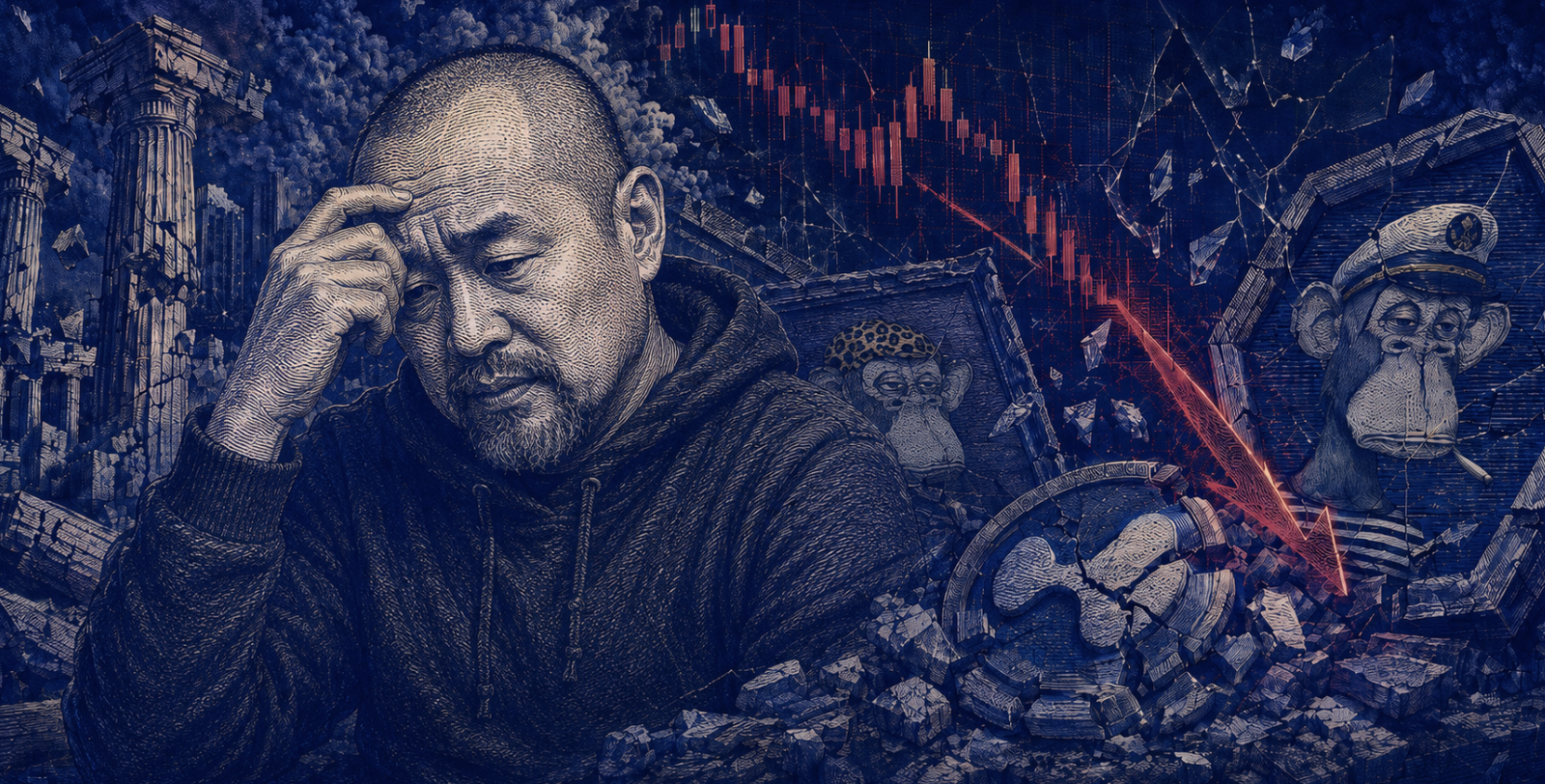
Margin Exhausted, "Brother Huang Li Cheng" Begins Selling Monkeys at a Loss

Taiwanese crypto whale "Machi Big Brother" Jeffrey Huang has been forced to sell his prized Bored Ape Yacht Club (BAYC) NFTs at significant losses to cover mounting losses from a highly leveraged ETH long position on Hyperliquid. Over the past month, Huang sold 34 BAYC NFTs for 326 ETH (approx. $514,000), realizing a loss of 399 ETH (approx. $631,000). The proceeds were transferred to Hyperliquid to replenish margin for his perpetual contract trades. One ape, BAYC #6057, bought for 76.84 ETH four years ago, was sold for just 7.65 ETH, a 90% loss in ETH terms. Huang began his high-leverage (25-40x) ETH long strategy in September 2025 when ETH was around $4,700. While his account once showed over $45 million in unrealized profit, the subsequent crash of ETH to the $1,600 range erased all gains. As of June 26, his cumulative losses on Hyperliquid reached $33.85 million, with over 335 liquidations earning him the community nickname "King of Liquidations." With conventional funds depleted, Huang's once-valuable NFT collection, which at its peak included around 200 BAYCs and was worth tens of millions, has become a lifeline. His remaining ~150 BAYCs, valued at roughly $1.6 million at current floor prices, provide only limited runway for his persistent high-stakes trading. Huang rose to prominence in crypto as a key figure in popularizing BAYC NFTs in Asia during the 2021 bull market. His pivot to perpetual contracts has now led to a cycle where his iconic "monkeys" are being sold to fund a failing trading strategy.

Foresight News50 dk önce

Margin Exhausted, "Brother Huang Li Cheng" Begins Selling Monkeys at a Loss

Foresight News50 dk önce

Quantum Computing Approaches "Q-Day": How Encryption Policy, Investment Logic, and Risk Management Are Reshaping the Landscape

Quantum Computing Nears 'Q-Day': Shaping Encryption Policy, Investment Logic, and Risk Management Quantum technology is increasingly intersecting with cryptocurrency policy and cybersecurity discussions as the potential 'Q-Day'—when quantum computers could break current encryption—approaches. While summer brings fast-paced crypto market dynamics, new U.S. legislation, and AI debates, the emerging dimension is how quantum advancements will reshape the digital asset landscape. The next phase of crypto investment is being shaped by two converging forces: clearer regulatory frameworks and cryptographic evolution driven by quantum computing. Investors stand to benefit from reduced uncertainty, but must also recognize that quantum readiness is becoming a core risk factor. Public blockchains rely on cryptography for security, and sufficiently advanced quantum machines could undermine these foundations. This does not mean imminent network collapse, but investors can no longer dismiss the timeline as irrelevant. Key questions now include whether projects have identified their cryptographic dependencies, formulated migration plans to post-quantum cryptography, and established governance for upgrades. For policymakers, the link is clear. Effective crypto policy must look beyond token classification and disclosure to address the underlying infrastructure. As stablecoins, tokenized assets, and blockchain payments integrate deeper into finance, cryptographic resilience becomes a systemic issue. Failure to prepare could lead to investor losses, operational failures, and legal disputes. Policy should encourage risk disclosure, require major intermediaries to maintain upgrade and response plans, and foster coordination across the ecosystem—rather than impose a single technical fix. The sustainability of cryptocurrencies will increasingly depend on their security infrastructure's ability to adapt to these accelerating technological pressures.

Foresight News1 saat önce

Quantum Computing Approaches "Q-Day": How Encryption Policy, Investment Logic, and Risk Management Are Reshaping the Landscape

Foresight News1 saat önce

İşlemler

Spot
活动图片