孙宇晨等早期投资者狂赚14倍,特朗普家族项目WLFI陷Aave分成争议

比推2025-08-25 tarihinde yayınlandı2025-08-26 tarihinde güncellendi

Özet

尽管WLFI与Aave的合作争议尚未落定,这一事件再次暴露了链上治理的局限。虽然链上治理具有透明、去中心化等优势,但即使提案获得社区投票通过,实际兑现仍取决于各方意愿及协商结果。

作者:Nancy,PANews
原标题:WLFI上线倒计时:孙宇晨等早期投资者狂赚十余倍,Aave分成提案陷争议

又一天王级项目即将亮相,由特朗普家族支持的加密项目 World Liberty Financial(WLFI) 即将在以太坊主网上线,超高的市场估值和惊人的早期回报迅速使其成为加密圈热议焦点。然而,WLFI也因与Aave的合作分成提案争议陷入舆论漩涡,这场链上治理大戏也激起市场探讨和思考。


WLFI即将上线以太坊,早期投资者最高可获14倍收益


8月23日,WLFI宣布即将于9月1日在以太坊主网上线,届时用户可进行领取与交易。其中,早期支持者(0.015和0.05美元轮次)将解锁20%,剩余80%将由社区投票决定。创始团队、顾问及合作伙伴的代币在上线时不会解锁。


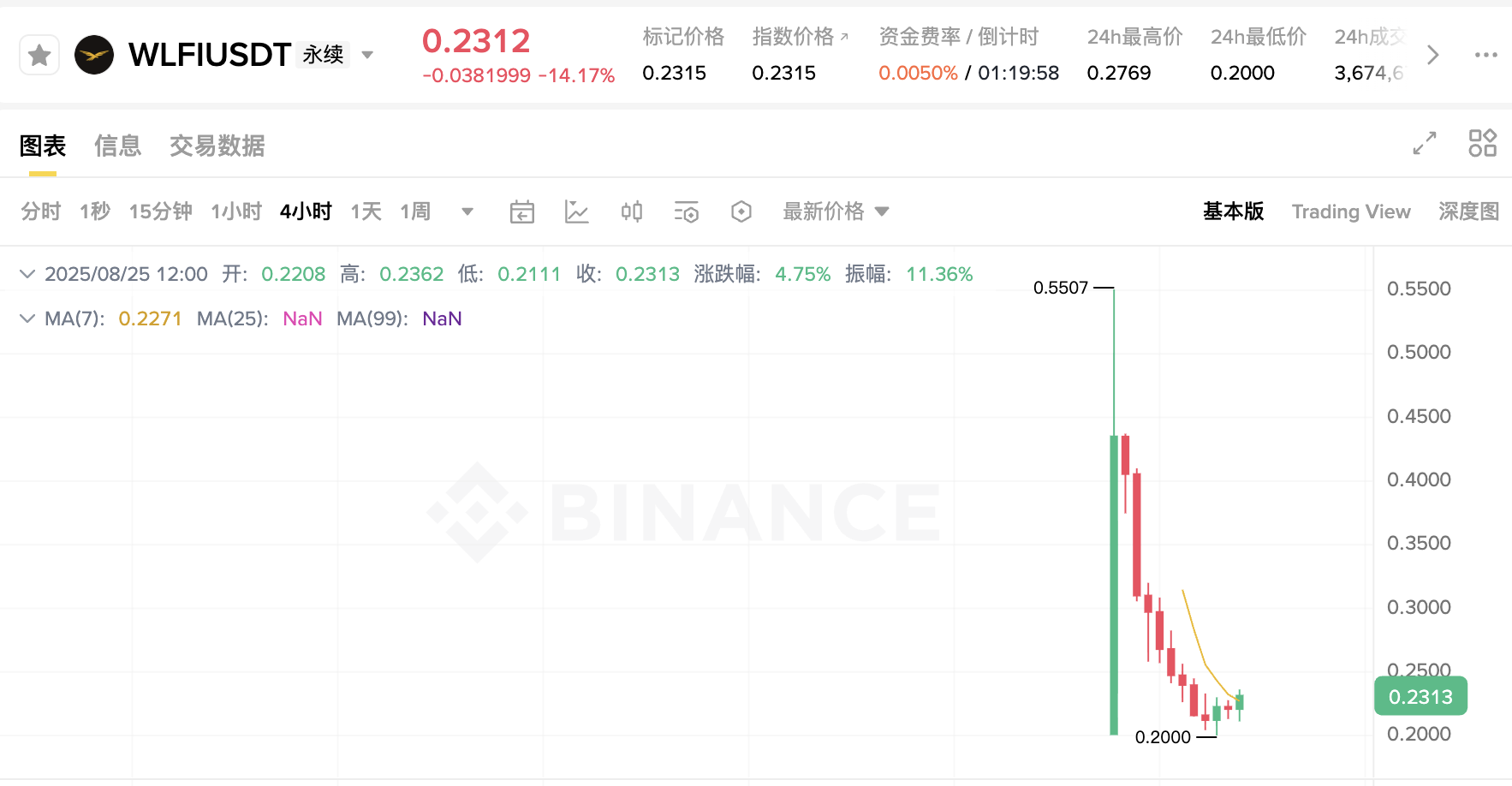
上线消息发布后,币安、OKX和Hyperliquid等交易所宣布上线WLFI/USDT永续合约盘前交易,当天合约价格一度冲高至0.55美元,对应全流通估值约550亿美元。但随后价格快速回落,盘前交易价格最高下跌超60%,跌至约0.2美元。

WLFI由特朗普家族于2024年9月宣布推出,迄今共公开进行了两轮募资。首轮预售于2024年10月15日开启,当时WLFI宣布以每枚0.015美元的价格向白名单投资者释放200亿枚代币。但市场反应平平,首日销售约6.1亿枚WLFI(剩余194亿枚待售),销售额仅为915万美元。由于市场反应疲软,WLFI还在次月提交申请,将筹资目标大幅下调90%,调整后仅计划募集3000万美元。


不过自特朗普赢得美国大选后,WLFI代币销售开始加速,最终在2025年1月20日前售罄了200亿枚代币,累计获得约3亿美元收入。期间,波场创始人孙宇晨进行了3000万美元和4500万美元的两轮投资,成为本轮募资的最大个人投资者,同时担任WLFI顾问。


2025年1月20日,恰逢特朗普就职典礼,WLFI启动第二轮预售,宣布再开放5%的代币供应量,价格提升至0.05美元。与首轮相比,本轮预售反应热烈,仅用两个月时间便于3月14日售罄,顺利完成2.5亿美元的募资目标。


而根据WLFI代币经济学显示,总供应量为1000亿枚,其中35%用于代币销售,32.5%用于社区增长和激励,30%分配给初始支持者,剩余2.5%分配给团队和顾问。从当前公募进度来看,WLFI已完成总供应量的25%,尚余10%待售。


若按照当前0.21美元的盘前交易价格计算,0.015美元的投资者浮盈约14倍,0.05美元的参与者浮盈约4.2倍。另根链上分析师Ai姨分析披露,WLFI TOP10地址的公募轮参与者累计投入7308万美元,持有总量4.63%的代币,共46.4亿枚。按当前价格计算,这部分投资者的TGE将解锁价值超1.9亿美元代币。


此外,WLFI的做市商情况也有所披露。据Ai姨分析,DWF Labs是 WLFI做市商已无悬念,大概率还会有别的做市商。数据显示,Web3Port在战略轮中获得2亿枚WLFI代币(成本0.05美元)、DWF Labs在战略轮中获得2.5亿枚代币(成本0.1美元)、ALT5 Sigma Corporation通过股权收购获得75亿枚代币(成本0.2美元)。


值得注意的是,与特朗普家族关联的DT Marks DEFI LLC可获得协议75%的净收入分配权,同时无需承担任何责任。而在公募过程中,DT Marks DEFI LLC已从原本75%持股下降至约40%。


7%代币分配提案落地存疑,WLFI与Aave各执一词


WLFI早期投资者高额收益引发热议的同时,一则关于Aave可能获得WLFI总量7%代币的传闻也让社区争议不断。WLFI团队对此予以否认,但Aave方面坚持该协议依然有效,双方各执一词。


事件可追溯到WLFI正式推出之前。WLFI当时曾透露计划在以太坊区块链上提供加密借贷服务,并在官方Telegram频道表示,他们正与Aave合作,强调这并非恶意分叉,而是希望打造推动DeFi行业发展的创新平台。
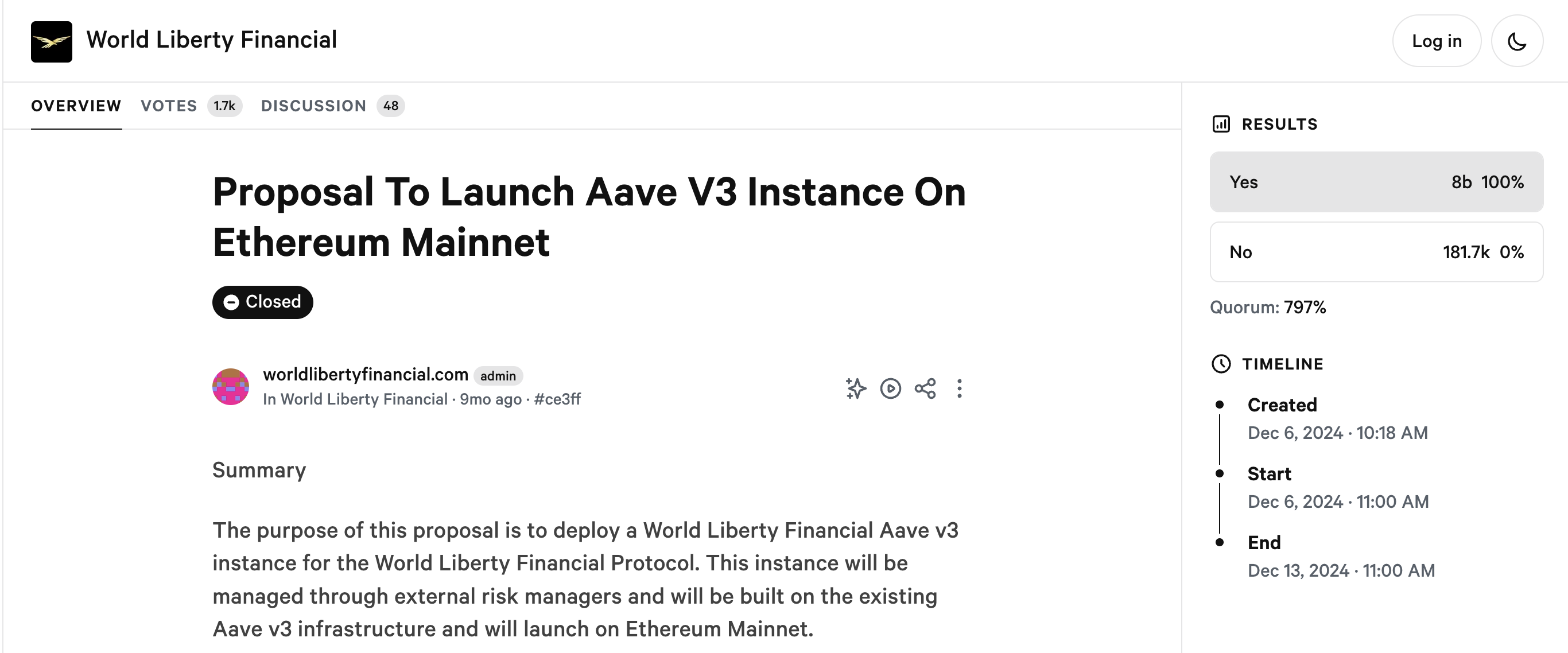

2024年12月初,WLFI提出首个社区提案,计划在以太坊主网部署WLFI协议的Aave v3借贷实例,初期支持USDC、USDT、ETH和WBTC,由Aave风险管理团队管理。提案主要目标是吸引首次进入DeFi的用户,并提升WLFI与Aave品牌的认知度。作为回报,提案指出AaveDAO将获得WLFI Aave v3实例产生的20%协议费用,并将获得约7%WLFI代币总量(70亿枚代币),用于参与WLFI未来治理、流动性挖矿及推动平台去中心化。收益分配计划通过无需信任的智能合约执行,按比例分配至AaveDAO与WLFI国库地址。该提案于2024年12月13日获得投票通过,支持率高达100%。


随着WLFI即将上线,这一提案也在近期被社区重提,直接推动AAVE价格上涨。按当前市场估值计算,Aave国库或将获得价值数十亿美元的WLFI代币,使其成为本轮周期中潜在最大受益方之一。
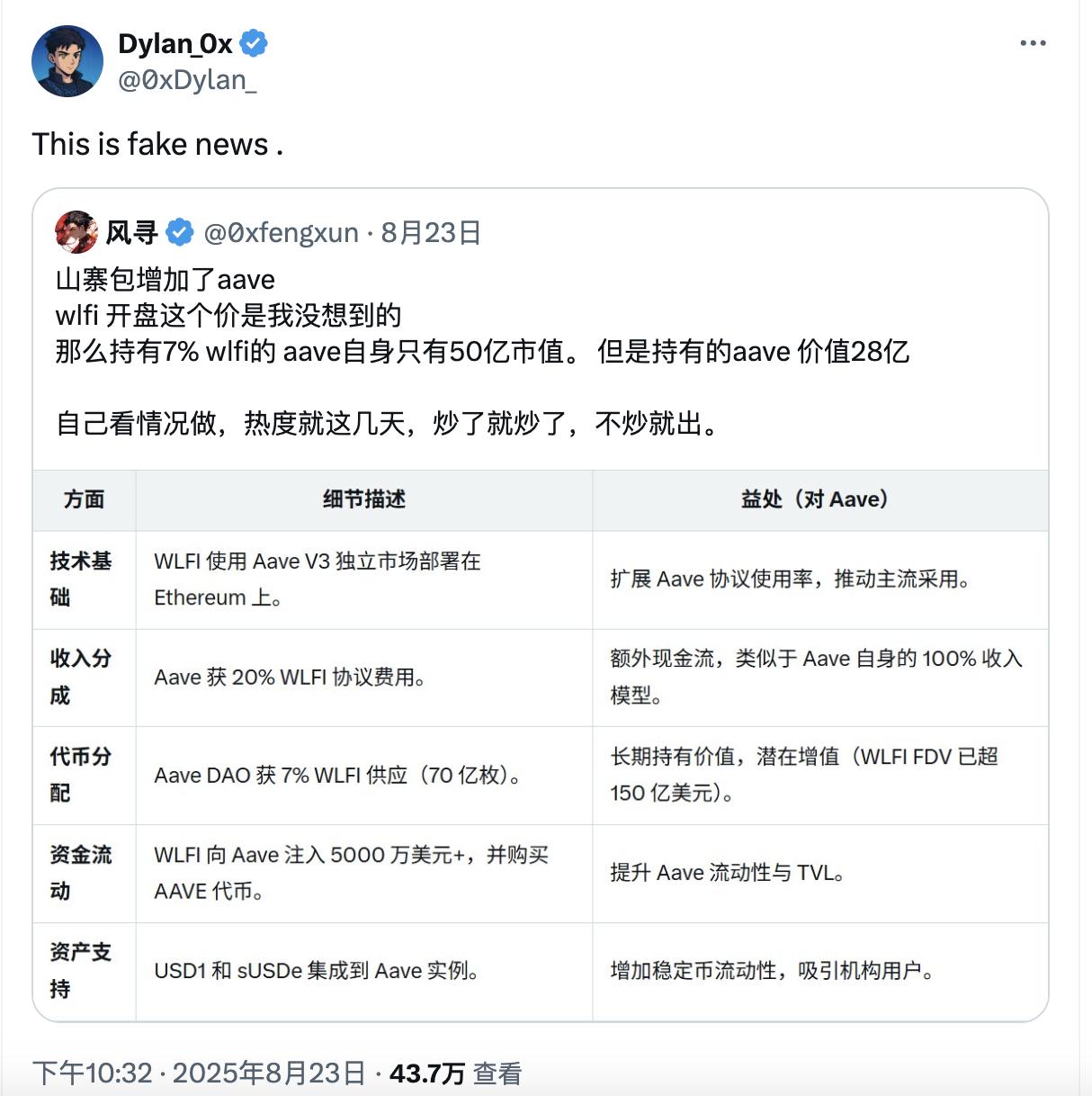

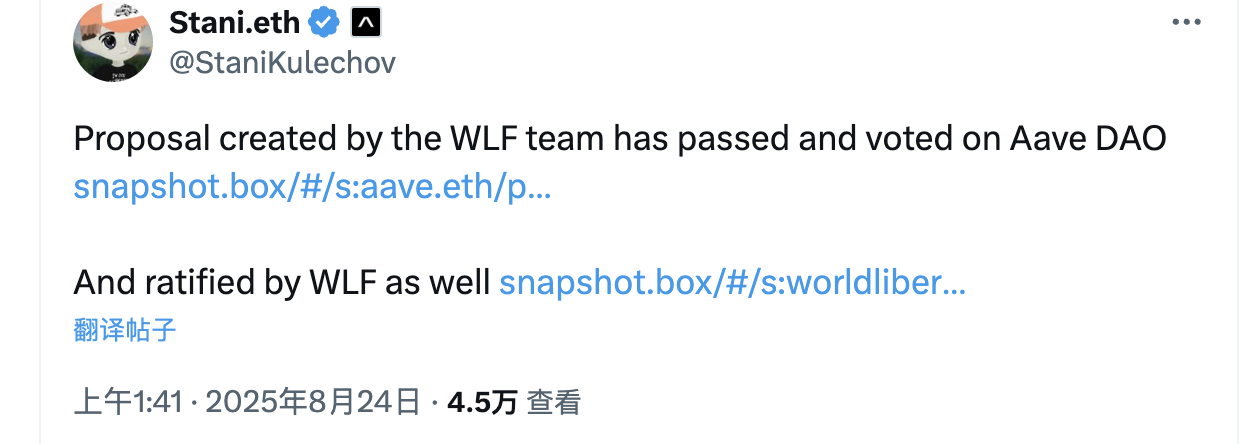
然而,这一利好消息遭到疑似WLFI Wallet团队成员否认,WLFI团队也向吴说区块链回应称言论不实,是“假新闻”。对此,Aave创始人Stani.eth坚持认为该协议依然有效,他强调这份提案是由WLFI团队创建并获得正式批准。

随着消息发酵,加密社区对这一事件争议不断,各方观点不一。加密KOL@0x_Todd指出,这是WLFI的创世提案(第一条提案),投票人数超过法定投票票数7倍,支持率高于99%。如果连创世提案最终都没有兑现,这非常不DeFi。中心化治理已经不是DeFi,治理毁约更应该踢出DeFi籍。


KOL@Luyaoyuan1则提醒,WLFI可能存在违约风险,他指出历史上类似SPK项目承诺收益大幅缩水的先例,Aave被欺骗多次。若违约支持Aave起诉WLFI。


在dForce创始人Mindao直看来,最初“20%收入分成+7%代币分配”条款设计不合理,与WLFI实际品牌和市场价值不匹配。他分析,后面剧本大概是WLFI完全弃用Aave,这样之前的合约就自然作废。同时WLFI大规模缩减代币分发份额,把分配用在激励USD1的借贷铸币,左手右手,也不吃亏,就当定向稳定币铸币运营补贴了。


“之前WLFI公售不顺利,外界对其存在割韭菜质疑,使得Aave在合作中处于强势方。然而,随着市场热情高涨、稳定币天才法案通过以及特朗普个人财务披露持157亿枚WLFI,其价值地位提升,也让WLFI不愿意和以前那样给Aave分那么多蛋糕。” @wenser2010分析指出,后续Aave可能需要做出让步,减少原有份额,或者WLFI或会推动新的提案,重新分配收益比例。至于时间长短,就看双方背后的斡旋谈判。


但Mint Ventures研究合伙人Alex Xu则指出,最开始WLFI想做的是一个基于Aave的借贷市场,但后来WLFI可能觉得借贷太不性感(虽然发了提案有过代币和利润分配方案),转向去做了稳定币。既然如此,双方的合作关系也就不存在了,WLFI官宣的金皮书也从没有过Aave的份。


尽管WLFI与Aave的合作争议尚未落定,这一事件再次暴露了链上治理的局限。虽然链上治理具有透明、去中心化等优势,但即使提案获得社区投票通过,实际兑现仍取决于各方意愿及协商结果。

İlgili Okumalar

A 10,000-Word Interpretation of the "Optical Interconnect" Industry Chain: The AI Infrastructure Bottleneck Obscured by GPU Glare

**Summary: The Rise of Optical Interconnect in AI Infrastructure** This analysis explores the critical, yet often overlooked, role of optical interconnects in large-scale AI data centers. While GPUs provide raw computational power, the efficiency of AI clusters depends heavily on high-speed data transfer between thousands of cooperating GPUs during both training and inference tasks. Copper-based electrical connections are hitting physical limits in bandwidth, distance, and power consumption. Fiber optics, using light signals, offer a superior solution with exponentially higher bandwidth and lower energy use over longer distances. This shift is driving rapid growth in the optical interconnect market. The core translation device is the pluggable optical transceiver (or module), which converts electrical signals from GPUs into optical signals for fiber transmission and vice versa. Its manufacturing involves two distinct semiconductor domains: indium phosphide (InP) for optical chips (lasers, modulators, detectors) and silicon for digital signal processing (DSP) chips. A transformative next-generation technology is Co-Packaged Optics (CPO). CPO moves the optical engine (a silicon photonic integrated circuit, or PIC) much closer to the GPU or switch inside the same chip package, drastically reducing power loss and latency. CPO necessitates an external laser source and relies on silicon photonics (using Silicon-on-Insulator/SOI wafers) for integration with silicon chips. The optical interconnect ecosystem is highly fragmented, unlike the concentrated GPU market. Key bottlenecks and players span the entire supply chain: InP substrates (e.g., AXT), epitaxial wafers (e.g., IQE), laser chips (e.g., Sivers, Lumentum, Coherent), silicon photonics foundries (e.g., Tower Semiconductor), SOI wafers (e.g., Soitec), DSP/switch chips (e.g., Broadcom, Marvell), and underlying fiber (e.g., Corning). The article posits that AI infrastructure competition is extending from "who has more GPUs" to "who can secure the scarce optical interconnect supply chain." CPO represents the largest potential growth variable, with projections suggesting it could become a market worth tens of billions of dollars by 2028. Investment opportunities vary from conservative (large, diversified players) to aggressive (small, high-beta companies focused on specific bottleneck technologies), but the sector carries significant volatility and execution risks.

marsbit23 dk önce

A 10,000-Word Interpretation of the "Optical Interconnect" Industry Chain: The AI Infrastructure Bottleneck Obscured by GPU Glare

marsbit23 dk önce

a16z: RWA Has Passed the Proof of Concept, but the Real Challenges Are Just Beginning

a16z highlights that the tokenized real-world asset (RWA) market, excluding stablecoins, has grown tenfold in under two years to roughly $340 billion. This surge is primarily driven by US Treasury bonds and gold, offering investors yield on idle stablecoins and providing institutions with more efficient settlement and collateral flows. However, the core insight is that most tokenized assets today are simply digital certificates for off-chain holdings—used for ownership and transfer but not deeply integrated into DeFi as composable financial building blocks. For instance, only about 5% of tokenized bonds ($8B) are actively used in DeFi protocols. Smaller categories like reinsurance tokens show much higher DeFi utilization (84%), indicating they were designed for on-chain composability from the start. The market remains concentrated, with US Treasuries and commodities comprising two-thirds of the total. Gold dominates the commodities segment. While Ethereum holds over half the market, activity is spreading across multiple chains like BNB Chain and Solana. Predictions for the market's future size vary widely (from $2 trillion to over $30 trillion by 2030/2034), reflecting different definitions of what constitutes tokenization. All agree on significant growth. The current market is minuscule compared to traditional finance (e.g., tokenized bonds are 0.01% of the global bond market). The key takeaway is that the initial "proof-of-concept" phase for moving familiar assets on-chain is proving successful. The next, harder challenge is moving more complex financial instruments onto blockchains and enabling true on-chain composability, where these assets become programmable components within a native digital financial system, rather than just digitized records.

marsbit1 saat önce

a16z: RWA Has Passed the Proof of Concept, but the Real Challenges Are Just Beginning

marsbit1 saat önce

The Wind of 'Proactive' AI Blows into Silicon Valley: Hark Secures $700 Million in Funding

Hark, an AI startup founded in late 2025, has raised $700 million in Series A funding at a $6 billion valuation. Led by Parkway Venture Capital with participation from NVIDIA, AMD Ventures, Intel Capital, Qualcomm Ventures, and Salesforce Ventures, the company aims to develop next-generation human-computer interfaces using a combination of proprietary foundational models and custom-built AI-native hardware. Founded by serial entrepreneur Brett Adcock, Hark envisions a system of multimodal devices equipped with agentic capabilities, end-to-end voice models, and personalized memory. This "active" AI approach seeks to move beyond passive chatbots, creating collaborative companions that anticipate needs and interact naturally within the real world. Adcock's experience with Figure, a humanoid robotics company, informs this hardware-focused venture. The article argues that while current AI is powerful, it remains confined to screens and traditional interfaces like chat. The next paradigm shift requires dedicated hardware that is always-on, possesses persistent memory, and enables intuitive interaction, potentially rivaling the impact of the iPhone. Hark is assembling a team with talent from Apple, Meta, Google, and Tesla to tackle this complex engineering challenge across models, hardware, and interaction design. Finally, the piece suggests Chinese startups may have an advantage in this "active" AI hardware space due to strong manufacturing ecosystems, a vast domestic market, and supportive government policies, framing the competition as one that requires integrated progress in models, operating systems, and devices.

marsbit1 saat önce

The Wind of 'Proactive' AI Blows into Silicon Valley: Hark Secures $700 Million in Funding

marsbit1 saat önce

İşlemler

Spot
Futures

Popüler Makaleler

AAVE Nasıl Satın Alınır

HTX.com’a hoş geldiniz! Aave Protocol (AAVE) satın alma işlemlerini basit ve kullanışlı bir hâle getirdik. Adım adım açıkladığımız rehberimizi takip ederek kripto yolculuğunuza başlayın. 1. Adım: HTX Hesabınızı OluşturunHTX'te ücretsiz bir hesap açmak için e-posta adresinizi veya telefon numaranızı kullanın. Sorunsuzca kaydolun ve tüm özelliklerin kilidini açın. Hesabımı Aç2. Adım: Kripto Satın Al Bölümüne Gidin ve Ödeme Yönteminizi SeçinKredi/Banka Kartı: Visa veya Mastercard'ınızı kullanarak anında Aave Protocol (AAVE) satın alın.Bakiye: Sorunsuz bir şekilde işlem yapmak için HTX hesap bakiyenizdeki fonları kullanın.Üçüncü Taraflar: Kullanımı kolaylaştırmak için Google Pay ve Apple Pay gibi popüler ödeme yöntemlerini ekledik.P2P: HTX'teki diğer kullanıcılarla doğrudan işlem yapın.Borsa Dışı (OTC): Yatırımcılar için kişiye özel hizmetler ve rekabetçi döviz kurları sunuyoruz.3. Adım: Aave Protocol (AAVE) Varlıklarınızı SaklayınAave Protocol (AAVE) satın aldıktan sonra HTX hesabınızda saklayın. Alternatif olarak, blok zinciri transferi yoluyla başka bir yere gönderebilir veya diğer kripto para birimlerini takas etmek için kullanabilirsiniz.4. Adım: Aave Protocol (AAVE) Varlıklarınızla İşlem YapınHTX'in spot piyasasında Aave Protocol (AAVE) ile kolayca işlemler yapın.Hesabınıza erişin, işlem çiftinizi seçin, işlemlerinizi gerçekleştirin ve gerçek zamanlı olarak izleyin. Hem yeni başlayanlar hem de deneyimli yatırımcılar için kullanıcı dostu bir deneyim sunuyoruz.

388 Toplam GörüntülenmeYayınlanma 2024.12.11Güncellenme 2025.03.21

AAVE Nasıl Satın Alınır

Tartışmalar

HTX Topluluğuna hoş geldiniz. Burada, en son platform gelişmeleri hakkında bilgi sahibi olabilir ve profesyonel piyasa görüşlerine erişebilirsiniz. Kullanıcıların AAVE (AAVE) fiyatı hakkındaki görüşleri aşağıda sunulmaktadır.

活动图片