Washington’s Fall Agenda Puts Crypto and Banking Rules in Play

bitcoinist2025-08-19 tarihinde yayınlandı2025-08-19 tarihinde güncellendi

Özet

The GENIUS Act sets the stablecoin baseline. But when the House and Senate reconvene in early September, Washington will wade...

Trusted Editorial content, reviewed by leading industry experts and seasoned editors. Ad Disclosure

The GENIUS Act sets the stablecoin baseline.

But when the House and Senate reconvene in early September, Washington will wade into one of the most consequential financial policy seasons in years – one that could redraw lines between banks, fintechs, and crypto firms.

The GENIUS Act might be revised. The CLARITY Act goes to the House. The SEC and CFTC weigh in on various regulations – and of course, the courts will have their say as well.

As lawmakers and regulators advance a mix of statutes and rules that touch everything from stablecoins and token classification to open banking and federal payments, Washington’s fall agenda could set crypto’s course for the foreseeable future.

And it could also set up these three of the best crypto presales for instant post-launch success.

Will GENIUS Be Revised?

In July, the GENIUS Act became the first federal framework for payment stablecoins. It requires full-reserve backing, AML/BSA compliance, and empowers Treasury and the OCC on oversight.

Early commentary noted several potential loopholes and complications with the act. Perhaps that’s to be expected with a ‘first-ever’ piece of legislation, but it has already highlighted the need for further clarification – and perhaps additional legislation. Agencies now must write implementing rules, and Treasury has opened a public comment process through mid-October.

In the meantime, the ICBA wrote an open letter to the US Congress highlighting flaws with the GENIUS Act that could undermine key provisions in US interstate commerce.

Banking trade groups (ABA, BPI, ICBA, and others) support a federal framework but want Congress to repair perceived GENIUS Act loopholes.

Those include treatment of interest/yield on stablecoins via affiliates, limits on non-financial company issuers, and a controversial interstate provision (often cited as Section 16(d)) that they say undermines the dual banking system.

Expect lobbying to intensify as committees take up follow-on technical fixes.

The CLARITY Act Is Up Next as Agencies Push Modernization

The CLARITY Act (Digital Asset Market Clarity Act of 2025) would define ‘digital commodities,’ create CFTC registration categories (exchanges, brokers, dealers), and help settle the SEC–CFTC divide on many tokens.

The bill has administration backing and is expected to move when Congress returns. Passage would give market participants clearer lanes for token listings, custody, and disclosures.

Regulators aren’t waiting on Congress. The SEC and CFTC continue to stake out interpretation territory on what is a security vs. a commodity. At the same time, the CFPB’s Open Banking Rule (Section 1033) has hit a dramatic twist – the Bureau, under new leadership, moved to have its own rule vacated and is preparing a narrower rewrite.

In the meantime, the fate of the law remains in the courts’ hands. They’ve stayed the rule during the reset, leaving fintech data-sharing rights and obligations in limbo for the fall.

Meanwhile, the White House and Treasury kicked payments modernization into high gear: paper checks for most federal payments end on September 30, 2025.

Over 3M people are employed by the federal government, not to mention contractors, consultants, and everyone else receiving payments.

The end of paper checks should rapidly push more Americans toward faster, digital financial rails. That’s the perfect setting to launch a crypto presale.

Bitcoin Hyper ($HYPER) – Hybrid Layer 2 Expands Bitcoin For DeFi, Faster Payments

Bitcoin Hyper ($HYPER) gives Bitcoin users faster payments, lower fees, and native on-chain staking – all through a Bitcoin Canonical Bridge that deposits wrapped $BTC on the Solana Virtual Machine (SVM).

It’s an innovative architecture that uses SVM’s lightning-fast payment resolution and ability to execute the complex smart contracts necessary for DeFi. At the same time, Bitcoin Hyper preserves final settlement for the Bitcoin original layer, leveraging the OG crypto’s rock-solid security and dependability.
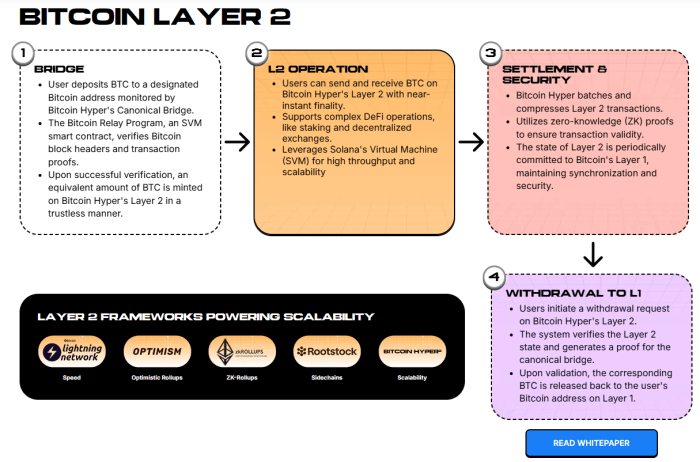
Bitocin Hyper architecture

What is Bitcoin Hyper? It’s the next evolution of Bitcoin, pushing the ecosystem forward without losing the unique features that make $BTC such a great store of value.

Read all the details in our guide on how to buy Bitcoin Hyper, and check out the project whitepaper for more info. We think the project’s price could skyrocket from the current $0.012755 to $0.32 by the end of 2025.

Visit the Bitcoin Hyper presale to learn more.

SUBBD Token ($SUBBD) – Unlock $85B Content Creation Market

SUBBD Token applies one red-hot market – crypto – to another – content creation. By placing a content creation platform on-chain, SUBBD unlocks new ways for fans and creators to interact, using $SUBBD as a utility token.
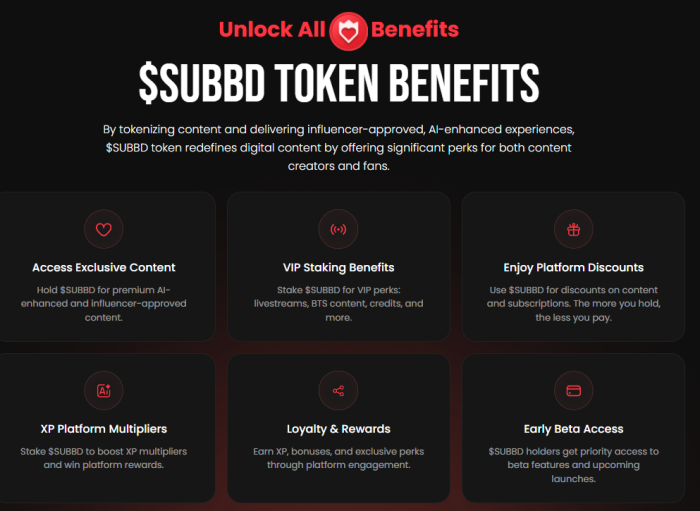
SUBBD token benefits

Platform staking benefits, platform discounts, early access and behind-the-scenes content – everything is possible to token holders with $SUBBD.

The platform also features a full suite of advanced AI content management tools. Human creators can deploy AI influencers, use AI content workflows, and create AI livestreams to boost their own content.

The content creation market is already blisteringly hot, valued at $85B – bigger even than the crypto meme coin market and the best meme coins. That’s one reason we predict $SUBBD’s price could reach $0.301, a 435% increase from its current $0.056225.

The presale has already brought in well over $1M, so check out how to buy SUBBD.

Learn exactly what SUBBD is, then visit the presale page now.

BlockDag ($BDAG) – Directed Acrylic Graphs Achieve True Utility

DAGs – Directed Acrylic Graphs – power BlockDag, one of crypto’s most advanced Layer-1 blockchains. It’s a security-focused ecosystem with the Bitcoin-inspired Proof-of-Work consensus mechanism.

Proof-of-Work, and Blockdag’s security-focused approach, goes a long way to explain why $BDAG has experienced one of the best crypto presales of 2025, raising an incredible $376M.
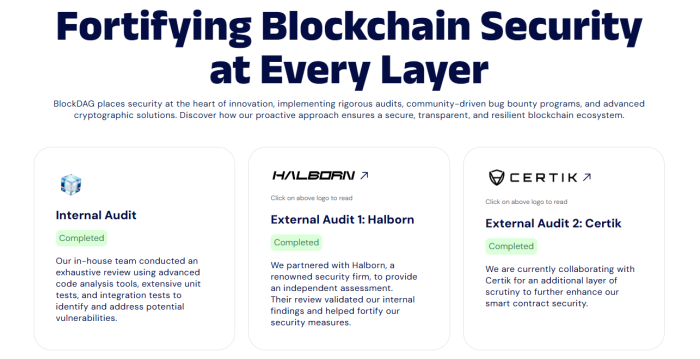
BDAG blockchain security

With 150B coins, $BDAG’s tokenomics prioritizes mining operations, then the presale. Hold $BDAG to pay network fees and stake it to earn more on your tokens.

The testnet is now live as BlockDAG nears the conclusion of the presale.

Key Dates in Fall Agenda as Best Presales Launch

  • Early September: Congress returns; watch for CLARITY Act markups and hearings on GENIUS Act fixes.
  • End of September: Federal paper checks mostly end.
  • By Oct. 17: Treasury comment deadline on GENIUS Act implementation.
  • Throughout the fall, there will be court updates and CFPB actions on 1033, SEC/CFTC guidance shaping token classification, and proposed regulations on AI in digital finance.

The US government, under President Donald Trump and a wave of crypto-friendly appointees, could be about to transform the US economy. Digital initiatives and pro-crypto policies are just the beginning, and $SUBBD and $HYPER look ready to profit.

Do your own research – nothing here is financial advice.

Editorial Process for bitcoinist is centered on delivering thoroughly researched, accurate, and unbiased content. We uphold strict sourcing standards, and each page undergoes diligent review by our team of top technology experts and seasoned editors. This process ensures the integrity, relevance, and value of our content for our readers.

As a crypto writer, Bogdan’s responsibilities are split between researching and writing articles and entertaining the team with his humor bordering on the politically incorrect, an aspiring Bill Burr, if you will. Thanks to his 12+ years of writing experience in just as many fields, including tech, cybersecurity, modelling, fitness, crypto, and other topics-that-shall-not-be-named, he's become a genuine asset to the team. While his position as a senior writer at PrivacyAffairs thought him valuable lessons about the power of self-management, his entire writing career was and is an exercise in self-improvement. Now, he's ready to sink his teeth into crypto and teach people how to take control of their own money on the blockchain. With fiat as an eternally devaluing currency, Bitcoin and altcoins seem like the best-fitting alternative for Bogdan. Bogdan’s biggest professional accomplishment, aside from securing a position as a main writer for Bitcoinist, was his 5-year run as a writing manager at Blackwood Productions, where he coordinated a team of four writers. During that time, he learned the value of teamwork and that of creating a working environment that breeds efficiency, positivity, and friendship.

İlgili Okumalar

Opinion: AI Bubble Bursts, Bitcoin and Other Risky Assets Are the First to Be Impacted

BIS Warns AI Investment Boom Could Trigger Market Stress, Impacting Bitcoin First The Bank for International Settlements (BIS) warns that a potential bursting of the "AI bubble" could tighten liquidity and severely impact risk assets like Bitcoin in the near term. Major tech firms are projected to spend over $1 trillion on AI infrastructure in 2025-2026. The BIS cautions that if returns fail to meet expectations, a sudden withdrawal of financing could turn this investment boom into a prolonged bust, creating ripple effects across financial markets. While AI holds long-term economic promise, the current scale and speed of investment, coupled with intense competition and physical bottlenecks (e.g., semiconductors, power grids), mirror historical bubbles. The report highlights that the AI funding web—spanning corporate debt, private credit, and complex vendor agreements—makes systemic risks harder to see. A disappointment in AI adoption could transmit stress through this chain, widening credit spreads and pressuring weaker borrowers. For Bitcoin, the initial reaction to such a market shock would likely be defensive. As liquidity tightens, investors typically sell liquid assets first, and Bitcoin often trades in line with other risk assets during portfolio de-risking. Recent correlations, like Bitcoin's drop following a sharp decline in South Korea's stock market, support this view. However, the longer-term outcome for Bitcoin depends on the policy response. If an AI-driven credit crunch forces central banks to inject liquidity and ease policy eventually, it could reignite Bitcoin's narrative as a hedge against monetary debasement. Yet, traders betting on this outcome may first have to endure significant market volatility and potential price declines.

marsbit38 dk önce

Opinion: AI Bubble Bursts, Bitcoin and Other Risky Assets Are the First to Be Impacted

marsbit38 dk önce

South Korea Reaps Riches, America Turns Hostile

The US has filed a collective antitrust lawsuit in California against Samsung, SK Hynix, and US-based Micron, alleging they colluded to create a "RAMpocalypse" by slashing traditional DRAM production and raising prices 700% over four years amid the AI boom. This lawsuit targets the heart of the AI supply chain: High Bandwidth Memory (HBM), critical for Nvidia's GPUs. Currently, SK Hynix (57%), Samsung (22%), and Micron (21%) dominate global HBM production. The case highlights a deeper US concern: in the AI era, South Korea, through its HBM dominance, is capturing an estimated 35% of global AI profits, second only to the US (49%). SK Hynix's operating profit margin recently hit a record 72%. In response to the lawsuit, South Korea announced a massive $800 trillion won investment to build four new chip plants, doubling down on its strategic position. Analysts see the lawsuit not merely as a consumer price issue but as strategic pressure. It aims to support Micron's US manufacturing expansion (subsidized by the CHIPS Act) and secure America's share of AI profits by bringing more HBM production onshore. However, South Korea's rapid execution and massive cash flow from current HBM sales give it a significant speed advantage over US build-out timelines. The conflict underscores a fundamental shift: AI infrastructure like GPUs and HBM is becoming a new form of strategic national resource, akin to oil. While Nvidia and Korean memory giants are interdependent, the struggle over profit distribution and industrial sovereignty in this new landscape is just beginning. This lawsuit may be the first major skirmish in the AI resource wars.

marsbit51 dk önce

South Korea Reaps Riches, America Turns Hostile

marsbit51 dk önce

İşlemler

Spot
活动图片