Crypto fraud alert! All you need to know about the latest ‘fake law firm’ scam

ambcrypto2025-08-17 tarihinde yayınlandı2025-08-18 tarihinde güncellendi

Key Takeaways

Crypto boom has fueled both record ETF inflows and rising scams, with fraudsters now impersonating law firms to exploit victims. Experts urge extreme caution, verification, and vigilance as scams grow more sophisticated.


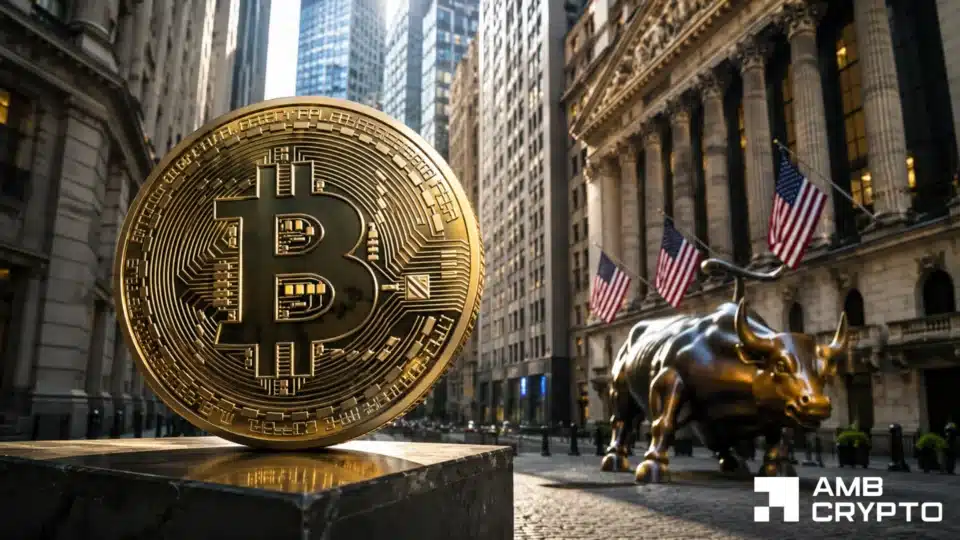
The crypto market has been seeing explosive momentum lately, with Bitcoin [BTC] soaring to an all-time high of $124,500 and Ethereum [ETH] hitting $4,500. This, before both cryptos pulled back to $118,247 and $3,247, respectively.

The aforementioned rally comes alongside record-breaking inflows into Bitcoin and Ethereum ETFs – A sign of growing institutional interest and accelerating global adoption.

And yet, as enthusiasm rises, so do risks. In fact, scammers are exploiting this boom with increasingly sophisticated schemes.

Rise in crypto scams

Among the latest threats are fictitious law firms that prey on victims of crypto scams. They lure them with promises of fund recovery while layering multiple tactics of exploitation.

Common warning signs include impersonating real lawyers or government affiliates, using fictitious agencies like the International Financial Trading Commission (INTFTC), and demanding payments via crypto or gift cards.

They may also claim access to victims’ past wire transfers, say funds are stored in foreign banks, or push victims into WhatsApp groups with fake “attorneys.”

Often, they avoid video calls, refuse to show licenses, and reroute payments through third parties.

Community reactions

As one X user, Verdigo93, noted, these scams often exploit victims’ desperation for fund recovery, making vigilance critical.

“95% of people in crypto will quit. Not because of scams. Not because of bear markets. But because they have no patience. If you can survive the boredom..You’ll survive the volatility.”

Echoing similar sentiments, another user added

“Be careful with presale ‘leaks’ – most crypto projects promising celebrity connections end up being scams.”

Hence, to stay safe, experts recommend a “Zero Trust” approach, while verifying every detail before engaging. It’s also important to always request video proof, licenses, and direct verification from government agencies.

Keep records of interactions, demand notarized ID proof, and never rely on unsolicited contacts.

What else should you know?

As expected, the surge in crypto adoption has been accompanied by an equally sharp uptick in sophisticated fraud.

From fake recovery law firms to YouTube takeovers and AI-driven deepfakes of industry leaders, scammers are exploiting every opportunity to prey on investors’ trust.

The recent case of Do Kwon highlights the legal consequences of large-scale crypto misconduct. However, the ongoing wave of impersonation schemes around Ripple underscores a harsher truth – Bad actors are evolving as fast as the market itself.

For investors, vigilance is no longer optional. It’s the only defense against becoming the next target.
Share

İlgili Okumalar

In the AI Era, What's Left for Bitcoin?

As Bitcoin falls below $60,000, the author reflects on the relationship between AI and Bitcoin, seeing them as two sides of the same coin. In the AI era, the cost of generating content has plummeted, making fake text, images, and videos increasingly easy and cheap to produce. This has led to a fundamental shift: while AI dramatically lowers the cost of information production, it also undermines trust and authenticity online. What becomes truly valuable is not more content, but the ability to verify what is real—"verifiability." This perspective offers a new lens for Bitcoin. Its massive energy consumption, often criticized as wasteful, is reinterpreted. While AI burns energy to enhance "capability" and efficiency, Bitcoin burns energy to produce "verifiability." Its purpose is not to be trusted but to enable a system where no trust in intermediaries—banks, platforms, or developers—is needed. Every transaction and the entire ledger's history is secured by cryptography and a decentralized network of nodes, making it independently verifiable. AI cannot forge a transaction on the Bitcoin network because the system is designed for proof, not generation. The author draws a historical parallel to the Renaissance: the printing press drastically reduced the cost of copying knowledge, while double-entry bookkeeping reduced the cost of trust in commerce. Today, AI is the new printing press, reducing content creation costs to near zero. Blockchain, and Bitcoin as its pioneer, may be the modern equivalent of double-entry bookkeeping—a foundational technology for verifying digital asset ownership and historical records without centralized authorities. Thus, AI and blockchain are not competitors. AI lowers the cost of creation; blockchain lowers the cost of verification. In an age where AI can generate anything, true scarcity may lie not in more content, but in independently verifiable facts. Whether the market will reprice Bitcoin accordingly remains uncertain, but its core value proposition as a "machine for producing verifiability" becomes strikingly relevant.

marsbit11 dk önce

In the AI Era, What's Left for Bitcoin?

marsbit11 dk önce

In the Age of AI, What's Left for Bitcoin?

Author: Sevclub, Seven Research Amid Bitcoin's recent drop below $60k, the author reflects on a growing sense that AI and Bitcoin are two sides of the same coin. Today, encountering any content triggers a new default question: "Was this made by AI?" The cost of generating convincing text, images, and video is now negligible. While the internet lowered information *distribution* costs, AI is crashing information *production* costs to near zero. The consequence is a flood of content where truth and falsehood are increasingly indistinguishable. In this environment, what becomes truly valuable is not more information, but the ability to verify what is real—"verifiability." This reframes the common criticism that Bitcoin "wastes electricity." AI consumes power to produce "capability" (e.g., more powerful models). Bitcoin consumes power to produce something else: "verifiability." Bitcoin's core purpose isn't about belief or trust in any institution, developer, or even its creator. It's about enabling independent verification. Every bitcoin's origin, every transaction, and the integrity of the entire ledger are secured by mathematics, cryptography, and a global network of nodes. AI can fabricate convincing media, but it cannot falsify a transaction on the Bitcoin network. The expended energy makes篡改历史 (tampering with history) prohibitively expensive, purchasing a globally verifiable ledger. The author draws a historical parallel to the Renaissance. The printing press drastically reduced the cost of copying knowledge, while double-entry bookkeeping reduced the cost of trust in commerce—one enabled creation, the other verification. Today, AI is the new printing press, driving content production costs toward zero. The question becomes: what is this era's "double-entry bookkeeping"? Blockchain appears to be the leading candidate. It doesn't verify which news is true or which image is real, but it provides a foundational layer for independently verifying asset ownership and historical records in the digital realm without centralized authorities. Therefore, AI and blockchain are not in competition. AI lowers the cost of *generation*. Blockchain (and Bitcoin as a prime example) lowers the cost of *verification*. One creates, the other proves. Whether Bitcoin ultimately succeeds remains uncertain, facing potential challenges from quantum computing, regulation, and technical evolution. However, the author now sees it less as a "machine for making bitcoin" and more as a "machine for making verifiability." In an age where AI can generate anything, true scarcity may no longer be "more content," but "more independently verifiable facts." Whether the market will price this accordingly is a separate question.

链捕手19 dk önce

In the Age of AI, What's Left for Bitcoin?

链捕手19 dk önce

İşlemler

Spot
活动图片