韩国稳定币政策:谁在真正受益?

marsbit2025-08-10 tarihinde yayınlandı2025-08-11 tarihinde güncellendi

韩国

事后看来一切都很明显!

又是我,再次吐槽韩元稳定币。

但今天我终于搞明白了,为什么我们的“掌控者”如此热衷于推广稳定币。

我想我已经发现他们这一切背后的真正动机了!

我们先来看看《金融时报》的报道:

曾任经济与财政部第二副部长的安道杰 (Ahn Do-geol)最近与企划财政部、韩国银行、金融服务委员会、韩国资本市场研究所和其他相关机构组成了一个工作组,起草一份关于韩元计价稳定币的法案。

(…)

安道杰的办公室计划在法案中不仅涵盖稳定币发行方的基本资格和许可要求,还将纳入有关抵押资产要求、货币政策管理措施、外汇交易监管以及用户保护机制的条款。

韩国资本市场研究院的高级研究员黄世云(Hwang Se-woon),作为安安道杰韩元稳定币特别工作组的一员,强调只有符合严格资格标准的实体才应被允许发行稳定币,并且发行方的资格应通过许可制度授予。


TLDR:发行韩元稳定币很可能需要政府的许可

那么,谁最有可能获得政府的批准呢?可能是与政府关系密切的人?或者是那些已经暗示正在为此做准备的成熟企业?

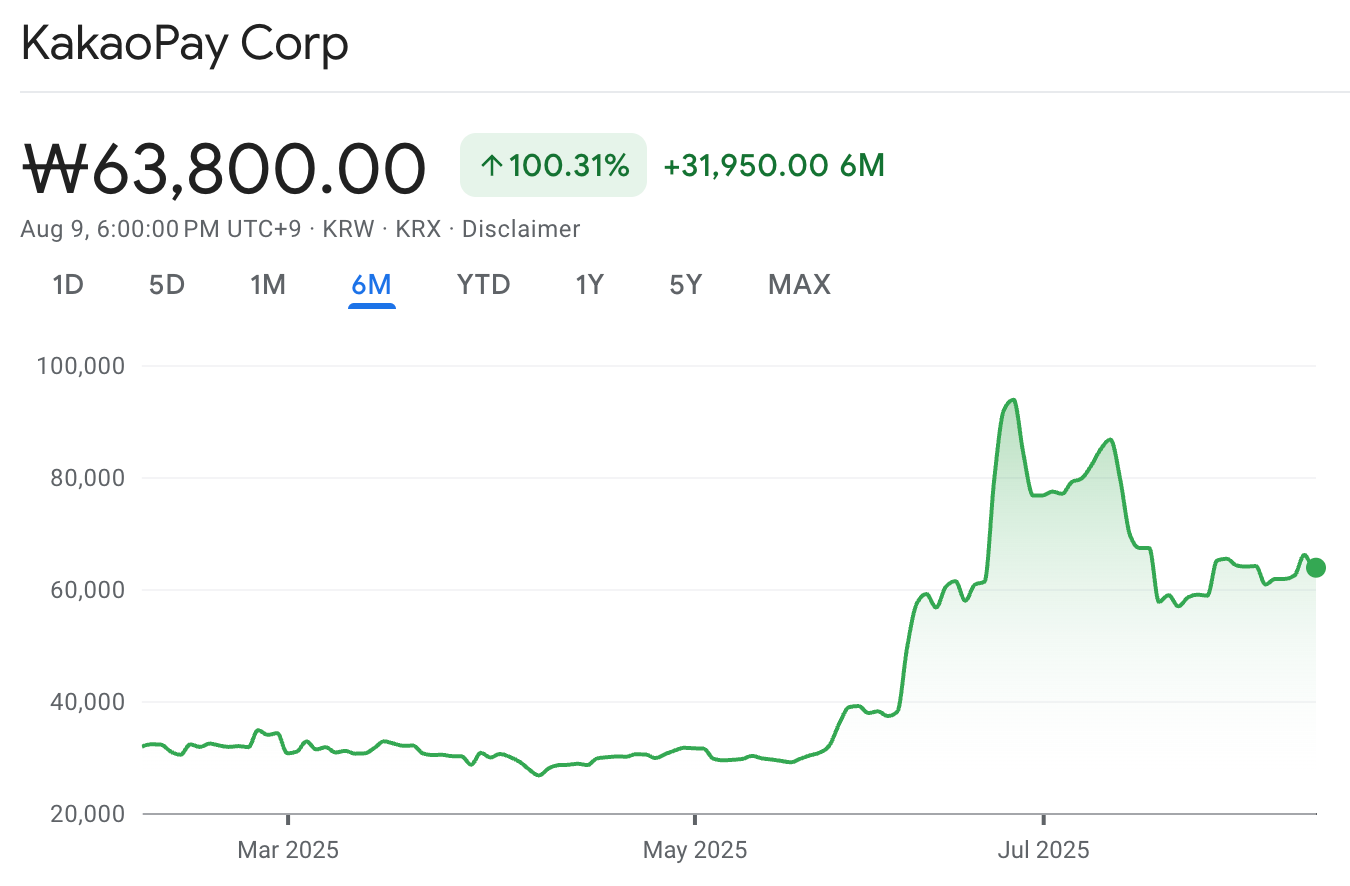
目前还没有人真正知道这项仓促政策的最终赢家会是谁,但市场似乎已经在某些名字上押注得非常积极了。
韩国

KakaoPay 是韩元稳定币潜在受益者中的显而易见的候选者之一,毕竟它是韩国最大的支付应用之一。

随着 KakaoPay走在前列,Kakao集团正计划部署自己的银行KakaoBank ,进一步推动其稳定币的梦想。

看来韩国的加密玩家们又要“吃饱了”,而那只“看不见的手”似乎在默默地发挥作用。

但这只手真的看不见吗?还是说对某些人来说,它其实是“看得见”的?


感谢4K摄像头,让那只“看不见的手”变得清晰可见

揭露那些宣称自己不持有证券却可能涉及内幕交易的民选官员。

韩国

图:韩国民主党议员李春锡(Lee Chun-seok)在国会以他人名义进行股票交易。

韩国民主党议员李春锡(Lee Chun-seok)在国会全体会议期间被拍到通过手机上的证券交易应用操作股票交易,例如交易Naver股票。问题在于,照片中的账户名称并非“李春锡”,而是他的助手车某(Mr. Cha)。

(…)

虽然在过去10个月内拍摄了两张类似的照片,但截至去年12月31日,李议员的资产披露声明中表明,他本人及其家属均未持有任何股票(证券)。根据《金融交易实名制法》,所有金融交易必须以真实姓名进行。任何人若以他人名义进行交易以达到非法目的,例如隐匿资产,可能面临最高五年监禁或最高5000万韩元的罚款。

——摘自《中央日报》(The Joongang)

这经典的“我才不在乎背后有能125倍变焦的摄像头呢,让我看看这些股票涨得怎么样,同时投个赞成票”真的让我无语了。

虽然目前尚无定论他是否真的涉及内幕交易,但仅仅是他用助手账户进行交易这一事实,就已经散发着犯罪的气息。

说到犯罪,很多事情都打着“教育内容”的旗号在进行。
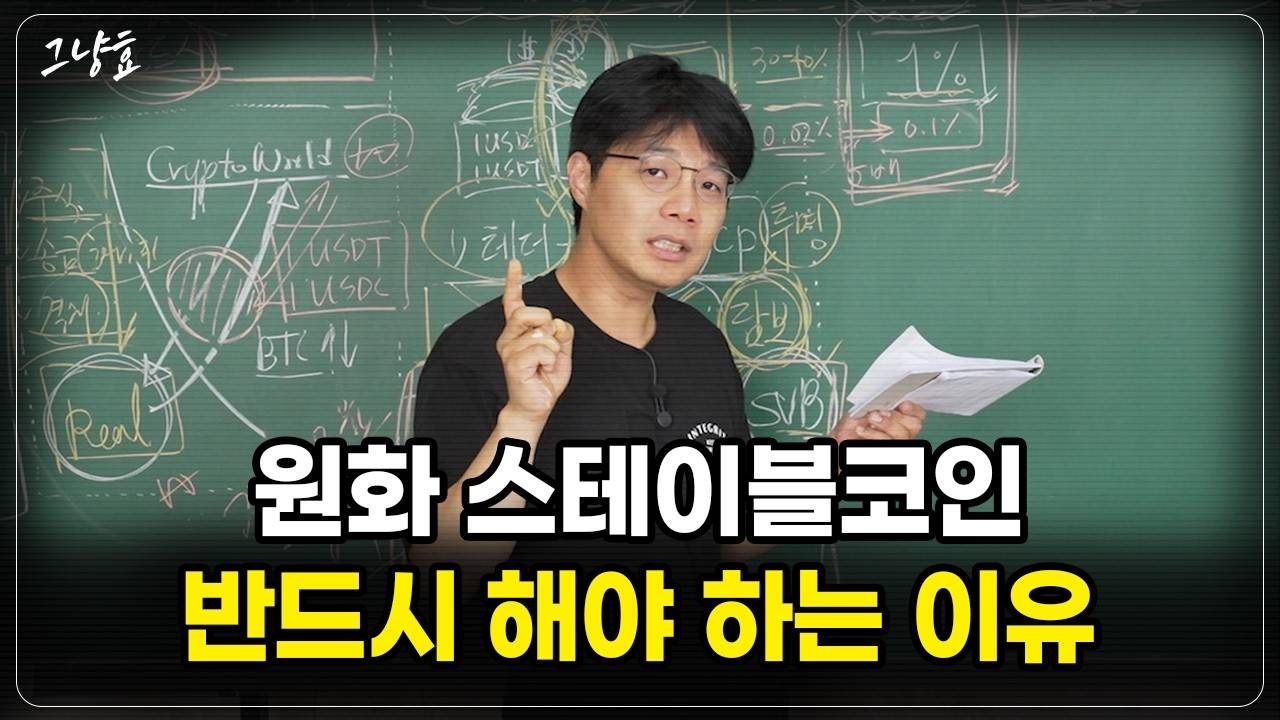
韩国

原视频链接:点击此处

在上述视频的 17:06 时间点,讲述者声称韩流(K-Pop)和韩国文化(K-Culture)可能是韩元稳定币的一个良好应用场景,并重复了那些试图推动相关立法的政治人物的论点。

然而,这段视频真正令人震惊的并不是视频内容本身,而是当你查看评论区时,发现观众对频道主表达的全是失望之情:

  • “你怎么了?是在试图竞选吗?”
  • “看来我之前一直高估了孝锡(Hyoseok)……”
  • “这是怎么回事?政府是不是威胁你发这个视频了?哈哈……嗯。”

然而,看到评论区对这种“洗脑”企图表达不满的声音,反而让我感到一丝恐惧,因为我突然意识到,这些提出质疑的人可能只是这个国家中的绝对少数。

大多数人甚至完全不关心稳定币是什么,也不在意它如何运作。只有具备一定金融知识的人才有能力去关注并解决这些问题。

现任政府的支持率高达65%。当然,这和那张免费的100美元消费券绝对没有关系!

只要继续撒钱,或许他们最终真的能达到自己的目标。

我们都会成功。

İlgili Okumalar

Three Years Later: Looking Back at My Predictions About ChatGPT in 2023

Three Years Later: Revisiting My 2023 Predictions on ChatGPT In March 2023, shortly after ChatGPT's launch, I made 20 predictions about its future. Now, in mid-2026, I've used AI agents to fact-check each one against the latest data. Overall, most major directional forecasts were correct, with only one outright error (incorrectly stating GPT-4 had 100 trillion parameters). Key successes included predicting that RAG and retrieval architectures would become the standard for handling knowledge and hallucinations, that natural language interfaces (LUI) would create a massive new industry layer beyond the models themselves, and that China would develop viable large language models, significantly closing the performance gap with Western counterparts within about three years. Predictions about the absence of mass unemployment, the rise of a new "robot network" for agent communication, and ChatGPT not possessing consciousness also held true in their core arguments. However, the "devil was in the details." Errors frequently involved specific numbers, timelines, or overlooking distributional effects. I tended to overestimate the speed of adoption (e.g., for agent networks) while underestimating the ultimate scale of capabilities or costs (e.g., AI winning IMO gold without tools, or the extreme capital required for frontier models). Other misjudgments included: underestimating how AI would reinforce, not dissolve, information filter bubbles; incorrectly assuming AI-generated content would easily circumvent copyright (it has instead triggered record-breaking settlements); and misidentifying where value would be captured (it accrued overwhelmingly to the compute layer, like Nvidia, not just the application or model layers). Key lessons from reviewing these predictions are: 1) Directional and mechanistic insights are far more reliable than precise numbers or absolute statements. 2) There's a consistent bias to overestimate short-term speed but underestimate long-term magnitude. 3) Errors often lie in missing distributional impacts within a generally correct aggregate trend. 4) Predictions phrased with nuance and caveats aged the best. 5) Some fundamental debates (e.g., on machine consciousness or the ultimate value chain) remain unresolved even after three years. This exercise is less about scoring the past and more about establishing rules for clearer thinking about the next three years of AI.

marsbit1 saat önce

Three Years Later: Looking Back at My Predictions About ChatGPT in 2023

marsbit1 saat önce

Three Years Later: Looking Back on My 2023 Predictions for ChatGPT

Looking Back After Three Years: Revisiting My 2023 Predictions on ChatGPT In March 2023, shortly after ChatGPT's debut and before GPT-4's release, I made over twenty predictions about AI's future based on limited information and intuition. Now, in May 2026, I revisited those forecasts using an AI-driven analysis with 41 Opus 4.8 agents to cross-reference them with the latest data. The assessment used symbols: ✅ Correct, 🟢 Mostly Correct, 🟡 Partially Correct, ❌ Incorrect. Overall, the directional judgments held up well, with only one major factual error regarding GPT-4's rumored parameter size (incorrectly cited as 100T). However, nuances and degrees of accuracy revealed more. **What Was Largely Correct:** Predictions about mechanisms and directions proved accurate. The rise of RAG (Retrieval-Augmented Generation) as the standard architecture for combating AI hallucination was confirmed, as was the transformative potential of LUI (Language User Interface) in creating a new industry layer atop GUIs. The emergence of "robot networks" (agent-to-agent communication protocols) and China's rapid catch-up in developing capable large models (closing the performance gap with top models to ~2.7%) were also on point. The analysis affirmed that LLMs lack consciousness and that the Turing Test merely measures perceived intelligence. **What Was Off Target:** Errors often involved specific numbers, over-optimistic timelines, or misjudged distributions. The prediction that value would primarily accrue to the application layer was half-right but missed NVIDIA's dominance as the profitable infrastructure layer. Forecasts about AI circumventing copyright issues and fostering a "global common ground" by averaging human viewpoints were incorrect; instead, major copyright settlements occurred and AI personalization is increasing. Estimates for model training costs ("$5-10 billion cap") were significantly off, underestimating frontier costs and overestimating replication costs. The notion that LLMs could never do complex math without tools was disproven by later models winning IMO gold. **Key Patterns from the Review:** 1. **Direction over precision:** Judgments about mechanisms and trends were more reliable than specific numbers or definitive statements. 2. **Timing bias:** There was a tendency to overestimate short-term speed but underestimate long-term magnitude and transformation. 3. **The distribution blind spot:** Aggregate-level correctness often masked uneven impacts (e.g., on young professionals' employment). 4. **The value of qualifiers:** Predictions framed with caution (e.g., "reportedly," "for now," "prototype in 2-3 years") aged better. 5. **Some debates continue:** Issues like the nature of "emergent abilities" or machine consciousness remain unresolved. This three-year review highlights that while seeing the big picture is crucial, humility regarding specifics, timelines, and disparate impacts is essential for future forecasting.

链捕手4 saat önce

Three Years Later: Looking Back on My 2023 Predictions for ChatGPT

链捕手4 saat önce

AI Bubble Warning: AI Investments Are Negative Returns for Most Tech Giants

The article issues a stark warning about a potential AI investment bubble. It notes that while the AI boom shares similarities with the TMT bubble of the late 1990s, its scale is vastly larger, currently driving 93% of U.S. GDP growth. Major hyperscale cloud providers like Microsoft, Alphabet, Amazon, Meta, and Oracle are planning to invest trillions in AI data centers over the coming years. However, calculations based on analyst projections for 2025-2030 reveal a concerning math problem: expected capital expenditure growth far outpaces projected revenue growth. Even under an extremely optimistic scenario of zero costs, the implied return on investment for most of these tech giants (except Amazon) is deeply negative. This suggests that the current trajectory could lead to one of history's largest shareholder value destruction events. The piece outlines two potential escapes: AI generating vastly more revenue than currently anticipated—a near-impossible task—or a significant cutback in the planned investment splurge. The latter scenario could trigger a domino effect, severely impacting the entire tech supply chain (from Nvidia to TSMC), potentially pushing the U.S. economy into recession, and causing a major stock market downturn. The author suggests upcoming high-profile IPOs by companies like OpenAI and Anthropic might represent a transfer of risk from early investors to public market participants. While the peak of the hype cycle might sustain investment through 2026, the fundamental financial dilemma remains unresolved, setting the stage for a potential market correction in 2027 or 2028, similar to the years following Alan Greenspan's "irrational exuberance" warning.

marsbit5 saat önce

AI Bubble Warning: AI Investments Are Negative Returns for Most Tech Giants

marsbit5 saat önce

From Tokens to Machine Labor: AI is Shifting from Tool to "Worker"

The article "From Token to Machine Labor: AI is Evolving from Tool to 'Worker'" argues that the business model for AI is shifting beyond simply selling computational resources (tokens, GPU hours) or model access. Instead, a new "machine labor market" is emerging, where the core economic transaction is the purchase of economically useful work directly performed by software. The central thesis is that AI pricing will evolve through four stages: 1) raw tokens, 2) standardized LLM capabilities (e.g., text generation), 3) industry-specific labor markets (e.g., legal review, radiology), and finally 4) a programmable results market where tasks like resolving a support ticket are bid on and priced based on outcome. In this future, buyers will care less about *which* model or GPU completes a task and more about whether the work meets specified standards for accuracy, latency, and cost. This transition reframes the impact of AI on human labor. Rather than simple replacement, it suggests a re-coordination where machines handle standardized, verifiable work, freeing humans for roles involving oversight, context management, responsibility, and final judgment. In some cases, this "last 1%" of human input becomes more valuable as it enables the other 99% to be automated. Furthermore, as AI reduces the cost of work, demand may expand, creating larger markets (e.g., 24/7 customer service) rather than just cheaper versions of existing ones. The article concludes that while infrastructure (GPUs, models, tokens) remains crucial upstream, the market is converging on a simpler, tradeable unit: machine labor that can be defined, measured, priced, and procured based on contractible specifications.

marsbit5 saat önce

From Tokens to Machine Labor: AI is Shifting from Tool to "Worker"

marsbit5 saat önce

Xiaomi MiMo's 99% Price Cut is Not Marketing! Luo Fuli Posts on X to Refute Critics

The price of Xiaomi's MiMo-V2.5 series API has been permanently reduced by up to 99%, specifically for the "Input (Cache Hit)" cost, which covers users re-reading historical context in long conversations. MiMo's head, Luo Fuli, published a detailed technical blog to clarify that this drastic price cut stems from genuine engineering breakthroughs, not a marketing stunt or a simple price war. The core of the achievement lies in six key engineering optimizations. First, the model architecture adopts a Hybrid Sliding Window Attention (SWA), reducing the memory footprint (KVCache) to 1/7th of a traditional model. Second, a dual-pool memory management system actually utilizes these savings, allowing a single GPU to handle over 5 times more concurrent users. Third, an upgraded prefix caching mechanism achieves a cache hit rate of 93-95% for repeated reads, meaning most such requests bypass GPU computation entirely. Fourth, a self-developed distributed cache (GCache) utilizes idle SSD space on existing GPU servers, eliminating additional storage costs. Fifth, an intelligent scheduling system (LLM-Router) efficiently routes requests to maximize cache reuse and performance. Sixth, Multi-Token Prediction (MTP) accelerates the model's text generation ("output") side. Together, these systemic optimizations dramatically lower the real computational cost per request, enabling the 99% price reduction for cached inputs while reportedly maintaining positive gross margins. Luo Fuli's disclosure aims to shift the narrative from "price war" to a demonstration of substantive AI engineering progress.

marsbit7 saat önce

Xiaomi MiMo's 99% Price Cut is Not Marketing! Luo Fuli Posts on X to Refute Critics

marsbit7 saat önce

İşlemler

Spot
Futures
活动图片