特朗普加密货币政策承诺一年后兑现几何?

比推2025-07-31 tarihinde yayınlandı2025-07-31 tarihinde güncellendi

原创|Odaily 星球日报(@OdailyChina

作者|Wenser(@wenser 2010

原标题:比特币大会一年后,特朗普曾经的承诺实现了吗?


2024年7月,特朗普在美国田纳西州纳什维尔的比特币大会上做了一场慷慨激昂的演讲,言之凿凿地陈述了自己上台后的“加密政策 2.0”规划版图,也正是在那之后,占据美国总人口约五分之一的加密人群逐渐转向支持特朗普,由此一举奠定了特朗普在去年11月总统竞选中的巨大优势。一年之后,特朗普上台超 6 个月之后的今天,或许是时候再度回顾特朗普上台后的“加密政策施行内容及进度”,看看其是否真的做到了曾经的承诺,以此管窥后续的美国加密政策走势。Odaily星球日报将于本文对其近半年的加密相关政策及法案推进予以梳理,供读者参考。

上台第一件事——解雇 Gary Gensler,进度:已完成

根据 Odaily星球日报此前整理的《特朗普比特币大会演讲全文》一文内容可知,作为前拜登政府时期的 SEC 主席,Gary Gensler 因其对加密货币行业极度不友好的执法态度而遭到了整个行业的敌视和排斥。因此,当时其也被特朗普视为“靶子”,扬言上台第一天就要解雇他,并任命一位亲加密货币的新 SEC 主席。

目前来看,特朗普在这件事还是言出必行的。今年1月21日,美国 SEC 官方发文官宣了原 SEC 主席 Gary Gensler 离职的消息;不仅如此,Gary Gensler 曾经的“政治遗产”也于今年6月遭到清算——美国证券交易委员会于6月中旬正式撤回了几项对 DeFi 和加密货币托管实施更严格监管的拟议规则,这些提议是在前任主席 Gary Gensler 的领导下提出的,他领导了该机构的“执法监管”方式。被废除的提议包括对 2023 年 4 月发布的《交易所法》第 3 b-16 条规则的拟议修订。该提案试图扩大交易所的定义,特别是将去中心化金融平台纳入国家证券交易所的监管。

在这方面,特朗普解雇 Gary Gensler 此举堪称大快人心。

此外,今年3月,Coinbase 还对 Gary Gensler 在加密执法行动中的支出金额发起了调查。该公司表示,通过提交的《信息自由法》(FOIA)请求,它正在寻求有关 2021 年 4 月 17 日至 2025 年 1 月 20 日期间数字资产的发售和销售、二级市场交易、质押和借贷的所有调查和诉讼的信息,该请求包括该期间调查和执法行动的数量和名称,以及有关 SEC 员工和承包商的信息,包括工作时间和薪酬,以及 SEC 加密资产和网络部门的预算和薪酬细节。截至 2025 年 7 月 31 日,美 SEC 并未对 Coinbase 的 FOIA 请求做出回应,或披露具体的支出数据。因此,该调查尚未产生公开结果。

上台第二件事——建立政府比特币战略储备,进度:阶段性完成

特朗普在去年比特币大会上提到的第二个重头戏,则是加密行业极为关注的“比特币战略储备”一事。

《特朗普比特币大会演讲全文》原文信息,特朗普的原话为:“美国将保留目前持有或未来获得的所有比特币的 100% 。我们将 100% 保留。”并提及“确保美国成为全球加密货币的首都和世界比特币的超级大国”。

如今,这一承诺算是阶段性完成了。

今年3月初,特朗普签署总统行政令建立两个不同的数字资产存储机制,其中包括:

1. 战略储备(Strategic Reserve)仅存储比特币(BTC)——被视为最佳价值储存数字资产

初始资金来源:政府多年来通过刑事和民事没收获得的约 20 万枚比特币;

独特授权:财政部长 Bessent 和商务部长 Lutnick 获准探索不增加纳税人负担的方式获取更多比特币。其定位为国家级数字价值储备。

2. 数字资产储备库(Digital Asset Stockpile)包含比特币以外的其他数字资产——可能包括 XRP、ADA、ETH 和 SOL 及其他资产

由财政部负责对政府持有的数字资产进行"负责任的管理"。政府只会探索使用预算中性方式购买更多比特币,而不会主动寻求增加储备库中其他数字资产的数量。行政令同时要求对政府目前持有的所有数字资产进行全面审计,确保资产管理透明度。

换言之,尽管美国政府推动的国家层面的比特币战略储备仍在推进当中,并未带来新的市场买盘,但过往的 BTC 持仓已作为储备的一部分,其特朗普曾于6月对外发言表示:创建了比特币战略储备还不够,并誓言建立“清晰简单的市场框架”,以确保美国在比特币和加密货币的主导地位。

上台第三件事——终结“Operation Choke Point 2.0 ”;禁止 CBDC(央行数字货币),建立稳定币监管框架,进度:任命白宫AI与加密货币负责人;反CBDC法案已通过众议院投票;GENIUS法案获批为成文法

去年,特朗普曾针对加密货币行业此前遭受的银行业打击“Operation Choke Point 2.0 ”活动及 CBDC(央行数字货币)分别做出表态,如今,其表态也已成为现实。

在去年的比特币大会上,特朗普曾放出豪言称:“作为总统,立即终结‘ Operation Choke Point 2.0’。他们想要扼杀你们的生意。我们不会让那种情况发生。你的政府再也不会坐视比特币的工作和企业逃往其他国家,因为美国的法律太不明确、太严厉、太愤怒、太僵硬。我们将把每一个比特币的工作岗位都留在美国。这就是我们要做的。我一上任,就会立即成立一个比特币和加密货币总统顾问委员会。”

目前,此事只能说是部分完成:一方面,前段时间 Gemini 与美国投行巨头小摩之间龌龊仍然暴露了美国银行业对加密货币平台的“金融迫害”(详见《Gemini 再遭摩根大通“卡脖子”,创始人怒斥银行掀起“金融迫害 2.0”》一文);另外一方面,特朗普此前曾任命 David Sacks 担任白宫AI与加密货币负责人,总管加密货币政策研判及制定。

此外,针对特朗普此前表态的“决不允许美国建立 CBDC”一事(其原话为:“他们想朝着创建中央银行数字货币的方向发展。忘了它吧。当我担任美国总统时,永远不会有中央银行数字货币。我将始终捍卫自我托管和自我主权的权利”),此前三大加密法案中《反 CBDC 监控国家法案》(编号为 S.1124)已经通过众议院投票,送往参议院审议,后续还需等待参议院投票,并如同稳定币监管法案《GENIUS 法案》一样经由特朗普签署后,正式成为法律。

7月19日,美国总统特朗普已正式签署《美国稳定币国家创新指导法案(GENIUS Act)》,标志着首个加密资产相关联邦法规落地。该法案要求稳定币须 100%以美元或等值流动资产储备,并对市值超过 500 亿美元的发行方实施年度审计,同时对境外发行制定监管指引。Circle、Tether、Coinbase 等高管出席签署仪式,特朗普称此举将“确立美国在全球金融与加密技术的主导地位”。
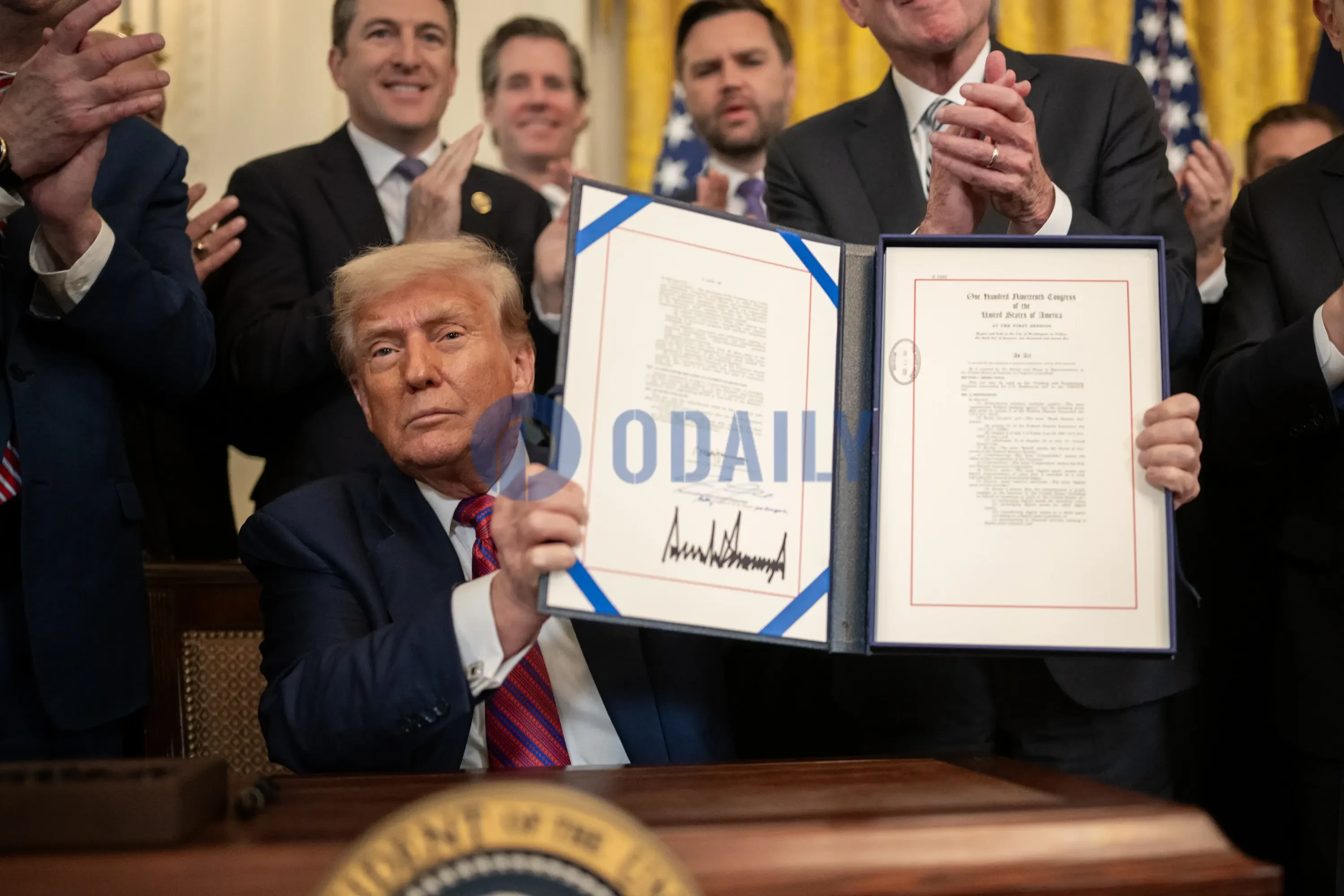
特朗普签署 GENIUS 法案

上台第四件事——确保美国成为全球加密货币之都和比特币超级大国,进度:暂未完成

最后,最为重要的一大承诺,则是特朗普曾提出的“确保美国成为全球加密制度和比特币超级大国”,目前来看,仍然任重而道远。

一方面,美联储在降息方面仍然并未松口,加密市场流动性相对有限;另外一方面,尽管随着“稳定币第一股” Circle 上市、美股上市公司掀起加密货币储备热潮,但距离美国全面放开加密货币不必要监管仍有一定距离。

此外,特朗普于今年4月开始掀起的“关税贸易战”也在一定程度上影响了这一愿景的实现。毕竟,作为世界经济体系中的重要一环,美国关税政策的影响是方方面面的,而朝令夕改的关税政策,很难让全球资金放心地加入美国的加密货币市场流动性之中。

与此同时,回看特朗普去年的比特币大会演讲内容,我们才后知后觉地发现,作为特朗普曾经重要的“政治盟友”,马斯克与其分道扬镳的结局其实早已注定。他曾提到:“并不是每个人都必须拥有电动车。我告诉过他(指马斯克)。所以我们将取消那个强制规定。有些人喜欢汽油车,有些人喜欢混合动力车,有些人喜欢电动车。它们都很好。我认为埃隆所做的很棒,他也理解。如果他不理解,他可能就不会支持我了。”如今,随着《大而美法案》的逐渐落地,如今看来,一片唏嘘。

当然,“使美国成为全球加密之都”这件事本身就不是一朝一夕的事情,后续特朗普能否在任期内成功履行诺言,我认为还需要通过3个标准来判断:

其一,是美国政府何时能够以联邦政府名义买入第一枚 BTC;

其二,是美股市场中建立加密货币财库储备的公司占比是否能有突破性飞跃;

其三,则是加密货币市场规模能否依赖美国市场再次实现指数级增长。

3个标准,至少实现2个,特朗普口中曾经提到的“全球加密之都”或“比特币超级大国”才算是成功应验,否则,仍然还需努力。

说明: 比推所有文章只代表作者观点,不构成投资建议

İlgili Okumalar

Anthropic Cries Wolf: Is the AGI Threat Real, or Just an IPO Story?

Anthropic has published an article titled "When AI builds itself," discussing the emerging concept of "recursive self-improvement," where AI begins to actively participate in designing, training, testing, and optimizing its own subsequent versions. The company presents internal data showing that by May 2026, over 80% of code merged into its codebase was written by Claude, its AI model. Claude's capabilities have expanded to handling complex, open-ended engineering tasks, achieving a 76% success rate in such areas, and even contributing to research processes, such as optimizing code performance and conducting AI safety experiments. Anthropic outlines an evolution from human-driven development to AI-assisted workflows, culminating in the current stage where AI agents can autonomously write, run, and delegate code. The company cautions that the path toward a "closed loop," where AI continuously improves itself, is becoming visible. It calls for coordinated global mechanisms to potentially slow or pause frontier AI development to allow safety research and societal structures to catch up. However, the timing of this warning coincides with Anthropic's preparations for an IPO, framing the narrative not just as a safety concern but also as a demonstration of Claude's advanced capabilities and its integral role in accelerating Anthropic's own R&D—creating a potential "flywheel" effect for competitive advantage. This contrasts with OpenAI's recent, more policy-oriented discussion of the same risks, highlighting the competitive dynamics in the AI industry as companies position themselves in both the technological and regulatory landscape.

marsbit5 dk önce

Anthropic Cries Wolf: Is the AGI Threat Real, or Just an IPO Story?

marsbit5 dk önce

BIT Research: ETF Purchases Have Slowed, Strategy (MicroStrategy) Has Slowed, What Else Can Drive Bitcoin's Rise?

Market Refocus on Inflation and Rate Expectations Weighs on Bitcoin Currently, the market is in a phase of macro-repricing dominated by inflation and interest rate expectations. Bitcoin, which previously benefited from easy liquidity and low inflation, is seeing its core bullish drivers weaken. These drivers were market expectations for interest rate cuts and strong inflows from Bitcoin ETFs and institutions like MicroStrategy (referred to as "Strategy" in the text). The logic has shifted. Recent high inflation data (e.g., CPI hitting 3.8% in a May 2026 report) has caused the market to sharply reduce its rate cut expectations for 2025 and even price in potential hikes. This is a key constraint for Bitcoin, as it lacks cash flows and is highly sensitive to rate expectations. Concurrently, institutional capital flows have slowed significantly. Following the hot CPI data, Bitcoin ETFs saw accelerated outflows, with around $4.3 billion leaving over a period. MicroStrategy's ability to keep adding substantial Bitcoin to its balance sheet is also diminishing. Together, ETF and MicroStrategy holdings total roughly $110 billion, but their momentum as growth engines is cooling. In summary, Bitcoin's current pressure stems not from its own fundamentals but from a changing macro environment. As long as inflation stays elevated, Bitcoin is likely to remain in a consolidating phase. However, historically, inflation eventually peaks. Once it recedes and rate cut expectations rebuild, institutional capital could return, potentially fueling a new and more robust recovery phase for Bitcoin.

marsbit13 dk önce

BIT Research: ETF Purchases Have Slowed, Strategy (MicroStrategy) Has Slowed, What Else Can Drive Bitcoin's Rise?

marsbit13 dk önce

Earning 1000 Trillion in Half a Year, 'Pocketing' 20 Million per Capita: This Round of Wealth Creation in the Korean Stock Market is Unprecedented in Scale

The South Korean stock market is experiencing an unprecedented wealth surge in 2026, with household equity and fund asset values soaring by over 1,000 trillion KRW (~$730bn) year-to-date. This translates to an average per capita wealth increase of roughly 20 million KRW, fueled by a historic 109% rally in the KOSPI index. The boom is driven by three converging forces: an AI-driven semiconductor supercycle boosting giants like Samsung and SK Hynix; the government's "Value-Up" market reforms addressing long-standing corporate governance issues; and aggressive real estate regulations that have locked capital within financial markets, preventing profits from flowing back into property. This has triggered a wealth effect, boosting high-end consumption significantly. However, the gains are highly concentrated. The two semiconductor behemoths account for over half the index's value, but retail investors own relatively low stakes in them, systematically missing the biggest rallies. Wealth and consumption benefits are skewed towards luxury goods and imported cars, bypassing mainstream retail. Further risks stem from excessive leverage, with high trading volume in leveraged ETFs, and a market sentiment heavily reliant on the AI sector's fortunes and speculative rumors. While this cycle marks a potential shift from real estate to equities as a primary wealth generator for Koreans, its sustainability, amid structural imbalances and leverage, remains a critical test.

marsbit18 dk önce

Earning 1000 Trillion in Half a Year, 'Pocketing' 20 Million per Capita: This Round of Wealth Creation in the Korean Stock Market is Unprecedented in Scale

marsbit18 dk önce

Behind ZEC's Over 30% Plunge: An 'Unlimited Minting' Vulnerability with No Way to Prove if It Was Ever Exploited

A critical vulnerability was discovered in Zcash's Orchard privacy pool, allowing for the theoretical creation of undetectable counterfeit ZEC. Researcher Taylor Hornby found the flaw on May 29th, 2024, within the Orchard circuit's cryptographic constraints, which could let an attacker bypass asset conservation rules. Although a rapid emergency fix was deployed within days via a coordinated soft and hard fork, a core uncertainty remains: due to Orchard's privacy features, it is impossible to cryptographically prove whether this "unlimited mint" flaw was exploited in the nearly four years since the pool's 2022 launch. This uncertainty, rather than the patched flaw itself, triggered a market panic, causing ZEC's price to drop over 30%. While the Zcash Foundation stated no evidence of exploitation was found, independent entity Shielded Labs emphasized the impossibility of definitively proving no counterfeit ZEC was ever created. The incident highlights the unique trust challenge in privacy systems. To address this, developers are proposing a new network upgrade with enhanced auditing to allow verifiable proof of supply integrity. Notably, the researcher utilized the newly released AI model Claude Opus 4.8 as a tool during the security review, signaling the growing role of advanced AI in uncovering complex cryptographic vulnerabilities.

marsbit20 dk önce

Behind ZEC's Over 30% Plunge: An 'Unlimited Minting' Vulnerability with No Way to Prove if It Was Ever Exploited

marsbit20 dk önce

İşlemler

Spot
Futures
活动图片