加密 ETF 的「诺曼底时刻」:SEC 新规默许质押收益,Coinbase 成最大赢家

深潮TechFlow2025-07-30 tarihinde yayınlandı2025-07-31 tarihinde güncellendi

Özet

新规将加速加密资产融入传统金融,而 Coinbase 的生态系统优势使其成为连接两大领域的关键枢纽。

撰文:Luke,火星财经


2024 年 1 月,比特币现货 ETF 的获批,是加密资产攻入传统金融堡垒的一次成功的「抢滩登陆」。然而,真正的「诺曼底时刻」——那场决定未来战局、成建制、大规模的「主力部队」登陆,正随着近期一份看似平淡的监管文件悄然开启。


近日,由 Cboe BZX 交易所和纳斯达克提交的规则变更提案(SR-CboeBZX-2025-104 等),正试图为山寨币(Altcoins)建立一条「通用上市标准」的快车道。这并非一次小规模的增援,而是一场精心策划的「制度化登陆」。其核心战术有二:一是开辟一条标准化的高速公路,让后续部队(山寨币 ETF)能源源不断地进入;二是在武器库中悄然加入了一项「新式武器」——被监管「默许」的质押收益(Staking Yields)。


而在这场波澜壮阔的金融变革图景中,当我们仔细审视「登陆场」的地理位置和「后勤补给线」的掌控者时,一个名字赫然浮现:Coinbase。这家美国最大的加密交易所,正凭借其无可比拟的生态系统优势,被这套新规不经意地推上了「最大赢家」的宝座。


从逐案审批到高速公路


此前,任何加密 ETF 的诞生都需经历 SEC 漫长而严苛的「逐案审批」,充满了不确定性。而新的「通用上市标准」彻底改变了游戏规则,其核心是:任何一个加密资产,只要其期货合约在 CFTC 监管下的市场(如 CME 或 Coinbase 衍生品交易所)稳定交易满六个月,其现货 ETF 就有资格通过「快车道」上市。


SEC 的意图是建立一套可扩展的监管框架,但客观上,这却将审批权的一部分「下放」了。新的权力中心,从华盛顿的 SEC 办公室,转移到了那些能够提供合规期货交易的平台门口。


虽然 CME 也是其中之一,但其更专注于比特币、以太坊等超大盘资产。对于广阔的山寨币世界而言,真正的「滩头堡」无疑是 Coinbase 衍生品交易所。它拥有上架更多元化山寨币期货的灵活性和意愿。因此,一个项目能否让自己的代币 ETF 化,其第一道、也是最关键的一道关卡,从游说 SEC 议员,变成了努力在 Coinbase Derivatives 上线其期货产品。


第一波登陆部队:候选名单已清晰可见


这套清晰的规则,让我们得以首次摆脱纯粹的猜测,能够基于一个明确的公式,直接锁定第一批「登陆部队」的名单。这些「先头部队」已经完成了在合规期货市场的「战前演练」,弹药充足,只待冲锋号吹响。


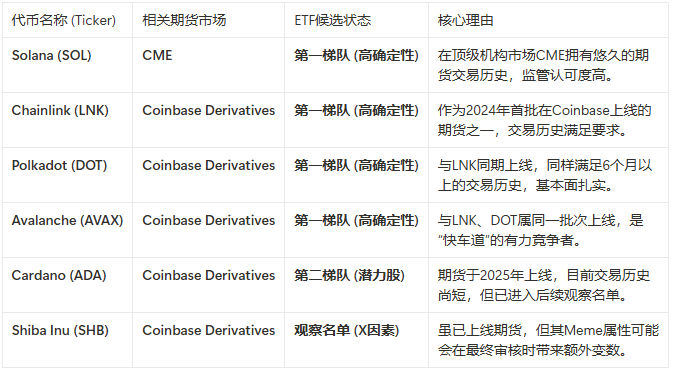
根据这一逻辑推断,首批最有可能获批的山寨币 ETF 候选名单已跃然纸上:


来自 Coinbase 阵营的选手包括:Avalanche (AVAX)、Chainlink (LNK)、Polkadot (DOT),甚至包括市场热度极高的 Shiba Inu (SHB)。这些代币的期货合约在 2024 年就已在 Coinbase Derivatives 备案或上线,到新规正式通过之时,其「服役」时间将远超六个月的硬性要求。

  • 来自 CME 阵营的重量级选手则是 Solana (SOL),其期货产品在机构云集的 CME 上早已稳定运行,具备极强的合规基础。
  • 因此,当市场还在热议「下一个获批的会是谁」时,答案其实已经隐藏在交易所的公开信息里。这批资产将是新规通过后,第一波冲击华尔街的 ETF 产品。紧随其后的,将是像 Cardano (ADA) 这样期货上线稍晚、构成「第二梯队」的资产。

Coinbase 为何是「天选之子」


如果说成为「准入闸口」是新规带来的战略优势,那么其中关于质押的条款,则直接指向了巨大的商业利益。当我们可以预见一只「附带质押收益的 Solana ETF」或「Polkadot ETF」的出现时,就能理解这一条款的威力。


新规 14.11(e)(4)(G) 条款精妙地规定,只要 ETF 发行商能确保有 85% 的资产可随时赎回,或为此建立完备的「流动性风险管理计划」,那么包含质押收益的 ETF 产品就是被允许的。这等于「默许」了将 DeFi 世界的原生收益机制,打包进华尔街最主流的金融产品中。
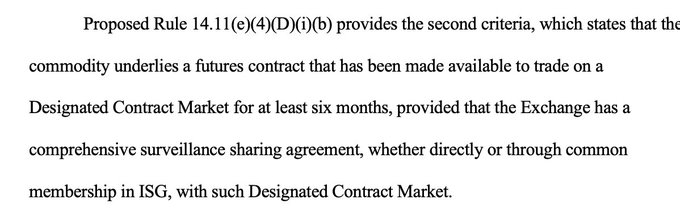

而谁是这项业务的最大受益者?依然是 Coinbase。作为全球最大、最受信任的机构级质押服务商之一,Coinbase Custody 几乎是所有 ETF 发行商的首选合作伙伴。无论是上述名单中的哪一个代币被 ETF 化并附带质押,Coinbase 都将通过提供托管和质押服务,赚取服务费和收益分成,其质押业务部门将迎来爆发式增长。


综合来看,SEC 的新规就像是为 Coinbase 的「全栈式」商业模式量身定做的一份大礼。它完美地串联起了 Coinbase 生态系统中的每一个环节,形成了一个强大的商业飞轮:

  • 期货市场(入口):Coinbase Derivatives 成为 ETF 的「资格认证中心」,吸引所有渴望被主流接纳的项目方前来「朝圣」,带来交易量和上币费。
  • 质押与托管(引擎):Coinbase Custody 成为质押型 ETF 的「核心基础设施」,为 AVAX、SOL、DOT 等未来 ETF 的底层资产提供服务。
  • 现货市场(基础):ETF 的申购与赎回机制将为 Coinbase 的现货市场带来海量的交易深度和手续费收入。
  • 监管合作(护城河):ETF 发行商必须与底层期货市场签订「监控共享协议」,这让 Coinbase 成为了贝莱德、富达等华尔街巨头在山寨币领域不可或缺的「监管科技」合作伙伴。

这一系列优势环环相扣,使 Coinbase 从一个加密行业的领军者,转变为连接加密世界与传统金融的「核心枢纽」。


结语:从「监视 SEC」到「关注 Coinbase」


正如「诺曼底登陆」标志着二战欧洲战场的转折,这次「通用上市标准」的提出,也标志着加密资产融入主流金融的转折点。它预示着一个新时代的到来:一个由清晰规则驱动、可大规模复制的山寨币 ETF 化时代。


而在这场宏大的历史进程中,SEC 通过一次巧妙的制度设计,在解决了自身监管难题的同时,也无意中「加冕」了新的王者。市场的焦点,或许将从日复一日地猜测 SEC 的态度,转向更加实际地关注 Coinbase 的下一步棋——因为它的每一次期货上币决策,都可能是在为下一只登陆华尔街的、名单已清晰可见的 ETF,吹响集结的号角。

İlgili Okumalar

Lightspark CEO: In Ten Years, Bitcoin Will Be as Invisible as TCP/IP, Yet Power Trillions in Daily Transactions

A decade from now, Bitcoin will function like TCP/IP — invisible yet foundational, supporting trillions in daily transactions globally, according to Lightspark CEO David Marcus. In this future, a coffee shop in Lagos receives instant payment, a manufacturer in São Paulo settles an invoice with a supplier in Ho Chi Minh City, and a freelancer in Bangalore gets paid weekly from an Austin startup — all via Bitcoin's settlement layer, with none of the parties consciously interacting with it. This vision parallels the adoption of open protocols: first driven by necessity where existing systems fail, then scaling rapidly as tools mature and economic benefits become clear. The structural shift begins with wallets. Modern non-custodial wallets, like Spark, allow users to hold dollars, local currency, and Bitcoin in a single address, seamlessly switching between them. This eliminates friction and revolutionizes global custody, moving significant deposits to user-controlled keys not by ideology, but by superior utility. As a result, Bitcoin becomes the default savings layer for billions, as its fixed supply and appreciating value make it a rational choice for savers holding it alongside stablecoins in their everyday wallets. Businesses follow a similar path, from small companies in emerging markets to multinational corporations, holding Bitcoin alongside operational stablecoins. The latest trend is direct Bitcoin transactions for commerce. When both parties hold Bitcoin, transacting in it becomes the simplest option — no conversions, no intermediary currency. This starts in niche areas like high-value B2B settlements but grows as infrastructure makes sending Bitcoin as easy as stablecoins. An accelerating force is AI agents. By 2036, AI agents conducting commerce on behalf of individuals and firms will increasingly choose Bitcoin for settlement. Optimizing for speed, finality, and minimal counterparty risk across jurisdictions, they find Bitcoin's global, neutral, and programmable network ideal for netting and settling obligations. Thus, Bitcoin is becoming the native currency for machine commerce, just as it has become a native savings asset for humans. The global monetary system is being rebuilt from the protocol layer: open infrastructure, default self-custody, Bitcoin settling everything underneath, with stablecoins as the interface. Most users won't think about Bitcoin when they transact — and they won't need to.

foresightnews_api5 dk önce

Lightspark CEO: In Ten Years, Bitcoin Will Be as Invisible as TCP/IP, Yet Power Trillions in Daily Transactions

foresightnews_api5 dk önce

Peeking Through Windows, Precision Hijacking? Two Giants of Prediction Markets Engage in Corporate Espionage

Polymarket, a prediction market platform, is investigating a suspected corporate espionage case involving its main rival, Kalshi. Polymarket accuses Kalshi of stealing business information and copying product launches through potentially illicit means, compiling a "plagiarism file" documenting over a dozen suspiciously coincidental product releases and marketing campaigns. Key incidents include a February 2026 free-grocery pop-up event, where Kalshi launched an almost identical campaign just nine days before Polymarket's scheduled launch, seemingly to siphon attention. Furthermore, an article leaked Kalshi's plans for a perpetual futures trading product merely an hour before Polymarket's own planned announcement for a similar tool in April 2026. Polymarket executives suspect either an internal mole or physical surveillance, noting that the office of Paradigm—a Kalshi investor—directly faces their Manhattan workspace, leading them to install dark window film. Both Paradigm and Kalshi have dismissed the allegations as baseless and ridiculous. Kalshi claims its product developments are independent and coincidental timing is merely market-driven. The rivalry intensifies as both companies secure significant funding, with Polymarket seeking a $15 billion valuation and Kalshi valued at $22 billion amid growing regulatory scrutiny of the prediction market industry.

foresightnews_api9 dk önce

Peeking Through Windows, Precision Hijacking? Two Giants of Prediction Markets Engage in Corporate Espionage

foresightnews_api9 dk önce

Hyperliquid, Wall Street's All-Day Trading Convenience Store

**Hyperliquid: Wall Street's 24/7 Trading Convenience Store** Written by Vicky Ge Huang, Wall Street Journal. Hyperliquid, a decentralized crypto trading platform, has become a go-to venue for Wall Street traders, especially during weekends when traditional U.S. markets are closed. Operating 24/7, it allows traders to pre-position or close trades ahead of market opens, capitalizing on events like geopolitical news. The platform, founded by former Hudson River Trading quant Jeff Yan, offers perpetual contracts on a wide range of assets, including Bitcoin, the S&P 500, oil, and even pre-IPO companies like SpaceX. Its growth exemplifies the merging of traditional finance and crypto markets, attracting significant volume from professional traders seeking leverage and constant access. A key differentiator, according to Yan, is user self-custody of assets—a necessity highlighted by the FTX collapse. Despite U.S. regulatory restrictions, some American users reportedly access the platform via VPN, drawn by its ease of use, lack of stringent KYC, and strong community culture on platforms like Discord and X. The platform is not without risks. Perpetual contracts are complex and highly leveraged, leading to massive liquidations during market volatility. Hyperliquid itself saw $10 billion in liquidations during a market crash in October last year. Regulatory warnings emphasize insufficient risk disclosure for retail investors. With about 11 employees, Hyperliquid and its associated blockchain reportedly generated around $800 million in revenue last year. Its native token, HYPE, has surged over 100% since late 2024. The platform plans to expand into prediction markets and options trading, aiming to become a hub for all financial activity.

foresightnews_api11 dk önce

Hyperliquid, Wall Street's All-Day Trading Convenience Store

foresightnews_api11 dk önce

İşlemler

Spot
Futures
活动图片



