Два управляющих ФРС разошлись во мнениях, призвав к немедленному снижению ставки

cryptonews.ru2025-02-27 tarihinde yayınlandı2025-07-29 tarihinde güncellendi

  • Давление на ФРС с целью снижения ставок усиливается после визита президента Трампа и новых внутренних разногласий
  • Два управляющих ФРС теперь открыто призвали к снижению ставки, что стало первым публичным двойным несогласием за 30 лет.
  • Потенциальное снижение ставки рассматривается как весьма оптимистичный вариант для биткоина, поскольку это, скорее всего, ослабит доллар США и приведет к росту рискованных активов.

Президент США Дональд Трамп вновь усилил публичное давление на главу Федеральной резервной системы (ФРС) Джерома Пауэлла, требуя от него резкого снижения процентных ставок. На прошлой неделе он посетил штаб-квартиру центрального банка и даже осмотрел строительную площадку ФРС, на реконструкцию которой было потрачено 2,5 миллиарда долларов. Хотя Трамп утверждал, что стоимость работ превысила 3 миллиарда долларов из-за возросших расходов на реставрацию.

ФРС впоследствии обосновала необходимость проекта, указав на устаревшую, почти вековую инфраструктуру, необходимость удаления опасных материалов и рост расходов на строительство. Кроме того, Пауэлл оспорил более высокую сумму, предложенную Трампом, поскольку президент США включил в проект реконструкцию, завершённую пять лет назад.

Тем не менее, после визита и встречи с Пауэллом Трамп заявил, что Пауэлл, возможно, готов снизить ставки, сославшись на замедление инфляции и смягчение политики других центральных банков. Хотя он резко раскритиковал политиков, Трамп подтвердил, что не уволит Пауэлла, пока ставки будут снижены.

В начале этого месяца, на конференции в Синтре, Пауэлл заявил, что ФРС продолжает отслеживать данные и будет принимать решения по процентным ставкам на каждом заседании, не обещав снижения в июле, но и не исключая его. Учитывая, что мы приближаемся к концу месяца, снижения вряд ли произойдёт в этом месяце.

Интересно, что внутреннее разногласие в ФРС усилилось: управляющие Уоллер и Боуман (оба входят в Совет управляющих ФРС) открыто выступают за сокращение ставки уже в этом месяце, что является первым двойным разногласием за три десятилетия.

Почему это важно для криптовалюты

В криптоиндустрии снижение процентных ставок может усилить склонность к риску, снизив ставку дисконтирования для цифровых активов и повысив их стоимость. Кроме того, политическое давление, особенно со стороны Трампа, добавляет дополнительную непредсказуемость рынкам криптовалют и дискуссиям об автономии Федеральной резервной системы и общей стабильности рынка.

С другой стороны, нерешительность ФРС может быть сигналом об ужесточении условий для цифровых активов.

Однако более низкие ставки обычно ослабляют доллар США, поскольку инвесторы стремятся к более высокой доходности активов, не деноминированных в долларах США. Кроме того, иностранный капитал становится менее заинтересованным в долларовых облигациях.

В связи с этим ослабление доллара, как правило, способствует росту биткоина и других криптовалют. В таких ситуациях люди часто воспринимают биткоин как цифровое золото, на которое можно вложить деньги, когда традиционные валюты идут неважно.

Кроме того, когда доллар не так силен, местные валюты других стран получают большую покупательную способность, а это значит, что они могут купить больше криптовалюты, тем самым побуждая больше людей по всему миру инвестировать.

İlgili Okumalar

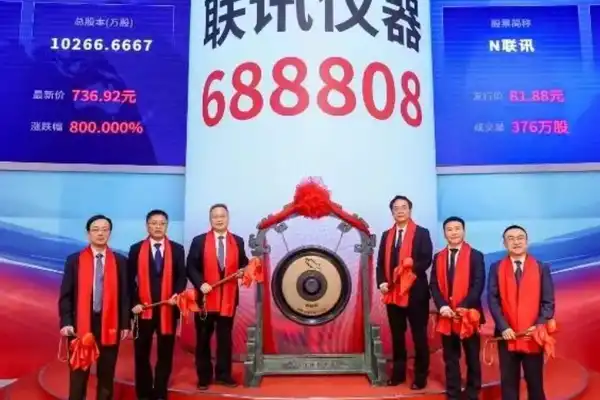
A Group of Suzhou Engineers Unexpectedly Attain Financial Freedom

In Suzhou, a group of engineers from Lianxun Instruments, a leader in optical communication testing equipment, have achieved remarkable wealth after the company's IPO. Listed just two months ago on the STAR Market, the company's stock price surged approximately 30 times, making it the only A-share stock priced above 2,000 yuan. This surge created substantial fortunes for nearly 100 technical employees who held a collective 15.91% stake through employee stock ownership platforms, valued at over 36 billion yuan at the current market cap. Among them, nearly 40 became billionaires, while even the smallest holdings exceeded 5 million yuan in value. Founded in 2017 by Hu Haiyang, Yang Jian, and Huang Jianjun, Lianxun Instruments was established to address China's reliance on foreign high-end testing instruments. The company grew rapidly with a strong focus on R&D, where technical staff make up nearly 80% of its workforce. Early implementation of employee stock plans helped retain this core talent. The company's explosive growth is fueled by booming AI computing demand, with clients including major global optical module leaders. Its revenue skyrocketed from 276 million yuan in 2023 to 1.194 billion yuan in 2025, turning a profit in 2024. The IPO has also generated massive returns for early investors, including Suzhou's state-owned capital, which saw a hundredfold return. This story reflects a broader trend in China's markets, where technology firms in AI, semiconductors, and optics are creating new wealth, rewarding engineers and technical teams who are now central to modern capital-driven success stories, marking a shift from previous eras dominated by internet and real estate tycoons.

marsbit2 saat önce

A Group of Suzhou Engineers Unexpectedly Attain Financial Freedom

marsbit2 saat önce

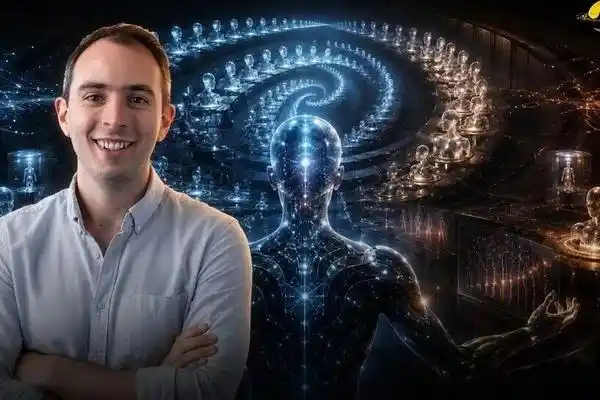
NVIDIA's Annual 'Most Dangerous' Paper: AI Self-Replicating Code, Unlimited Leveling and Evolution

NVIDIA's "Red Queen Gödel Machine" (RQGM) paper proposes a potentially groundbreaking AI self-evolution framework. It breaks from the long-stalled concept of the "Gödel Machine," which required mathematically proven beneficial self-modifications, by adopting an evolutionary approach. The core, and most striking, innovation is that the AI does not just evolve its own code in a static environment. Instead, it co-evolves both the "student" (the task-performing agent) and the "examiner" (the evaluation system that judges it). This creates a dynamic, recursive self-improvement loop inspired by the biological "Red Queen Hypothesis"—where continuous adaptation is needed just to maintain relative fitness. The mechanism operates in epochs. Within an epoch, a fixed examiner evaluates all candidate code variants. At epoch boundaries, a new, potentially more rigorous examiner can replace the old one, but only if it proves statistically superior on a held-out "ground truth" dataset. This "controlled utility evolution" aims to ensure progress is measurable and grounded. The paper demonstrates RQGM's effectiveness across three domains: 1. **Code Generation:** It achieved a 71.7% test-set pass rate (improving over a 69.9% SOTA) while using 1.35-1.72x fewer computational tokens. 2. **Paper Writing:** In a subjective task, the co-evolved writer and reviewer achieved a 40.5% acceptance rate by a fixed human panel, up from 21.8%. 3. **Math Proofs:** It evolved more accurate graders (at 3x lower cost) and higher-scoring provers. Notably, RQGM also mitigated a known LLM bias where AI reviewers favor AI-generated content. By specifically rewarding reviewers that correctly rejected AI-written papers from a historical pool, the evolved system achieved impartiality while maintaining 80% accuracy. The research has sparked significant discussion about the acceleration of Recursive Self-Improvement (RSI). Some, like Anthropic's Jack Clark, have predicted a high probability of highly autonomous, self-evolving AI emerging by 2028. The paper suggests that when an AI begins to design its own evaluators and push itself toward ever-higher standards in a recursive loop, it may be taking a fundamental step toward redefining intelligence and autonomy.

marsbit2 saat önce

NVIDIA's Annual 'Most Dangerous' Paper: AI Self-Replicating Code, Unlimited Leveling and Evolution

marsbit2 saat önce

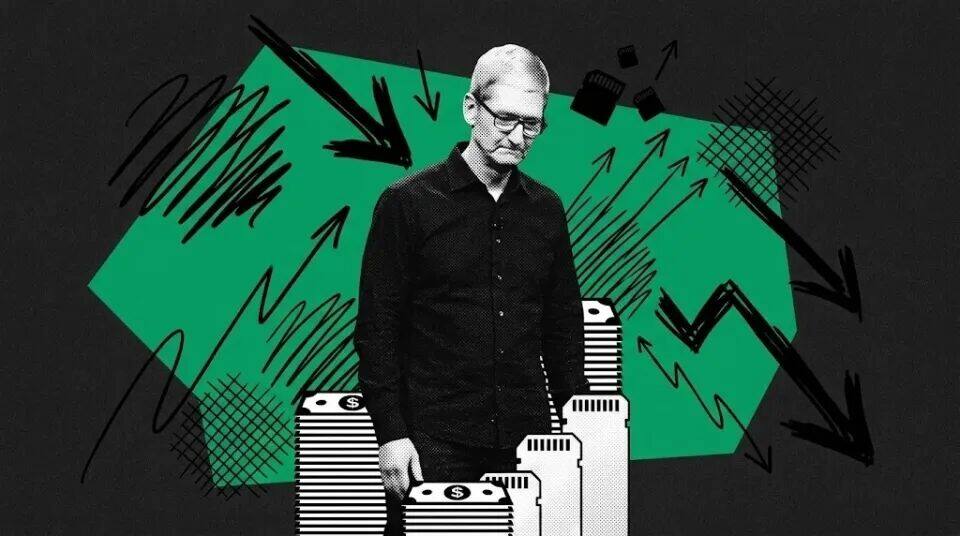
Apple and the Power Rebalancing with 'The Microns': Dissecting the Profit Ledger Behind the iPhone

The article analyzes the shifting profit dynamics and power balance between Apple and memory suppliers like Micron within the iPhone supply chain. It highlights a social media post criticizing Apple for raising iPhone prices while blaming memory chip cost increases, despite historically paying suppliers like Micron very little. An estimated iPhone 18 cost breakdown is referenced. Historically, memory was a minor cost component. In 2017's iPhone X, memory accounted for only about 1.6-2.3% of the price, with Apple capturing nearly 50% net profit. Over time, memory's share of the Bill-of-Materials (BOM) cost has grown significantly, reaching an estimated 12-15% for the iPhone 17 series. The core driver of this change is soaring demand for memory from the AI industry, particularly for High Bandwidth Memory (HBM) and AI servers, which is diverting production capacity and squeezing supply for consumer electronics. Memory manufacturers, after enduring periods of low profits, now hold greater pricing power. This is reflected in their recent strong financials, like Micron's 84.6% gross margin. Apple CEO Tim Cook initially described the memory price pressure as unprecedented in his 40-year career, later calling it a "once-in-a-century flood," before Apple announced price hikes across several product lines, causing a significant stock drop. Elon Musk echoed Cook's sentiment about the dramatic cost surge. The article concludes that the era of memory suppliers being at the mercy of Apple's pricing power has temporarily reversed, thanks to AI-driven demand. It notes Apple is reportedly seeking to diversify its supply chain, including exploring chips from China's CXMT.

Odaily星球日报4 saat önce

Apple and the Power Rebalancing with 'The Microns': Dissecting the Profit Ledger Behind the iPhone

Odaily星球日报4 saat önce

İşlemler

Spot
活动图片