Ethereum Price Prediction 2025: ETH at Crossroads

ccn.com2025-07-27 tarihinde yayınlandı2025-07-28 tarihinde güncellendi

Özet

On May 15, 2025, one wallet held more than 50% of ETH’s supply.

Key Takeaways

  • Ethereum (ETH) is the second-biggest cryptocurrency in the world.
  • Ethereum traded above $4,000 in December 2024 but has fallen since.
  • Our Ethereum price prediction suggests ETH could return above $3,000.

Ethereum launched the Pectra upgrade on May 7, its most significant upgrade since Dencun. This upgrade had the unintended consequence of making the ETH supply inflationary.


Pectra aims to remedy this by doubling the number of Blobs, which has already had a deflationary effect on the ETH supply.


Ethereum’s price has reacted positively to the upgrade, increasing by over 50%.


Let’s examine our price predictions for ETH, made on May 15, 2025. We will also examine the history of ETH prices and explain what ETH is and what it does.

Ethereum Price Prediction


Here are the Ethereum price predictions from CCN on May 15, 2025. The projections are made using the wave count method, while the minimum and maximum targets depend on the price movement during each specific year.


Minimum Ethereum Price Prediction Average Ethereum Price Prediction Maximum Ethereum Price Prediction 2025 $1,385 $2,600 $3,750 2026 $740 $1,100 $2,400 2030 $5,000 $7,230 $15,000


The most likely wave count suggests that Ethereum has completed a five-wave upward movement since 2016 and corrected inside a W-X-Y structure (red) since its all-time high in 2021.


If the count is accurate, Ethereum is in sub-wave B (black) of the final wave Y. Giving wave Y the same length as wave X leads to a low of $740.


The Fib Time Zone tool suggests ETH will reach the low in June 2026.


During this projected upward movement, the wave count method predicts an Ethereum price of $2,600 by the end of 2025.

Ethereum Prediction

ETH/USDT Weekly Chart | Credit: Valdrin Tahiri/TradingView Then, we will use the daily rate of increase for the past seven years to make an Ethereum price prediction for the end of 2026 and 2030.


Ethereum’s price has increased by 370% in the past seven years, for a daily rate of 0.225%. Projecting this rate of increase forward from the June 2026 low leads to prices of $1,100 and $7,230 for the end of 2026 and 2030, respectively.


Ethereum Price Prediction for 2025


The wave count method predicts that Ethereum’s price will range between $1,385 and $3,750 by the end of 2025.


Ethereum Price Prediction for 2026


The wave count method and the daily rate of increase predict that Ethereum’s price will range between $740 and $2,400 by the end of 2026.


Ethereum Price Prediction for 2030


The wave count method and the daily rate of increase predict that Ethereum’s price will range between $5,000 and $15,000 by the end of 2026.


Ethereum Price Analysis


Ethereum’s price has completed a five-wave upward movement with an unusually extended wave five since April 7.


While the movement became parabolic on May 10, it has lost some momentum this week, becoming much more gradual.


Furthermore, technical indicators are showing weakness. The Relative Strength Index (RSI) and Moving Average Convergence/Divergence (MACD) created bearish divergences, a characteristic of wave five tops.


If the analysis is accurate, the ETH price has started an A-B-C correction (red), which can end at three support levels.


An extremely shallow retracement would reach the $2,420 area, a Fibonacci and horizontal support.

ETH Wave Count

ETH/USDT Six-Hour Chart | Credit: Valdrin Tahiri/TradingView

A deeper retracement could bring the $2,220 and $2,060 levels into play, coinciding with an ascending parallel channel.

Because of the highly extended wave five, it is unlikely that Ethereum’s price will fall below $2,060 without invalidating the count.


Short-term ETH Price Prediction


The Ethereum price prediction for the next 24 hours is bearish. ETH will likely retrace toward $2,060 before eventually resuming its upward movement.


Ethereum Average True Range (ATR): ETH Volatility


The Average True Range (ATR) measures market volatility by averaging the largest of three values: The current high minus the current low, the absolute value of the current high minus the previous close, and the absolute value of the current low minus the previous close over a period, typically 14 days.


A rising ATR indicates increasing volatility, while a falling ATR indicates decreasing volatility.

ETH ATR

Ethereum ATR | Credit: Valdrin Tahiri/TradingView On Jan. 3, 2025, ETH’s ATR was 44, a sign of average volatility.


ETH Relative Strength Index (RSI): Is ETH Overbought or Oversold?


The Relative Strength Index (RSI) is a momentum indicator that traders use to determine whether an asset is overbought or oversold. Movements above 70 and below 30 show over- and undervaluation, respectively.


Movements above and below the 50 line indicate whether the trend is bullish or bearish.

Ethereum RSI

ETH Weekly RSI | Credit: Valdrin Tahiri/TradingView On May 15, 2025, Ethereum’s RSI was 52, suggesting a neutral trend gradually turning bullish.


ETH Market Cap to TVL Ratio


The Market Cap to Total Value Locked (TVL) ratio measures the valuation of a decentralized finance project by comparing its market capitalization to the total value of assets locked in its smart contracts. This ratio shows the project’s utilization and links the platform’s health to locked asset value.


A ratio above 1.0 indicates overvaluation because the market cap exceeds the value of assets used in the platform. A ratio below 1.0 indicates undervaluation because the market cap is lower than the value of locked assets.
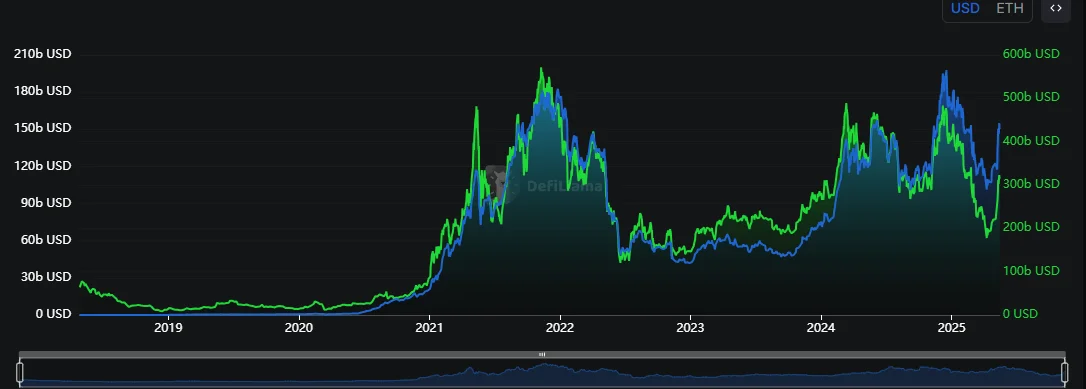
Market Cap to TVL

ETH MCAP/TVL | Credit: DeFiLlama On May 15, 2025, the Ethereum TVL ratio was 2.12, indicating a slight overvaluation.


CCN Strength Index


The CCN Strength Index combines an array of advanced market signals to measure the strength of individual cryptocurrencies over the last 30 days.
Every day, it assigns a strength score, ranging from 0 to 100, to the top 500 assets by market capitalization on CoinMarketCap, focusing on both trend direction and the intensity of price movements.

  • 0 to 24: Assets exhibit significant weakness, showing signs of sustained downtrend behavior.
  • 25 to 35: The price tends to move within stable bounds with minimal volatility.
  • 36 to 49: Assets begin a stable uptrend but without strong surges.
  • 50 to 59: Consistent growth with moderate price advances, building momentum.
  • 60+: Sharp price movements and high demand indicate more volatility and trend shifts.

The index dynamically adapts to rapid changes. For example, an asset experiencing a 100% increase within a short timeframe would see a sharp jump in its score to reflect the intensity of the rise.


However, should that asset stabilize at this new price level, the score will gradually taper down and align with the dampened momentum as the movement normalizes.
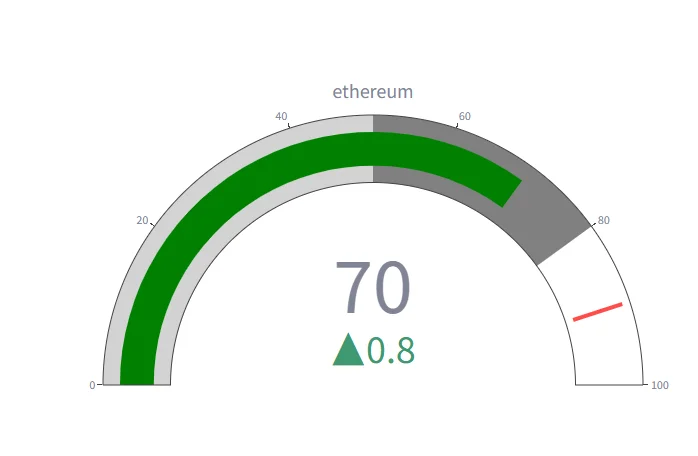
CCN Index

ETH CCN Index | Credit: CCN May 15, 2025, Ethereum scored 70 on the CCN Index, suggesting strong momentum.


Best Days and Months to Buy


We looked at the ETH price history and found the times when the price was at its lowest across certain days, months, quarters, and even weeks in the year, indicating the best times to buy Ethereum.


Time to Buy ETH Days, Weeks, Months, and Quarters Best Day Wednesday Best Week 33 Best Month January Best Quarter First


ETH Price Performance Comparison


Ethereum is a blockchain that deals with smart contracts, so let’s compare its performance with similar projects.


Current Price One Year Ago Price Change Ethereum $2,552 $3,035 -12.1% Solana $170.52 $158.01 +17.6% Cardano $0.77 $0.45 +76.9% Avalanche $23.79 $34.63 -27.8%
Advantages and Disadvantages


CCN’s Senior Research Analyst, Toghrul Aliyev, studied Ethereum in depth and found its advantages and disadvantages.


Advantages of Ethereum


Development

  • Ethereum ranks number one across multiple key development metrics: 112,535 repositories, 1,540 sub-ecosystems, 43,475 weekly commits, and 2,913 active developers. These numbers demonstrate Ethereum’s extensive range of applications and projects. The active development results in fewer bugs, faster issue resolution, and the ability to swiftly meet user demands and stay ahead of competitors.

Centralization and Decentralization

  • The 2016 The DAO hack led to the theft of 3.6 million ETH. In response, Ethereum implemented a hard fork to restore the stolen funds. Critics argue this decision contradicted Ethereum’s decentralized ethos. However, the hard fork demonstrated true decentralization only after achieving majority consensus through extensive community discussions and voting. With 14% of the total supply at risk and the ecosystem’s future in jeopardy, the move was not a bailout. In contrast, no hard fork was implemented when the Parity multi-signature wallet was exploited in 2017. Other critics compare The DAO hack to the Mt. Gox collapse, but this comparison misses key differences. When MtGox’s losses were revealed, the funds had already been widely dispersed, making a simple revert impossible. In the case of The DAO, the funds were locked for several weeks after the transfer, allowing for a different response.

Market Position

  • The approval of ETH ETFs makes Ethereum accessible to institutional investors like pension funds, mutual funds, and insurance companies. As a result, Ethereum is now part of traditional finance, which enhances its liquidity and price stability.
  • Ethereum ranks 1st in DEX trading volume, holding a 33.4% market share in the first quarter of 2024, with $144.2 billion in trades.


DEX Trading Volume

2024 Spot DEX Trading Volume Q1, 2024. Credit: CoinGecko

  • Ethereum leads in real-world asset tokenization. It has an almost 72% market share in tokenized US Treasuries. Ethereum also holds more than 98% of the commodities and more than 53% of the stablecoin supply on its network.

US Treasuries Stablecoins Commodities Ethereum $1384.49M $88604.92M $864.89M Stellar $433.27M $226.43M $9.83M Solana $47.96M $3199.73M – Mantle $39.72M – – Polygon $10.32M $361.26M – Arbitrum $5.22M $1309.82M – Gnosis $2.23M – – TRON – $61680.08M – BNB Smart Chain – $4994.37M – Base – $2,972.77 – Avalanche – $2185.47M – NEAR – $714.01M –

  • Positive: Ethereum dominates the DeFi sector by total value locked, holding more than 56% of the market share.

total Value Locked (TVL) all chains

Total Value Locked – All Chains. Source: DefiLlama Supply and Scalability

  • Positive: Users can stake Ethereum to earn rewards by participating in the network’s validation process.
  • Positive: Ethereum’s burning mechanism, introduced through the EIP-1559 upgrade, reduces the total supply of ETH over time. Each transaction on the Ethereum network includes a base fee, which gets burned, permanently removing that ETH from circulation. If the rate of ETH being burned is greater than the rate at which new ETH is created, the total supply of ETH decreases, leading to increased scarcity and potentially higher value per token.

Disadvantages of Ethereum


Development

  • When problems arise in the Ethereum network, solutions often involve outsourcing tasks to external organizations. This practice can compromise the protocol’s integrity because it relies on outside parties rather than the community or core developers. It creates a situation where external companies have significant influence over the network, leading to conflicts of interest and reducing the system’s trustworthiness.
  • Layer 2 solutions offer faster and cheaper transactions, causing users and developers to focus on them rather than the Ethereum network. As a result, developers prioritize creating and enhancing Layer 2 or Layer 3 solutions, shifting their innovation and development efforts away from Ethereum itself.
  • Ethereum developers focus on long-term solutions that take years to implement, mainly concentrating on Layer 2s and Layer 3s. Meanwhile, competitors are addressing Ethereum’s issues more quickly, thus attracting more users, developers, and investment. The dynamic leads to a loss of market share for Ethereum as other platforms offer immediate improvements and capture more of the market.

Centralization and Decentralization

  • Liquid staking lets users stake Ether and receive tokens representing their staked assets, which can be traded or used in other DeFi applications. However, it poses a risk to the protocol’s health. If too much Ether concentrates in liquid staking services, a few entities could gain significant control over the network. This is already a reality because Lido and Coinbase control over 40% of the market share in Ethereum’s staking. For proof-of-stake platforms, control by more than 33% of the stake is problematic because it increases the risk of collusion and potential network compromise.


Ethereum Stakers

Credit: Dune Analytics/Hildobby

  • As the hardware requirements for running a node on the Ethereum network increase, only entities with large data centers can afford to keep up. Smaller, individual node operators may find it too expensive to continue participating. This trend leads to a more centralized network, where a few large players dominate, reducing the network’s resilience and decentralization. As of July 2024, five ISPs—Amazon, Hetzner Online, OVH SAS, Comcast Cable, and Spectrum—are responsible for 1/3 of the network’s nodes out of 893 providers. The situation has improved since August 2022, when three ISPs hosted 2/3 of the nodes . However, this improvement still does not fully resolve the centralization issue.


Ethereum Node Distribution

Credit: Ethernodes.org

  • MEV refers to the profit miners can make by reordering, including, or excluding transactions within the blocks they produce. Instead of finding ways to solve this problem, Ethereum has started accommodating it by supporting proprietary MEV builders. The focus on MEV builders gives them precedence over local, smaller block producers, which can lead to a more centralized and unfair system.
  • Staking requires a minimum of 32 ETH, equivalent to $112,000 at an Ethereum price of $3,500, making it inaccessible for the average retail investor. The barrier reduces the level of decentralization, as fewer individuals can participate in securing the network.
  • Ethereum’s decision-making relies heavily on a small group of developers, which centralizes control and slows the decision-making process. The absence of on-chain governance means fewer community voices influence major updates, leading to less flexible responses to challenges. A centralized structure hampers Ethereum’s ability to adapt quickly and increases the risk of users and developers moving to more responsive platforms.

Market Position

  • Negative: Year-to-date inflows and outflows of Ethereum have resulted in a net outflow of $0.85 billion. More money leaving the chain than coming in indicates that investors and users prefer other chains over Ethereum, which could lead to decreased network activity and hinder its growth and development.

Inflows and Outflows

Inflows and outflows: Credit: Artemis.xyz Supply and Scalability

Ethereum Average Transaction Fee

ETH Average Transaction Fee. Source: Etherscan

  • Ethereum relies on Layer 2 solutions like Arbitrum and Optimism to handle more transactions. These help reduce congestion and fees but make Ethereum less viable as a standalone option. The significant market share of these Layer 2 platforms indicates a preference for alternatives. Although these solutions operate within the Ethereum ecosystem, relying on external chains instead of in-house solutions is not ideal. 
  • Due to congestion and inefficiency, Ethereum’s inability to scale results in a poor user experience. Additionally, fragmentation across Layer-2 solutions complicates dApp interoperability. It also complicates integrating new projects with existing ones, while reduced composability hampers innovation and growth within the ecosystem.
  • Ethereum’s focus on being a secure data availability layer for Layer 2 solutions highlights its scalability limitations. The mainnet remains less scalable, affecting the efficiency of the DA Layer. Meanwhile, scalable blockchains can process more transactions, capture higher revenue, and enhance security. This puts Ethereum at a competitive disadvantage as it struggles to match the performance and efficiency of more scalable blockchains.
  • Successful Layer 2 solutions may abandon Ethereum for more scalable Layer 1 blockchains. If Ethereum doesn’t provide sufficient revenue for these protocols to thrive, they will likely migrate to other platforms that offer better scalability and profitability, further weakening Ethereum’s ecosystem.
  • Due to scalability issues, congestion, and high fees, Ethereum’s DEX trading volume market share has been chipped away by other chains, mainly its Layer 2 solution, Arbitrum, and Ethereum’s biggest competition, Solana. In October 2023, Ethereum’s DEX trading volume market share was 56.49%, but by March 2024, it had dropped to 33.4%.
  • Recently, interest in Ethereum has dropped, leading to inflation exceeding the amount of ETH burned. Since April 2024, the net increase in ETH supply has been about 60,000 ETH monthly. If this trend continues, by Dec. 2024, the total supply of ETH could return to the levels seen at the time of the Merger.

Ethereum Price History


Now, look at some key dates in the ETH price history . While past performance is not an indicator of future results, knowing what the token has done can help provide context when making or interpreting an Ethereum price prediction.


Period Ethereum Price Last Week (May 8, 2025) $1,939 Last Month (April 15, 2025) $1,645 Three months ago (Feb. 15, 2025) $2,704 One year ago (May 15, 2024) $3,035 Five years ago (Jan. 3, 2020) $207.85 Launch price (Aug. 7, 2015) $2.83 All-time high (Nov. 16, 2021) $4,891 All-time low (Oct. 21, 2015) $0.42


Ethereum Market Cap


The market capitalization, or market cap, is the sum of the total ETH in circulation multiplied by its price.

Ethereum Market Cap

Ethereum market cap for the last 12 months | Credit: CoinMarketCap On May 15, 2025, Ethereum’s market cap was $306 billion, making it the second-largest crypto by that metric.
Who Owns the Most Ethereum (ETH)?
On May 15, 2025, one wallet held more than 50% of ETH’s supply.

Richest ETH Wallet Addresses


As of May 15, 2025, the five richest ETH wallets were

  • 0x00000000219ab540356cbb839cbe05303d7705fa. This wallet held 61,413,109 ETH, or 50.86% of the supply.
  • 0xc02aaa39b223fe8d0a0e5c4f27ead9083c756cc2. This wallet held 2,694,435 ETH, or 2.23% of the supply.
  • 0xbe0eb53f46cd790cd13851d5eff43d12404d33e8. This wallet, listed as Binance, held 1,996,008 ETH, or 1.65% of the supply.
  • 0x40b38765696e3d5d8d9d834d8aad4bb6e418e489. This wallet held 1,376,695 ETH, or 1.14% of the supply.
  • 0x49048044d57e1c92a77f79988d21fa8faf74e97e. This wallet held 1,107,296 ETH, or 0.92% of the supply.


Trend Kriptolar

İlgili Okumalar

The Impact of OUSD on Circle, Tether, and Paxos: Not a Simple Negative, but a More Complex Competitive Landscape

OUSD's Impact on Circle, Tether, and Paxos: A Nuanced Competitive Reshuffle The launch of OUSD, a new stablecoin initiative, has complex implications for the stablecoin market. For Circle (CRCL), the initial 15-20% stock drop reflects legitimate competitive concerns but is not a "death sentence." Circle retains deep liquidity, existing integrations, and first-mover advantages. A potential restructuring or termination of its Coinbase partnership could even double its net revenue in the short term, providing more competitive freedom. However, OUSD, backed by Stripe's engineering and product strengths, could become the default stablecoin within the Stripe ecosystem for new adopters, challenging USDC's position. OUSD does not solve the core barrier for corporate adoption: it remains a credit exposure to its issuer (likely a Bridge-related entity), which, like Circle, is not an investment-grade entity. Large banks and asset managers could still capture the most lucrative enterprise use cases. Circle must accelerate its payment/fintech product development and consider defensive M&A. For Tether, OUSD targets a different market segment. Tether will continue focusing on distribution channels not prioritized by Stripe or Circle. Its market share may decline over time, but within a significantly growing total market. Paxos faces the greatest pressure. OUSD undermines the key selling points of its USDG stablecoin, and Paxos's regulatory advantages may diminish as frameworks mature. This poses a more existential challenge, explaining Paxos's recent shift back to its brokerage-as-a-service business.

marsbit17 dk önce

The Impact of OUSD on Circle, Tether, and Paxos: Not a Simple Negative, but a More Complex Competitive Landscape

marsbit17 dk önce

OUSD's Impact on Circle, Tether, and Paxos: Not a Simple Negative, but a More Complex Competitive Reshuffle

This article analyzes the impact of the newly announced stablecoin OUSD, backed by a consortium including Stripe, on major incumbents like Circle (USDC), Tether (USDT), and Paxos (USDG). For Circle, the announcement is not a simple negative. While the initial market reaction was rational, it's not a "death sentence." Circle retains deep liquidity, existing integrations, and first-mover advantage. A potential restructuring or termination of its exclusive revenue-sharing deal with Coinbase could even near-double its net income in the short term, providing more competitive flexibility. However, within the Stripe ecosystem, OUSD, with its strong engineering and product focus, could become the default choice, displacing USDC for new integrations. Circle must accelerate its own fintech product development and consider defensive M&A. OUSD does not directly threaten Tether's core markets, which focus on different distribution channels. Tether's market share may decline over time but within a significantly growing overall market. Paxos faces the greatest pressure. OUSD undermines the primary value proposition of its USDG stablecoin, and Paxos's regulatory advantages may erode as frameworks mature, posing a more existential challenge. This explains Paxos's recent strategic pivot towards brokerage-as-a-service. A fundamental unresolved issue for enterprise adoption remains: if issued by a Bridge-related entity, OUSD, like USDC, still represents a credit exposure to a non-investment-grade issuer, unless a parent company guarantee is provided. Large banks and asset managers entering the space later could still compete for the most lucrative enterprise use cases.

链捕手18 dk önce

OUSD's Impact on Circle, Tether, and Paxos: Not a Simple Negative, but a More Complex Competitive Reshuffle

链捕手18 dk önce

İşlemler

Spot

Popüler Makaleler

ETH 2.0 Nedir

ETH 2.0: Ethereum için Yeni Bir Dönem Giriş ETH 2.0, Ethereum 2.0 olarak da bilinir, Ethereum blok zincirinde önemli bir yükseltmeyi işaret eder. Bu geçiş yalnızca bir yüz değiştirme değil; ağın ölçeklenebilirliğini, güvenliğini ve sürdürülebilirliğini temelinden geliştirmeyi hedeflemektedir. Enerji yoğun Proof of Work (PoW) konsensüs mekanizmasından daha verimli olan Proof of Stake (PoS) mekanizmasına geçişle birlikte, ETH 2.0 blok zinciri ekosistemine dönüştürücü bir yaklaşım vaat etmektedir. ETH 2.0 Nedir? ETH 2.0, Ethereum'un yeteneklerini ve performansını optimize etmeye odaklanmış özel, birbirine bağlı güncellemelerin bir derlemesidir. Yenileme, mevcut Ethereum mekanizmasının karşılaştığı kritik zorlukları, özellikle işlem hızı ve ağ tıkanıklığı ile ilgili sorunları ele almak üzere tasarlanmıştır. ETH 2.0'ın Amaçları ETH 2.0'ın ana amaçları, üç temel unsuru geliştirmeye odaklanmaktadır: Ölçeklenebilirlik: Ağın saniye başına işleyebileceği işlem sayısını önemli ölçüde artırmayı hedefleyen ETH 2.0, mevcut yaklaşık 15 işlem/saniye sınırlamasını aşmayı ve potansiyel olarak binlerce işleme ulaşmayı planlamaktadır. Güvenlik: Geliştirilmiş güvenlik önlemleri, özellikle siber saldırılara karşı daha iyi direnç sağlama ve Ethereum'un merkeziyetsiz görünümünü koruma açısından ETH 2.0 için hayati öneme sahiptir. Sürdürülebilirlik: Yeni PoS mekanizması, sadece verimliliği artırmakla kalmayıp aynı zamanda enerji tüketimini de önemli ölçüde azaltma hedefiyle tasarlanmış olup, Ethereum'un operasyonel çerçevesini çevresel kaygılarla uyumlu hale getirmektedir. ETH 2.0'ın Yaratıcısı Kimdir? ETH 2.0'ın yaratılması Ethereum Vakfı'na atfedilebilir. Ethereum'un gelişimini destekleme konusunda kritik bir rol oynayan bu kar amacı gütmeyen kuruluş, dikkat çekici kurucu ortağı Vitalik Buterin tarafından yönetilmektedir. Daha ölçeklenebilir ve sürdürülebilir bir Ethereum vizyonu, bu yükseltmenin arkasındaki itici güç olmuştur ve protokolü geliştirmek için kendini adamış küresel bir geliştici ve meraklı topluluğunun katkılarını içermektedir. ETH 2.0'ın Yatırımcıları Kimlerdir? ETH 2.0 yatırımcıları ile ilgili detaylar kamuoyuna açıklanmamış olsa da, Ethereum Vakfı'nın blok zinciri ve teknoloji alanında çeşitli kuruluşlar ve bireyler tarafından desteklendiği bilinmektedir. Bu ortaklar arasında merkeziyetsiz teknolojilerin ve blok zinciri altyapısının geliştirilmesine karşılıklı ilgi duyan girişim sermayesi şirketleri, teknoloji firmaları ve hayır kurumları yer almaktadır. ETH 2.0 Nasıl Çalışır? ETH 2.0, onu öncüsünden ayıran bir dizi önemli özelliği tanıtmasıyla dikkat çekmektedir. Proof of Stake (PoS) PoS konsensüs mekanizmasına geçiş, ETH 2.0'ın en belirgin değişikliklerinden biridir. İşlem doğrulama için enerji yoğun madenciliğe dayanmak yerine, PoS kullanıcıların ağa yatırdıkları ETH miktarına göre işlemleri doğrulayıp yeni bloklar oluşturmalarına olanak tanır. Bu, enerji verimliliğinin artırılmasına yol açarak tüketimi yaklaşık %99,95 oranında azaltmakta ve Ethereum 2.0'ı önemli ölçüde daha çevre dostu bir alternatif haline getirmektedir. Shard Zincirleri Shard zincirleri, ETH 2.0'ın diğer bir kritik yeniliğidir. Bu daha küçük zincirler, ana Ethereum zinciri ile paralel olarak çalışarak birden fazla işlemin aynı anda işlenmesine olanak tanır. Bu yaklaşım, ağın genel kapasitesini artırarak Ethereum'u rahatsız eden ölçeklenebilirlik sorunlarını ele alır. Beacon Zinciri ETH 2.0'ın temelinde, ağı koordine eden ve PoS protokolünü yöneten Beacon Zinciri yer almaktadır. Bu, bir tür organizatör olarak işlev görür: doğrulayıcıları denetler, shard'ların ağa bağlı kalmasını sağlar ve blok zinciri ekosisteminin genel sağlığını izler. ETH 2.0 Zaman Çizelgesi ETH 2.0'ın yolculuğu, bu önemli yükseltmenin evrimini gösteren birkaç önemli dönüm noktası ile tanımlanmıştır: Aralık 2020: Beacon Zinciri'nin başlatılması, PoS'un tanıtımını işaret etmiş ve ETH 2.0’a geçiş için sahneyi hazırlamıştır. Eylül 2022: "The Merge" tamamlanması, Ethereum ağının başarılı bir şekilde PoW'den PoS çerçevesine geçiş yaptığı kritik bir anı temsil etmekte ve Ethereum için yeni bir dönemi müjdelemektedir. 2023: Shard zincirlerinin beklenen dağıtımı, Ethereum ağının ölçeklenebilirliğini daha da artırmayı hedeflemekte ve ETH 2.0'ı merkeziyetsiz uygulamalar ve hizmetler için sağlam bir platform haline getirmeyi pekiştirmektedir. Ana Özellikler ve Faydalar Geliştirilmiş Ölçeklenebilirlik ETH 2.0'ın en önemli avantajlarından biri, geliştirilmiş ölçeklenebilirliğidir. PoS ve shard zincirlerinin kombinasyonu, ağın kapasitesini artırarak, eski sistemle kıyaslandığında çok daha fazla işlem hacmi karşılayabilmesini sağlamaktadır. Enerji Verimliliği PoS'un uygulanması, blok zinciri teknolojisinde enerji verimliliği yönünde büyük bir adım teşkil etmektedir. Enerji tüketimini ciddi şekilde azaltarak, ETH 2.0 yalnızca işletme maliyetlerini düşürmekle kalmaz, aynı zamanda küresel sürdürülebilirlik hedefleriyle daha yakın bir uyum sağlar. Geliştirilmiş Güvenlik ETH 2.0'ın güncellenmiş mekanizmaları, ağ genelinde güvenliğin artırılmasına katkıda bulunmaktadır. PoS'un uygulanması ve shard zincirleri ile Beacon Zinciri aracılığıyla geliştirilen yenilikçi kontrol önlemleri, potansiyel tehditlere karşı daha yüksek bir koruma sağlar. Kullanıcılar için Düşük Maliyetler Ölçeklenebilirlik geliştikçe, işlem maliyetleri üzerindeki etkiler de belirgin hale gelecektir. Artan kapasite ve azalan tıkanıklığın, kullanıcılar için düşük ücretler anlamına gelmesi beklenmekte ve Ethereum'u günlük işlemler için daha erişilebilir hale getirmektedir. Sonuç ETH 2.0, Ethereum blok zinciri ekosisteminde önemli bir evrimi işaret etmektedir. Ölçeklenebilirlik, enerji tüketimi, işlem verimliliği ve genel güvenlik gibi temel sorunları ele alırken, bu güncellemenin önemi abartılamaz. Proof of Stake'e geçiş, shard zincirlerinin tanıtımı ve Beacon Zinciri'nin altyapı çalışmaları, Ethereum'un merkeziyetsiz piyasalarının artan taleplerini karşılayabileceği bir geleceği göstermektedir. Yenilik ve ilerleme ile şekillenen bir sektörde, ETH 2.0, blok zinciri teknolojisinin daha sürdürülebilir ve verimli bir dijital ekonomi için yol açmadaki yeteneklerinin bir kanıtıdır.

204 Toplam GörüntülenmeYayınlanma 2024.04.04Güncellenme 2024.12.03

ETH 2.0 Nedir

ETH 3.0 Nedir

ETH3.0 ve $eth 3.0: Ethereum'un Geleceği Üzerine Derinlemesine Bir İnceleme Giriş Hızla evrilen kripto para ve blok zinciri teknolojisi ortamında, ETH3.0, sıklıkla $eth 3.0 olarak adlandırılmakta, önemli bir ilgi ve spekülasyon konusu haline gelmiştir. Bu terim, netleştirilmesi gereken iki temel kavramı kapsamaktadır: Ethereum 3.0: Bu, mevcut Ethereum blok zincirinin yeteneklerini artırmayı hedefleyen olası bir gelecekteki güncellemeyi temsil eder, özellikle ölçeklenebilirlik ve performansı iyileştirmeye odaklanmaktadır. ETH3.0 Meme Token: Bu ayrı kripto para projesi, Ethereum blok zincirini kullanarak meme merkezli bir ekosistem oluşturmayı amaçlamakta ve kripto para topluluğu içinde etkileşimi artırmaktadır. ETH3.0'ün bu yönlerini anlamak, yalnızca kripto meraklıları için değil, aynı zamanda dijital alandaki daha geniş teknolojik trendleri gözlemleyenler için de hayati öneme sahiptir. ETH3.0 Nedir? Ethereum 3.0 Ethereum 3.0, zaten kurulmuş olan Ethereum ağına önerilen bir güncelleme olarak duyurulmaktadır; bu ağ, kuruluşundan bu yana birçok merkeziyetsiz uygulamanın (dApp'ler) ve akıllı sözleşmelerin belkemiği olmuştur. Tasarlanan iyileştirmeler, esasen ölçeklenebilirlik üzerine yoğunlaşmakta – shardlama ve sıfır bilgi kanıtları (zk-proofs) gibi ileri teknolojileri entegre etmektedir. Bu teknolojik yenilikler, saniyede eşi benzeri görülmemiş sayıda işlem (TPS) gerçekleştirmeyi kolaylaştırmayı amaçlamakta olup, muhtemelen milyonlara ulaşarak mevcut blok zinciri teknolojisinin karşılaştığı en büyük sınırlamalardan birine çözüm getirmektedir. İyileştirme yalnızca teknik değil, aynı zamanda stratejiktir; Ethereum ağını, merkeziyetsiz çözümlere olan artan talep ile belirginleşen bir geleceğe hazırlamak için tasarlanmıştır. ETH3.0 Meme Token Ethereum 3.0'ın aksine, ETH3.0 Meme Token, internet meme kültürünü kripto para dinamikleriyle birleştirerek daha hafif ve eğlenceli bir alanda hareket etmektedir. Bu proje, kullanıcıların Ethereum blok zincirinde meme alım, satım ve ticaret yapmalarına izin vererek, yaratıcılık ve ortak ilgi alanları aracılığıyla topluluk etkileşimini teşvik eden bir platform sunmaktadır. ETH3.0 Meme Token, blok zinciri teknolojisinin dijital kültürle nasıl kesişebileceğini göstererek, hem eğlenceli hem de finansal olarak sürdürülebilir kullanım senaryoları oluşturmayı hedeflemektedir. ETH3.0'un Yaratıcısı Kimdir? Ethereum 3.0 Ethereum 3.0'a yönelik girişim, esas olarak Ethereum topluluğundaki bir geliştirici ve araştırmacı konsorsiyumu tarafından yönlendirilmektedir ve bunlar arasında Justin Drake de bulunmaktadır. Ethereum'un evrimine yönelik içgörüleri ve katkılarıyla tanınan Drake, Ethereum'u “Beam Chain” olarak adlandırılan yeni bir konsensüs katmanına geçirme konusundaki tartışmalarda öne çıkan bir figür olmuştur. Geliştirmeye yönelik bu iş birliği yaklaşımı, Ethereum 3.0'ın tek bir yaratıcının ürünü olmadığını, aksine blok zinciri teknolojisini ilerletmeye odaklanmış kolektif bir dehanın tezahürü olduğunu göstermektedir. ETH3.0 Meme Token ETH3.0 Meme Token'ın yaratıcısına dair detaylar şu anda izlenemez durumdadır. Meme tokenların doğası, genellikle daha merkeziyetsiz ve topluluk odaklı bir yapıya yol açmakta olup, bu da spesifik bir atıf eksikliğini açıklayabilir. Bu durum, yeniliğin genellikle iş birliği yerine bireysel çabalardan ortaya çıktığı kripto topluluğunun genel felsefesiyle uyumludur. ETH3.0 Yatırımcıları Kimlerdir? Ethereum 3.0 Ethereum 3.0'a olan destek, esasen Ethereum Vakfı ve hevesli bir geliştirici ve yatırımcı topluluğu tarafından sağlanmaktadır. Bu temel birliktelik, yıllar süren ağ operasyonlarıyla inşa edilen güven ve itibarından yararlanarak önemli bir meşruiyet sağlamaktadır. Kripto para dünyasının hızla değişen ikliminde, topluluk desteği, gelişim ve benimsemeyi yönlendirmede kritik bir rol oynamakta ve Ethereum 3.0'ı gelecekteki blok zinciri ilerlemeleri için ciddi bir rakip haline getirmektedir. ETH3.0 Meme Token Mevcut kaynaklar, ETH3.0 Meme Token'ı destekleyen yatırım temelleri veya kuruluşları hakkında net bilgiler sağlamasa da, bu durum meme tokenlar için tipik olan finansman modelini göstermektedir; bu model genellikle tabandan destek ve topluluk katılımına dayanır. Bu tür projelerdeki yatırımcılar genellikle toplum odaklı yenilik potansiyeli ve kripto topluluğunda bulunan iş birliği ruhuyla motive olmuş bireylerden oluşmaktadır. ETH3.0 Nasıl Çalışır? Ethereum 3.0 Ethereum 3.0'ın ayırt edici özellikleri, önerilen shardlama ve zk-proof teknolojisinin uygulanmasında yatmaktadır. Shardlama, blok zincirini daha küçük, yönetilebilir parçalara veya “parçalara” ayırma yöntemidir; bu parçalar işlemleri ardışık değil, eşzamanlı olarak işleyebilir. Bu işlem yükünün merkeziyetsizliği, tıkanıklığı önlemeye yardımcı olur ve ağın yoğun yük altında bile yanıt verebilir olmasını sağlar. Sıfır bilgi kanıtı (zk-proof) teknolojisi, işleme katılan temel verileri ifşa etmeden işlem doğrulaması sağlamasıyla başka bir sofistike katman ekler. Bu yön, sadece gizliliği artırmakla kalmaz, aynı zamanda ağın genel verimliliğini de artırır. Bu güncellemeye, ağın yeteneklerini ve faydasını daha da artırarak sıfır bilgi Ethereum Sanal Makinesi (zkEVM) entegrasyonunun da eklenmesi gündeme gelmektedir. ETH3.0 Meme Token ETH3.0 Meme Token, meme kültürünün popülaritesinden yararlanarak kendini farklılaştırmaktadır. Kullanıcıların sadece eğlence için değil, aynı zamanda potansiyel ekonomik kazançlar için meme ticareti yapmalarına olanak tanıyacak bir pazar yeri oluşturur. Stake etme, likidite sağlama ve yönetim mekanizmaları gibi özelliklerin entegrasyonu sayesinde, proje topluluk etkileşimini ve katılımını teşvik eden bir ortam oluşturur. Eğlence ve ekonomik fırsatların eşsiz bir karışımını sunarak, ETH3.0 Meme Token, kripto tutkunlarından gündelik meme meraklılarına kadar çeşitli bir kitleyi çekmeyi hedeflemektedir. ETH3.0 Zaman Çizelgesi Ethereum 3.0 11 Kasım 2024: Justin Drake, ölçeklenebilirlik iyileştirmeleri etrafında şekillenen yaklaşan ETH 3.0 güncellemesine işaret ediyor. Bu duyuru, Ethereum'un gelecekteki mimarisi hakkında resmi tartışmaların başlangıcını simgeliyor. 12 Kasım 2024: Ethereum 3.0'a yönelik beklenen önerinin, Bangkok'taki Devcon'da açıklanması planlanıyor ve bu, daha geniş topluluk geri bildirimi ve gelişim için olası sonraki adımların zeminini hazırlıyor. ETH3.0 Meme Token 21 Mart 2024: ETH3.0 Meme Token, CoinMarketCap'ta resmi olarak listeleniyor, bu da kamusal kripto alanına adım atarak meme merkezli ekosisteminin görünürlüğünü artırıyor. Ana Noktalar Sonuç olarak, Ethereum 3.0, gelişmiş teknolojiler aracılığıyla ölçeklenebilirlik ve performansla ilgili sınırlamaların üstesinden gelmeye odaklanan Ethereum ağındaki önemli bir evrimi temsil etmektedir. Önerilen güncellemeleri, gelecekteki talepler ve kullanılabilirlik için proaktif bir yaklaşımı yansıtmaktadır. Öte yandan, ETH3.0 Meme Token, kripto para alanındaki topluluk odaklı kültürün özünü kapsamakta, meme kültürünü kullanarak kullanıcı yaratıcılığını ve katılımını teşvik eden etkileşimli platformlar oluşturmayı hedeflemektedir. ETH3.0 ve $eth 3.0'un farklı amaçlarının ve işlevlerinin anlaşılması, kripto alanındaki gelişmeleri takip eden herkes için hayati öneme sahiptir. Her iki girişim de benzersiz yollar çizerek, blok zinciri yeniliğinin dinamik ve çok yönlü doğasını birlikte vurgulamaktadır.

201 Toplam GörüntülenmeYayınlanma 2024.04.04Güncellenme 2024.12.03

ETH 3.0 Nedir

ETH Nasıl Satın Alınır

HTX.com’a hoş geldiniz! Ethereum (ETH) satın alma işlemlerini basit ve kullanışlı bir hâle getirdik. Adım adım açıkladığımız rehberimizi takip ederek kripto yolculuğunuza başlayın. 1. Adım: HTX Hesabınızı OluşturunHTX'te ücretsiz bir hesap açmak için e-posta adresinizi veya telefon numaranızı kullanın. Sorunsuzca kaydolun ve tüm özelliklerin kilidini açın. Hesabımı Aç2. Adım: Kripto Satın Al Bölümüne Gidin ve Ödeme Yönteminizi SeçinKredi/Banka Kartı: Visa veya Mastercard'ınızı kullanarak anında Ethereum (ETH) satın alın.Bakiye: Sorunsuz bir şekilde işlem yapmak için HTX hesap bakiyenizdeki fonları kullanın.Üçüncü Taraflar: Kullanımı kolaylaştırmak için Google Pay ve Apple Pay gibi popüler ödeme yöntemlerini ekledik.P2P: HTX'teki diğer kullanıcılarla doğrudan işlem yapın.Borsa Dışı (OTC): Yatırımcılar için kişiye özel hizmetler ve rekabetçi döviz kurları sunuyoruz.3. Adım: Ethereum (ETH) Varlıklarınızı SaklayınEthereum (ETH) satın aldıktan sonra HTX hesabınızda saklayın. Alternatif olarak, blok zinciri transferi yoluyla başka bir yere gönderebilir veya diğer kripto para birimlerini takas etmek için kullanabilirsiniz.4. Adım: Ethereum (ETH) Varlıklarınızla İşlem YapınHTX'in spot piyasasında Ethereum (ETH) ile kolayca işlemler yapın.Hesabınıza erişin, işlem çiftinizi seçin, işlemlerinizi gerçekleştirin ve gerçek zamanlı olarak izleyin. Hem yeni başlayanlar hem de deneyimli yatırımcılar için kullanıcı dostu bir deneyim sunuyoruz.

3.7k Toplam GörüntülenmeYayınlanma 2024.12.10Güncellenme 2026.06.02

ETH Nasıl Satın Alınır

Tartışmalar

HTX Topluluğuna hoş geldiniz. Burada, en son platform gelişmeleri hakkında bilgi sahibi olabilir ve profesyonel piyasa görüşlerine erişebilirsiniz. Kullanıcıların ETH (ETH) fiyatı hakkındaki görüşleri aşağıda sunulmaktadır.

活动图片