Elastos представил стейблкоин на базе биткоина

cryptonews.ru2025-04-19 tarihinde yayınlandı2025-06-19 tarihinde güncellendi

BTCFi-проект Elastos выпустил стейблкоин BTCD, обеспеченный первой криптовалютой.

The wait is over. Introducing the first fully Bitcoin-backed stablecoin, The Bitcoin Dollar — $BTCD⚡️

BTCD is the world’s first Bitcoin-native stablecoin, fully collateralized with BTC and governed by Elastos. It's time to put Bitcoin’s trillion-dollar balance sheet to work! pic.twitter.com/DDbzRUsVQS

— Elastos (@ElastosInfo) June 18, 2025

Команда стремится создать «цифровую версию Бреттон-Вудской системы» — послевоенного соглашения, которое закрепило привязку доллара США к золоту и утвердило его в роли мировой резервной валюты для укрепления финансовой стабильности.

«[Мы] переосмысливаем Бреттон-Вудс, положив в основу биткоин», — заявили в Elastos.

Привязанные к доллару стейблкоины обычно обеспечены фиатными валютами и краткосрочными гособлигациями США, отличающимися высокой ликвидностью.

BTCD, в отличие от традиционных «стабильных монет», обеспечен волатильным активом — биткоином.

В разговоре с CoinDesk представители Elastos пояснили, что решают проблему ценовых колебаний за счет избыточного обеспечения — на уровне 160-200% от стоимости BTCD.

«Оракулы обновляют курс первой криптовалюты к доллару в каждом блоке. Если покрытие снижается до 110%, арбитражеры могут погасить долг, выкупить цифровое золото с небольшим дисконтом и устранить риск», — отметили разработчики.

Таким образом, курс регулируется алгоритмически, путем выпуска и сжигания BTCD в зависимости от соотношения спроса и предложения.

Совокупная рыночная капитализация сегмента стейблкоинов превысила $260 млрд.
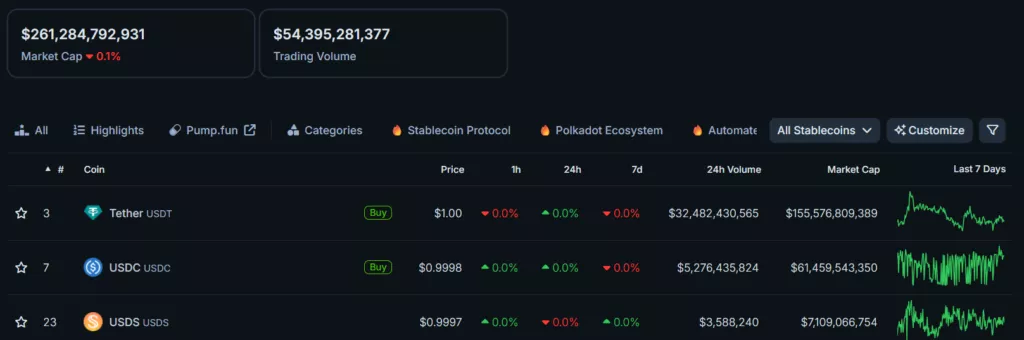
Данные: CoinGecko.

Общий TVL децентрализованных приложений на базе биткоина составляет $6,41 млрд. Сегмент занимает третью строчку рейтинга DeFi Llama, уступая лишь экосистемам на основе Ethereum и Solana.
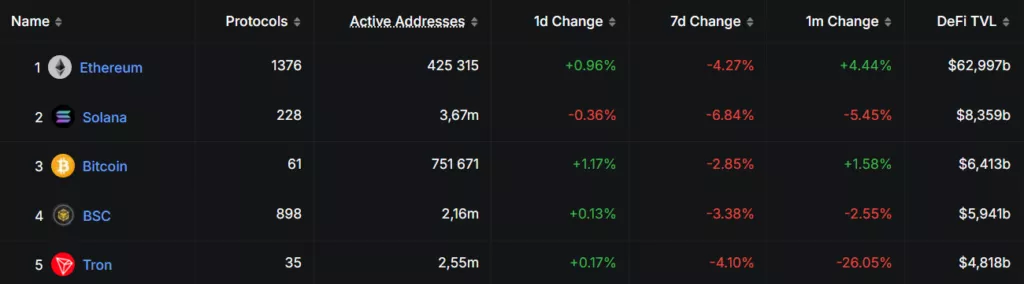
Данные: DeFi Llama.

Крупнейшая BTCFi-платформа — Babylon Protocol. TVL рестейкингового сервиса составляет $4,9 млрд.

Напомним, основатель Cardano Чарльз Хоскинсон предложил выделить из резервов проекта $100 млн в токенах ADA на покупку биткоинов и стейблкоинов.


İlgili Okumalar

After Missing the 20x, I've Found a 'Dumb' Method for AI Investing

**Missing the 20x Opportunity: A Simple 'Dumb' Approach to AI Investing** The AI boom, driving NVIDIA's revenue from $60B to $216B in two years, creates immense investment pressure. However, like the internet bubble of 2000, the largest AI opportunities likely lie ahead, perhaps after a correction. Instead of rushing in now or waiting paralyzed for a crash, the author proposes a third way: building a "knowledge warehouse" by systematically mapping the AI industry to be ready when opportunities arise. The core of the strategy is understanding AI's four-layer value chain: 1. **Compute Infrastructure (The "Engine"):** This foundational layer, where all money eventually flows, includes: a) **Chip Design:** NVIDIA's dominance via its CUDA ecosystem, b) **Chip Manufacturing/Packaging/Memory:** TSMC's near-monopoly in advanced manufacturing and SK Hynix's lead in High Bandwidth Memory (HBM), c) **Optical Interconnects:** Essential for large-scale AI clusters (e.g., Lumentum, Coherent), d) **Cooling & Power:** Critical for high-density AI data centers (e.g., Vertiv), e) **Servers/Data Centers & Cloud Platforms:** The physical and virtual wholesale providers. 2. **Models & Tools (The "OS"):** The competitive layer of foundation models (OpenAI, Anthropic, Google, Meta, xAI), now generating real revenue. A key shift is the center of gravity moving from **Training** models to **Inference** (running models), which demands different chip characteristics and could challenge NVIDIA's monopoly. 3. **Middleware & Platform ("The Glue"):** Connects models and applications (e.g., Scale AI, Hugging Face). This layer could explode if applications take off. 4. **Vertical Applications ("The Cash Register"):** Where AI meets end-users (e.g., enterprise AI, coding tools, medical AI, robotics). A critical cross-cutting constraint is **Energy**, as AI's massive power consumption drives investment in nuclear and other energy infrastructure. The author identifies four key questions for further research: 1) How will the shift from Training to Inference reshape the competitive landscape? 2) With tech giants spending over $600B on capex, where is the ROI from AI applications? 3) What are the under-the-radar opportunities in the "second" and "third" circles of the value chain (e.g., cooling, specialty foundries)? 4) How will geopolitics (e.g., U.S.-China chip restrictions) bifurcate the supply chain? The conclusion is that missed opportunities stem from insufficient research, not slow timing. By methodically studying each layer—its business models, competition, and valuations—investors can build the "killer intuition" needed to act decisively when the market presents its chance.

marsbit18 dk önce

After Missing the 20x, I've Found a 'Dumb' Method for AI Investing

marsbit18 dk önce

İşlemler

Spot
Futures
活动图片