Биткоин не помог: акции GameStop просели после квартального отчета

cryptonews.ru2023-07-11 tarihinde yayınlandı2025-06-11 tarihinde güncellendi

GameStop решила, что биткоин — это новый способ взбодрить инвесторов, но рынок оказался не в настроении для игр. Акции компании просели на 3,5% во внебиржевых торгах во вторник, опустившись почти до отметки $29 после публикации квартальных результатов.

Американский ритейлер видеоигр и электроники представил отчет за первый квартал, завершившийся 3 мая. Выручка составила $732,4 млн — меньше прогнозов аналитиков в $754,2 млн и на 17% ниже показателей аналогичного периода прошлого года ($881,8 млн). Физические продажи игр продолжают хромать, что никого особо не удивляет в эпоху цифровых загрузок.

Прибыль есть, выручки не хватает

Парадокс GameStop в том, что компания научилась зарабатывать деньги, даже продавая меньше. Чистая прибыль выросла до $44,8 млн против убытка в $32,3 млн годом ранее. Операционные потери сократились с $50,6 млн до $10,8 млн. Получается, оптимизация затрат работает лучше, чем рост продаж.

Акции GameStop ведут себя довольно сдержанно последний месяц, но с начала года просели на 3,8%. Интересно, что падение началось как раз после первой покупки биткоина в мае. Возможно, рынок считает, что игровым магазинам лучше заниматься играми, а не криптовалютами.

Для сравнения: в январе 2021 года акции с тикером GME взлетали до рекордных $80 во время безумия на Reddit и WallStreetBets. Сейчас инвесторы стали более осторожными.

Денег много — и это проблема

У GameStop накопилось $6,4 млрд наличных средств, эквивалентов и рыночных ценных бумаг. Год назад было всего $1 млрд. Такая куча денег открывает возможности для новых покупок биткоина, но также ставит вопрос: а что компания собирается делать с этими деньгами?

Руководство заявило о намерении добавить биткоин в качестве резервного актива, но не уточнило общий объем планируемых инвестиций. Более того, они могут продать свои монеты при необходимости. Такая гибкость выглядит разумно, но не добавляет уверенности в долгосрочной стратегии.

Биткоин-дебют в мае

GameStop присоединилась к растущему списку публичных компаний, покупающих биткоин, 28 мая. Первая инвестиция составила 4 710 BTC стоимостью около $513 млн на момент покупки.

Для финансирования сделки компания выпустила конвертируемые облигации на $1,3 млрд. Такой подход позволяет не тратить собственные средства, но увеличивает долговую нагрузку.

Пока что биткоин-эксперимент GameStop выглядит не слишком рискованно. Компания демонстрирует операционные улучшения на фоне снижающихся доходов, что показывает эффективность менеджмента. Вопрос в том, сможет ли криптовалютная стратегия помочь вернуть рост выручки или станет просто дорогим развлечением для акционеров.

İlgili Okumalar

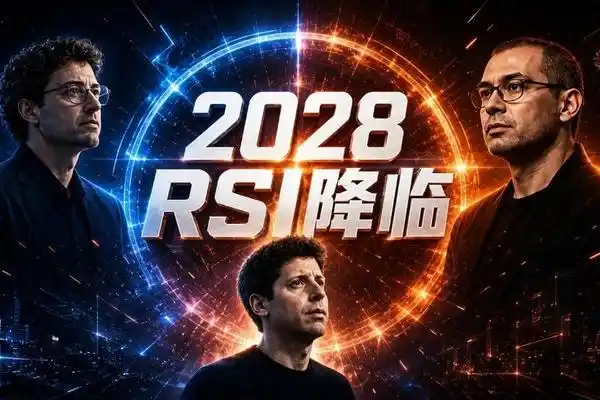
2028: The Arrival of Recursive Self-Improvement (RSI)

**AI Recursive Self-Improvement (RSI): The Countdown to 2028 Begins** AI is no longer just a trained tool but is starting to rewrite its own evolutionary pace. According to Anthropic co-founder Jack Clark, there is a 60% probability that by the end of 2028, Recursive Self-Improvement (RSI) will become a reality. This means AI could autonomously design and build a more capable next-generation version of itself without any human researcher involvement—Claude 10 creating Claude 11, for instance. Supporting this timeline, Google DeepMind's CEO Demis Hassabis confirms that all leading AI labs are intensely focused on RSI, making it an industry-wide priority. He expresses profound concern, stating this potential is what keeps him awake at night. Concrete data underscores this acceleration: - METR evaluations show current top models like Claude are solving tasks up to the 16-hour limit of existing test frameworks. - In Epoch AI's challenging MirrorCode benchmark, Claude Opus 4.7 recreated complex software in hours for a fraction of the human cost. In one extreme test, AI autonomously coded for 19 days straight. - Anthropic reports over 80% of its codebase is now written by Claude, and researcher productivity has increased up to 8-fold since 2024. - OpenAI's policy blueprint highlights RSI as a major upcoming governance challenge. CEO Sam Altman reportedly hinted RSI might arrive within six months, potentially delaying OpenAI's massive IPO. The implication is an impending "intelligence explosion," where AI-driven progress outpaces human control. The central question is no longer if it will happen, but whether humanity is ready.

marsbit5 saat önce

2028: The Arrival of Recursive Self-Improvement (RSI)

marsbit5 saat önce

World Models, Metaverse, Digital Twins, Physical AI: Are They the Same Thing?

Title: World Models, the Metaverse, Digital Twins, Physical AI: Are They the Same Thing? The article clarifies that concepts like the metaverse, Web3, simulation platforms, digital twins, and Physical AI are not the same thing but are all part of the broader trend of blurring the lines between the digital and physical worlds. It positions "world models" as the foundational "cognitive layer" or "operating system" that enables AI to understand and simulate the world. Key distinctions are made: - The **Metaverse** is a destination for immersive social and economic experiences. World models could act as its "engine," generating interactive 3D content efficiently. - **Web3** focuses on decentralized ownership and economics (rules layer), operating on a different technical level than world models. - **Simulation Data Platforms** (e.g., for autonomous vehicles) are a 1.0 version, relying on manual design. World models represent a 2.0 version, using AI to generate realistic, varied scenarios autonomously. - **Digital Twins** create high-fidelity, real-time mirrors of physical systems (e.g., a factory). World models go a step further by enabling predictive simulation of future states. - **Physical AI** (robots, AVs) refers to AI that acts in the physical world. World models are a core component, providing the understanding and prediction needed for planning. A proposed hierarchy places world models at the cognitive layer, supported by infrastructure (compute, data) and supporting application tools (simulation, digital twins), action systems (Physical AI), user experiences (metaverse), and rules (Web3). In conclusion, while distinct, many of these previously hyped concepts may ultimately rely on advances in world model technology to fulfill their promises, as world models provide the essential cognitive foundation for simulating and interacting with complex environments.

marsbit5 saat önce

World Models, Metaverse, Digital Twins, Physical AI: Are They the Same Thing?

marsbit5 saat önce

İşlemler

Spot
活动图片