当TikTok算法遇上ZKsync:SocialFi 2.0的诺亚方舟正在建造

marsbit2025-05-06 tarihinde yayınlandı2025-05-07 tarihinde güncellendi

SocialFi的困境源于技术瓶颈、用户体验障碍及生态割裂。它需要专用基础设施、无缝用户体验及创新的社交模式。

理论上,SocialFi应是必然趋势。它承诺重塑社交媒体权力格局——让用户掌控内容与个人数据的使用及变现方式,甚至赋予其分享2000亿美元社交媒体广告市场的机会(该市场目前几乎被Meta等巨头垄断)。

然而如今的SocialFi平台更像数字"鬼城",而非Web2般的热闹枢纽。2023年的明星项目Friend.tech日活峰值仅8万,随后跌至不足1万。是什么阻碍了SocialFi发展?为何它未能挑战Facebook,反而重蹈Friend.tech的覆辙?

残酷的现实是:去中心化社交网络始终未能吸引主流用户留存。尽管Web3社区热情高涨,但用户所有权、数据可移植性和变现的核心承诺仍受制于深层结构性问题。

技术瓶颈

区块链基础设施本非为社交网络的高吞吐、低延迟需求设计。用户期待发布图片、点赞或关注时即时响应——这些行为在Instagram、TikTok和X等平台日均产生数亿笔交易。

对比鲜明:以太坊每秒仅处理15-20笔交易(TPS),Solana约5000 TPS仍捉襟见肘。而TikTok日均视频上传量达2500万,X日发帖量5亿。当用户评论需30秒确认时间,或网络拥堵时Gas费波动达0.1-50美元时,普及根本无从谈起。

Web2的启示

Meta年投入350亿美元研发以打磨极致体验,TikTok算法通过日均10亿小时用户互动优化,47%用户起床即打开应用。其成果是"技术隐于体验之后"的界面。

反观SocialFi:新用户面对钱包弹窗、加密术语和浮动费用。主流用户感到困惑畏惧。DappRadar 2023研究显示92%的SocialFi用户30天内流失。除非SocialFi能提供媲美Web2的流畅体验并凸显独特优势,否则其用户将始终局限于加密原生群体。

生态割裂之痛

Web3多链世界将SocialFi割裂为孤岛。Lens Protocol的社交图谱不与Farcaster互通,Friend.tech的变现工具无法移植至DeSo。结果?丧失网络效应的碎片化体验。

试想Gmail用户需付费才能给Outlook用户发邮件,且无法携带联系人列表——这正是SocialFi现状。破局需依赖ENS等去中心化身份系统及EAS等新兴标准,构建可移植、可组合的社交图谱,使用户内容、粉丝和声誉跨平台流通,惠及整个生态而非单一应用。

专用基础设施

解决方案并非对现有模型修修补补,而是为社交应用量身定制基础设施。正如水平扩展革新了Web2基础设施,模块化区块链架构通过分离数据可用性、执行和结算等层级,为承载数十亿用户的社交应用奠定基础。

变革已悄然展开:Farcaster从以太坊主网迁移至Optimism二层网络以降低交互成本;Lens Protocol转向ZKsync,利用零知识证明扩容同时保护隐私;CyberConnect推出专为社交优化的L1链Cyber,内置社交图谱实现高速低成本交互。

这些专用架构复刻了Web2的扩展路径——分离数据、执行和存储以应对指数增长。Web3的答案是模块化架构:Rollup提升性能,去中心化存储处理媒体,ENS/Lit Protocol等身份层。

用户至上的社交网络

当建立在正确基础上时,SocialFi终将兑现其核心承诺:让用户重掌社交体验中心。这意味着真正的身份与内容所有权、跨应用移植的社交图谱,以及向内容创作者公平分配价值。

其机遇远不止修复Web2社交媒体的缺陷:真实所有权让创作者可跨平台迁移受众;可编程货币使TikTok式病毒传播包含即时收益分成(比如舞蹈挑战广告收入的10%自动分配给创作者)。

当可编程货币与社交连接结合,全新交互模式将成为可能——从优质内容的无缝打赏,到协作创作的自动收益分配。

结语

SocialFi早期尝试仅在加密爱好者中昙花一现。唯有攻克根本性的技术与体验障碍,Web3社交才能发挥传统平台无法企及的独特优势。

İlgili Okumalar

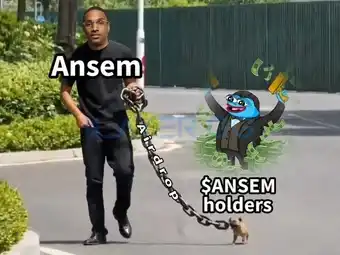
The Ansem Airdrop Brings Back the Celebrity Endorsement Effect: When the Market Is Stagnant, Smart Money Watches KOLs' Tweets

In the recent crypto bear market, a narrative-driven surge has emerged within the Solana meme coin sector, highlighted by the explosive performance of $ANSEM (The Black Bull). The token, associated with prominent trader Ansem, soared nearly 19,878% in a week following his announcement of a community airdrop funded by his creator fees from Pump.fun. This move, emphasizing social engagement over traditional on-chain metrics, distributed millions of tokens to hundreds of wallets, though distribution appeared concentrated with a few wallets receiving substantial portions. The event signals a resurgence of influencer-driven market movements. Similarly, BitMEX co-founder Arthur Hayes boosted tokens like $CARDS and $SYN through public endorsements and analysis, leading to significant price rallies. These cases underscore a current market dynamic: with major narratives stagnant and limited new capital, attention and "smart money" are increasingly focused on signals from key opinion leaders (KOLs) to identify asymmetric opportunities, despite the inherent risks of speculation and potential market manipulation. The landscape suggests that while old strategies for evaluating such pumps remain relevant, the reduced competition for attention may make these localized trends critical for participants seeking alpha in a sideways market.

marsbit49 dk önce

The Ansem Airdrop Brings Back the Celebrity Endorsement Effect: When the Market Is Stagnant, Smart Money Watches KOLs' Tweets

marsbit49 dk önce

Just Now, Anthropic Released Sonnet 5, Performance Close to Opus 4.8, but Not Necessarily Cheaper

Anthropic has officially released Claude Sonnet 5, describing it as the most "agentic" Sonnet model to date. It can plan, use tools like browsers and terminals, and autonomously perform tasks at a level previously requiring larger, more expensive models. Performance in reasoning, tool use, programming, and knowledge work has significantly improved compared to Sonnet 4.6, now approaching that of Opus 4.8. Evaluation results indicate that Sonnet 5, at medium "effort" levels, offers better cost efficiency than its predecessor. At higher effort levels, its performance in some tasks can match Opus 4.8. In terms of safety, Sonnet 5 shows improved rates of refusing malicious requests and resisting prompt injection attacks compared to Sonnet 4.6, though it has a slightly higher rate of policy-violating behavior than Opus 4.8 and Mythos Preview. Its cybersecurity capabilities remain weaker than those models. Notably, Sonnet 5 uses a new tokenizer. The same text input now results in approximately 1.0 to 1.35 times more tokens, depending on content. To offset this, Anthropic offers a promotional launch price until August 31, 2026, at $2 per million input tokens and $10 per million output tokens. The standard pricing will be $3/$15 per million tokens thereafter. However, some external analysis suggests that due to increased token usage, the actual cost per task for Sonnet 5 may be higher than both Sonnet 4.6 and Opus 4.8.

marsbit1 saat önce

Just Now, Anthropic Released Sonnet 5, Performance Close to Opus 4.8, but Not Necessarily Cheaper

marsbit1 saat önce

İşlemler

Spot
活动图片