Четыре фактора, способных развернуть криптовалютный рынок во II квартале 2025 года

cryptonews.ru2025-03-17 tarihinde yayınlandı2025-04-17 tarihinde güncellendi

После неудачного первого квартала 2025 года крипторынок нуждается в новых стимулах для роста. Несмотря на важные события в индустрии, начало года оказалось самым слабым за последние годы.

«Разочаровывающий — лучшее слово для описания прошедшего квартала», — заявил главный инвестиционный директор Bitwise Мэтт Хоуган (Matt Hougan) в недавнем отчете, назвав Q1 «лучшим из худших кварталов в истории криптовалют».

Нетипичное падение биткоина и Ethereum в первом квартале

Биткоин и Ethereum, две крупнейшие криптовалюты по капитализации, показали снижение на 11,82% и 45,41% соответственно в первом квартале 2025 года. Это необычно, поскольку исторически данный период показывал сильные результаты для обоих активов. С 2013 года первый квартал был вторым по прибыльности для биткоина (в среднем 51,2%) и лучшим для Ethereum (77,4%), согласно данным CoinGlass.
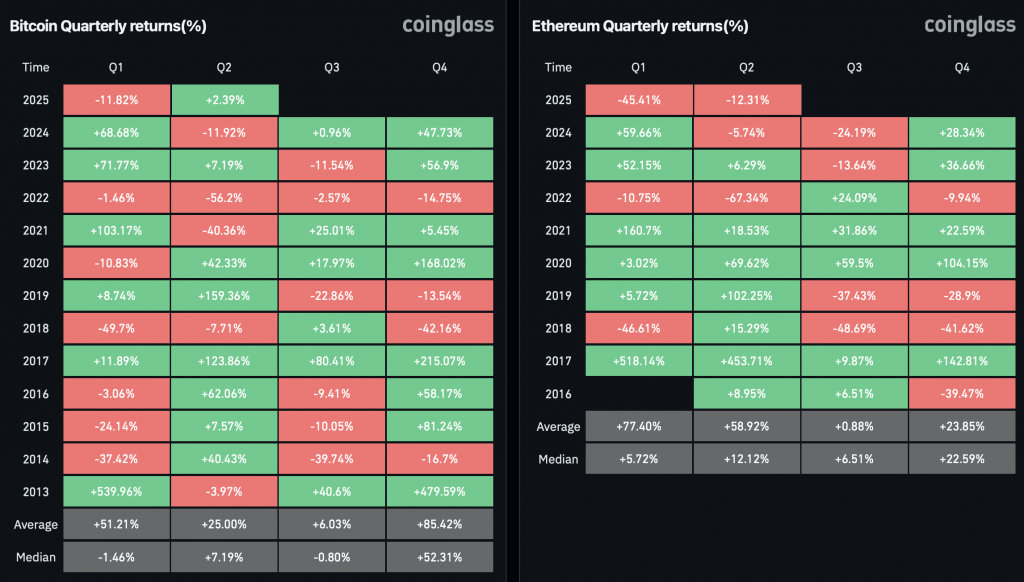
Квартальная доходность биткоина и Ethereum. Источник: CoinGlass

Четыре ключевых фактора потенциального роста во втором квартале

Хоуган выделил несколько важных катализаторов, способных обеспечить рост крипторынка в Q2:

  1. Увеличение глобальной денежной массы: «После нескольких лет ужесточения центральные банки по всему миру сигнализируют о переходе к смягчению денежно-кредитной политики и расширению M2». Хоуган отметил: «Исторически эти условия были благоприятны для рисковых активов, особенно для цифровых». 14 апреля аналитик Колин Токс Крипто (Colin Talks Crypto) сообщил: «Глобальный показатель M2 оставался на историческом максимуме в течение трех дней подряд». Согласно сентябрьскому исследованию экономиста Лин Алден (Lyn Alden), биткоин движется в направлении глобального M2 в 83% случаев.
  2. Благоприятное регулирование в США: Еще одним позитивным фактором для криптовалютного рынка может стать «повсеместное введение благоприятных регуляций» в США. «Это длинный хвост регуляторной ясности, о котором никто не говорит, и он только начинается», — заявил Хоуган.
  3. Рост стейблкоинов до исторического максимума: Рост активов под управлением в стейблкоинах также может служить положительным индикатором для рынка. По словам Хоугана, в первом квартале объем активов под управлением в стейблкоинах вырос до «исторического максимума более $218 миллионов». «Растущее принятие стейблкоинов принесет пользу смежным секторам, включая DeFi и другие криптоприложения», — добавил он.
  4. Геополитический хаос и диверсификация портфелей: Компания Bitwise также отметила, что «геополитический хаос» в мировой экономике в первом квартале 2025 года, особенно после инаугурации президента США Дональда Трампа и введения им тарифов, «заставляет глобальных инвесторов пересматривать свои портфели». Это может привести к повышенному интересу к криптовалютам как к альтернативному активу.

Недавно Хоуган подтвердил свой прогноз о росте биткоина на 138% к концу года: «В декабре Bitwise прогнозировал, что биткоин завершит год на отметке $200 000. Я по-прежнему считаю, что это возможно».


İlgili Okumalar

Grayscale Reassesses Zcash: In the Era of AI Surveillance, What is Financial Privacy Worth?

Grayscale Research reevaluates Zcash (ZEC) in the context of AI-powered financial surveillance. The report posits that stablecoins, transparent blockchains, and AI analytics tools are increasing the traceability of digital finance, potentially reigniting mainstream demand for financial privacy as a core monetary attribute. While AI could drive a third wave of privacy concern, Zcash's investment thesis hinges on whether this theoretical demand translates into sustained adoption. Zcash, operational for nearly a decade, uses zero-knowledge proofs to offer users a choice between transparent and shielded transactions, placing control of information disclosure back in users' hands. Recent infrastructure improvements—like wallet enhancements, mining pool expansions, and protocol upgrades—have reduced usability barriers. On-chain data shows shielded transactions comprise ~90% of transaction count, with ~25% of circulating ZEC in shielded pools, indicating existing use. However, significant risks remain. These include regulatory hurdles for exchanges and custodians dealing with shielded assets, past protocol vulnerabilities (theoretical, now patched), long-term quantum computing threats, and execution risks for future scalability upgrades. Grayscale's analysis suggests ZEC's current low market share (~0.6% of the "digital currency" crypto sector) offers valuation upside *if* the market reprices privacy. A scenario analysis notes that capturing 5% of this sector could imply a ~9x valuation increase, though this is a simplified sensitivity test, not a price target. Ultimately, Zcash's opportunity lies in the unresolved question: in an AI-monitored era, what price will the market assign to financial privacy? Validating the thesis requires monitoring growth in real shielded usage, wallet usability, upgrade timelines, and regulatory accessibility, not just price appreciation.

marsbit36 dk önce

Grayscale Reassesses Zcash: In the Era of AI Surveillance, What is Financial Privacy Worth?

marsbit36 dk önce

AI Democratizes Hacking, Bitcoin Red Team White Hats Race in Speed-Based Attack-Defense Contest

AI is democratizing powerful hacking tools, putting them in the hands of those with little cybersecurity expertise. Cryptocurrency developers are now in a race to find system vulnerabilities before attackers do. The Bitcoin Red Team, a group of 20-25 volunteers including anonymous developers like Calle, has formed to urgently address these AI-augmented security threats within the Bitcoin ecosystem. Calle emphasizes that while the Bitcoin core protocol itself is secure, the real risk lies in the wallets, applications, services, and other third-party software built on top of it—the software most users interact with. Incidents like the Coldcard wallet hack and the emergence of powerful Chinese AI models have accelerated their proactive security auditing efforts. The team both accepts audit requests from Bitcoin projects and proactively scans major open-source projects. They report found vulnerabilities to developers and refine their classification standards. Notably, Calle states the team frequently uses Chinese AI models over US counterparts, as the latter's strict safety guardrails often block cybersecurity research tasks, hindering their utility for finding or fixing vulnerabilities. Calle warns that AI is erasing the information asymmetry that previously protected some vulnerabilities. It lowers the technical barrier, allowing non-experts to exploit simple flaws. He describes the current state of Bitcoin software as "on fire" and believes the direct financial incentive of cryptocurrency makes it a first target in this industry-wide shift, with other sectors to follow. The era of security through obscurity is over.

marsbit56 dk önce

AI Democratizes Hacking, Bitcoin Red Team White Hats Race in Speed-Based Attack-Defense Contest

marsbit56 dk önce

İşlemler

Spot
活动图片