美国经济崩溃:消费者信心触底,衰退阴影笼罩未来

marsbit2025-03-18 tarihinde yayınlandı2025-03-18 tarihinde güncellendi

美国消费者的崩溃:

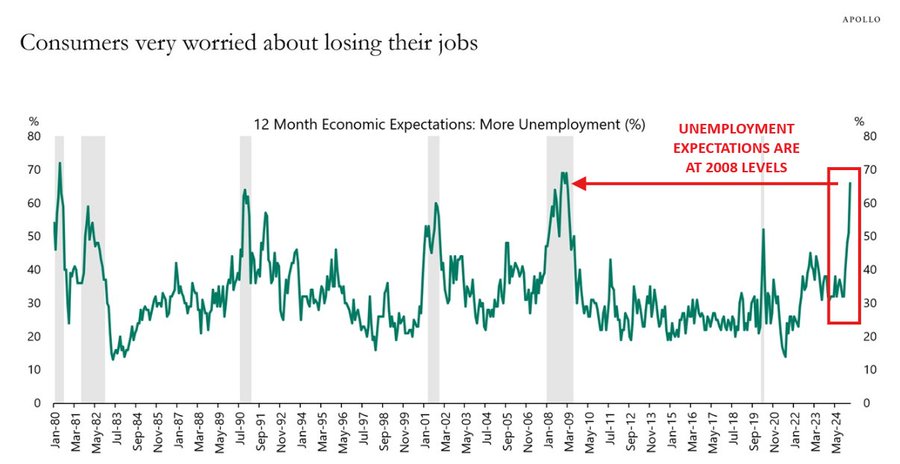
美国的失业预期现已超过2020年的水平,并达到了自2008年以来的最高点。

2024年的一项调查显示,高达56%的美国人认为美国正处于经济衰退中。

美国即将步入经济衰退吗?
经济衰退

以下是哈里斯民意调查公司在2024年5月(大选前夕)进行的一项调查:

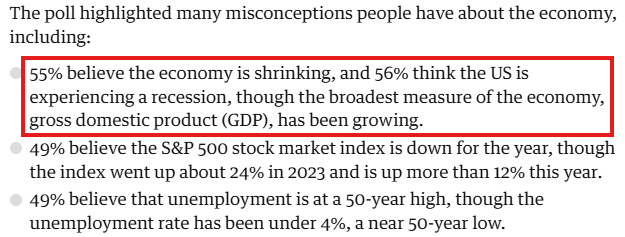
56%的美国人认为美国正处于经济衰退中,49%的人认为标普500指数当年迄今(YTD)下跌。

然而,实际上,当时美国GDP增长“强劲”,标普500指数年内上涨了12%。
经济衰退

时至今日,消费者的悲观情绪更加严重。

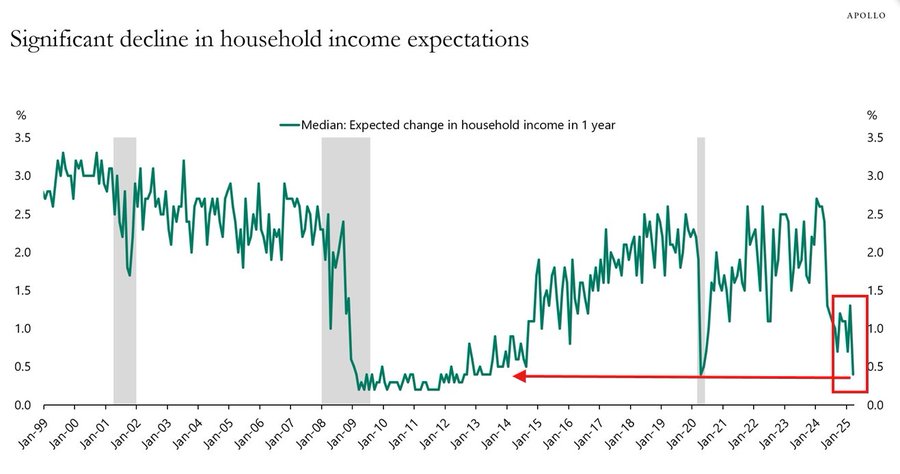
未来12个月家庭收入的预期变化中位数已经大幅下降。

事实上,当前的预期已降至自2020年3月全球经济封锁以来的最低水平。
经济衰退

通胀使情况更加恶化:

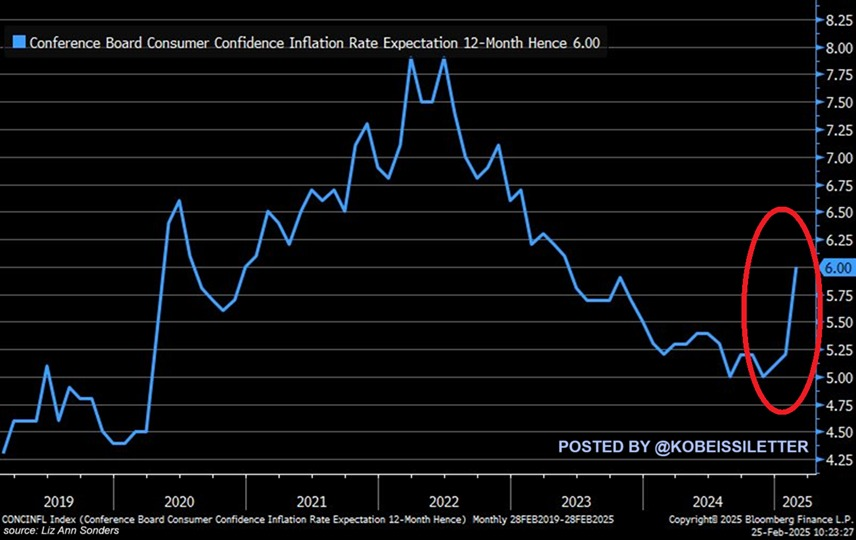
美国消费者认为未来12个月的通胀率将上升至6.0%,这是自2023年5月以来的最高水平。

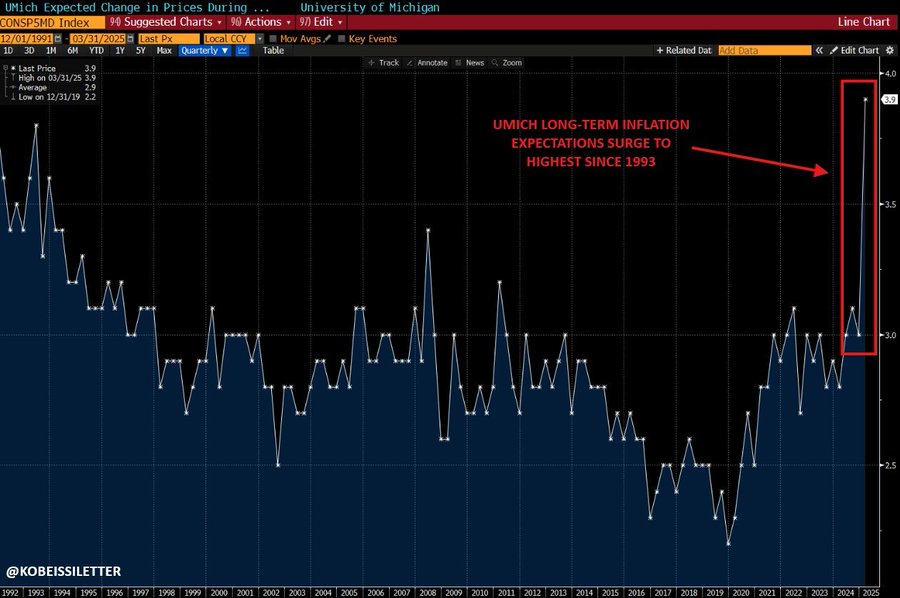
美国人预计未来5到10年的年均通胀率为3.9%,创下30年来的新高。

我们实际上正经历多年累积的通胀影响。
经济衰退

美国的长期通胀预期已正式达到自1993年以来的最高水平。

随着特朗普总统推出大规模关税政策,经济不确定性上升,通胀预期也随之上扬。

其结果是消费者信心的严重崩溃。
经济衰退

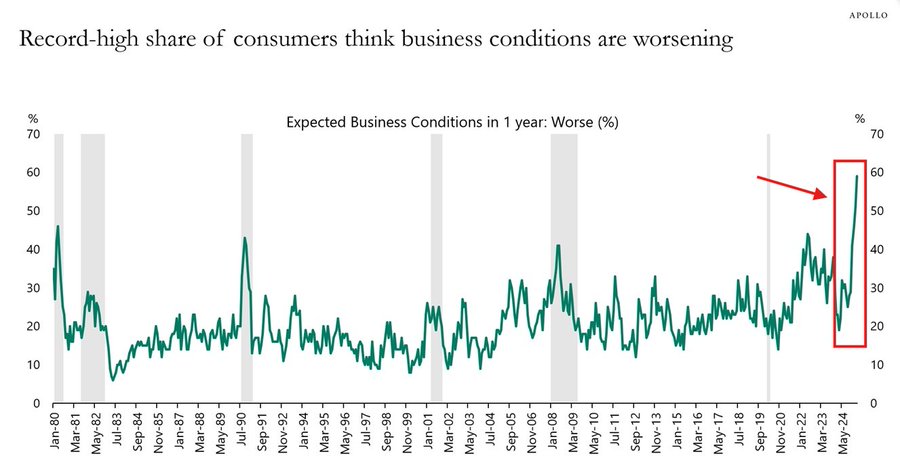
创纪录的约60%的美国消费者预计未来12个月商业环境将恶化。

即使在2008年房市崩盘最严重的时期,该指标的峰值也仅约为42%。

可以肯定地说,美国消费者的悲观情绪达到了近代历史上的最高点。
经济衰退

市场正在消化经济衰退的预期:

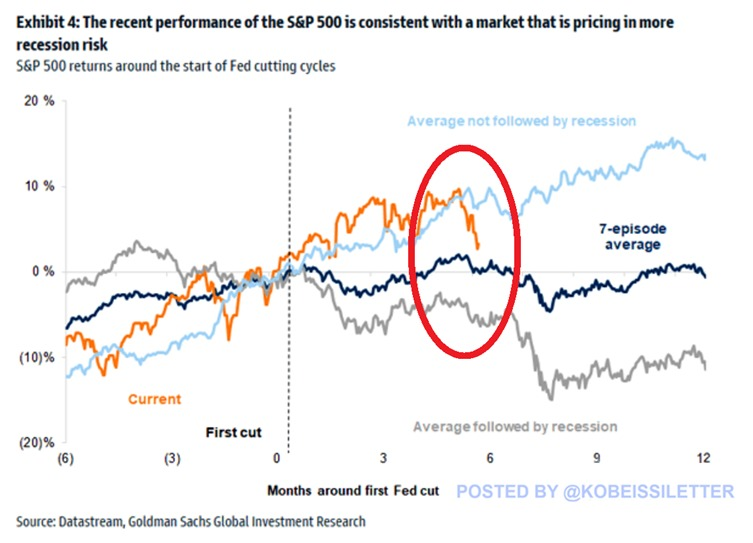
自美联储于2024年9月开始降息以来,标普500指数已下跌2%。

在经济衰退期间的降息情况下,标普500指数通常在6个月内下跌6%,12个月内下跌10%。

历史数据显示,政策转向后的平均6个月回报仅为1%。
经济衰退

此外,不仅仅是普通消费者感到悲观。

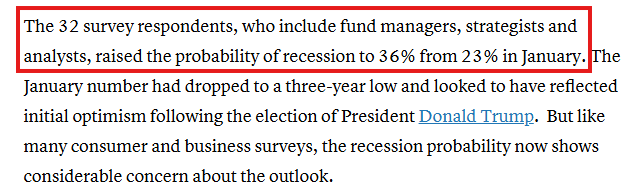
在3月份的CNBC美联储调查中(涵盖基金经理、策略师和分析师),经济衰退的可能性大幅上升。

衰退概率从1月份的23%跃升至36%。

机构投资者的情绪已明显转向悲观。
经济衰退

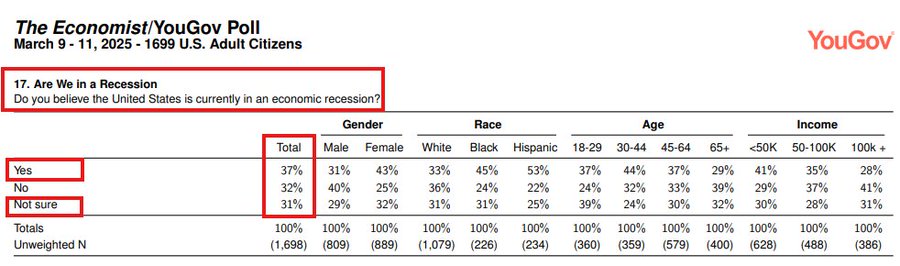
在上周的《经济学人》/YouGov民意调查中,美国人被问及对经济的看法。

目前,37%的人认为美国正处于经济衰退中,31%的人不确定。

仅有32%的人认为美国目前处于经济衰退。

这正是市场对降息预期大幅上升的原因。

经济衰退

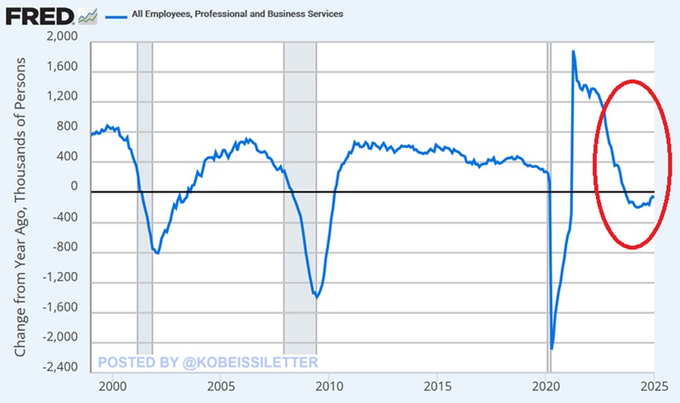
这一次,白领工作也受到了冲击。

自2023年5月以来,美国专业和商业服务行业已减少了248,000个岗位。

该行业的就业人数已连续17个月下降,创下自2008年以来最长的下滑周期。

劳动力市场正在走弱。
经济衰退

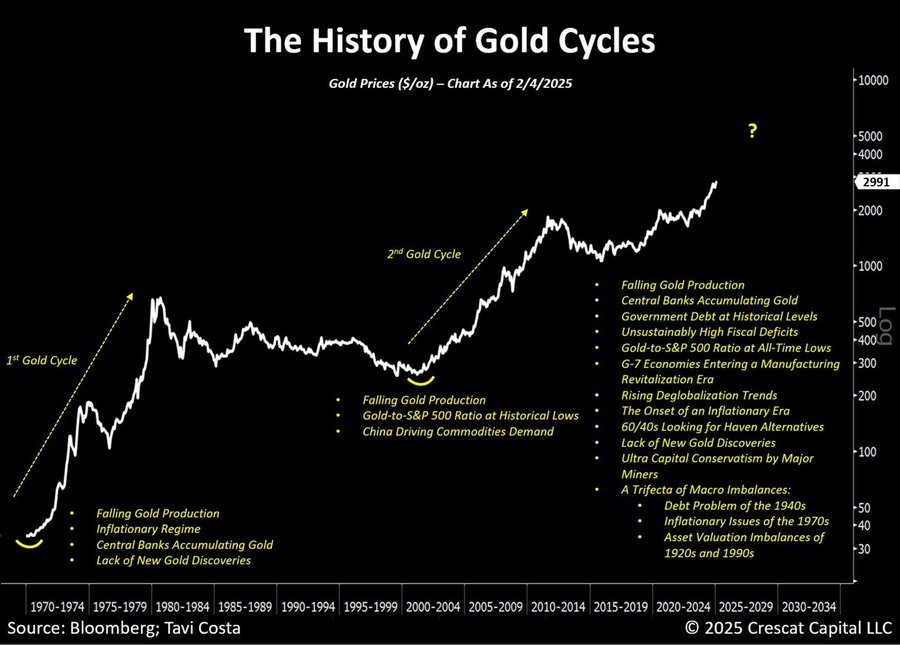
最后,经济最具指示性的迹象之一就是黄金。

在美国债务危机、通胀、贸易不确定性和衰退担忧的背景下,黄金价格飙升。

我们预期未来将发生重大变化。
经济衰退

İlgili Okumalar

The Impact of OUSD on Circle, Tether, and Paxos: Not a Simple Negative, but a More Complex Competitive Landscape

OUSD's Impact on Circle, Tether, and Paxos: A Nuanced Competitive Reshuffle The launch of OUSD, a new stablecoin initiative, has complex implications for the stablecoin market. For Circle (CRCL), the initial 15-20% stock drop reflects legitimate competitive concerns but is not a "death sentence." Circle retains deep liquidity, existing integrations, and first-mover advantages. A potential restructuring or termination of its Coinbase partnership could even double its net revenue in the short term, providing more competitive freedom. However, OUSD, backed by Stripe's engineering and product strengths, could become the default stablecoin within the Stripe ecosystem for new adopters, challenging USDC's position. OUSD does not solve the core barrier for corporate adoption: it remains a credit exposure to its issuer (likely a Bridge-related entity), which, like Circle, is not an investment-grade entity. Large banks and asset managers could still capture the most lucrative enterprise use cases. Circle must accelerate its payment/fintech product development and consider defensive M&A. For Tether, OUSD targets a different market segment. Tether will continue focusing on distribution channels not prioritized by Stripe or Circle. Its market share may decline over time, but within a significantly growing total market. Paxos faces the greatest pressure. OUSD undermines the key selling points of its USDG stablecoin, and Paxos's regulatory advantages may diminish as frameworks mature. This poses a more existential challenge, explaining Paxos's recent shift back to its brokerage-as-a-service business.

marsbit17 dk önce

The Impact of OUSD on Circle, Tether, and Paxos: Not a Simple Negative, but a More Complex Competitive Landscape

marsbit17 dk önce

OUSD's Impact on Circle, Tether, and Paxos: Not a Simple Negative, but a More Complex Competitive Reshuffle

This article analyzes the impact of the newly announced stablecoin OUSD, backed by a consortium including Stripe, on major incumbents like Circle (USDC), Tether (USDT), and Paxos (USDG). For Circle, the announcement is not a simple negative. While the initial market reaction was rational, it's not a "death sentence." Circle retains deep liquidity, existing integrations, and first-mover advantage. A potential restructuring or termination of its exclusive revenue-sharing deal with Coinbase could even near-double its net income in the short term, providing more competitive flexibility. However, within the Stripe ecosystem, OUSD, with its strong engineering and product focus, could become the default choice, displacing USDC for new integrations. Circle must accelerate its own fintech product development and consider defensive M&A. OUSD does not directly threaten Tether's core markets, which focus on different distribution channels. Tether's market share may decline over time but within a significantly growing overall market. Paxos faces the greatest pressure. OUSD undermines the primary value proposition of its USDG stablecoin, and Paxos's regulatory advantages may erode as frameworks mature, posing a more existential challenge. This explains Paxos's recent strategic pivot towards brokerage-as-a-service. A fundamental unresolved issue for enterprise adoption remains: if issued by a Bridge-related entity, OUSD, like USDC, still represents a credit exposure to a non-investment-grade issuer, unless a parent company guarantee is provided. Large banks and asset managers entering the space later could still compete for the most lucrative enterprise use cases.

链捕手18 dk önce

OUSD's Impact on Circle, Tether, and Paxos: Not a Simple Negative, but a More Complex Competitive Reshuffle

链捕手18 dk önce

İşlemler

Spot
活动图片